Men’s Health put a fall capsule on October 16. Ten essentials, according to a style editor who repeats outfits on purpose. Mix and match. More looks with less garb. The page then sells a button-down, a sweater, three leather jackets, and a pair of Levi’s 501s. That is a cart. It is not a closet.
The same week, InteriorDaily’s Vogue note wants heavier wool, cashmere, and mohair throws, jewel tones, and layered antique rugs. USA Today on October 15 says HomeGoods will open eight stores by the end of the month. One list wants fewer garments. One list wants more fabric on the sofa. One chain wants you in the aisle. None of them counts hangars.
We already wrote the evergreen capsule as a closet job and the Nothing New month as a buying freeze. This week’s object is the shopping list that calls itself an edit.
Ten SKUs is a cart
Men’s Health’s editor defines a capsule the way stylists do: a tight set of pieces that combine. You do not have to be a menswear person. Keep the basics. Add a little texture. The useful sentence is the one that comes before the product modules. The rest of the page is SKUs with strike-through prices.
A blue Oxford or a white button-down is the first heading. Van Heusen poplin, $20 on Amazon, $25 at Zappos. Brooks Brothers non-iron twill, Ainsley collar, bengal stripe, marked 50 percent off, $139 down to $70. Those are two shirts. They are not a wardrobe. If your closet already has a blue Oxford, the $20 module is a duplicate with better photography.
Read the page as a receipt. Every heading that names a retailer is a purchase. Every heading that names a category without a count is still a purchase once the modules load. “At least one shirt” is the only quantity the button-down section commits to. The leather section puts three jackets on the same screen. That is how a capsule becomes a haul.
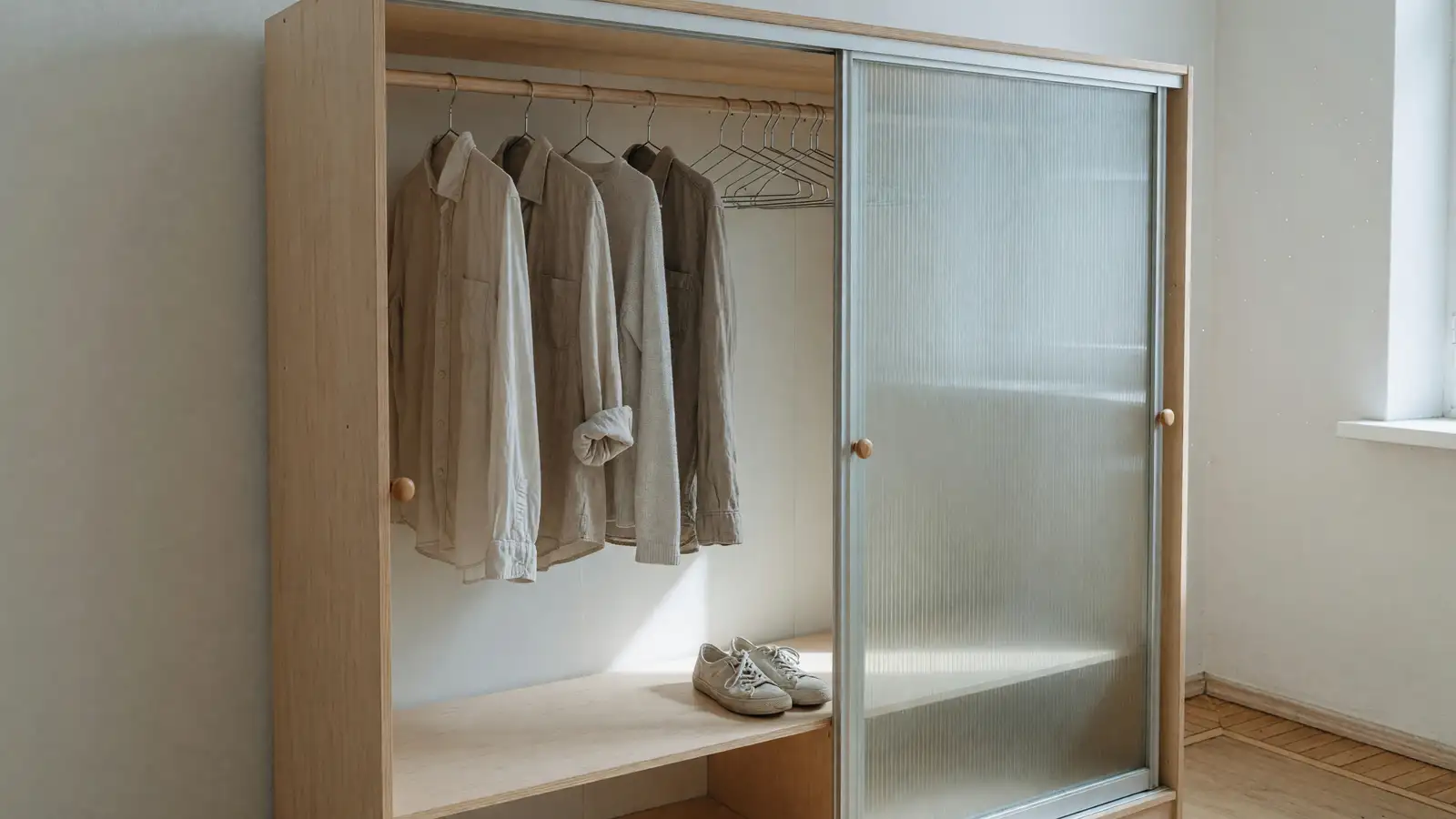
If you came here from the capsule guide, steal the test, not the cart. How many hangars does this list add to a rod that is already full. If the answer is ten and you have not taken ten off, you did not build a capsule. You booked a package.
The $20 shirt is not the edit
The Van Heusen number is the hook. Twenty dollars is cheap enough that it does not feel like shopping. That is the trap. Minimalism fails on cheap duplicates more often than it fails on one expensive coat. We already treated IKEA’s $60 speaker as a keep-the-$10 problem. A $20 Oxford is the clothing version.
Brooks Brothers at $70 is the other end of the same heading. Fifty percent off is a calendar, not a need. If the shirt only exists because it is on sale, it is not an essential. It is a coupon. The editor’s actual instruction is still “one shirt that can handle a meeting or a dinner.” One. Not the Amazon module and the stripe.
Fit instructions on the page are more useful than the links. Tucked into chinos. Open over a tee. Collar showing under a crewneck. That is a wear plan. You can run it on a shirt you already own. If you cannot name three outfits for the Oxford in the closet, buying a second one will not fix the rotation. It will fill the rod.
Do the count before the checkout. Shirts you wore in the last 30 days. Shirts you did not. The second pile is the capsule, if you let it leave. The Men’s Health list cannot do that part. It can only add.
Three jackets is a mood board
Banana Republic vegan leather zip, 60 percent off, $200 to $80. Zara cropped leather, $269. Quince 100 percent leather Harrington, $250. The page puts them under the same seasonal need. A jacket. Pick one. The modules do not pick. They stack.
Eighty dollars is the sale that makes the vegan zip feel like a default. Two hundred sixty-nine is the fashion one. Two hundred fifty is the “real leather, direct-to-consumer” one. Those are three answers to a question the closet can only hang once unless you are building a store. A capsule that needs a leather jacket needs one leather jacket. The other two are tabs.
Relaxed-fit jeans, in the extract, are called the backbone. Levi’s 501 Original Fit. Medium or dark wash. Room in the thighs without going baggy. That sentence is closer to an edit than the jacket row. Jeans are the piece most people already own in triplicate. If the 501 is a replacement for a pair that is done, buy it. If it is a fourth wash because the photo is good, it is inventory.
The sweater heading on the page is truncated in our notes. Treat it the same way. One everyday sweater. Not a color story. If Vogue is in your house this week, the sweater is about to compete with a throw. That is not a joke. It is the same wool budget.
Vogue wants more fabric in the room
InteriorDaily dated October 12 reads Vogue’s autumn interiors as richer, not smaller. Deep olive, chocolate, berry. Velvet, mohair, marble. Handmade textiles. Needlepoint cushions. Restored vintage. Layered antique rugs. 1970s shapes. Statement florals. Fringes and tassels. Then the practical line: swap lightweight fabrics for heavier wool, cashmere, and mohair throws. Skip the renovation. Change the textiles.
That is the opposite shopping list from Men’s Health, aimed at the same season. One page wants fewer garments that combine. The other wants more weight on the sofa. Both will arrive at your door as packages. Both will sit on the chair if you do not give them a home.
We already filed warm minimalism as 2026’s cozier less. Jewel tones and a mohair throw can live in a small closet if the closet actually edited. They cannot live there if the rod is still a history of sales. The Vogue note is not a closet article. Steal it anyway. If you add a throw, a rug, and a cushion in October, that is three objects that need a landing zone. The guest-room pile from last week’s cleaning list is where those objects go to die.
Do not buy the throw because the palette is chocolate. Buy it if the existing one is thin and you will put the thin one in the donate bag the same day. Otherwise you have two throws and a Men’s Health jacket on the same chair.
HomeGoods opened eight doors
USA Today on October 15, Gabe Hauari, 3:21 p.m. ET: HomeGoods will open eight locations by the end of October. TJX Companies. Sister of T.J. Maxx and Marshalls. The chain started in 1992. Ernie Herrman, in May 2024, set a goal of at least 1,300 additional TJX locations globally. The October list is a small slice of that number.
Bedford, Massachusetts, 297 Great Road, October 15. Bridgeville, Pennsylvania; Shirley, New York; Elizabethtown, Kentucky, October 22. Baytown, Texas; North Broken Arrow, Oklahoma; North Andover, Massachusetts; Orlando, Florida, October 29. Orlando is a move from Millenia Plaza to Colonial Plaza Market Center, not a net-new building in the same sense as Bedford. Read the retailer’s grand-openings page if you are actually driving there. The article is a location list, not a floor plan.
A new HomeGoods is a browsing machine. Baskets. Frames. Seasonal ceramics. The same objects that turn a capsule into a house that needs a storage unit that is not a declutter. If you walk in with the Men’s Health list in your head, you will not leave with one Oxford. You will leave with the Oxford energy applied to throw pillows.
The increment is ugly and useful. Men’s Health will sell you ten garments as “less.” Vogue will sell you heavier textiles as “character.” HomeGoods will sell you both in the same aisle because the store does not have a hangar budget. You do. Count the rod before you park.
A capsule is a hangar count
Here is the job that none of the three pages will do for you.
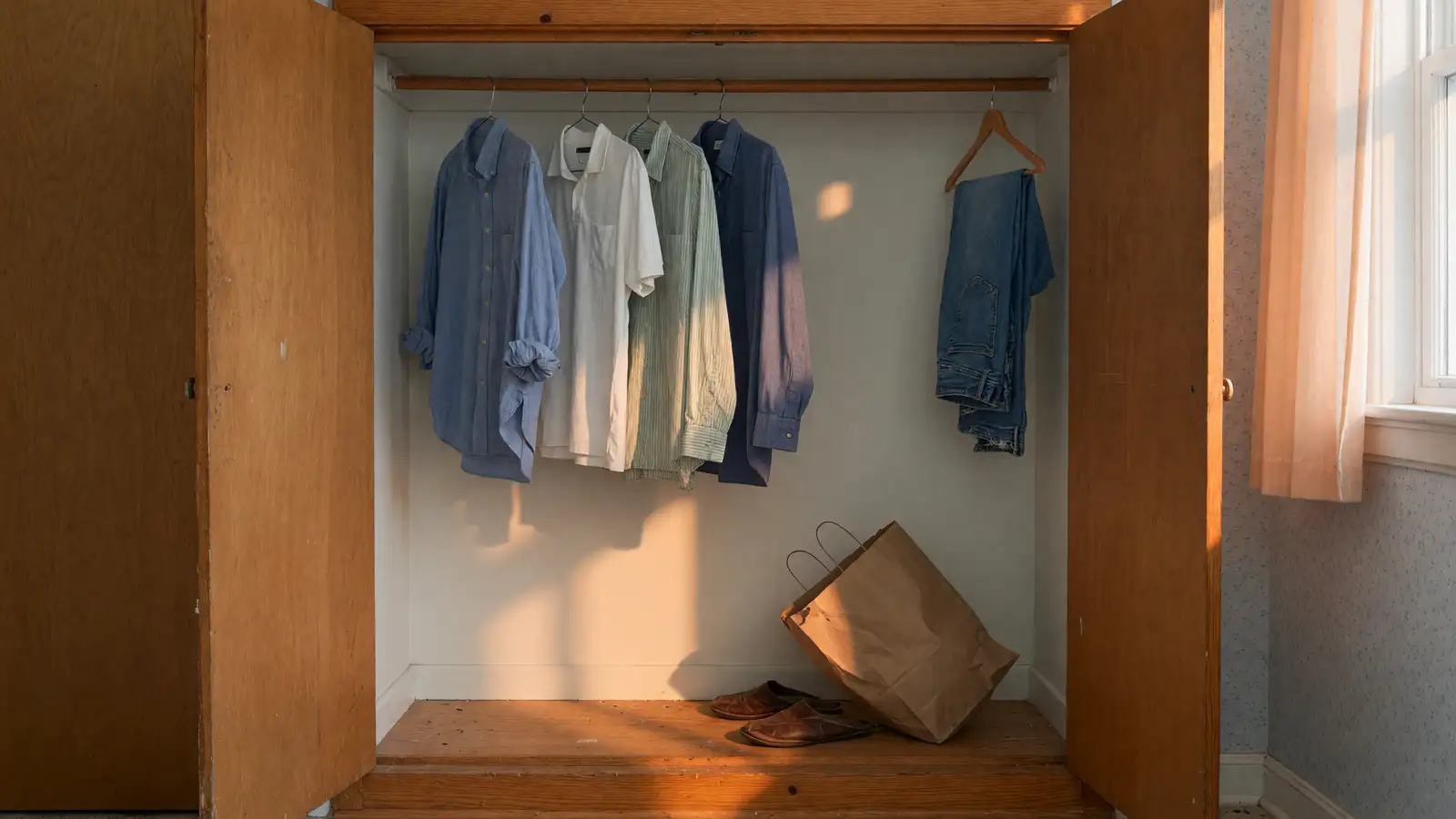
Take every hangar off the rod. Put back only what you wore in the last 30 days plus the one meeting shirt you can name. That is the capsule. Photograph it if you need a record. The Men’s Health modules are allowed only if a hangar opened. The Vogue throw is allowed only if a blanket left. The HomeGoods bag is allowed only if you already know which shelf it belongs on.
Ten essentials, on the Men’s Health page, is a headline count. It is not your count. Your count is the number of pieces that can make a week without a leftover pile on the chair. If that number is 18, you do not need the Zara jacket. If that number is 6 and you freeze in November, you need the sweater you already almost bought last year, not a third leather.
Sale math does not change the rod. $20, $70, $80, $269, $250 are prices. They are not space. A 60 percent off tag is how a vegan zip enters a closet that already has a coat. We have run this argument on Prime Day bags and on one-item-a-day challenges. October’s version is a style editor with a clean definition and a page full of carts.
If you want a number to steal from Vogue, steal the refusal of a renovation. You do not need a new closet system to run a fall capsule. You need the rod to be shorter than the list. If you want a number to steal from USA Today, steal eight. Eight stores. Eight chances to buy a basket you will not assign. Drive past them until the hangars have gaps.
November on the USA Today list is the leftover. HomeGoods will open more stores then, the article says, if you keep reading the grand-openings page. October’s eight locations are not the end of the TJX plan. Herrman’s 1,300 additional stores is a multi-year number from May 2024. One Bedford opening on October 15 does not complete it. If you live near 297 Great Road, that date already happened. If you live near Garth Road in Baytown, you still have until October 29 to decide whether the aisle is a closet tool. It is not.
Orlando’s move from Millenia Plaza to Colonial Plaza is the one line on that list that is not a new door in the simple sense. A relocation can still dump a household into “we should stop by the new one.” A new address is not a new need. If the old store was already in your week, you already have the baskets. The Men’s Health capsule does not get cheaper because the HomeGoods moved.
Vogue’s craft list is the other leftover. Handmade textiles, needlepoint, restored vintage, layered rugs, 1970s furniture, floral motifs, fringes, tassels. That is a house, not a rod. If any of it enters because the palette is berry, assign a shelf the same day. Character without a landing zone is the guest-room pile with better adjectives.
The editor who repeats outfits is the only part of the Men’s Health piece that is already a practice. Repeat the Oxford. Repeat the 501. Repeat the sweater. The modules can wait. The closet cannot hold a sale and a capsule at the same time.