A clear-out often fails in the first ten minutes, before any decision about what to keep. You open one cupboard, lift everything out so you can see it, and the contents land on the floor, the desk, the bed, and whichever chair is not already holding clothes. Then the afternoon ends. The job stops halfway. The room looks worse than the cupboard did. Ella Duggan, household advice writer at Good Housekeeping UK, described that sequence in a piece published on 12 November 2026. The magazine’s UK account posted the same piece the next morning, calling it the trick that stops a clear-out from taking over the whole home.
That framing is a household-systems problem, not a pep talk about owning less. The mess is produced by the method of working, not only by the volume of objects. Duggan’s point is that a lack of spare floor, or a lack of an uninterrupted afternoon, becomes the reason people never start. Even when the floor is free, moving objects around without deciding where each one belongs turns a cupboard into a whole-home project. A method that keeps the room intact while you work is the difference between a session you can pause and a session you have to finish or live inside.
The method she walks through was created by professional organiser and author Dana K. White. Duggan presents it as five steps for working through clutter without first emptying the space and without building temporary piles that still need a second sort. The aim is steady progress. If you stop part of the way through, you have not left a larger mess than you found. The steps move from easy decisions to harder ones: rubbish first, then items that already have a home, then obvious donations, then the uncertain objects, then a check that what you are keeping actually fits the container you started with.
A second Good Housekeeping UK piece, reshared by the same account on 12 November 2026, shows why that sequence should not be forced onto a clothes rail in one evening. Household advice editor Katie Mortram tried the reverse hanger technique and wrote up what a month of turned hangers revealed. That article carries a publish time of 16 May 2025. It is not a new study from this week. It is a wear record with numbers, caveats, and a warning against snap decisions. Read next to Duggan’s no-mess steps, it marks a boundary: some clutter can be decided in the moment, and some clothing cannot.
The session has to survive being interrupted
Duggan’s opening scene is familiar because the failure is mechanical. A cupboard is a contained volume. Once its contents are on the floor, the contained volume is gone. Every later decision has to happen in a room that is now also a sorting table. Dinner, a phone call, or the end of the day does not pause a pile. It abandons one. The half-done job then becomes the reason the next session never starts. You are no longer facing a cupboard. You are facing a room you made worse on purpose.
White’s method, as Duggan reports it, refuses that trade. You choose one contained area: a drawer, a cupboard, or a section of a room. You work one item at a time. You do not empty the container onto a bed so you can see everything. Seeing everything is the move that creates the spread. The progress you can point to is the space inside the container you are still working in, plus the rubbish that has already left, plus the mug that has already gone back to the kitchen.
That design matches a weeknight better than a reserved Saturday. A weeknight is a chain of interruptions. A method that requires a spare room, a free weekend, and a clear floor will lose to the school run and the washing. Duggan says the no-mess approach suits people who avoid starting because they fear a room full of half-sorted belongings, and people who get sidetracked mid-task. There is no keep pile waiting for a later sort. There is no requirement to empty a whole cupboard before progress shows. You pick a small area and stop when the day stops. The area should look at least as orderly as when you opened it.
A “section of a room” is the widest start she allows, and it is still a boundary. A section has an edge: one bank of shelves, the top of a dresser, the left half of a hall cupboard. The whole room is not a section. The moment the work spills past that edge, you are in the failure she opened with, contents on the desk and the chair, job unfinished, excuse ready for next month. The container is both the project and the stop rule.
Easy decisions first, so the hard ones have less company
The order of the five steps is the system. Starting with the hard objects is how a single drawer becomes a debate about the kind of person you are. Starting with rubbish is how the drawer gets smaller before your judgment is tired.
Step one is anything clearly rubbish or ready to recycle. Duggan’s examples are empty packaging, broken items you cannot repair, and paperwork you no longer need. These are easy wins, and the point of an easy win here is not a mood. It is volume. Packaging and dead paper take space that makes the remaining objects look like a project. Once they are out, the drawer is a smaller decision. Paperwork is the example worth lingering on, because paper is where people invent a filing project in order to avoid a bin. If you no longer need the sheet, the step does not ask you to design an archive. It asks you to recycle it. A manual for an appliance you no longer own is the same kind of object as empty packaging: it documents a thing that is not in the house.
Step two is anything that already has an obvious home somewhere else. Take it there now. Do not start a “put away later” pile. Duggan’s example is a mug found in the bedroom: it goes back to the kitchen before you pick up the next object. That rule is easy to resent, because walking to the kitchen breaks the rhythm of the drawer. The rhythm is the problem. A put-away-later pile is a new location with no owner. It will still be there when you need the chair. The walk is the decision being finished. The mug is also a template. If you can name the home in one sentence, the item does not get a holding area. Chargers that live in the desk drawer, scissors that live in the kitchen, a book that belongs on the shelf by the bed: each one gets the walk now, or it is not actually an “easy home.” If you have to invent the home during the walk, you have skipped ahead to step four.
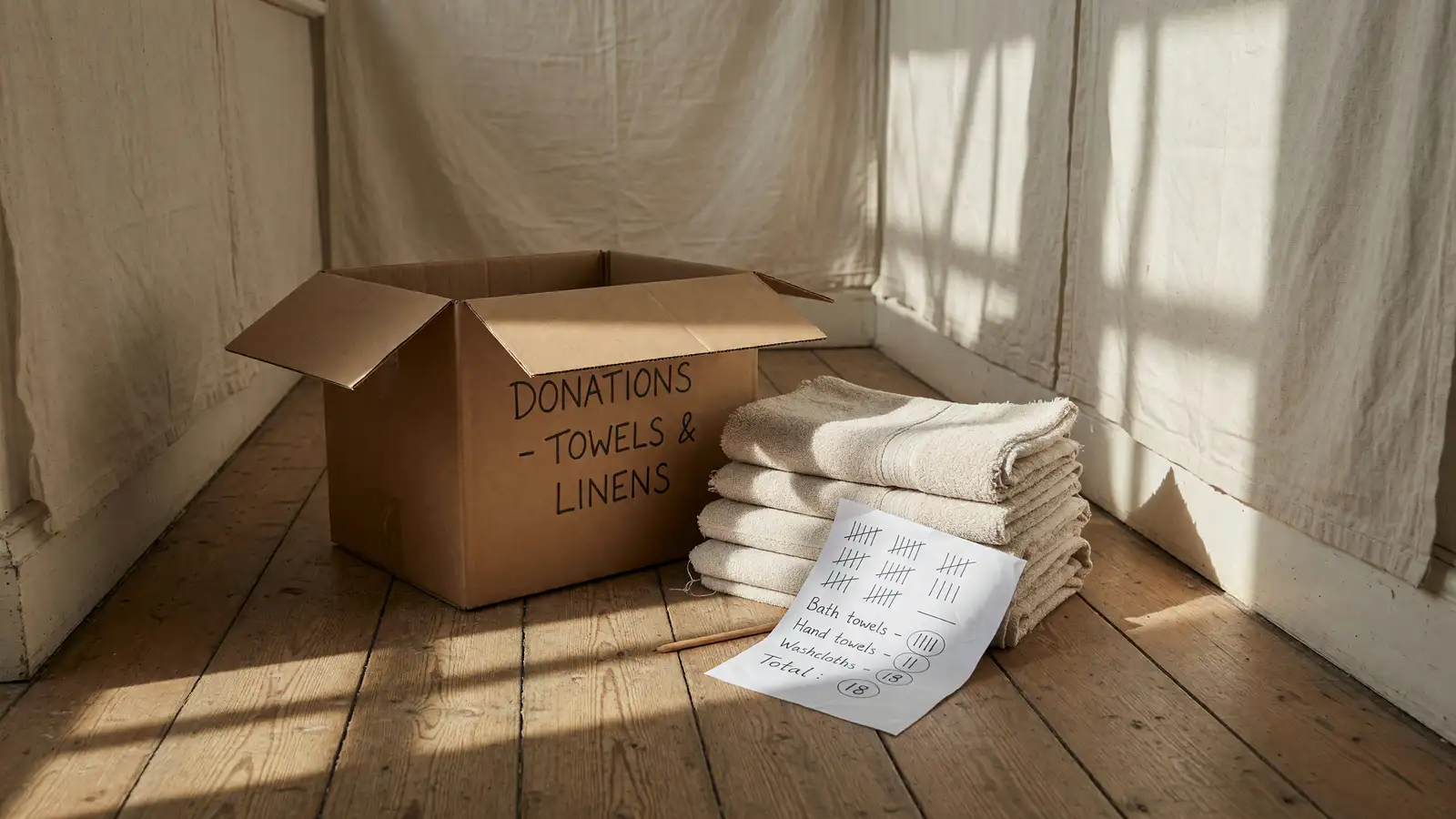
Step three is what White calls “duh clutter”: items you already know you do not want or need, put into a donation box without a debate. The box can sit nearby. It cannot become the new plan. Duggan is explicit that the box needs a clear destination, or it turns into a permanent feature of the hallway. A box with no date and no door it will leave through is storage wearing a virtuous label. The no-mess method does not finish when the object leaves the drawer. It finishes when the object is on a path out of the building, or back into a real home.
Step four is for the objects you are less sure about. Duggan reports two questions. First: if I needed this, where would I look for it first? Take it to that place. Second: if I needed this, would it occur to me that I already had one? If the answer is no, the object may be taking space rather than waiting to be used. If the place you would look first is already full, White’s advice, as Duggan relays it, is to make room there by choosing something else to discard or donate. The clutter does not get transferred into another overstuffed cupboard. That second half of the rule is the one people skip. Moving a spare torch from the junk drawer to a full hall cupboard feels like progress because the junk drawer closed. The torch is now invisible in a second overfull space, which is the same problem with a new address.
The two questions also stop a common cheat: keeping an object because it is useful in the abstract. A garlic press is useful. So is a label maker, a travel adapter, a third pair of scissors. Usefulness in a shop window is not the test Duggan reports. The test is whether the need would send your hand to a place you can name, and whether the need would remind you that this copy already exists. If the honest answer is that you would buy another one because you would not remember this one, the object has already failed as a household tool. Keeping it “just in case” stores a memory you do not have.
Step five happens after the easy exits. Group similar items, then see whether they fit the space you have. If the drawer or shelf is still overfull, keep the items you use most and let some of the rest go. Fit is the constraint. The container is not a suggestion. If twelve of a kind do not fit the shelf that is their home, the shelf has already voted. Choosing the most-used ones is a use test you can do without a month of record-keeping, because these are the objects whose use is obvious: the mugs you reach for, the tools you can name, the papers tied to a current bill. The objects that fail step four’s memory test are the ones step five should not be asked to house out of guilt.
Grouping comes last for a reason. If you group first, you build a display of categories and then feel obliged to find a home for every category. That is how a junk drawer becomes a set of small boxes that still do not fit the drawer. Duggan’s order keeps the group small: rubbish gone, strays returned, obvious donations out, uncertain items either homed or released. What remains is similar because the unalike things have already left. Only then do you ask whether the group fits. A group that does not fit is not a prompt to buy a larger container in the middle of the session. It is a prompt to keep the most-used and let some of the rest go. Buying storage during the sort is how the session escapes the container you chose.
A donation box is a destination, or it is furniture
The hallway box is the failure mode that links a cupboard session to the rest of the house. Duggan warns that a donation box without a destination becomes a fixture. That is not a style note. A box in a hallway is an object every person in the home has to step around, and it invites new additions that were never decided. Once the box is “the donate pile,” anything awkward can be dropped on it to end a conversation. The pile then needs its own clear-out, which is how one cupboard becomes the whole-home project Duggan described at the start.
The practical reading is small and specific. Before the first “duh” item goes in, name where the box is going and when it leaves. A charity shop run on Saturday, a recycling collection on Thursday, a friend who already asked for the cake tins. If you cannot name an exit this week, the item is not ready for the box. It goes back into the container, or it waits for a later session when an exit exists. That sounds slower. It is slower than a fictional sort, and faster than living with a hallway stack that still has to be decided.
This is also where a cupboard session should stop borrowing energy from the wardrobe. Clothes are where exits get emotional and where “I might wear it” can outlast any box. Duggan’s steps can take a stained tea towel, a duplicate opener, a manual for an appliance you no longer own. They should not be asked, in the same half hour, to rule on a coat you wear three months of the year.
Clothes need a record, not a faster pile
On 12 November 2026, Good Housekeeping UK’s account posted Mortram’s reverse hanger write-up again. The post used her own framing: she had tried the technique and was describing what it would do to a wardrobe. The piece itself is from 16 May 2025. Treating it as this week’s news would misread it. Treating it as a wear record with a counted result is fair, because she published the count and the limits.
The technique, as she explains it, is simple. Turn every hanger on the rail so it faces the wrong way. When you wear the item, put it back with the hanger facing the right way. The usual encouragement is to keep this up for six months, then declutter what never turned back. She ran it for one month and wrote that the month was enough to see the problem. She also calls the method long-winded and, in her experience, brutal. Both adjectives belong in the plan. A household that expects a tidy rail by Sunday night has picked up the wrong tool.
She could already close the wardrobe doors. She knew where to find what she wanted to wear. A recent declutter had not fixed the unworn share. That detail matters next to Duggan’s cupboard method. A closed door and a known layout are signs that a space is usable. They are not a count of use. The no-mess method would have been the wrong tool for that discovery, because a one-evening pass through a rail asks you to guess future wear. The hanger method refuses the guess. It writes the wear down in the direction of the hook.
The month was also a warning about performing the method. Early on, the turned hangers helped her avoid wearing the same item twice in a week. Then the visible backwards hooks made her self-conscious about repeating work clothes. The record started to steer the wearing, not only to observe it. She noticed the same cheat with shoes: wearing a pair in order to turn it, then forgetting it again. She says that defeats the purpose. A household using the method needs that sentence more than it needs a six-month slogan. If the only reason an item turns is to clear it from the unused side, the record is fiction. The hook has to follow a day you were already going to live, not a day staged for the wardrobe.
What one editor’s count can and cannot tell you
Mortram’s totals are specific, and they should stay specific. Across the clothes rail, shoes, and bags, she had worn 32 of 91 items. She calls that 35 percent, and she notes she had been trying to wear as many things as possible. This is one wardrobe, in a period she describes as one month, written up from a May 2025 test. It is not a national average and not a target to impose on someone else’s rail. If anything, the effort cuts against using 35 percent as a comfort. She was pushing wear upward and still left most of the 91 untouched. A quieter month might look worse. That is a reading of her caveat, not a second study.
The useful part is the split, not the blended figure. Dresses moved. She wore 9 of 13. They were the first category to turn, and she had been fairly confident she would wear them. After about a week she was still repeating a smaller set. The method pushed her toward dresses she rarely chose. One, which she had thought too striking for work, drew a compliment from her managing director. A graduation dress, kept for the memory, still fit when she made herself try it, and she was glad she wore it. Those are not arguments for keeping every memory in the daily rail. They are evidence that some unworn items fail a use test for a boring reason: they sit slightly outside the default outfit, and the default is what a closed wardrobe keeps serving. A no-mess evening would have been likely to park both dresses in a “keep, it has a story” pile. The month let one of them earn a wearing before any exit talk.
Coats told a seasonal story she had to separate by hand. She wore 3 of 9. Five of the nine were winter coats, and she writes that they do not really count at that time of year. Even with that defence, she concluded she had too many. A brand-new winter coat that, in her view, drowned her was headed for sale. A well-worn coat still had life if she used a fabric shaver. She owns two raincoats, wore one, and planned to rehome the other. The remaining winter coats would go into garment bags to protect them from moths and mildew until the season returned. The hanger method did not say “donate every backwards hook.” She used the hooks to force a reason: wrong season, wrong fit, duplicate, or still worth storing properly. The garment bag is the interesting exit. It is not a donate decision and not a keep-on-the-rail decision. It is a third place, named and protective, so the daily rail stops housing clothes the calendar has not asked for.
Shoes were the sore spot. Two racks, 24 pairs, had already been moved out of the wardrobe because their height hit the hems of her dresses. She turned each pair as she wore it, a translation of the hanger idea onto objects with no hook. She was wearing the same three: brown boots, black boots, and trainers at the weekend. Trying more pairs produced decisions the racks had been postponing. A newer pair of boots, worn once and feared for rubbing, was more comfortable than she had thought. Another pair was too large, still looked new, and was a candidate to sell. A spare pair of trainers could go to her mother, who had been looking for some. Summer-unsuitable shoes would be stored so they were not on display all year. A few decisions, she writes, increased the set she actually wore and removed some of the excess. Notice the shape of those exits. Comfort discovered, size wrong, a named person who wants the spare, season stored out of sight. None of them required a new shoe cabinet. The racks were already full enough to have been exiled from the wardrobe. The missing information was which pairs left the house on her feet.
The untouched categories were the indictment of neat storage. Silk scarves, each on its own smaller velvet hanger, went unworn. Fourteen handbags, lined on the top shelf and under the bed, produced one worn bag out of fourteen. She was annoyed because she liked these things and had already spent effort storing them. Liking an object and housing it neatly did not put it in her hand. The shelf was high, hard to see, and partly blocked by two larger bags at the front. Her plan was ordinary and spatial: choose outfits the evening before so a scarf gets matched on purpose, and at the Sunday reset, when she already empties her handbag, swap to a different bag so the set rotates. After some floor space exists, move bags down where they can be seen. Visibility was the missing home, not another organiser.
That handbag shelf is also a worked example of Duggan’s fourth step, even though Mortram did not use White’s wording. If she needed a bag, where would she look first? Not at a high shelf blocked by two larger bags, and not under the bed. The first-look place was wherever the current bag already sat, which is why the same bag kept winning. Taking the others “to the place you would look first” only works after that place has room. She said she would move what she could to the wardrobe floor once she had cleared space. That sequence is White’s full-destination rule: do not transfer the forgotten bags into a spot that is already blocked. Clear the view, then place them where a hand would actually go.
Other single items failed a try-on, not a theory. Two black dresses kept for formal events: one looked too young, one was too tight, and she was glad a last-minute event had not arrived first. A cardigan she no longer liked the look of went to recycling. A prom dress, once defended from a sister who wanted to alter it for a cruise, was too small and had no occasion left. She offered it back. Her sister wanted it for a niece. The dress left for a person who might wear it, which is a different exit from a donation box with no name on it. The formal dresses are the caution against waiting for a hypothetical invitation to do the try-on for you. She tried them in ordinary time and found the fit and the age of the cut had already decided.
Do not run both methods on the same rail in one evening
The mistake, reading the two pieces together, is to treat them as interchangeable speed settings. The no-mess method is a way to decide now without wrecking the room. The reverse hanger method is a way to delay the decision until use has been recorded. Using the first on a wardrobe rail compresses a month of evidence into an hour of mood. Using the second on a junk drawer is a mismatch: a tin opener does not need six months of reversed hangers. It needs the question Duggan reports. Would you remember you owned it?
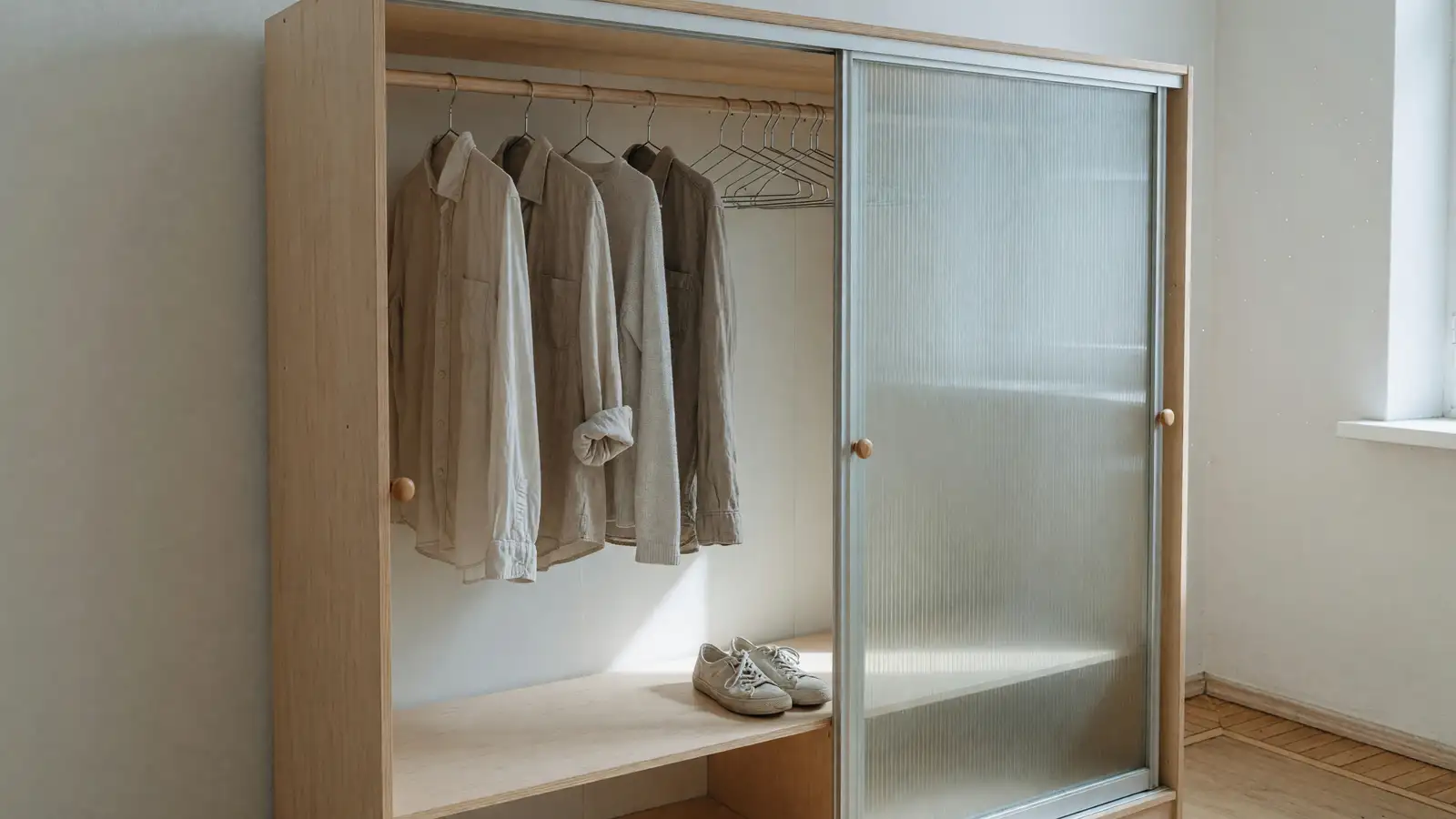
There is a second clash at the level of the room. Mortram’s method works because the clothes stay on the rail. The backwards hook is visible every time you get dressed. If you empty the rail onto the bed so you can sort faster, you have left her method and entered the failure Duggan described: contents spread across the bed and the chair, session unfinished, room worse. The hanger trick is valuable partly because it refuses that spread. It is slow on purpose. She says you will see proportions within a couple of weeks, and that the full run takes dedication. Speed is not the feature. A visible hook on a still-hung shirt is the feature.
A third clash is the exit. White’s steps, via Duggan, want obvious donations to leave the decision loop immediately. Mortram’s verdict says a backwards hanger is not, by itself, a reason to finish with the item. Try it on. Ask why it was not worn. The reasons she lists are concrete: you no longer like how it looks, it does not fit, or it is so specialised that the occasion never comes. If one of those is true, the space on the rail would serve something you do wear. The unused item can be donated, recycled, sold, or stored safely for a real future event. Sentimental clothing you are not prepared to let go of is better stored away, protected from moths and musty smells, than left in the daily reach where it blocks a shirt you actually put on. A Saturday that mixes “duh clutter” speed with wardrobe sentiment will either dump the prom dress in a bag you regret or stall the whole session on one dress and abandon the drawer you opened first.
Season is the fourth clash, and Mortram is plain about it. Across six months you will still own clothes the calendar has not asked for. Those need to be discounted, not charged as failures. She had to do that arithmetic herself with the winter coats, in a write-up tied to a May publish date, when five of nine coats were out of season and she still thought the total was too high. If you start a hanger record in mid-November without first pulling true summer clothes out of the count, the backwards hooks in February will mix “I do not wear this” with “the season has not arrived.” The method cannot sort that mix for you. You have to separate the season before you trust the hooks. November is a kind month for that separation, because the summer dresses and the unworn sandals are obvious. Leave them out of the backwards-hook count, store them as she stored out-of-season shoes and winter coats, and let the hooks judge what this season actually asks of you.
A week that uses each method for one job
A workable reading, not a schedule either writer printed, is to give each method a territory and a stop.
On a weeknight, run Duggan’s five steps on one contained area that is not the clothes rail. A drawer of manuals, a bathroom cupboard, the shelf where gift bags and dead chargers collect. Rubbish out. Homes returned, including the walk to the kitchen. Obvious donations only if the box already has a destination and a day. Uncertain items face the two questions, and a full destination cupboard gets edited before it receives anything new. Similar items grouped, extras released until the container shuts. When the evening ends, stop. The container is the boundary. The floor is not a second container. If you opened the drawer and only finished step one, that is a finished session under her rule, because the rubbish is gone and the rest is still inside. You did not owe the room a heroic floor.
On the same week, the wardrobe gets a start rather than a finish. Turn the hangers on the rail you actually dress from. Before you turn them, remove the category Mortram says must be discounted: the season you are not in. Those pieces can go into garment bags, as she planned for winter coats in a warmer month, so moths and mildew are not the price of honesty. Write the review date where you will see it. She found one month enough to see proportions, and she notes that within a couple of weeks you roughly know what share goes unused. The six-month line is the version she says people are encouraged to run, and she also says the method takes a long time and fails if you forget to switch the hangers back. A date on the inside of the door is a way to keep that duration from dissolving. It is not a rule she published. It is a way to obey the rule she did publish: stay with it, and do not let a backwards hook become invisible again.
Shoes can follow her adaptation if they live in pairs you can turn, not if turning them becomes a costume. She caught herself wearing shoes to flip the record. If you copy the turn, copy the correction. A pair counts when you wore it for the day you were already going to have. Twenty-four pairs on two racks do not need a new diagnosis. They need the same honesty she applied: which three are doing all the work, which pair fails a fit test once you actually walk in it, which spare already has a person waiting, and which pairs are simply out of season and should leave the display.
Bags and scarves are the visibility test, not a shopping test. Her scarves were already on individual velvet hangers. Her bags were already lined up, and still one of fourteen left the shelf. The fix she chose was to plan the outfit the night before, rotate bags during a Sunday reset she already does, and move bags to a lower, visible spot once the floor of the wardrobe has room. That last move is White’s full-destination rule in different clothes. Do not stack the bags into a space that is already blocked by two larger ones at the front. Clear the view, then place the things you forget because you cannot see them. A velvet hanger did not save the scarves. Access might. The evening outfit plan is a small version of the same idea: the scarf gets chosen when you are already deciding clothes, instead of waiting to be remembered from a neat row you do not touch.
When the review date arrives, use Mortram’s questions on what never turned, and use Duggan’s exit rule on what you release. Try it on. Name the reason. Donate, recycle, sell, give to a named person, or store for a named season or event. A box with none of those names goes back. The prom dress found a niece. The too-large boots were a sale candidate because they still looked new. The cardigan went to recycling because she no longer liked it. The winter coats that still had a season went into garment bags rather than into a guilty keep on the daily rail. None of those exits required emptying the rail onto the bed.
Fit is the last vote, and it happens in the original container
Both pieces end in the same constraint, stated differently. Duggan’s fifth step: what you are keeping has to fit the space. Mortram’s closing line: the wardrobe should be reserved for items you wear regularly. A cupboard that closes because you forced the stack is not finished. A rail that closes because the doors still shut is not finished either. Mortram could shut her doors at the start. The month was what showed the unworn remainder of that 91 sitting behind a door that already looked acceptable.
The no-mess method is how a small container tells the truth in one sitting. The reverse hanger method is how a rail tells the truth over weeks, if you refuse to game the hooks and if you refuse to count the wrong season as a moral failure. Used as a pair, they keep a clear-out inside the object that started it. The cupboard stays a cupboard. The rail stays a rail. The floor stays a floor. The box leaves, or it does not get to pretend it is a system.
That is a narrower promise than a whole-home reset, and it is the promise both write-ups actually make. Duggan’s method does not ask for a spare room. Mortram’s method does not ask you to trust a hunch about a dress you have not worn since the last formal invitation. A household that can pause, name an exit, and let a hook record a month will still own plenty. It will stop manufacturing a worse room on the way to a calmer one. The work is the stop, the named door the box will leave through, and the hook that only turns when the clothes were actually worn.