IKEA UK’s first dating show went live in the trade press on October 2. Little Black Book says Mother built it so singles put PAX wardrobes on display and pick a date from the rail, not the face. Creative Salon named the series Storage is Sexy. Host: Charley Marlowe. Product: the same PAX system already in a few million spare rooms.
That is a closet argument wearing a dating format. It is not a new method for owning less. If the wardrobe that “wins” is still stuffed, you bought a nicer door for the same pile. We already covered IKEA’s kitchen-counter fight in the silent protest piece. This week the fight moved to hangers.
The show is a catalog with a host
More About Advertising describes the mechanic without romance language: contestants pick a potential partner purely by examining the contents of IKEA PAX wardrobes. Marlowe, who also does voiceover for I Kissed a Girl, sits on top of a premise the magazine called watertight because you can imagine a PAX in every home on screen. That sentence is the brief. The furniture has to look inevitable.
Creative Salon’s credits list is the rest of the production: Faithful Hound, director Chris Faith, producer Emily Meyjes. None of that changes what you do with a rail on a Tuesday. It does tell you IKEA paid for entertainment people might actually finish, instead of a 15-second tidy-up montage. Agencies have talked about “content people seek out” for years. This is that bet, tied to sliding doors and interior lighting.
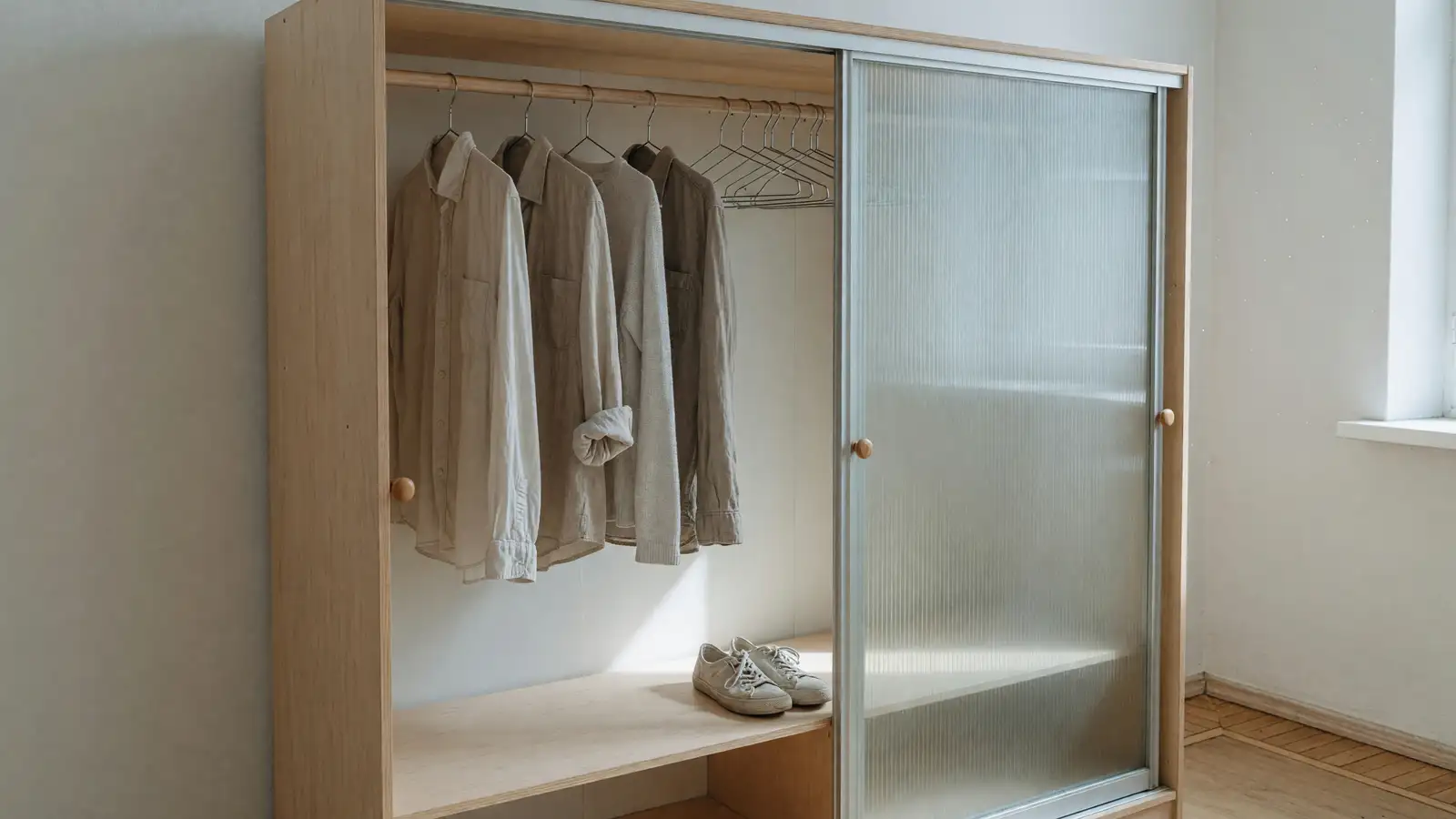
LBB’s write-up repeats the hook as a question: could you fall in love based on a wardrobe alone? You do not need to answer it. You need to notice what the camera is allowed to show. Folded stacks. Shoes in a line. Empty air between hangers. The empty air is the product. A PAX with a jammed rail photographs like every other overfilled closet, just with better hardware.
If you already run a capsule wardrobe, the show will feel familiar. The people who look “hot” in this format are the people who already edited. The people who look chaotic are the people who used the extra-wide bay as permission to keep a second winter coat they do not wear. The dating layer is packaging. The edit is the work.
Three wardrobes, one pick
Creative Salon’s episode notes are specific enough to steal. Episode one: Dani, a motorcycle designer with an eye for detail, looks into the wardrobes to see whose organisation gets her heart racing. The wardrobe dates sit behind their storage displays and listen. That is a one-way mirror with hangers. Episode two: Kajal, a doctor “with strong opinions about wardrobe organisation.” The copy cuts off mid-belief in the extract we have. The opinion itself is the point. A doctor who cares how shirts hang is the customer IKEA wants you to copy.
The three PAX setups in episode one are not one size. Creative Salon lists sliding doors, lighting, extra-wide, narrow, “and everything in between.” That is the configurator, not a personality test. Extra-wide is how you hide volume. Narrow is how you admit you do not have a spare wall. Lighting is how a beige knit looks expensive at 8 p.m. None of those options reduce a count of garments. They change whether the count looks intentional.
If you are watching this as a decluttering prompt, steal the listening bit. Stand on the far side of the door and say out loud what a stranger would infer from the rail. “Owns five black jackets and still has nothing for a wedding.” “Kept the race-day shirts.” “Has three almost-identical white sneakers.” The show lets a date say it. You can say it without a host.
Do not copy the product placement as a shopping list. PAX is a system of frames, interiors, and doors. You can run the same edit in a wire rack. The difference is whether the frame makes the leftover mess look designed. Curated clutter already won a lot of 2026 moodboards. A wardrobe is a worse place to fake that look. Clothes in a heap are not a collection. They are laundry that never finished.
Organization is not the same as owning less
The campaign’s line, per Creative Salon, is that being organised can be the hottest thing a person can be. Fine for a billboard. Bad as a household rule. Organisation without a cap just relocates the same volume into nicer boxes. You have seen this in kitchens. You will see it in closets the week someone installs lighting and then buys another row of slim hangers.
A useful test: if you emptied the PAX onto the bed, would you put everything back? If the answer is “most of it, because I paid for the bay,” the furniture is making the decision. If the answer is “half of it, because the rest is a second life I am not living,” you already know the edit. The dating show only works if the half that stays looks like a person. The half that goes never makes television.
Yahoo’s October 4 capsule-shoe note is a smaller version of the same math. Stylist Smale, via Parade, names three essential pairs: slingback kitten heels, ballet pumps, thong sandals. She swaps loafers in for pumps when it gets cold, and a closed-toe slingback when the thong sandal is wrong for the room. That is a rotation, not a wall of boxes labeled “summer 2019.” Three plus seasonal swaps is a number you can count without an app.
You do not have to take her three silhouettes as law. You do have to take the count. A shelf that holds twelve almost-identical sneakers is storage. A shelf that holds the three you actually walk in is a wardrobe. PAX will happily hold twelve. The sliding door will make twelve look tidy in a thumbnail. Your feet still only wear three.
What a PAX actually forces you to decide
PAX is modular. That is the sales pitch and the trap. Extra-wide bays invite a second rail. Interior lighting invites you to keep the sequin thing “because it looks good lit.” Narrow units force a yes/no on coat bulk. If you are trying to own less, start with the narrow constraint even if you have the wall for wide. Constraint is the feature. Width is the upsell.
Doors matter more than interiors for the photograph, which is why the show can run on wardrobe fronts. Sliding doors hide the rail until someone opens them. Hinged doors announce every unfinished pile. If your goal is to stop buying, a door that hides the mess will slow the feedback. Leave one bay open for a week. The open bay is the honest one.
Lighting is not moral. It is a finish. Use it after the count is done, not before. A lit rail of clothes you do not wear is a boutique for a customer who never comes. Turn the lights on when the leftover items can survive a stranger’s narration. If they cannot, the lighting budget is early.
IKEA’s own range copy, as Creative Salon repeats it, says PAX is “designed around your life” and “built for your wants, your needs and the way you live.” Translate that. If the way you live is “leave the house in the same four outfits,” the unit should be small enough that a fifth outfit has to earn a hanger. If the way you live is “keep every concert tee,” say that and stop calling it minimalism. The show is not going to say it for you.
If your closet would lose the date
Run the format at home without buying anything. Pick three categories the show already uses: clothes, accessories, shoes. Pull them out. Put back only what you would be willing to have a stranger describe while you sit behind the door. That is a harsher filter than “does it spark joy,” and it is closer to how other people already see your stuff.
Accessories are where volume hides. Belts on a hook look like one object and count as eight. Jewelry dishes collect “maybe.” Bags nested inside bags are a second closet. If Kajal’s “strong opinions” mean anything transferable, they probably start here, because a doctor’s morning does not include hunting a matching belt. Speed is a decluttering metric. If it takes four minutes to assemble an outfit you already like, the system failed before taste entered.
Shoes get a separate pass because they eat floor and shelf at the same time. Smale’s three-pair floor is aggressive. A working floor for most people is still a number, not a vibe: daily, weather, and one event shoe, plus one seasonal swap stored off the open shelf. Everything else is a maybe box wearing a lid. We have had this fight with sentimental clutter in the kitchen. Closets pretend the same objects are “the collection.” They are not. They are duplicates with a story.
If you share the closet, do not run the dating-show roast on a partner without a rule. The rule is: each person edits their own rail. Joint space (coats, the floor, the top shelf) gets a count, not a personality attack. Mother can script a one-way mirror. You live with the person behind the door.
Edit the rail before you buy the box
The order of operations is the whole article. Edit first. Measure the leftover volume. Then decide if the current wardrobe is the constraint or the excuse. If the leftover volume fits a cheaper, smaller unit, do not step up to extra-wide because the ad made extra-wide look like taste. Extra-wide is how the unedited half comes back.
If you already own PAX, you do not need a new frame to do this week’s work. Pull interior fittings you never used. Pull the extra rail if it only holds “maybe.” Leave lighting off until the open-bay test passes. The dating show will still be there after you finish. The sliding door will look better when there is air in the shot for real, not because a director stood to the left.
IKEA is allowed to sell storage as sex appeal. You are allowed to notice that the attractive wardrobes on screen are the ones that already said no. The no is free. The frame is not. If the rail cannot survive Marlowe’s premise for ten minutes, buying another bay will not make it hotter. It will make the same clothes harder to see.