IKEA published the Store & Organize Report 2026 as “Finding Meaning in the Mess.” YouGov ran it in April. 31,488 people. 31 markets. The headline they chose is a protest. The number they measured is a counter.
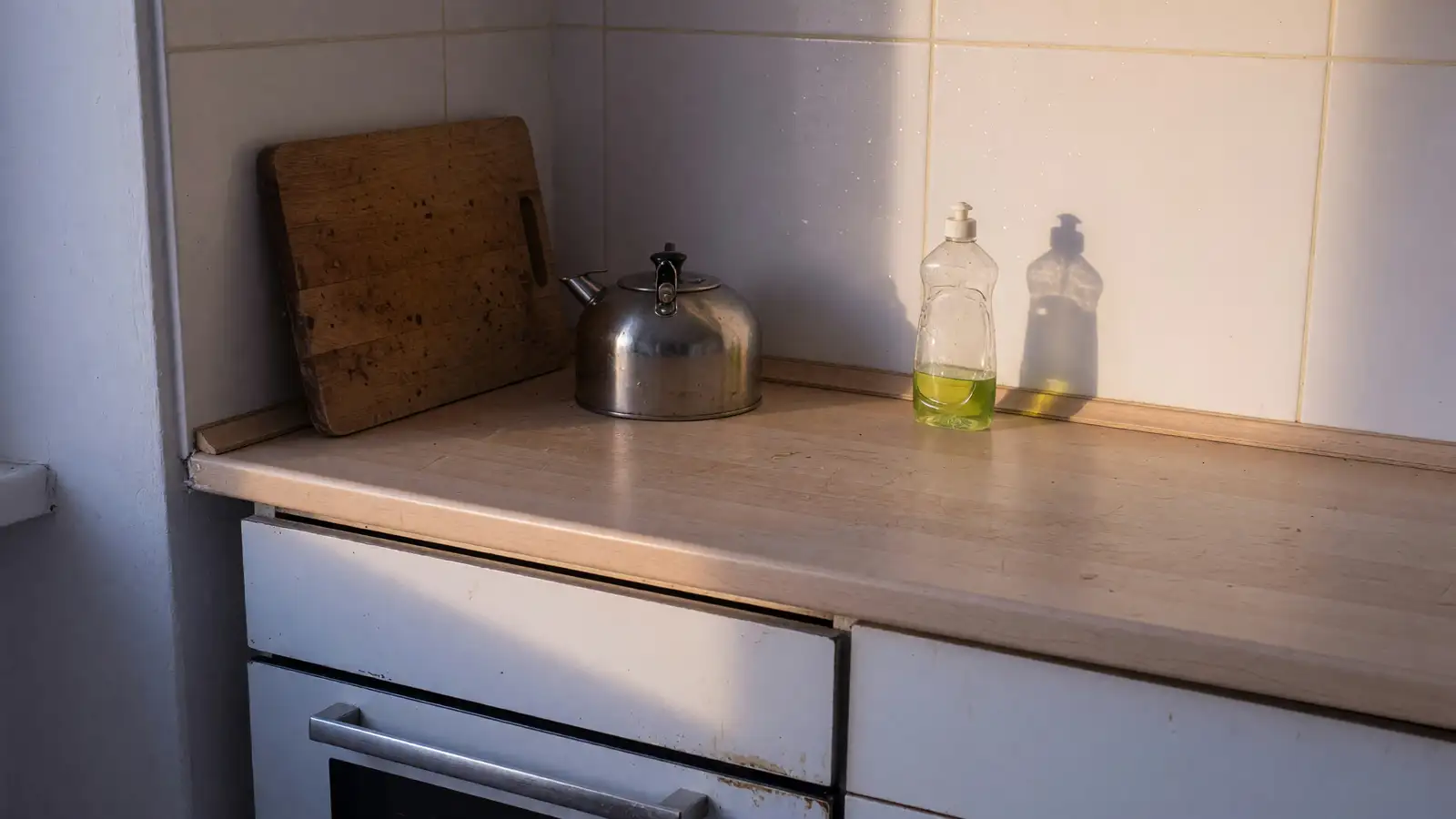
The kitchen countertop is the hardest surface to keep clear, 24 percent. It is the most likely place to start an argument, 37 percent. One in ten people use the oven as storage. In South Korea that is 21 percent. If your fall “minimalism” project is a new wood tray and a candle, you are shopping the fight, not entering it.
We already said curated clutter is a 2026 mood, not a job. We already split a keep list from a bathroom purge. This week’s report is the kitchen version of that split. Sentiment is in the Yahoo recap. Heat is in the oven.
31,488 people is not a Pinterest board
The sample is nationally representative, weighted by gender, age, and geography, across Australia through the USA. That is a lot of kitchens. It is not your kitchen. Treat the percentages as traffic, not as a diagnosis of your marriage.
Three chapter titles do more work than the protest metaphor. “Don’t Need It. Don’t Use It. Can’t Live Without It.” “Behind Closed Drawers.” “At Home With the Chaos.” The first is a keep test. The second is the place you hide the test. The third is the story you tell after you fail the test.
IKEA is a storage company. Of course the report ends by sending you to the full PDF and, eventually, a cabinet. You can still steal the measurements. 24 and 37 are about one rectangle of laminate. They are not about a living-room gallery wall.
People in India spend 80 minutes a day looking for misplaced items. People in the UK average 15. IKEA’s copy converts the India number into “over two full weeks more per year.” That is a time tax. It is not a style. If your house is the 80-minute house, a new palette will not find the scissors.
Fifteen percent globally call mess a form of creativity. China 31 percent. Japan 4 percent. Twelve percent of self-described neat freaks agree with the creativity line. That last group is the one that will buy a system and then leave mail on it. The report’s own shrug is useful: maybe the goal was never a perfect home. Fine. A perfect home is not the assignment. A counter you can put a cutting board on is.
If you already live in the 15-minute house, do not use this PDF as permission to start a 30-day aesthetic project. You do not have a protest. You have a Tuesday.
The counter is the argument
Zone the rectangle. Left of the sink is wet. Right of the sink is dry. The corner by the outlet is the charger pile. The appliance garage, if you have one, is where the mixer goes to die. Kitchen counter clutter is a zone problem we have already written. IKEA just put a fight percentage on it.
24 percent “hardest to keep clutter-free” is not the same as 37 percent “most likely to cause an argument.” The first is maintenance. The second is two people using the same two feet of space as a desk, a pantry, a homework station, and a landing pad for Amazon. If you only clear the visual layer, the argument comes back at 6:40 p.m. when someone needs the board.
A keep list for this surface is short. Knife block or magnetic strip, not both. One board. Kettle or coffee maker, pick the one you used this week. Soap and a brush. A bowl for the fruit that will actually get eaten in three days. That is five objects. The rest is a bag.
Mail is not a kitchen object. Keys are not a kitchen object. The kids’ permission slip is not a kitchen object. They arrive here because the door is closer to this counter than to a tray. Pioneer Woman’s fall hotspot logic still applies: postponed small tasks become weeks. The IKEA number is what those weeks look like when two adults share a sink.
Do not buy a riser until the five objects fit without one. A riser is a second counter. Second counters fill.
If you cook, the argument is heat and crumbs. If you do not cook, the argument is still the same rectangle, now holding a laptop. Either way the 37 percent is about competing jobs, not about whether you “like clutter.” People who like clutter still burn themselves on a pan stored in a cold oven. That is the next section, and it is not cute.
Clear the counter in one pass with a bag, not a sort pile. Homes & Gardens is about to sell you a method that forbids leftover piles. Steal that rule for this one surface even if you ignore the rest of their list.
The oven is storage until it is not
One in ten. South Korea 21 percent. IKEA’s joke is that someone is about to get a surprise. The surprise is a plastic bin of baking sheets meeting 350°F. That is a fire story, not a storage tip.
If the oven is where the roasting pan lives because the cabinet is full of “maybe” appliances, the cabinet is the project. The oven is a heat box. It is allowed to be empty. Empty is a safety spec.
Pull everything out. Anything that is not a rack, a stone, or a pan you used in the last month leaves the kitchen. The rest gets one cabinet or one drawer. If it does not fit, you own too many pans, not too little oven.
People store dry goods in the oven in small apartments. I know. The report is global. Your workaround does not make the 21 percent safer. A note on the handle that says “STUFF INSIDE” is a ritual. Rituals fail when a guest preheats. If you must, use the drawer under the oven if you have one, and label it like a chemical.
This is the opposite of “meaningful mess.” A pile of cookbooks can be a personality. A pile of Tupperware in a cavity that gets hot is a recall waiting for a Tuesday night.
If you find the stand mixer in there, you do not have a mixer problem. You have a counter you refused to assign. The mixer either lives on the rectangle or it lives in a cabinet you can open without moving a chair. Third location is how it becomes oven cargo.
Check once this week, with the oven cold. If you hesitate because you might “need those pans this weekend,” that is the keep test from chapter one. Need it. Use it. Or it does not live in a heat box.
Gifts you hate are not heirlooms
Yahoo’s write-up of the same report puts sentimentality in the foreground. New U.S. homes are smaller than they have been in 15 years. Hand-me-downs and inherited things are “especially meaningful” in 2026. People are not ready to give them up. That is the volume problem wearing a family story.
One in five are stashing gifts they do not like because they do not want to look ungrateful. Nineteen percent are hanging onto hand-me-downs they secretly hate for the same reason. Those two numbers are not “curated gallery walls.” They are guilt inventory.
The keep list we already covered from Good Housekeeping had a bin cap. Use it here. One bin of gifts you are afraid to return. Date the lid. Ninety days. If you have not used the vase, it leaves. Text the giver only if your family actually inspects cupboards. Most do not. They inspect the table at holidays. Put one object you like on the table. That is the gratitude they can see.
Hand-me-downs you hate are not your grandmother. They are someone else’s unfinished declutter, transferred. Photograph, thank, release. If the object is actually an heirloom you use, it is already out. The 19 percent are the ones in the guest room.
Yahoo says IKEA is making it “okay to not care too much about clutter” because lived-in homes have personality. That sentence is how a counter dies. Personality is a bowl you chose. Personality is not five mugs from offices you left. Display what you can, the recap says. “Can” is a linear foot, not a feeling.
We already wrote conservation clutter. This week’s 1-in-5 is the gift-specific version. The protest IKEA named is often two people, one of them defending a present, the other trying to chop onions.
If you need a script: “I liked that you thought of me. I do not have a place that earns this object.” Then move it the same day. Delayed kindness is how the 24 percent stays stuck.
Editors are trying methods. The report is a fight map
Homes & Gardens asked their editors what they are trying in 2026. Punteha van Terheyden is using Dana White’s 5-Day Clutter Shakedown on the space under the stairs. The point she likes is mechanical: every item is removed or put in its place. No leftover piles during or after. If she has to stop because of pain or fatigue, she is not looking at a new mess she created.
Steal the no-pile rule for the counter. Do not steal a five-day brand name unless you like homework. One surface. One bag. One donate box that is already a box, leftover parcel packaging or an IKEA SAMLA, so you are not shopping for the donation container.
Dan Fauzi is trying the Sunday Butterfly method, which Lydia Hayman made for kitchens and which they say suits neurodivergent brains. The extract we have does not give the step list. I will not invent one. If you need a Sunday ritual, set a 20-minute timer and clear the rectangle. If the method’s actual steps help you, read their page. Do not wait for a named method to touch the 37 percent.
They also nod at an “Influencer Method.” That is a product pipeline. You do not need it to act on IKEA’s counter number. Influencers will sell you the tray that becomes the new clutter. The nothing-new challenge still exists for a reason.
Use H&G for the constraint (no piles, stoppable, donate box is a box). Use IKEA for the location (the counter, the oven, the gift stash). If you mix them into a weekend “reset” with a shopping list, you will own more SAMLA than you dumped.
Under-stairs catch-alls are the guest-room problem in a different footprint. If that is your house, White’s staged method is for that cavity, not for the sink. Do not run two methods on two rooms in one afternoon. The report’s argument percentage is about one hotspot. Win that hotspot.
What to do this week without a new cabinet
Stand at the counter with a bag and a box. Bag is trash and recycling. Box is leave-the-house. Nothing gets a “sort later” chair. White’s rule, IKEA’s rectangle.
Take the oven contents out while it is cold. If you find storage, you found the 10 percent. Relocate pans. Put a sticky note on the inside of a cabinet, not on the oven door, that says what used to live in the heat. Then throw the note away in a week when the habit holds.
Cap gifts. One bin. Date it. The 1-in-5 number is your permission to stop hosting other people’s shopping.
Do not redecorate. Yahoo’s “okay to not care too much about clutter” line is not a shopping brief. Lived-in means the five objects you use. It does not mean a new color story on a clogged sink.
If two of you share the kitchen, pick the 37 percent time of day and agree on the five objects before that hour. Write them on a pad. That is uglier than a magazine and faster than a protest.
The report will be used to sell boxes. You can buy a box after the counter is empty enough to measure. Measuring a full counter is how you buy the wrong width.
India’s 80 minutes and the UK’s 15 are the only productivity metric in the file that matters. Time spent hunting is the tax. A clear rectangle lowers it. A silent protest, as a brand phrase, does not.
Tomorrow, cook something that needs the board. If you cannot put the board down, you are not done. That is the whole article. The PDF is 31,488 people telling you which room. You already knew. You live there.