Compact living spaces present distinct organizational hurdles. When square footage is limited, physical belongings occupy a noticeable percentage of both floor area and sightlines. A single delivery box, two pairs of shoes left beside an entryway, or a stack of unopened mail on a dining counter can instantly make a studio or one-bedroom apartment feel disorganized. Because spatial margins are narrow, residents frequently look to minimalist aesthetics for relief. Yet attempting to maintain barren showroom surfaces in a compact home rarely holds up over time. Real daily routines require tools, paperwork, footwear, and cookware to remain within easy reach.
Sustainable domestic order comes from functional minimalism: establishing practical habits that respect daily routines while preventing static clutter from accumulating. Compact spaces stay open, calm, and practical when daily staging is separated from stagnant inventory. Recent research into household dynamics and home organization highlights how intentional daily habits create long-term order far more effectively than exhausting whole-house purges.
Understanding Dynamic Staging versus Stagnant Clutter
Successful small-space decluttering begins with recognizing that household disorder serves different purposes across different contexts. Academic research published in the Journal of Business Research by Jamal Abarashi, Prabash Aminda Edirisingha, and Amy Errmann investigates how domestic disorder operates in everyday family life. Drawing on assemblage theory and qualitative household interviews, the authors show how families actively produce and navigate domestic disorder as a dynamic family resource. In their findings, temporary household disarray coordinates daily routines, supports interpersonal cooperation, and accommodates the shifting logistical needs of busy homes.
A companion analysis broadcast by Radio New Zealand highlights how everyday objects left in common areas frequently serve practical purposes. When a parent places school forms, water bottles, and transit passes on a dining table or entryway bench the night before, those objects act as visual reminders. They keep morning departures running smoothly and prevent essential items from being forgotten. Demanding that every single surface remain completely sterile at all hours creates domestic friction and ignores the logistical realities of running a household.
In compact homes, distinguishing between functional staging and stagnant clutter is essential for maintaining order:
Functional staging involves objects actively involved in current tasks or near-term departures. These items stay out temporarily because they support an ongoing routine, such as ingredients gathered for an evening meal or a library book waiting next to a work bag.
Stagnant clutter consists of dormant items that have no active role in current routines. These include clothing unworn for months, redundant kitchen utensils stored on countertops, expired paperwork, and broken electronics tucked into corners.
When functional staging is permitted within defined boundaries, daily routines run smoothly. Problems arise when stagnant clutter claims the same surfaces. Because small homes have limited surface area, dormant possessions crowd out active tools, forcing residents to shuffle items repeatedly just to complete ordinary tasks. The goal of small-space minimalism is to eliminate stagnant inventory so that everyday functional staging can happen without choking the room.
Weekend Habits for Small Space Decluttering
When clutter builds up in a compact home, the conventional response is to schedule a massive weekend cleanup. Many people set aside an entire Saturday or Sunday, pulling everything out of closets and cupboards onto beds and living room floors. While this approach works in spacious homes with dedicated staging areas, it frequently leads to exhaustion and regret in small apartments. When the contents of a deep closet are spread across a small living room, the entire apartment becomes impassable within an hour. Decision fatigue sets in quickly, energy drops, and by evening the resident is left sleeping next to half-sorted piles.
Recent guidance from House Beautiful on small-space decluttering emphasizes replacing exhausting marathon sessions with focused micro-habits. Effective small-space organization relies on short, 10-to-15 minute decluttering sessions focused on a single, contained micro-zone.
Targeted micro-decluttering preserves the rest of the living space while delivering noticeable momentum:
Choose one self-contained boundary, such as a single utensil drawer, a bathroom medicine cabinet shelf, or a bedside table drawer.
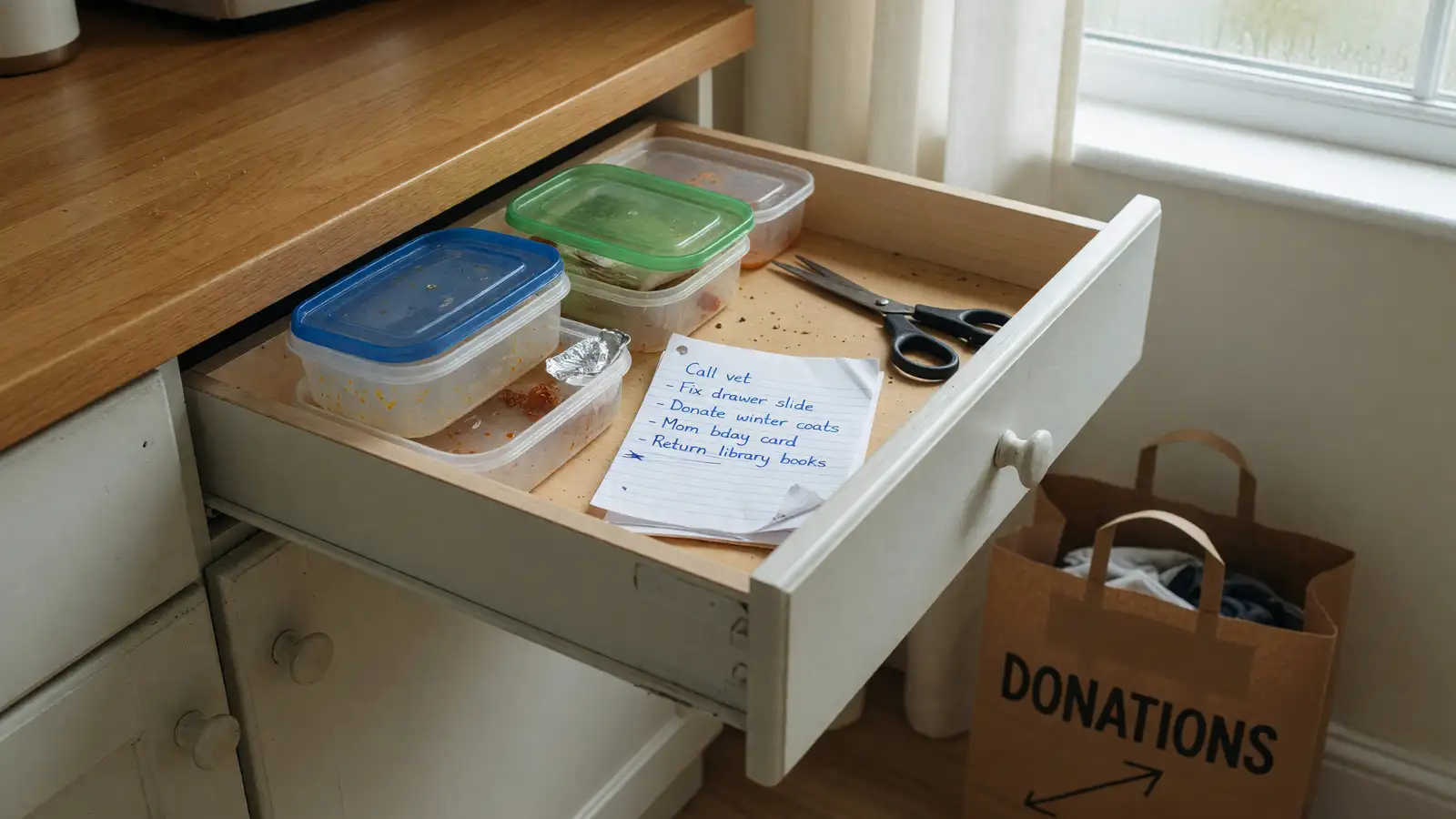
Set a timer for 15 minutes. Empty that specific container completely, wipe the interior surface, and sort the items into three simple piles: keep, donate, or discard.
Return only the items that have seen active use within the last three to six months. Remove duplicates, expired goods, and items kept out of vague obligation.
Take immediate action with discards. Place donations into a bag designated for drop-off and throw broken items directly into the recycling or waste bin.
Working in short intervals prevents mental exhaustion. Because the scope is strictly bounded, the apartment remains completely functional throughout the process. Completing one drawer or shelf provides immediate visual feedback, reinforcing the habit and making it easier to tackle another micro-zone the following weekend.
Protecting Flat Surfaces and Preserving Sightlines
In small homes, horizontal surfaces function as the primary indicators of order and spaciousness. Dining tables, coffee tables, kitchen counters, and entryway consoles are flat and accessible, making them natural targets for dropped keys, packages, laundry, and laptops. However, when horizontal surfaces are covered with miscellaneous objects, the eye perceives the room as cramped and visually noisy. The walls seem closer together, and natural light cannot bounce cleanly across the space.
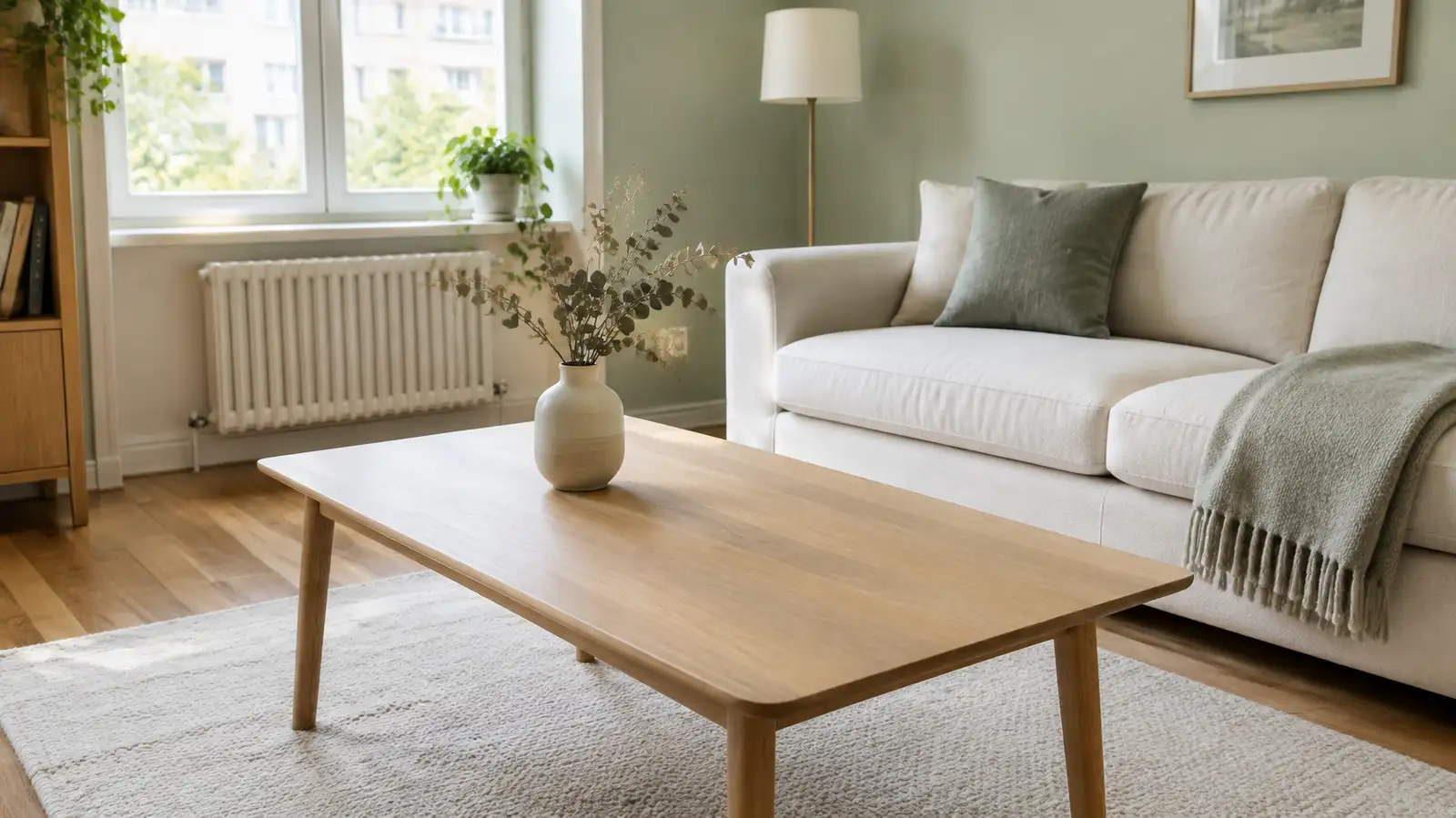
House Beautiful highlights daily clearing of flat surfaces as one of the most effective habits for making compact rooms feel larger. When surfaces are kept clear, the physical footprint of the furniture remains legible, creating continuous sightlines across the room.
This principle connects directly to the architectural value of breathing room. In our detailed look at the design value of empty space, we examined how unadorned surfaces allow the eye to rest and visually expand compact rooms. An uncluttered wooden tabletop or kitchen counter provides the spatial buffer that makes a compact living environment comfortable to occupy.
To protect horizontal surfaces in everyday life, three clear boundary rules provide structure:
First, maintain a two-item limit on secondary tables. On a bedside stand or coffee table, allow only two decorative or functional items, such as a reading lamp and a single coaster. Any additional object introduced during the day must be cleared before going to sleep.
Second, apply an active-use standard to kitchen counters. Reserve countertop space exclusively for appliances used daily, such as a coffee maker or electric kettle. Specialty appliances like stand mixers, food processors, and slow cookers belong in lower cabinets, retrieved only when a specific recipe requires them.
Third, institute a nightly five-minute surface reset. Before going to bed, walk through communal areas with a shallow tray or basket. Gather stray cups, magazines, and mail, returning each item to its cabinet or filing spot. Starting the morning with clear counters lowers stress and simplifies breakfast preparation.
Establishing Controlled Intake With the One-In, One-Out Principle
Decluttering existing possessions solves only half of the small-space equation. If the volume of items entering the apartment remains unrestricted, the space will return to a cluttered baseline within weeks. A compact home has fixed physical storage limits. Unlike a suburban house with an attic, basement, or garage, an apartment cannot absorb new purchases without sacrificing usable living area.
Controlling inventory requires a strict intake boundary. The one-in, one-out rule serves as an essential gatekeeper for compact living. In our analysis of the one-in-one-out rule, we explored how pairing incoming acquisitions with corresponding departures prevents clutter from accumulating indefinitely.
Applying this rule in a small home transforms how purchases are evaluated:
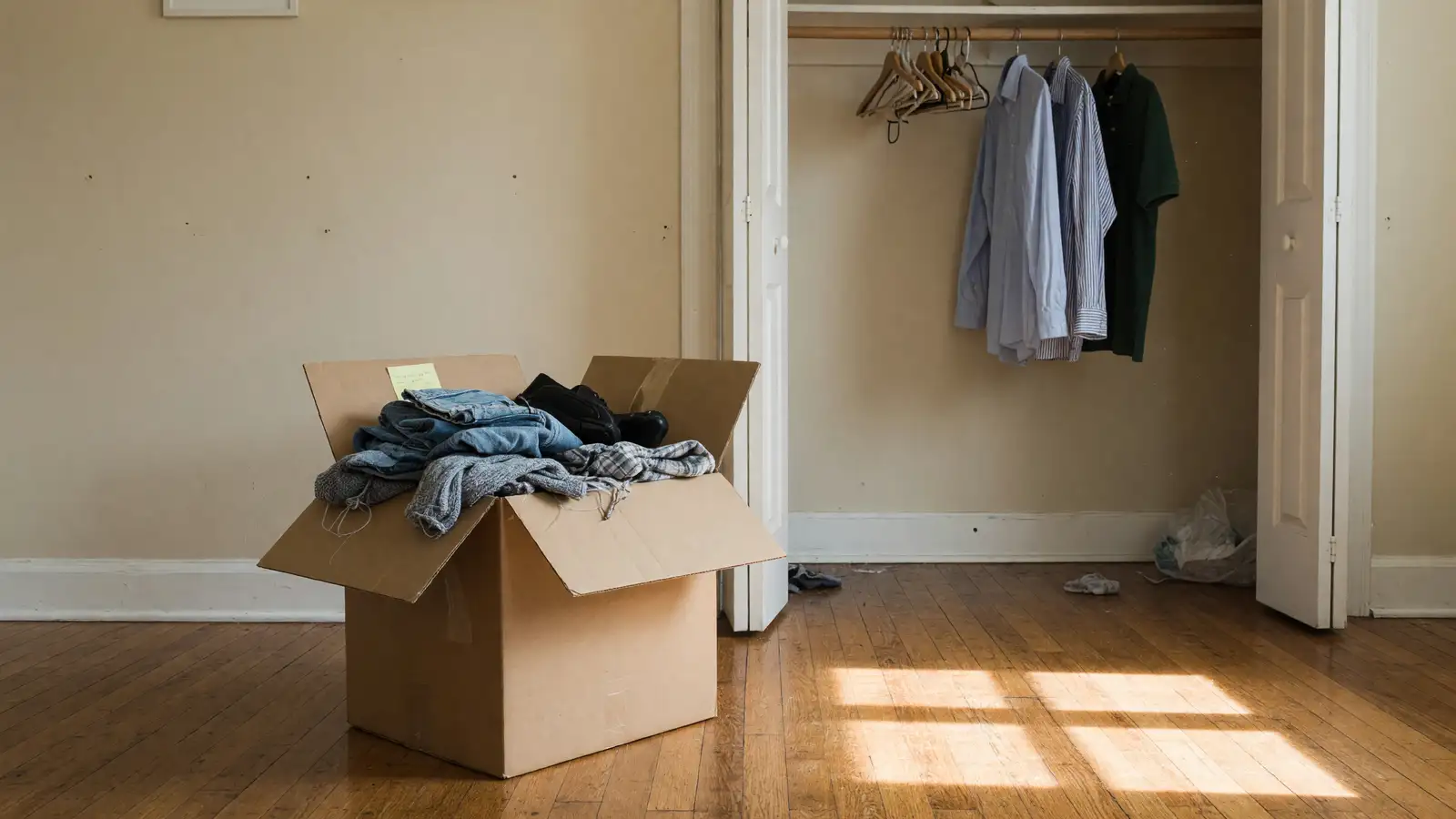
For clothing and footwear, bringing home a new winter coat or pair of boots means an older coat or worn pair of shoes leaves the closet. This forces an honest comparison between the prospective purchase and what you currently own, preventing wardrobe overflow.
For kitchenware and drinkware, cabinets in compact apartments fill up quickly with novelty mugs, reusable water bottles, and promotional containers. Establishing a firm ceiling on each category, such as six mugs total, keeps shelves manageable. Bringing home a new mug means choosing an existing one to donate.
For reading materials and media, physical books, magazines, and records consume heavy shelf volume. Adopting a library-first policy for fiction, and donating or selling a book once read, prevents stacks from taking over credenzas and floor space.
For home textiles and decor, decorative cushions, throws, and decorative bowls should not multiply across furniture. When swapping seasonal textiles, store or donate current pieces before placing new pillows onto the sofa.
Evaluating a purchase requires deciding which existing possession will leave to make physical room for it. That requirement curtails impulse buying before items ever cross the threshold.
The Storage Container Trap: Subtraction Precedes Organization
A widespread mistake among individuals attempting to organize compact spaces is buying storage containers prematurely. Retail stores and social media channels routinely promote matching plastic bins, woven baskets, and acrylic drawer organizers as the primary path to a tidy home. Buying organizers feels productive and rewarding, but doing so before editing down possessions creates organized clutter.
When storage containers are purchased first, bins are sized to accommodate unedited belongings that may not even belong in the home. Baskets and bins consume their own physical volume; in a small closet, bulky plastic tubs can easily eat up twenty percent of available shelf space simply with their own container walls and lids. Furthermore, opaque containers often hide dormant items from view, allowing forgotten clutter to linger indefinitely behind neat labels.
Effective small-space decluttering follows a disciplined sequence:
The initial step is rigorous subtraction. Group items by category and eliminate obsolete, duplicate, or unloved possessions. You cannot organize items that do not belong in the home.
The next step is evaluating built-in storage. Maximize existing closet shelves, drawers, and cabinet space before considering any container purchase. Group remaining items logically within existing millwork.
The final step is measuring and purchasing selectively. If loose items like charging cables, seasonal hats, or craft supplies still require containment, measure the exact interior dimensions of the shelf or drawer first. Choose uniform, modular organizers that make full use of the depth and height without leaving awkward gaps.
When organizing systems are designed for real life, they should accommodate human imperfection. Our overview of forgiving storage systems emphasizes that complex organizational schemes with dozens of rigid micro-compartments almost always fail over time. Open bins, simple hooks, and generous categories are much easier to maintain on busy evenings than intricate labeled dividers.
Creating Practical Landing Zones for Daily Essentials
While minimalism promotes reducing unnecessary objects, everyday life demands reliable homes for portable essentials. When people return home from work or errands, they carry keys, wallets, sunglasses, transit cards, mail, and work bags. In a small home without a dedicated mudroom, these items are frequently dumped on the nearest flat surface, typically the dining table or kitchen island. Within hours, that surface becomes a magnet for additional paperwork and receipts.
To prevent daily carry items from colonizing communal furniture, designate a single, contained landing zone near the entrance of the home. This landing zone acknowledges the reality of functional staging described by Abarashi and colleagues, giving active items a legitimate, bounded location without allowing them to scatter across living spaces.
An effective compact landing zone consists of three key elements:
First, install a wall-mounted rack or hook strip near the door at eye level to hold everyday coats, hats, and daily bags off the floor. Keep hook capacity matched to the number of residents, reserving floor space for footwear.
Second, place a shallow drop bowl or tray on a narrow console table, wall shelf, or the top of a shoe cabinet. This tray serves as the designated holding spot for keys, wallets, badges, and pocket change. Its finite boundaries prevent items from expanding across the rest of the surface.
Third, position an immediate paper recycling station directly beneath or beside the entry surface. When bringing mail inside, immediately drop flyers, catalogs, and junk mail into the bin before walking further into the apartment. Place incoming bills or actionable letters into a single desktop folder for weekly processing.
Containing daily transit items to this single perimeter protects the living room and kitchen from transitional clutter, allowing communal spaces to remain calm and restful.
Maintaining Long-Term Order in Compact Quarters
Creating a functional, uncluttered small home is an ongoing practice of boundary maintenance. In a limited footprint, small decisions made over an ordinary week determine whether the space feels supportive or chaotic.
Functional minimalism separates dynamic staging that supports daily logistics from dormant clutter that claims usable square footage. Consistent micro-decluttering, protected horizontal surfaces, disciplined intake boundaries, and forgiving storage systems allow compact apartments to maintain lasting order and comfort. A well-edited home provides the space to live comfortably, focus on what matters, and enjoy the true benefits of a simplified environment.