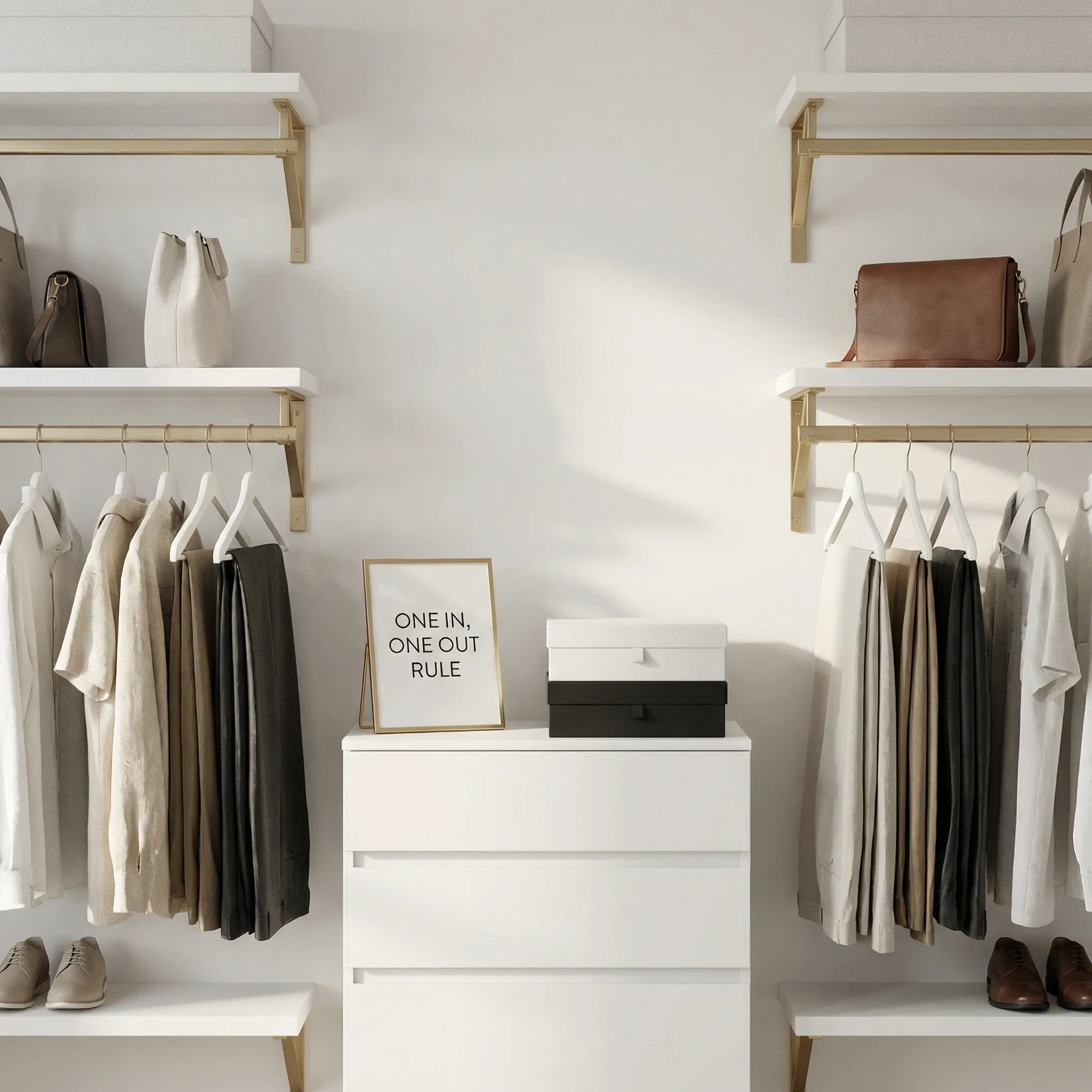
At the checkout, ask where your purchase will live and which item it will replace. This works best for categories that already meet your needs. If you have never tried it, start with the one-shelf practice guide.
A replacement you can name
A new raincoat is replacing the one that leaks. Before buying, check whether the old coat can be repaired and whether the new one suits the trip you have in mind. Once the replacement fits and works, decide what to do with the old coat. Describe its condition honestly if you give it away. For a purchase that might be returned, keep the old item until the replacement is settled.
Gifts and shared belongings
A second toaster can look like an easy exchange until you discover that the one you planned to donate belongs to a housemate. Agree on which appliance everyone uses before promising anything away. For an unexpected gift, decide first whether you will use it. You may be able to return or pass along the incoming item.
When an extra item earns its place
A child who needs clothes in a new size, a household gaining a member, or someone who needs a backup accessibility aid may reasonably keep both items. Identify the actual need and the available space, then revisit that specific choice when circumstances change. Safety supplies should follow the household’s needs.
For the next purchase in an already-full category, write down the outgoing item and its destination before placing the order. If neither comes to mind, leave the item on a wish list until you can make room or find another way to meet the need.