Black Friday 2026 falls on 27 November, the day after Thanksgiving, and it arrives with the usual noise: countdown timers, inbox floods, and prices that look like they will never come back. A minimalist Black Friday means walking into the biggest shopping day of the year with a short list and a waiting rule, in a home that already has room for whatever comes through the door.
Willpower runs out around the third flash sale. A plan written before the emails start works better, because each decision is already half made. This guide builds that plan from three recent sources: the National Retail Federation’s 2026 holiday forecast, a roundup of the Black Friday alternatives brands are running this year, and professional organizers’ advice on clearing space before the holidays. The method is simple. Nothing here was tested in a lab or a store. Every number comes from one of those three sources, each linked below, and every step can be checked by the reader: look up the price history of an item before buying it, leave it in the cart for a day, and count the empty shelf space before adding anything to it.
The scale of the day
The National Retail Federation expects US retail sales in November and December 2026 to grow 4.2 percent over 2025, reaching $1.013 trillion. That is the first time the holiday season has passed the trillion-dollar mark in the federation’s measure, up from $972 billion in 2025. The forecast covers 1 November to 31 December and excludes car dealers, gas stations, and restaurants. The NRF’s winter holiday data page carries the full figures.
Two details in that forecast matter for anyone trying to shop less. First, the 4.2 percent growth is a nominal figure. It is not adjusted for inflation, and coverage of the forecast notes that about half of the anticipated growth is expected to come from higher prices rather than from people buying more things. A record spending total does not mean a record number of items. Second, the federation’s own 20-year average for holiday growth is 3.1 percent, excluding the pandemic years of 2020 and 2021, so this year sits above the long-run trend.
What that means at home level is straightforward. Prices are higher, discounts look bigger because the starting prices are higher, and the pressure to buy now is doing more of the work than the price cut itself. A minimalist approach to Black Friday starts by reading the number that way: the day is built to move money, and the only defense is deciding in advance what the money is for.
What the 2026 alternatives actually do
Skipping Black Friday entirely is one option, but it is no longer the only organized alternative. A roundup published on 24 November 2026 by the clothing brand Bluebuck catalogues the movements and brand initiatives that now run alongside the sales, and several of them are practical rather than symbolic. The full roundup lists them with dates and figures.
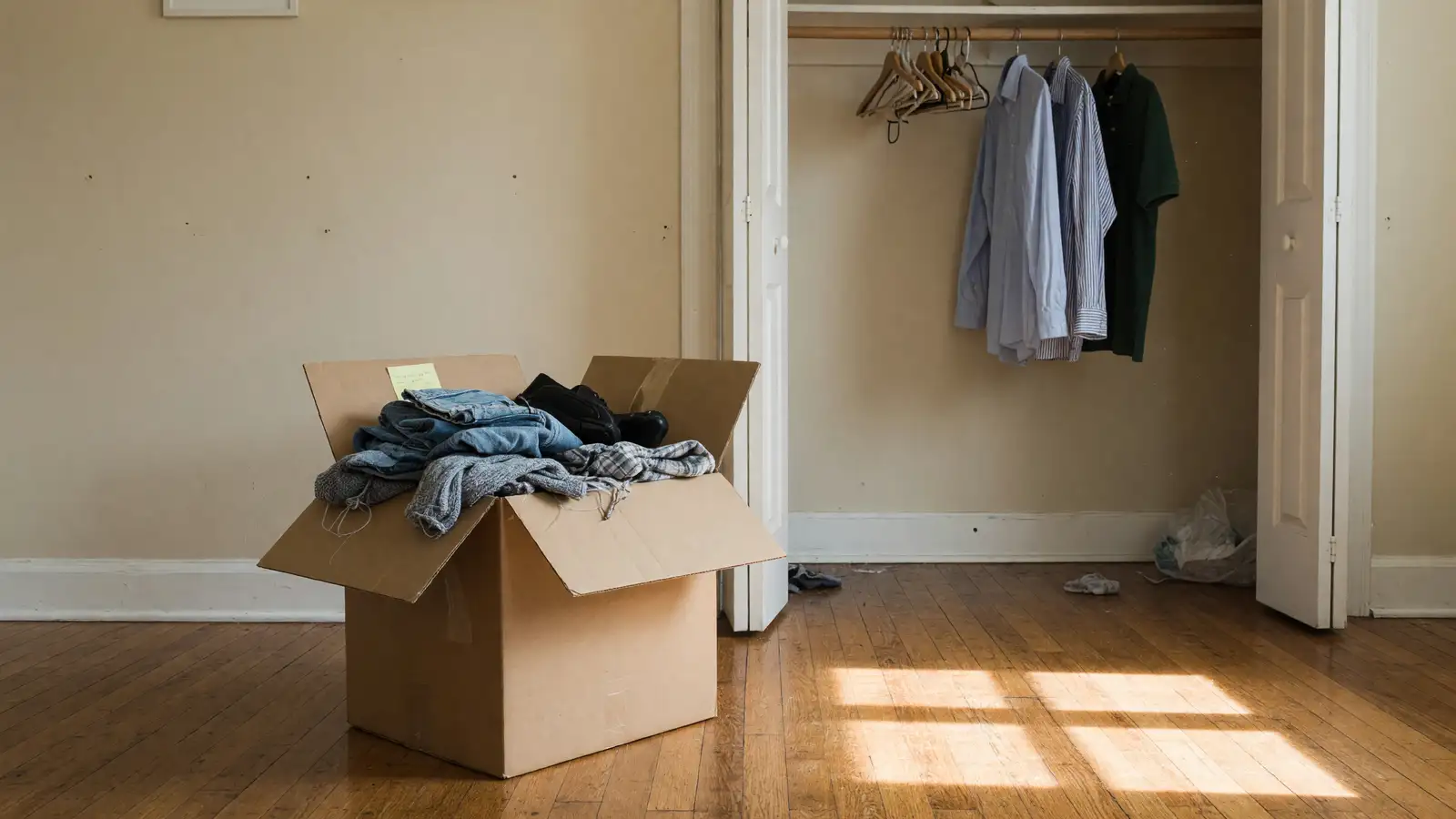
Green Friday, founded by the French organizations Altermundi and Envie, answers aggressive promotions with a blunt message: “the real cost of fake deals.” Its advice is to repair what you own, resell or donate what you do not use, buy second-hand, and support brands with clear sustainability commitments. Make Friday Green Again, launched in France by the brand Faguo, offers a routine instead of a boycott: sort through the wardrobe, repair what can be repaired, resell, swap, or donate. Anything except clicking add to cart in a hurry.
Some of the numbers attached to these movements are concrete enough to check. Blue Friday, a Belgian initiative, donates part of Black Friday sales to ocean cleanup groups. Its 2025 project with Ocean Legacy worked on a simple rate: every four dollars donated funds the removal of one pound of marine waste from the Pacific. The project reports 21,000 kilograms of debris removed and $127,000 raised. Bluebuck itself donates 10 percent of its Black Friday revenue to marine cleanup. Black for Good, created by the skincare brand Typology, replaces discounts with donations to charities. In 2024 it counted 42 participating brands, 69,000 euros raised, and 37 supported organizations. Circular Monday, born in Sweden, promotes second-hand buying, repair, rental, and recycling, and holds its day on the Monday before Black Friday.
Individual brands have gone further. DECIEM, the company behind The Ordinary, runs “Slowvember”: 23 percent off for the entire month, with all stores and the website closed on Black Friday itself. REI closes every store on the day and gives its employees the day off. Picture Organic Clothing closes its site for the day and invites customers outside instead. Patagonia has the longest record here. Its 2011 “Don’t Buy This Jacket” campaign ran in The New York Times, and in 2016 it donated 100 percent of its Black Friday profits, around $10 million, to environmental organizations. In 2022 it ran in-store repair workshops instead of sales events.
A minimalist does not have to join a movement or buy from a particular brand. The useful part is the pattern. Every one of these initiatives replaces the urgency of the day with a slower step: a repair, a donation, a closed store, a month-long discount instead of a 24-hour one. A household can borrow that structure without buying anything from the brands involved. The version that fits a home is the simplest one: sort first, repair what can be repaired, and let the rest wait a day.
Declutter first, then decide
The strongest argument for decluttering before Black Friday has nothing to do with virtue. It is practical. New things need somewhere to go, and a home that is already full turns every purchase into a storage problem the same evening. Professional organizers Sarah Gerber and Jen Rowe, co-founders of Lumea Living in Vancouver and Toronto, put it plainly in a Parade guide published 21 November 2026: “The holidays bring more people into your home than any other time of year, and they’ll use every room you have.” A home full of people and full of things, they add, feels overwhelming, and hosting takes more out of the host than it needs to.
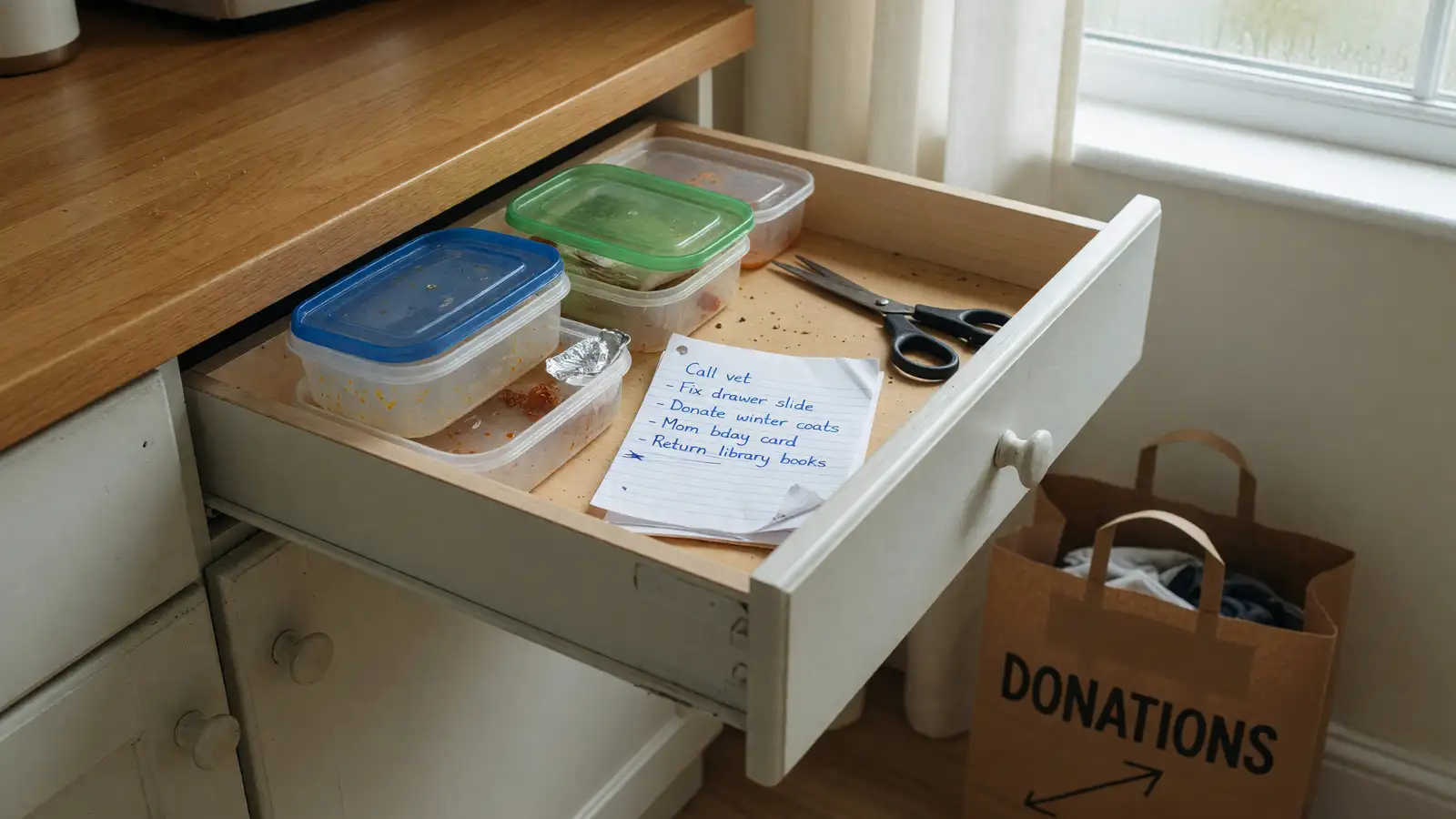
Their list of seven clutter categories reads like a pre-shopping checklist. The kitchen counter, which they call “the landing strip of the house,” collects mail, keys, and grocery bags because everything passes through it. Their fix is to take everything off and put back only what earns its place, with daily items staying and the rest moving to a cupboard or drawer. The fridge gets the same treatment inside and out: expired items tossed, duplicate condiments merged, and the front cleared of the photos and notes that stop registering after months on display. The cutlery drawer gets emptied onto the counter, the plastic forks and takeout chopsticks tossed, and the remaining set counted so the host knows whether there is actually a full set for guests.
The entryway gets a shoe and coat audit, with off-season items stored elsewhere and only the minimum per person left at the door, plus a few cleared hooks for guests. Toys get decluttered now, before new gifts arrive, one category at a time: blocks, puzzles, art supplies, with outgrown or broken items set aside. Trinkets and everyday decor get swapped rather than stacked: when a seasonal piece comes out of a box, an everyday piece goes into it. The guest room gets sorted into three groups: things that live in the room, things that are leaving, and things that belong somewhere else in the house.
Three habits from the same guide carry over directly into a shopping plan. The first is the tray method. Gerber and Rowe say a tray gives a pile an edge, and once it has an edge it reads as a category. One tray under the coffee station, one on the entry table, one wherever the daily odds and ends land. The second is the swap rule: each time something seasonal comes out of a box, send something everyday into it, so surfaces stay at the same level of fullness all season without new storage. The third is the 20-minute timer. Choose one spot, work until the timer goes off, and stop. One zone each evening gets through the list in about a week, which fits a busy schedule better than waiting for a free Saturday.
Applied to Black Friday, the order matters. Clear the space first, in 20-minute sessions over the week, and the shopping list writes itself. The empty shelf shows what is genuinely missing. The drawer with three spatulas and no whisk shows what needs replacing. The closet with four black sweaters shows what does not. The list that comes out of a cleared home is short, specific, and hard to argue with, which is exactly what a sale day tries to prevent.
The minimalist Black Friday list
A short list is the whole method. It has three columns: what the item replaces, what it costs at full price, and the target price that would make it worth buying. An item without something it replaces goes on a separate list, the maybe list, and the maybe list does not get opened on Black Friday. Gifts go on the list with a named recipient, not a category. A gift for a specific person with a specific use is a plan. A gift for “someone” is a guess that becomes clutter by January.
Four rules keep the list honest. First, every item gets a reason written next to it: the thing it replaces, or the person it is for. Second, each item gets a target price decided before the sale starts, based on the price seen in October rather than the crossed-out price shown on the day. Third, anything not on the list waits 24 hours in the cart before checkout. The wait is the test. If the desire survives a day of normal life, it was a real want. If it fades, it was the timer on the page doing its work. Fourth, the budget is set as a single number for the day, not per store. A per-store budget is a permission slip to spend the same money five times.
Cost per use is the arithmetic that sorts the list. Divide the price by the number of times the item will actually be used. A pair of boots worn every winter day for five years costs less per wear than a trendy pair worn twice and shelved. A sturdy pan used five nights a week beats a novelty gadget used once. The calculation needs no app and no spreadsheet. It needs an honest guess about use, and the cleared home from the previous section gives the evidence for that guess. The boots already in the closet show how often boots get worn. The gadgets already in the drawer show how often gadgets get used.
There is a second check that costs nothing: search the price history. Most major retailers show a price trend, and browser tools that track prices across months will show whether today’s “deal” is lower than the price from three weeks ago. A discount from an inflated reference price is not a saving. A genuine drop from the price the item carried in October is. The reader can verify this for any item in under a minute, and it is the single most useful check on a sale day.
Readers who want the reasoning behind this guide can trace it. The spending figures come from the National Retail Federation’s forecast, linked above. The alternative movements and their numbers come from Bluebuck’s 24 November roundup. The decluttering steps and the 20-minute timer come from Gerber and Rowe’s Parade guide. Nothing in this article comes from a product test or a store visit, and no brand paid for a mention. The claims about what works are judgments based on those sources and on this site’s own archive, including the case for buying better rather than more. The steps themselves are checkable at home: count what is in the drawer, time a 20-minute session, and leave an item in the cart overnight.
When a deal is worth taking
A minimalist Black Friday still includes buying, when the list calls for it. Some purchases are worth making on the day, and the list makes them easy to recognize. Replacements come first. A worn-out item with a clear successor is the best use of a sale, because the old one leaves the house the same week and the net number of things stays flat. Daily-use items come second: the knife, the shoes, the jacket, the container that goes to work five days a week. These are the purchases that feel good months later, because the cost per use keeps dropping every time they are picked up.
Repairability is the third filter. A product is only as durable as its weakest part, so a deal on something with replaceable parts, a real warranty, and a company that sells spares is worth more than a deeper discount on a sealed unit that dies whole. The repair workshops Patagonia ran in 2022 and the repair-first message of Green Friday point at the same idea from the brand side: the cheapest item is often the one that never needs replacing.
Gifts follow the same filters. The presents people keep are rarely the flashiest ones. A gift that fits the recipient’s daily routine, in a quality they would not buy for themselves, outlasts a novelty that gets used once and stored. Writing the recipient’s name next to the item before shopping is the simplest way to keep gifts in this category. It also keeps the budget honest, because a list with five names on it is a list with a visible end.
What stays off the list is just as clear. Anything bought because the discount is large rather than because the item is needed. Anything that duplicates something already owned and working. Anything that needs new storage to live in. Anything for a hypothetical hobby, a hypothetical guest, or a hypothetical version of the reader. The cleared shelf from the decluttering step is the test for all of these: if there is no place for it, it does not come home yet.
After the day: one in, one out
Black Friday ends, but the minimalist part of the day is the week after it. The one-in, one-out rule does the quiet work here. Every item that comes in sends one item out, in the same category, within the same week. A new sweater means an old sweater leaves. A new pan means the scratched pan leaves. The rule works because it is tied to the purchase rather than to a mood. Decluttering by mood happens twice a year. Decluttering by purchase happens every time something arrives.
The rest of the week has its own small jobs. Returns go back within the return window, not into a pile by the door. The boxes the new items came in get broken down the same day. The receipt goes into one place, digital or paper, so a return in January does not become a search. These are small steps, but they are the difference between a home that absorbed a shopping day and a home that is still storing it in February.
The swap rule from the organizers’ guide applies here too. When the holiday decorations go up, the everyday pieces they replace go into the same bins. When a gift arrives, the thing it replaces leaves before the gift is put away. The house stays at the same level of fullness, and the January clear-out that usually follows the holidays gets smaller every year this is practiced.
There is also a longer view worth keeping. The movements catalogued in the Bluebuck roundup, from Green Friday to Circular Monday, are not asking households to stop buying. They are asking for the purchase to be the last step in a longer chain: sort, repair, resell, swap, donate, and only then buy. A home that follows that chain buys less often and keeps what it buys longer. The 2026 forecast says the country will spend $1.013 trillion on the holidays. A minimalist household will spend its share of that number, but on a list it wrote before the sale started, for things with a place to go and a job to do.