HuffPost Life this week walked the 30-day minimalism challenge like it was a new app. Regina Lark, talking to HuffPost, named the inventors: Joshua Fields Millburn and Ryan Nicodemus, The Minimalists. Day one is one object. Day two is two. Day thirty is thirty. Add the triangle and you get 465. That is a month of counting. It is not a finished drawer.
HuffPost UK ran the same piece on October 25. Same 465. Same ladder. If you already used our zone-per-day 30-day map, do not paste this on top of it. That older map is one small area a day. This week’s named game is a rising quota. We already filed one item a day that never became a closet. A streak with no drop-off is a pile with a calendar.
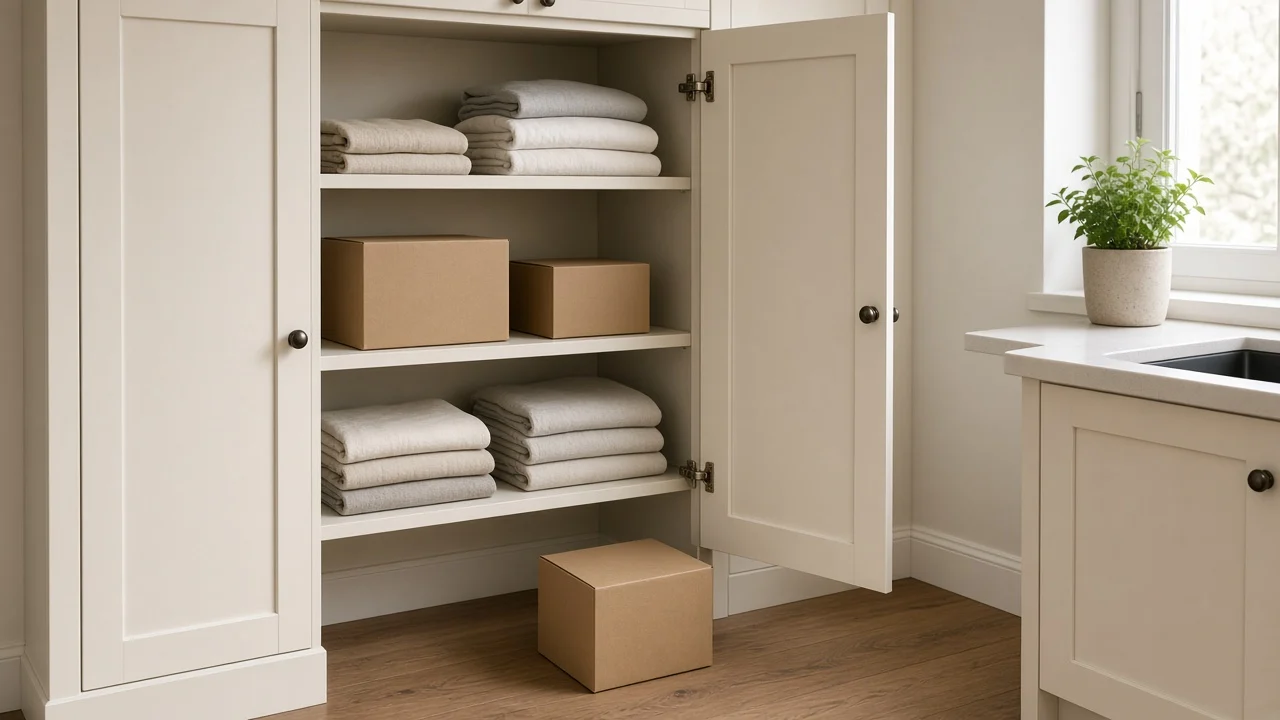
AOL on October 22 is the other table. Orna Fathers of Grace This Space Interiors cut a family’s beach-towel bin down to the four towels they actually use. Four is a number you can hold. 465 is a number you can miss by throwing receipts in a bag.
465 is a triangle. Day 30 is still 30 objects.
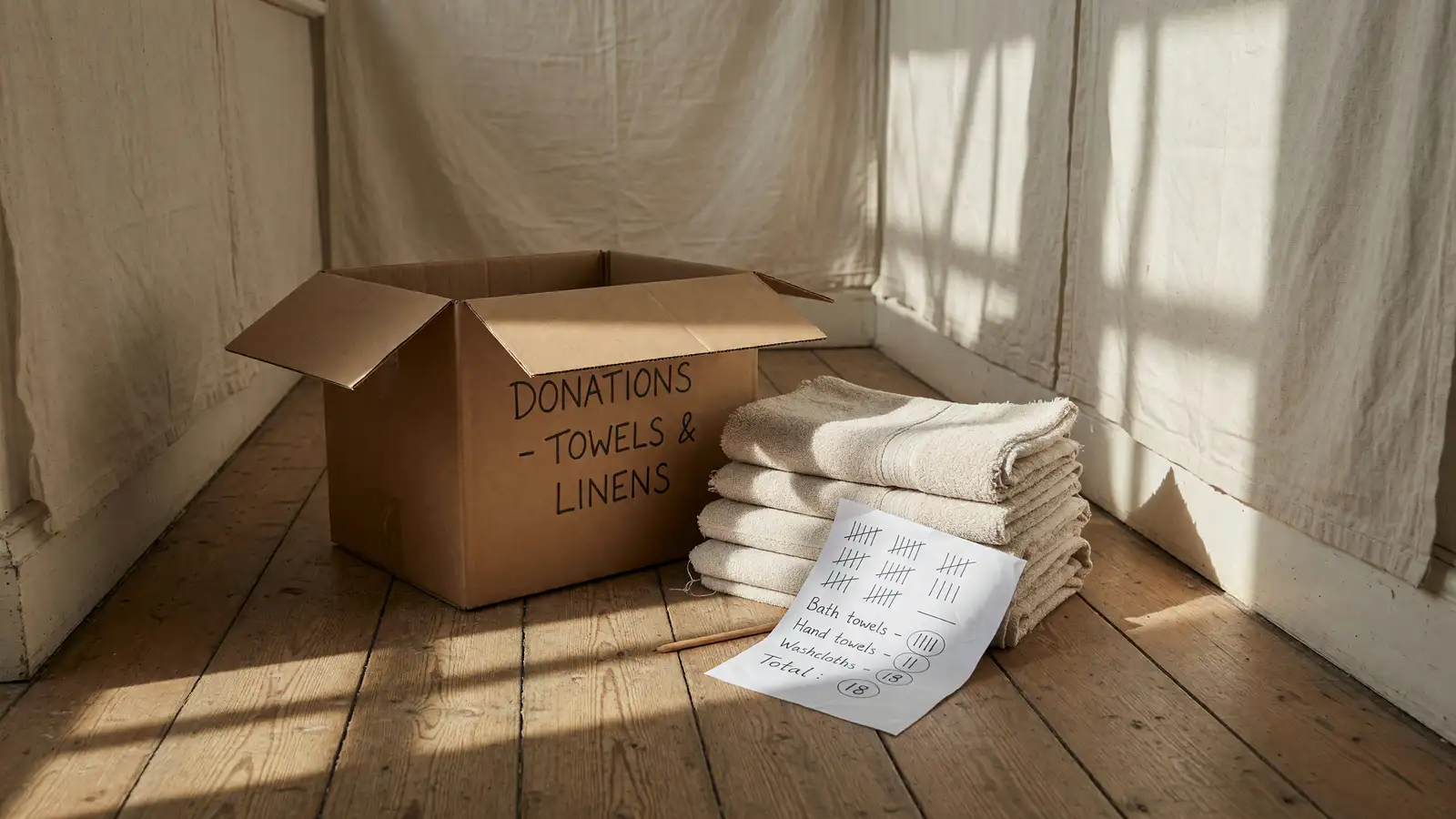
Lark’s description in HuffPost is the whole mechanic: one on the first, two on the second, three on the third, and so on. HuffPost then prints the punchline. On day 30 you let go of 30 things. By the end of the month you have gotten rid of 465 total items.
Do the arithmetic once so you stop treating 465 like a brand. 30 times 31 divided by 2 is 465. Nobody in the extract hid a different total. If your version of the challenge “counts a bag as one,” you are not playing the game HuffPost described. You are protecting the streak.
Bohne Leah, owner of Be Organized Method, told HuffPost it is a fun challenge that can get tough by the end. Days 1 through 7 are junk-drawer candy. Days 22 through 30 are 22, then 23, then 24 objects you still have to name. If those objects are paper clips, Julie Naylon already told you the house did not move.
Some people run it alone. Some pair with a friend and make it a competition: who finishes the month, or who lasts the most days. A competition is a scoreboard. It is not a closet. The friend cannot donate your chairs.
If you do not have a spare 20 minutes on a Wednesday, Hubbard’s condition applies. Katie Hubbard of Turn It Tidy told HuffPost the strategy works if you have the time to find and declutter items each day. No time is not a moral failure. It is a skipped day. Leah’s later fix for a skipped day is below. Do not invent a “makeup Saturday” that dumps 80 objects on the rug.
Quantity is a receipt. Quality is a shelf you can see.
Julie Naylon of No Wire Hangers Professional Organizing gave HuffPost the line this site actually needed. The biggest downside, she said, is that the challenge prioritizes quantity over quality. Getting rid of 465 items does not necessarily mean your home will be more organized. Someone could easily eliminate hundreds of old receipts, paper clips, or other small objects without making a meaningful difference in their living space.
Print that on the bag. If day 12 is twelve expired coupons, you are winning the game and losing the room. The room is the product. The game is a counter.
We already spent the 3 homes rule as a sort, not a closet quiz. An exit home still needs a diary date. 465 with no drop-off date is Wilson’s charity-shop bag that became furniture, except now it has a streak count.
Hubbard added the emotional tax. Decluttering can bring up guilt, especially if you feel pressured to let go of something you are not ready to part with. By the end of the month, trying to find 30 items to discard in one day could feel overwhelming rather than motivating. That is day 30. It is not day 3. Plan the hard days as categories you already decided, not as a panic raid on the keepsake box.
Naylon also said the upside out loud: it is a great way to motivate people who have difficulty getting started. Turning decluttering into a game can make an otherwise daunting task feel more approachable. Steal the start. Do not steal the scoreboard as proof the spare room is empty.
Lisa Zaslow of Gotham Organizers told HuffPost it is great to have support, encouragement, and structure when you start. She also named the failure mode: judging yourself harshly for not completing the whole 30 days. The point of a challenge is to be motivating, not to beat yourself up. Celebrate the wins. A half-finished 465 is still a pile of actual objects that left, if they left.
The bag by the door is the only hardware.
Leah’s practical list in HuffPost is short enough to use. Habit-stack: attach the challenge to something you already do every day, like when you first wake up or while the coffee is brewing. Keep a donation bag or box by the door so items have somewhere to go right away. If 30 days feels like too much, try a 7-day version first.
A 7-day version is a smaller triangle. HuffPost did not print a 7-day total. The bag is still the hardware. Coffee is still the timer. If the bag lives in the spare room, you built another cupboard.
Leah on a missed day: don’t restart. Pick up where you left off, or double up on a day when it feels easy. Restarting is how an October challenge becomes a January personality. Doubling is 16 objects on a day that already had 8. Only do that on a category that is already decided, like duplicate water bottles. Do not double on photographs.
Lark’s modification is the one that actually maps to a room. She suggested clearing out 10 things in one category per day, such as 10 water bottles, 10 vases, or 10 articles of clothing. Ten bottles is a shelf. Ten vases is a sideboard. Ten shirts is a rail. That is quality hiding inside a quota. 10 receipts is still Naylon’s complaint.
If you run Lark’s 10-in-one-category for 30 days, you are not playing The Minimalists’ rising ladder. You are playing a different game that HuffPost printed as a modification. Name it. Do not tweet 465 when you did 10 shirts.
The bag still has to leave. We keep landing here. Write the drop-off. Saturday, the place that is open, the bag already in the car. HuffPost did not print charity hours. You have to.
Four towels is a finished bin. 465 is not.
AOL’s October 22 piece is a seasonal list, not a triangle. Steal it as the quality test for whatever quota you picked.
Fathers on summer gear: broken pool toys, leaky inflatables, citronella candle remains, and plastic chairs that aren’t holding up all need to go. A leaky inflatable is one object that actually occupied a garage corner. It counts as one on day 1 of HuffPost’s ladder and as a real cubic foot. A receipt does not.
Same section, swimwear: if a swimsuit hasn’t left the drawer all summer, it deserves a new home, not another year in the same drawer. That is a clothing decision with a season attached. It is not 12 hangers of “maybe.” Fathers also said to tackle this while summer is still fresh, because you will remember why you did not reach for it. Late October is that window. January is a fiction about next July.
Kitchen: check spices and pantry items past their prime, single-use gadgets that only come out for summer cookouts, and food storage containers without lids. Then clear the counters for holiday baking in November and December. A lidless tub is one object. A gadget you used once in July is one object. A spice bottle with a 2023 date is one object. Those three beat thirty paper clips.
Clothes at the swap: only store what you used this summer and want to wear again next year. Get rid of broken zippers, clothes that no longer fit, or pieces you’ve kept out of guilt. Guilt is not a size. A zipper that does not close is not a project for February.
The family story is the one to keep on the fridge. Fathers pared an entire bin of old beach towels back to the four they actually use, and reclaimed the space. Four towels. Not a virtuous feeling. Not 465. A bin that closed.
Her method note is the opposite of a rising quota: start with one bin, drawer, or closet, and complete the entire area before moving onto the next target. Finish the bin. Then you may open the next one. HuffPost’s ladder will fight that, because day 18 demands 18 objects even if the bin only had 11. When the bin is done, stop counting or move to the next named container. Do not raid the keepsakes to feed the triangle.
335 square feet is a filter. Oils still expire.
Laura Cattano, in the same AOL piece, does not necessarily subscribe to the minimalist label. She lives in a 335 square foot apartment and focuses on being intentional about what she brings in. Fall, for her, is skincare and the medicine cabinet. Oils go bad. She checks whether she needs to restock, and whether oils she rarely used over the summer have gone bad, which oils do quickly.
335 is a constraint. It is not a personality. If your house is 2,000 square feet, you still have a medicine cabinet. Expired oil is expired oil. A 30-day quota that ignores the cabinet until day 29 will put 29 bottles in a bag in one afternoon. That is how you throw something you needed and keep the leaky raft.
Fathers on outdoor dumping grounds: garages and porches collect summer items. That is the inflatable’s real home. If day 6 of the challenge is six porch objects, you are doing quality. If day 6 is six takeout napkins from the console, you are doing volume.
AOL’s key points, compressed: damaged unused summer gear; expired pantry goods and kitchen clutter; clothes you no longer wear; skincare and medicine that expired; outdoor/garage overflow. Five buckets. None of them are “465.” Use the buckets as the menu for HuffPost’s daily number. Day 14 should be 14 objects from one bucket, preferably one shelf.
Do not buy organizers to celebrate the challenge. We already ran the nothing-new challenge. A new bin to hold the 465 is how the house gains a bin. Fathers’ four towels freed a bin. That is the direction.
A month is a calendar. Tuesday is a category.
If you want the HuffPost game, write the rules on paper before day 1.
Rule one: a category per day, not a scavenger hunt across the house. Lark’s 10 water bottles is the model even if you stay on the 1, 2, 3 ladder. Day 9 is nine mugs or it is a skip. Mixed junk from four rooms is how you “hit 9” and still cannot see a shelf.
Rule two: the bag is by the door the same day. Leah said it. If it waits for a heroic weekend, you are back at one-item-a-day with a larger integer.
Rule three: missed days do not reset the month. Leah said don’t restart. Zaslow said don’t beat yourself up for missing 30. A reset is a second personality. The objects you already bagged can still leave on Saturday.
Rule four: day 30 is planned in week one. If you cannot name a 30-object category that is actually clutter, you should be on Leah’s 7-day version or Lark’s 10-in-one-category, not on The Minimalists’ triangle. Hubbard already warned that hunting 30 on the last day feels like pressure. Pressure is how keepsakes become quota.
Rule five: count cubic feet when you brag, not items. Naylon’s receipts are the anti-brag. Four towels is a brag. A lidless tub is a brag. 465 is only a brag if the spare room changed.
HuffPost printed a gamified strategy for overflowing homes. AOL printed a fall list with a four-towel ending. Run them as one November and you get a rising count that still finishes containers. Run only the count and you get a bag of paper and a closet that looks the same. The closet does not care that the triangle added up.