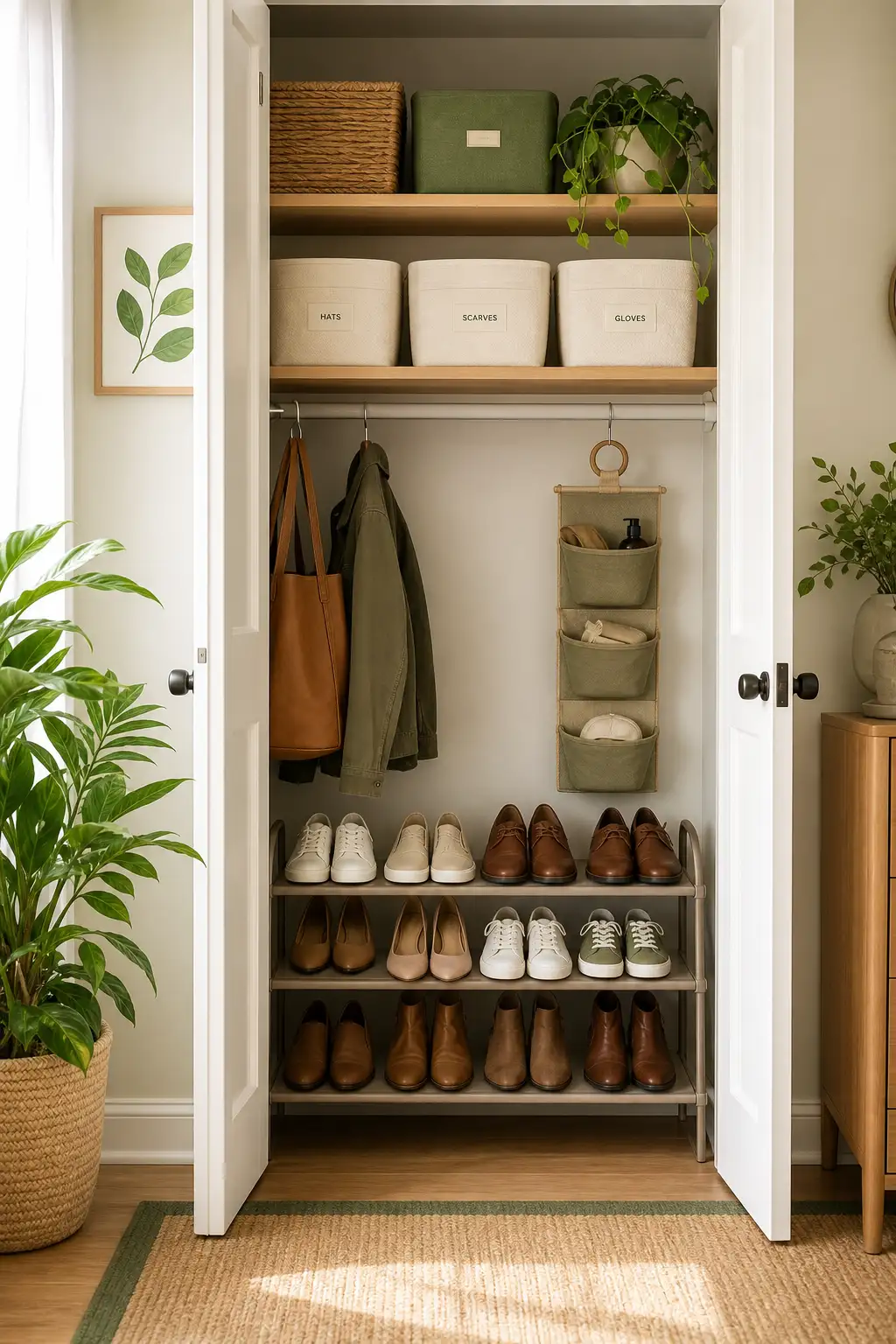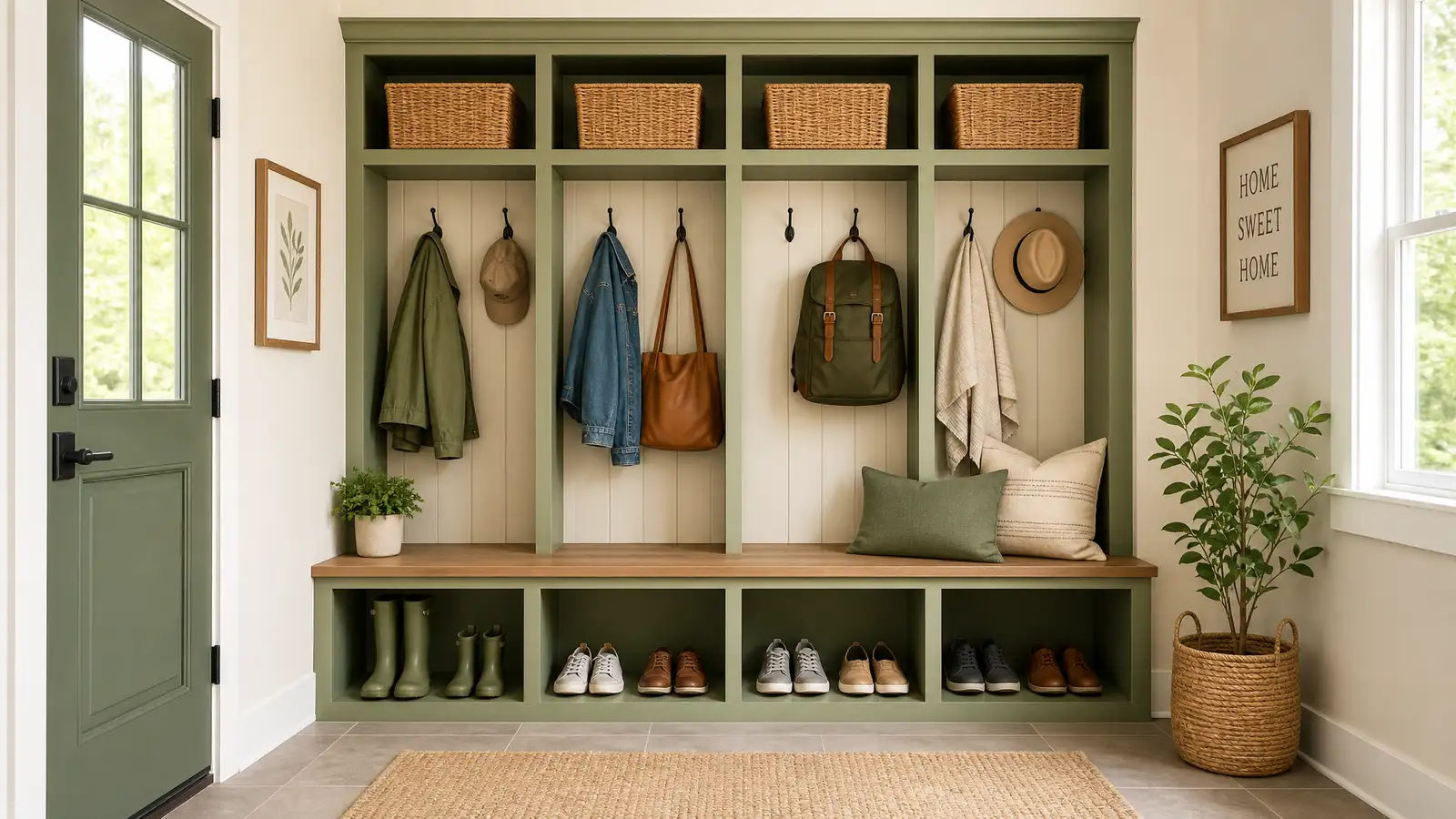
Walking through the front door and tripping over a pile of shoes is not the welcome anyone wants. A tiny entryway makes shoe storage feel like an unsolvable puzzle. There is no mudroom, no generous closet, maybe not even a proper hall. Just a narrow strip of floor that somehow needs to contain the footwear of every person who lives in the house.
The solution is not a bigger house. The solution is aggressive verticality and some honest conversations about how many shoes actually need to live by the door.
The One Pair Per Person Rule
Before buying any storage solutions, start with a household policy: one pair of shoes per person lives at the entryway. Everything else lives in bedroom closets or wherever shoes are stored. This rule alone prevents the entryway from becoming a shoe graveyard.
The logic is simple. Most people wear the same one or two pairs every day. Those are the shoes that need easy access. The hiking boots you use once a month, the dress shoes from a wedding two years ago, the running shoes you keep meaning to use, all of these belong somewhere else. Enforcing this rule takes a week of reminders and then becomes habit.
For households with children, adjust to two pairs: school shoes and play shoes. Kids generate more footwear chaos than adults and benefit from a slightly higher limit. But the principle still holds: if it has not been worn in a week, it does not live by the door.
Over-Door Organizers
The back of the entryway door is prime real estate that almost nobody uses. An over-door shoe organizer with clear pockets holds eight to twelve pairs of shoes and takes up zero floor space. The pockets keep shoes separated and visible, which means nobody has to dig through a pile to find a matching pair.
Look for organizers with reinforced pocket bottoms. Flimsy fabric pockets sag under the weight of adult shoes, especially boots. Heavy-duty canvas or plastic-coated versions hold up better. If the door clears the floor by a tight margin, measure carefully before buying. Some organizers hang low enough to drag and prevent the door from closing fully.
Over-door storage also works for the back of a coat closet door if the entryway door itself is not suitable due to swing direction or proximity to a heater.
IKEA Trones Cabinets
The IKEA Trones cabinet line was designed for shoe storage in narrow spaces. Each Trones unit is about seven inches deep and twenty inches wide, with a pull-down door that flips open. They mount directly to the wall at any height and can be stacked vertically or arranged in a horizontal row.
Two Trones units stacked create four shoe compartments in a footprint smaller than a standard doormat. Because they are so shallow, they work on walls that would otherwise be useless for storage. The top of a Trones row becomes a small shelf for keys, mail, or a plant.
The white plastic construction means they wipe clean, which matters in an entryway where shoes track in mud and snow. They also come in a cabinet-depth version that is slightly deeper but still compact.
Under-Bench Storage
A narrow bench with a shelf underneath solves two problems at once: a place to sit while putting on shoes and a place to store them. Benches as shallow as ten inches exist specifically for small entryways. Pair one with low-profile baskets or bins on the shelf beneath.
Woven baskets hide the visual clutter of shoes while keeping them accessible. Each family member gets their own basket. The basket system enforces the one-pair rule naturally because the basket only fits one pair. If you are tempted to cram more in, the lid will not close, and that is your signal.
If even a bench is too deep for your space, a simple wall-mounted shelf at sitting height with a cushion on top creates the same function in less depth.
Seasonal Rotation
Shoes multiply when off-season pairs stay in the entryway year round. Winter boots and summer sandals do not need to occupy the same square footage simultaneously. Twice a year, swap the seasonal shoes out.
Store off-season shoes in under-bed containers, closet shelves, or in a labeled bin in a storage area. When snow boots migrate to the basement in April, the entryway feels instantly larger. When sandals go into storage in October, there is suddenly room for winter footwear.
Set calendar reminders for the spring and fall rotation. The first warm weekend in April and the first cold weekend in October are good anchors. The swap takes twenty minutes and pays back in daily entryway sanity for six months.
Measuring Before Buying
The number one mistake with small-space shoe storage is buying something that technically fits but blocks a walkway, door swing, or heat vent. Measure the available floor space, wall space, and door clearance before purchasing anything.
Tape out the footprint of a potential cabinet or bench on the floor with painter’s tape. Live with the taped outline for a day. Walk through the entryway carrying groceries, a backpack, a child. If the taped area feels intrusive, the furniture will feel worse because it has height as well as footprint.
Pay attention to door swing. An entryway door that opens inward needs clearance on the hinge side. A storage unit placed too close to the hinges will get hit every time someone enters.
Vertical Wall Solutions
When floor space is truly nonexistent, go up. Wall-mounted shoe shelves or individual shoe racks keep footwear off the floor entirely. A slim vertical shelf unit that is four inches deep can hold six pairs of shoes mounted flat against the wall.
Individual wall-mounted shoe holders that grip shoes by the heel or toe exist for very tight spaces. They create a sculptural look along a narrow wall and work best for lightweight shoes like sneakers and flats rather than heavy boots.
Hooks mounted on a wall strip can handle shoes with sturdy heel loops like Blundstones or rain boots. This approach requires shoes that can hang by a single point, which not all footwear supports.
A tiny entryway will never feel spacious. But it can feel functional. Combine the one-pair rule with vertical storage, seasonal rotation, and careful measuring, and your entryway becomes a place where shoes are stored, not a place where shoes accumulate.