The entryway is the first thing you see when you walk through the door and the last thing you pass on your way out. It is also where shoes accumulate in piles, coats drape over every available surface, and mail multiplies into precarious stacks. For apartments and homes without a dedicated mudroom, the entryway clutter struggle is particularly acute.
But a small entryway is not a storage death sentence. It is a design constraint that forces smarter solutions. Here is how to create a functional drop zone in even the most compact entry space.
The Vertical Strip Strategy
When floor space is measured in square inches rather than square feet, the only direction to build is up. A single vertical strip of wall, roughly two feet wide, can serve as a complete entryway command center if you use every inch of height intentionally.
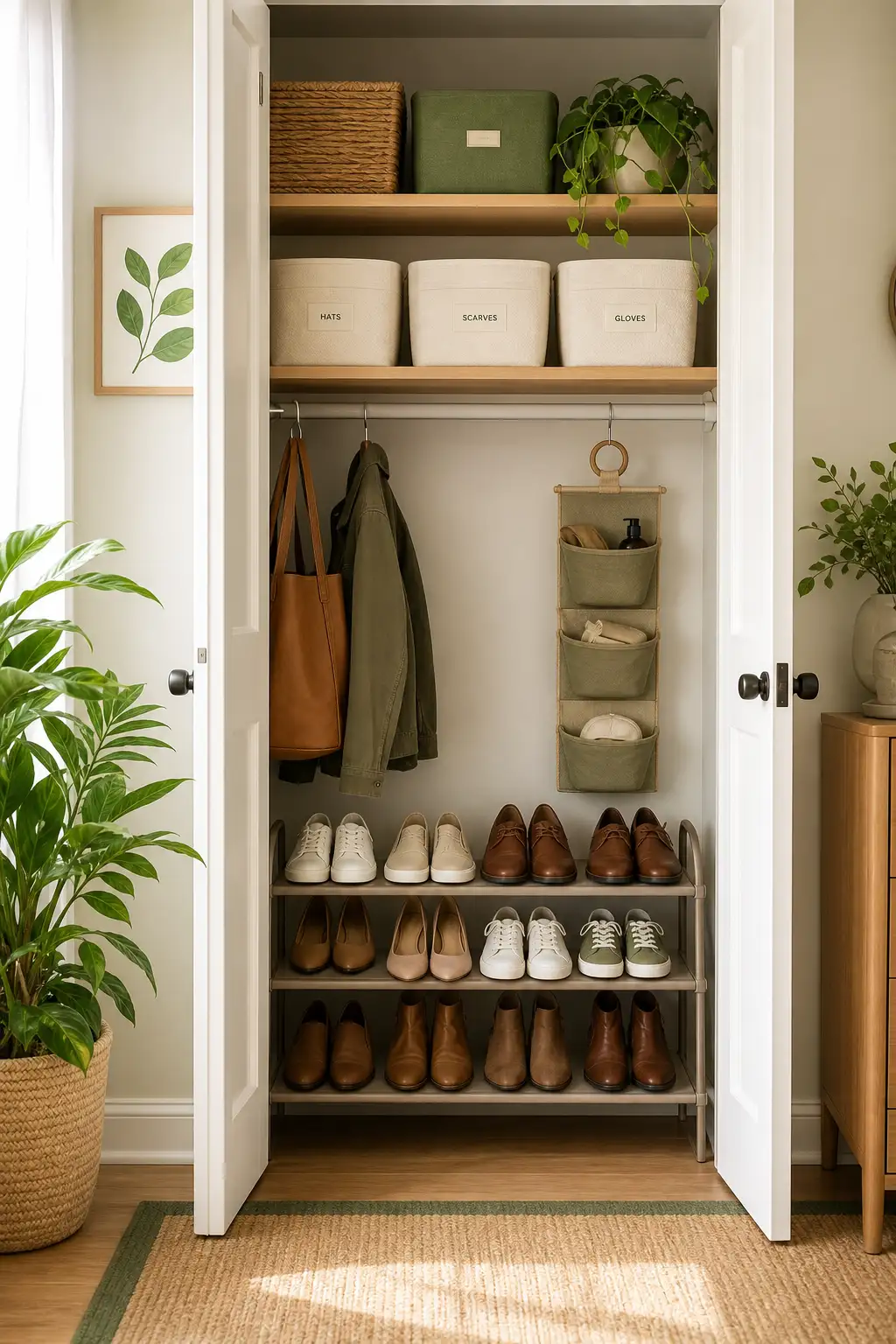
Start at the top with a high shelf for rarely accessed items like seasonal hats, sunscreen, or pet walking gear that you only need occasionally. Mount it at least seven feet high so it does not encroach on headroom.
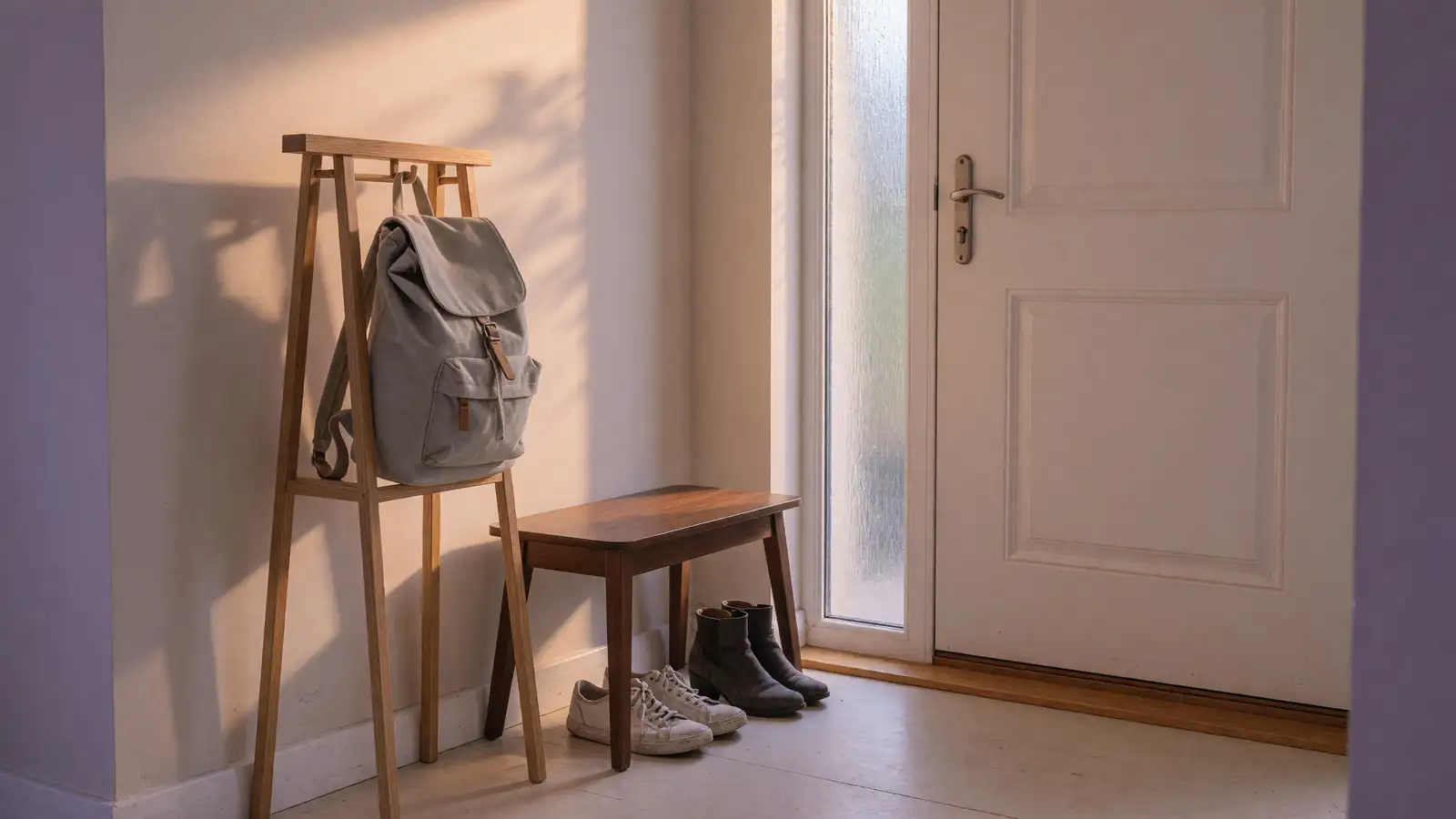
The middle zone, between four and six feet, is your prime real estate. This is where hooks for everyday coats and bags belong. Install at least three hooks on a single rail, and choose styles with a small upper shelf that creates a landing zone for items you grab on the way out. A row of wall-mounted cubbies at this height can hold sunglasses, wallets, and keys without consuming a single inch of floor space.
The lower zone, from the floor to about three feet, handles shoes. A wall-mounted shoe rack that tilts shoes at an angle uses half the depth of a traditional shoe cabinet while holding just as many pairs. For households with multiple people, assign each person a row or section to prevent the inevitable pile-up.
Furniture That Works Twice as Hard
In a small entryway, every piece of furniture must earn its footprint. A slim console table with a lower shelf serves as a mail sorting station on top and a basket storage zone below. Look for models no deeper than ten inches so they do not obstruct the walkway.
Storage benches pull double duty as seating for putting on shoes and hidden storage for off-season items. The key measurement here is depth: a bench deeper than fourteen inches eats too much hallway space, while anything under twelve inches is uncomfortable to sit on. Thirteen inches is the sweet spot.
Wall-mounted folding seats are the nuclear option for extremely tight spaces. These flip down when you need them and sit nearly flush with the wall when you do not. Originally designed for accessibility, they have become a mainstream solution for compact urban entryways.
The Mail and Key Problem
Paper is the entryway’s persistent enemy. Mail, flyers, school notices, and receipts arrive daily and seem to self-replicate if left unattended. The solution is not a bigger pile but a ruthless processing system.
Mount a wall file organizer with three clearly labeled slots: incoming, action required, and shred. Process incoming mail immediately upon arrival. Junk mail goes straight to the shred slot. Bills and actionable items go to the action slot. Everything else goes to incoming for later review. Once a week, empty the action slot by actually taking the required actions.
For keys, a simple wall-mounted key hook positioned at the exact height your hand naturally reaches when entering is worth more than any fancy organizational gadget. Place a small catch-all tray or dish on a nearby surface for pocket items like loose change and receipts. The entire drop routine should take under ten seconds, or it will not stick.
Seasonal Rotation Keeps It Functional
An entryway that works in January will feel oppressive in July if you do not rotate. Heavy winter coats and boots consume disproportionate space and should live in a coat closet or under-bed storage during warmer months. Replace them with lightweight jackets, sun hats, and sandals.
The same principle applies to accessories. Umbrellas, sunscreen, bug spray, and winter gloves each have a season. Keep only what is currently relevant in the entryway. Everything else belongs in seasonal storage elsewhere in the home.
This rotation has a hidden benefit: it forces you to touch every item at least twice a year, which surfaces things that are broken, outgrown, or no longer needed before they become permanent clutter.
A well-designed entryway is not about having more space. It is about having a system that processes the daily incoming stream of people and their belongings efficiently enough that nothing accumulates. With the right vertical strategy and multi-purpose furniture, even a three-foot-wide hallway can become a functional, clutter-free transition zone.