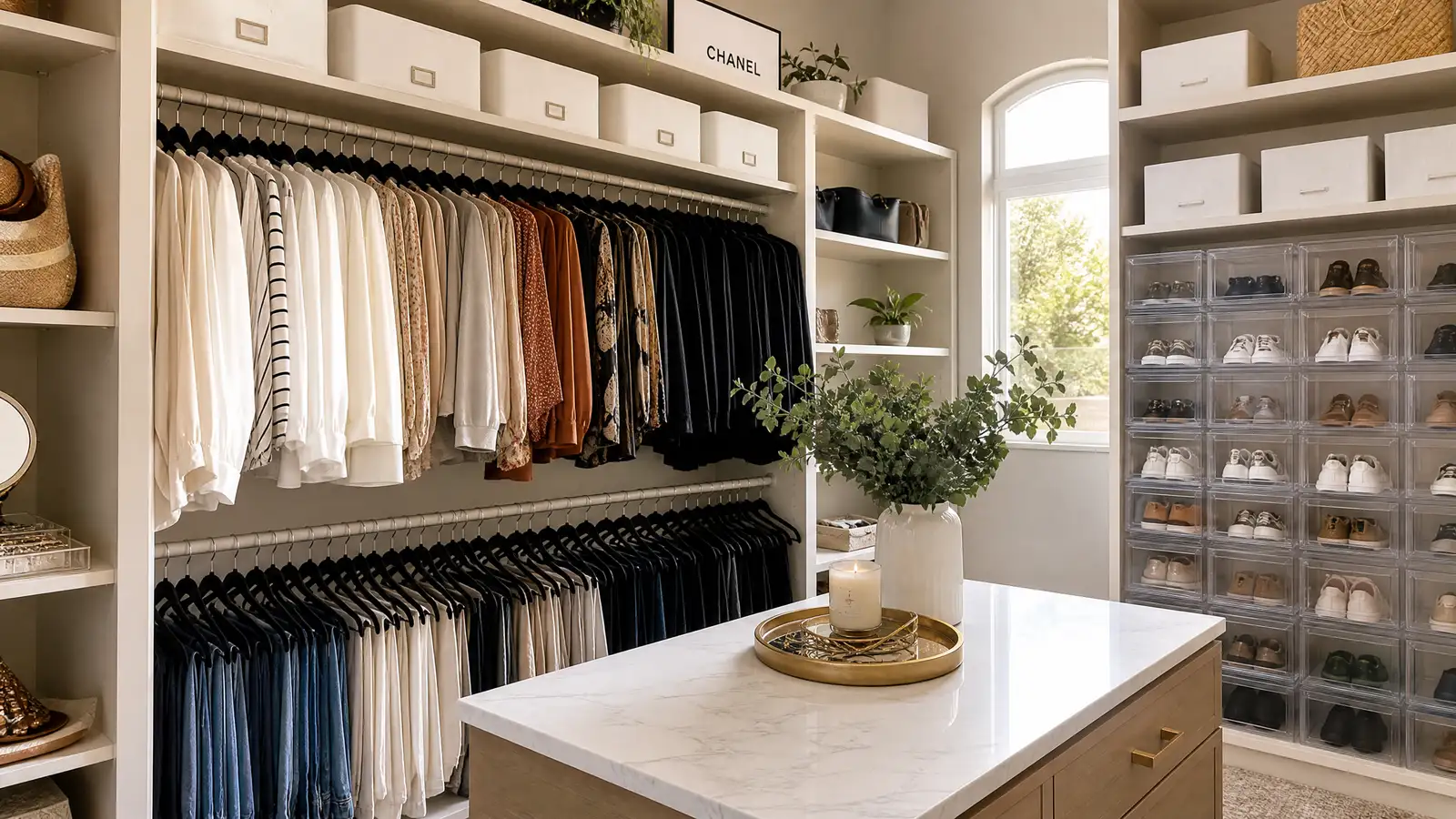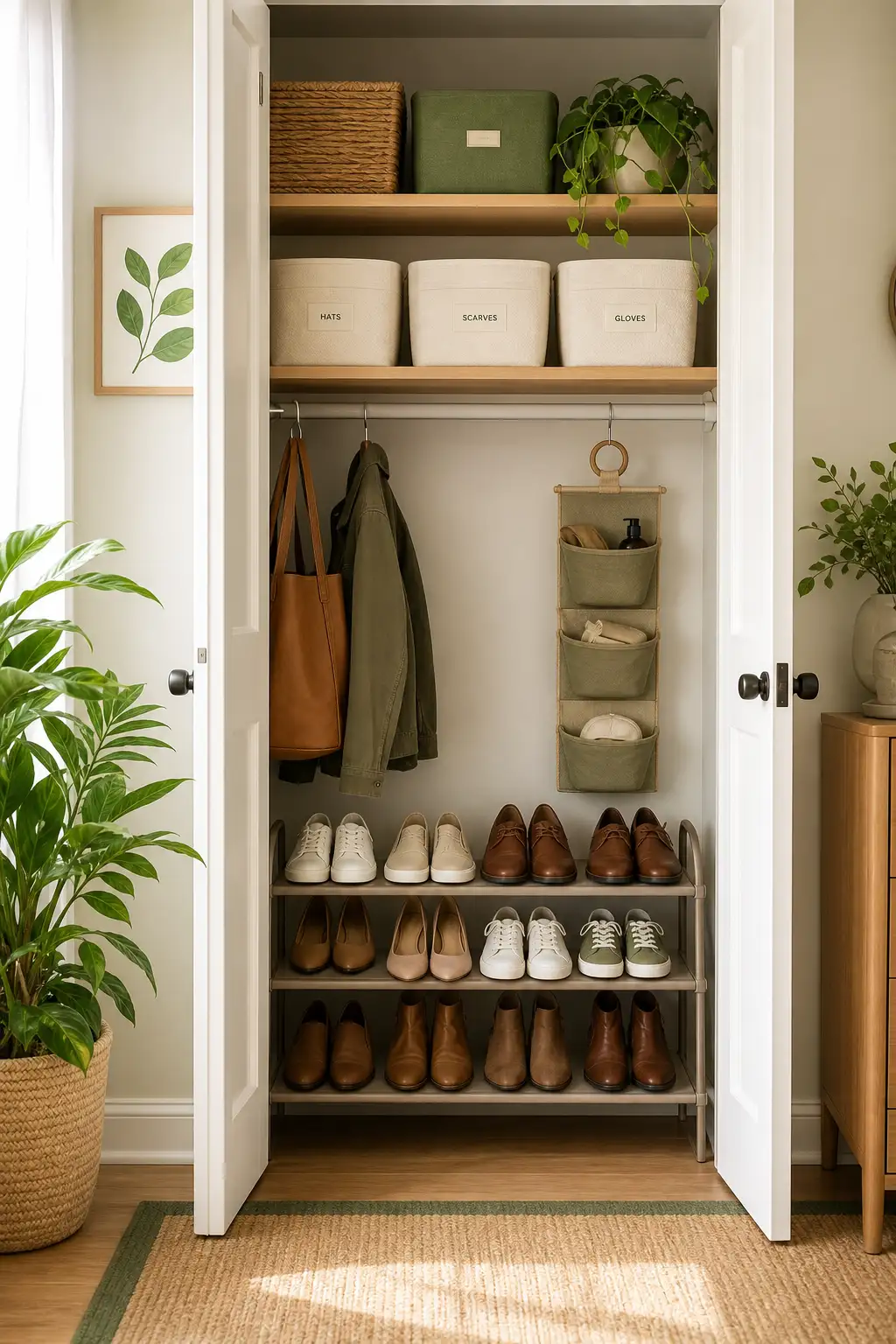
Shoes have a unique ability to colonize any space they occupy. A single pair by the door becomes three pairs within days, and before long the entryway looks like a shoe store after an earthquake. The problem compounds in closets, where shoes pile on the floor in a heap that makes it impossible to find matching pairs without excavation.
The solution is not owning fewer shoes, though that helps. The solution is giving every pair a designated, visible home that makes putting shoes away as easy as taking them off.
The Entryway Solution
The entryway is where shoes cause the most visible chaos because it is the first thing you see when you walk in the door. A designated shoe storage system near the entry prevents the pile from forming in the first place.
A slim shoe cabinet with tilt-out drawers is the most space-efficient option for tight entryways. These cabinets are typically six to eight inches deep and fit against a wall without obstructing the walkway. The drawers tilt open to reveal angled shelves that hold shoes vertically, making them visible and accessible without consuming floor space. A three-drawer cabinet holds nine to twelve pairs in the footprint of a single shoebox.
For households where shoes are removed at the door, an open shoe rack with two or three tiers handles daily-wear shoes for the whole family. Assign each family member a row. The open design provides the ventilation that closed cabinets lack, which matters for shoes worn without socks in warm weather.
A boot tray placed under the shoe rack or cabinet catches water, snow, and mud from outdoor shoes. The tray contains the mess to one washable surface rather than spreading it across the entryway floor. In wet climates, a boot tray is as essential as the shoe rack itself.
The Closet Solution
Closet shoe storage must balance visibility with density. Shoes piled on the closet floor are invisible and inaccessible. Shoes in their original boxes consume excessive space and hide the shoes from view.
A hanging shoe organizer with clear pockets, suspended from the closet rod, stores twelve or more pairs in the vertical space below hanging clothes. Each pair is visible through the clear pocket and protected from dust. This is the most cost-effective solution for reaching closets with limited floor space.
Floor-level shoe racks that angle shoes forward display the full collection at a glance. A two-tier rack that holds shoes at opposing angles fits more pairs in the same footprint as a flat rack. The angled display also makes it easy to grab a pair without bending down to floor level, which becomes increasingly important as shoe collections age along with their owners.
For seasonal shoes worn infrequently, clear plastic shoeboxes with ventilation holes stack securely and protect shoes from dust without hiding them. Stack boxes by season: summer sandals in the back during winter, winter boots in the back during summer. The rotation happens twice a year and frees up prime rack space for current-season shoes.
The Under-Bed Overflow
Shoes worn less than once a month do not need to occupy prime closet or entryway real estate. An under-bed shoe organizer with individual compartments stores off-season and special-occasion shoes out of sight but still organized. The flat design fits under most bed frames, and the clear top allows you to identify contents without pulling the organizer out.
Shoe storage is not about having the most elegant system. It is about having a system that gets shoes off the floor and into designated homes where they can be found in seconds. The best system is the one your household actually uses.