A lemon kitchen does not mean a clean lung.
ScienceDaily’s write-up of Purdue work presented at the American Chemical Society fall meeting, posted September 26, is the sentence that should change how you mop once the windows stay shut. Brandon Boor, who studies indoor air at Purdue, said fragrance from cleaning products reacting with indoor ozone makes nanoparticles. The respiratory dose can match or beat standing next to a busy road. You do not see smoke. You smell “clean.”
That is a different job from the closed-house fall routine we already published, which was about filters, gutters, and the dirt that recirculates when you stop opening sashes. Keep the filter calendar. Subtract the essential-oil flex.
The ACS talk is not a product review
Boor’s group did not rank brands. They looked at what happens after you put scent into a room that already has ozone. Conventional cleaners and botanical essential-oil products both released fragrance compounds that reacted quickly indoors and generated nanoparticles small enough, the researchers said, to travel deep into the lungs.
The useful quote is the one ScienceDaily led with. The particles are a different composition from traffic soot. The total dose can still be higher. The trap is sensory. If the air smells like a spa, people stop asking what they are inhaling.
The work was presented at ACS’s “Healthy Indoor Spaces: Bridging the Microbiome and Chemistry” symposium at McCormick Place, not as a peer-reviewed journal drop in that write-up. Treat it as a conference finding with a named lab, not as a law. The mitigation list in the same piece is short enough to tape inside the sink cabinet: unscented products, exhaust fans or open windows, and do not run ozone-generating gadgets while scented cleaners are in the air.
If you bought a “nature” ozone gadget to “freshen” the living room, that last line is the whole article.
Both product classes, conventional and botanical, produced what the researchers called complex multiphase exposure: reactive gases plus secondary organic aerosol. “Green” on the label is not a particle filter. Citrus oil is still a pile of terpenes waiting for ozone.
We already walked through air-purifier maintenance as a seasonal job. A purifier can pull some of this. It cannot undo a ritual of fogging the kitchen with lemon spray every night in a sealed house. Turn the machine on if you have one. Change what you spray first.
Fall is when the dose sticks around
Maid Brigade’s September 22 press release, carried on Yahoo Finance, is a paid vendor note. Read it that way. Rick Yohn, the brand leader, wants a “healthy home reset” before cold and flu season because windows close and people stay in. That part is not marketing. That is how September works in most of the country.
The checklist under the pitch is the part worth stealing, because it names surfaces that feed the air you will recirculate for five months. Ceiling fans, light fixtures, air vents, return registers, baseboards, window sills. Cabinet handles, faucets, remotes, switches, door handles. Upholstery and fabric headboards that hold dust and pet hair. Pet beds, bowls, feeding corners. Entryways where shoes unload the yard.
None of that requires a fragrance. Vacuum the sofa. Wipe the return register. Wash the dog bed. If the house still “needs to smell like fall,” you are buying a mood, not a cleaning outcome.
Maid Brigade’s own product story is electrolyzed water and “no overpowering scents.” I am not endorsing the franchise. I am noting that even a company selling a fall reset is quietly backing away from perfume as the proof of work. The Purdue talk is why.
Our September one-task-a-day reset still holds for pacing. Change the success test. If the room smells like a candle, you have not finished. If the register is gray, you have not started.
The $600 bleach quote is usually dust
The same Saturday as the ScienceDaily post, The Cool Down wrote up a homeowner who was quoted about $600 to spray bleach into an AC box that a contractor called mold. The photo was from Reddit. The comments were the useful part.
People who actually work on ducts said the number was ridiculous for a chemical spray. One person in air-duct cleaning said the allergy-and-asthma speech is a rehearsed line, and that the spray often does nothing useful and can make the mess worse. Other people pointed at filtration: the right filter, changed often enough that the box does not cake.
Ordinary dust in a return or an indoor coil cabinet is not a mold emergency. Mold in an HVAC system is a water problem first. If the drain is clogged, if the cabinet sits wet, if the house is pulling damp air through a leak, bleach on dry dirt will not save you. You dry the source. You replace the parts that stayed wet. You do not buy a perfume of chlorine and call it remediation.
This is the same distinction we already used for bathroom mold. Shine is not disinfection. A wet room with no air exchange is a schedule. A dusty AC box with a cheap filter is a different schedule. Mixing them is how a $600 quote gets into your weekend.
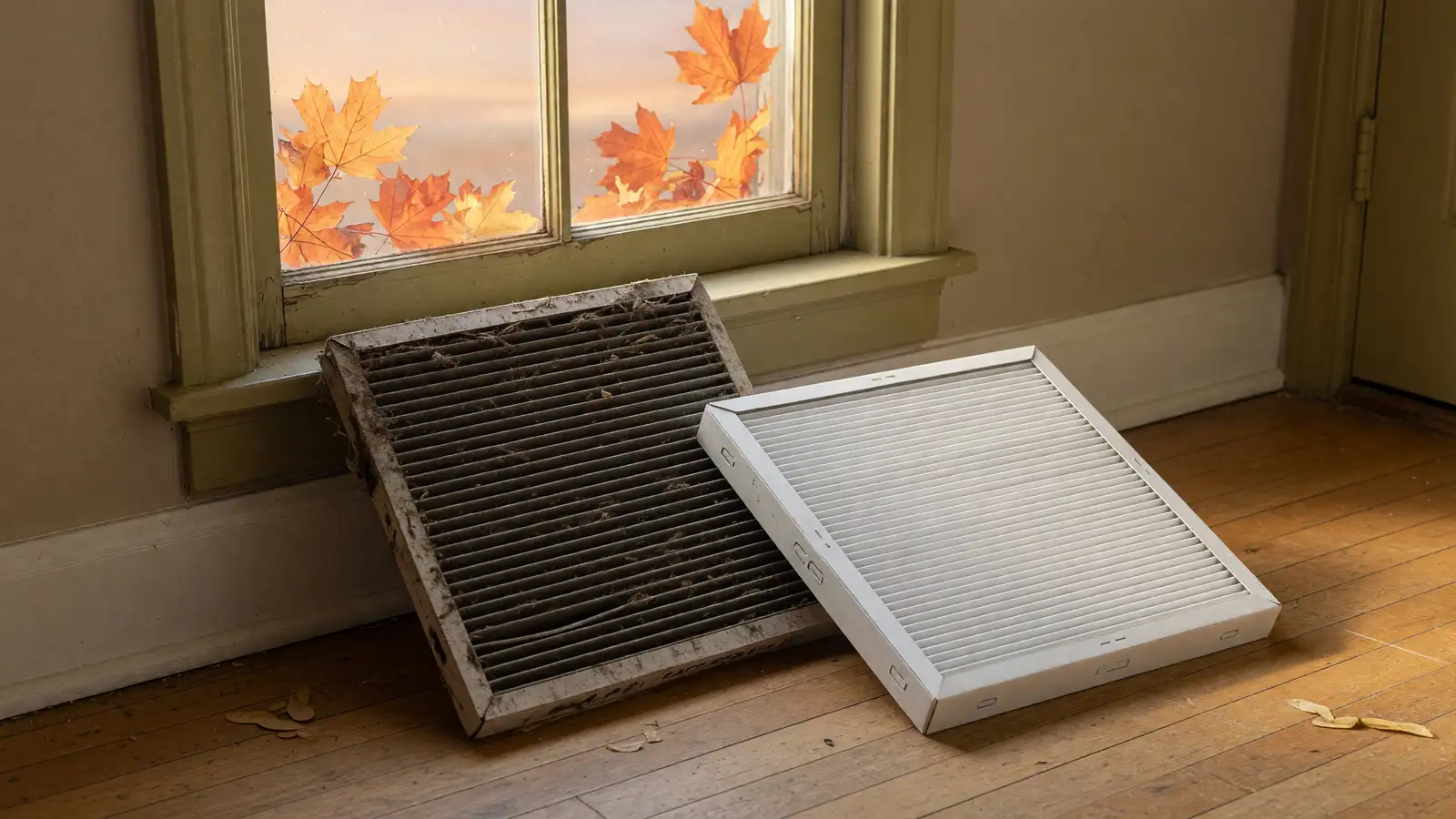
If you are staring at gray fuzz on a register, pull the filter, photograph the size on the cardboard, and replace it with the same size. Vacuum the register. Look at the coil cabinet with a flashlight. If you see standing water, call someone who talks about drains, not someone who talks about “fogging.”
Unscented is the routine, not a brand
Write the week as jobs, not as a basket of new liquids.
Monday: furnace or heat-pump filter. Photograph the size. Put the next date on the calendar, 30 to 90 days, same window Carrier and the closed-house piece already use. If a portable purifier has been off since April, vacuum the intake before you plug it in.
Tuesday: registers and returns. Vacuum. Wipe. Do not spray lemon into the duct because the metal “smells dusty.” Dust is the job. Scent is a new emission.
Wednesday: the overlooked horizontal surfaces from the Maid Brigade list. Fan blades last, with a bag over the motor or a damp cloth, so you do not redistribute a year of grit onto the bed. Light fixtures. Window sills. Baseboards in the rooms you will actually live in with the windows shut.
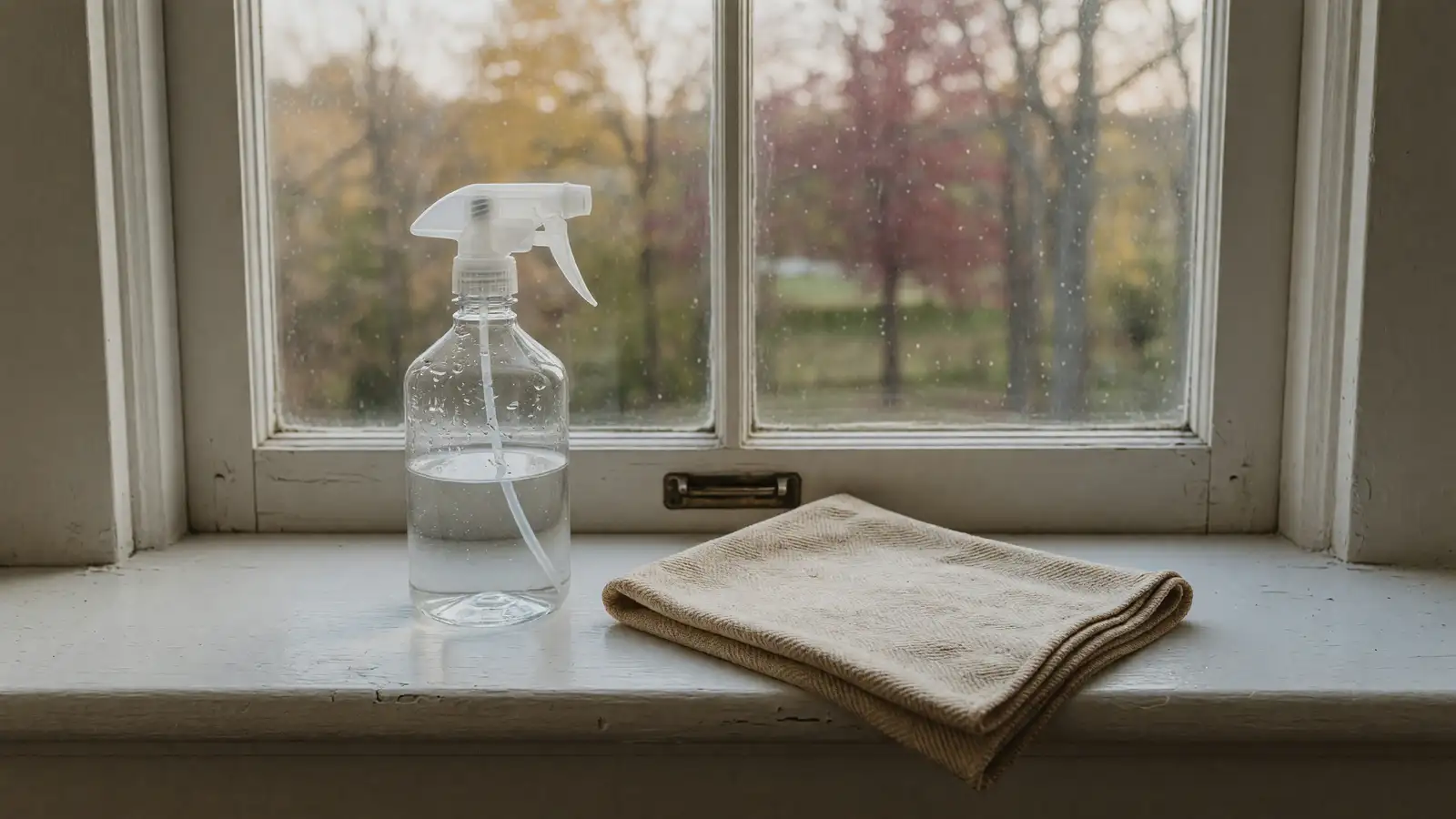
Thursday: high-touch plastic and metal. Handles, switches, remote, faucet. A damp cloth and a little dish soap beats a disinfecting aerosol if the goal is film, not theater. Save a real disinfectant for the cutting board and the bathroom, and then ventilate.
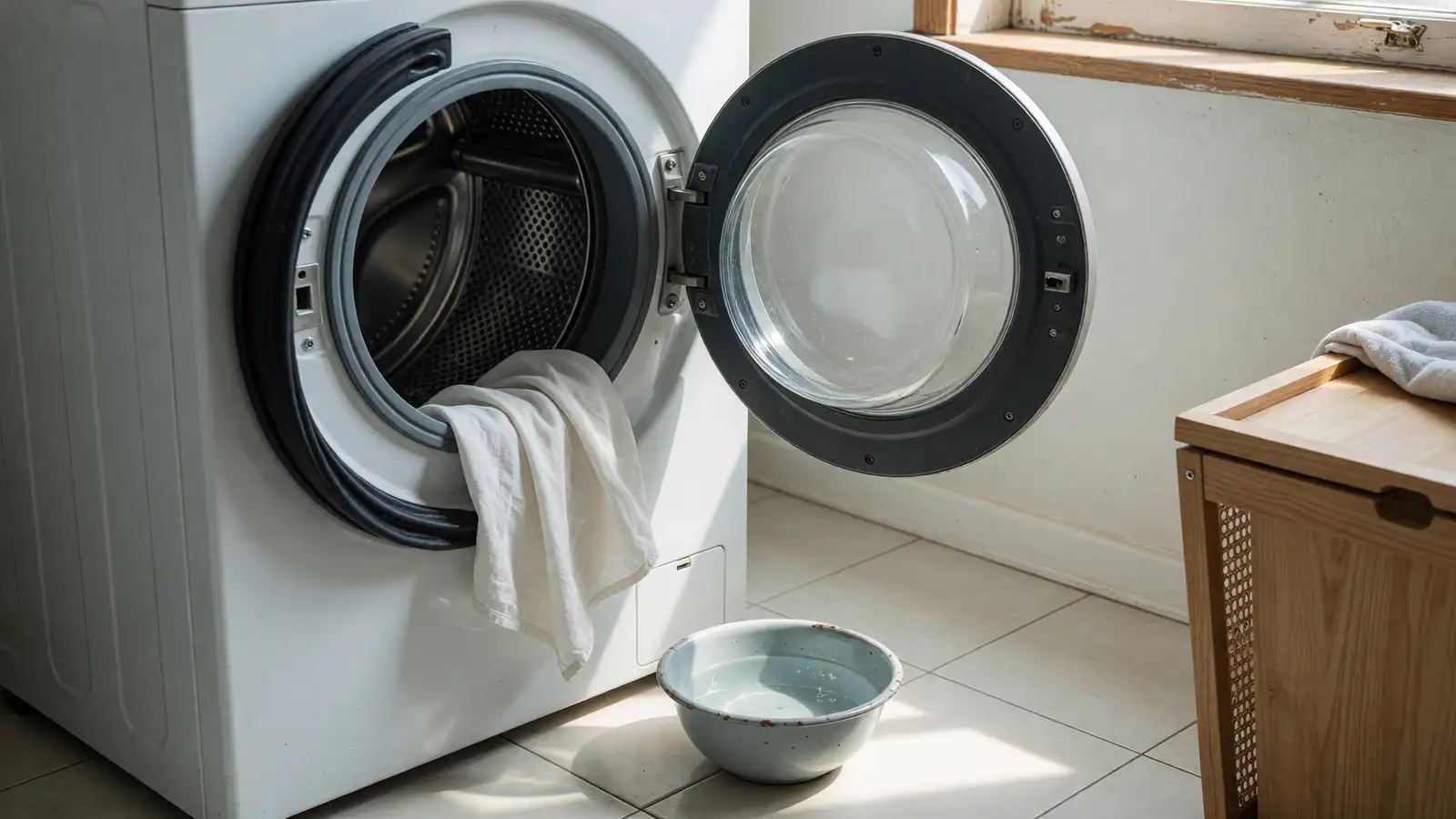
Friday: textiles. Vacuum the sofa. Wash the pet bed. Sheets. If you want a “fresh” bedroom, that is laundry and an open sash for an hour, not a linen spray.
The products that drop out of this week are the ones whose job is to announce themselves. Plug-in oils. Ozone wands. “Botanical” cleaners that still list fragrance. If you keep one scented item for guests, use it with a window cracked, then stop. Boor’s point was not that one spritz will hospitalize you. It was that the dose can look like traffic while the house feels like a spa.
What to stop buying this month
Stop buying round two of the same lemon concentrate because the first bottle “stopped smelling strong.” That is you going nose-blind, not the house getting dirtier.
Stop buying a duct-cleaning upsell that is a bleach spray and a speech about asthma unless someone has shown you water, growth, or a failed drain. The Cool Down thread is full of people who were sold a chemical for a filter problem.
Stop running an ozone gadget “to kill smells” on the same afternoon you mop with anything scented. The ACS mitigation line is specific about that pairing.
Stop treating essential oils as the safe aisle. The Purdue work put botanical products in the same nanoparticle story as conventional cleaners. If you want plant oil on your hands, that is a soap preference. If you want it in the air of a sealed living room, that is chemistry you did not sign up for.
Keep the boring stack: unscented all-purpose, unscented dish soap, vinegar only where it will not wreck stone, a vacuum that actually reaches the sofa, filters in the right size, a squeegee in the shower. The closed-house piece already argued that fall dirt is recirculation. This week adds a second recirculation: the cleaner itself.
Bathrooms are the easy place to get this wrong after you close the house. You spray something that smells like “spa,” you skip the fan because the hallway is cold, and you have combined fragrance, humidity, and no exhaust. The Purdue talk is about ozone plus scent, not about mildew. You still need the squeegee. You still need the fan. You do not need a third product whose only job is to make the first two smell expensive.
A closed house needs a quiet cleaner
I keep coming back to Boor’s line about not seeing haze. Traffic at least looks like traffic. A mop bucket smells like virtue.
If you have kids on the floor, or a bird, or someone with asthma, you do not need a new identity as a “non-toxic household.” You need fewer scented aerosols and a fan that actually exhausts. Crack the kitchen window or run the hood while you wipe. If it is too cold to open anything, unscented is the remaining control.
Vendor fall-reset copy will keep selling coziness. Cozy is a blanket. It is not a pine candle next to a closed sash. The particle talk from Purdue is the reason to be rude about that candle.
Do the Maid Brigade surfaces because they are dusty. Skip the Maid Brigade scent story, even the one that boasts about having no scent, unless you independently like the method. The science this week is not a coupon. It is a reason to trust your eyes and your filter slot more than your nose.
When someone in the house says it does not “smell clean,” point at the register. If the register is pale and the filter date is this month, the house is clean enough. The rest is perfume.