Most people buy an air purifier, set it on the floor, and forget about it. Months later, the unit smells strange, the indicator light blinks red, and they realize the “clean air machine” has been quietly recirculating dust, pet dander, and whatever else was floating around. The filters are packed solid. The motor is straining. The purifier is doing the opposite of what you paid it to do.
The fix is boring but effective: a cleaning routine that takes thirty minutes per session and costs almost nothing. The details change depending on your filter type, but the principle is dead simple. Clean filters move air. Clogged filters do not. That gap is the difference between a machine that protects your health and one that just looks like it does.
Why a clogged filter matters
Air purifiers push air through dense filter media. A HEPA filter traps particles in a web of glass fibers. As debris builds up, airflow drops. The motor works harder. Energy use goes up.
A study in Building and Environment found HEPA filters at full capacity processed 40 to 60% more air per hour than the same filters clogged with household dust (Liu et al., 2024). For a purifier rated at 300 square feet of coverage, that clogged filter effectively cuts the range to 150. The other half of the room gets nothing.
Then there are the secondary problems. Mold can grow on damp filter media and release spores back into the room. Bacteria feeding on trapped particles produce odors. Pet dander that should stay trapped starts passing right through. The purifier becomes a distribution system for exactly what you bought it to remove.
Know your filter type
Not every air purifier filters the same way, and the cleaning method changes depending on what is inside. Before touching anything, check the manual or pop open the filter compartment to see what you are working with.
HEPA filters
True HEPA filters are made from densely packed glass fibers arranged in a random web. They capture particles through three mechanisms: interception (particles follow airflow and contact fibers), impaction (larger particles collide directly with fibers), and diffusion (smallest particles move randomly and contact fibers through Brownian motion).
HEPA filters are sealed units that cannot be washed or vacuumed without damaging the fiber matrix. Attempting to clean a HEPA filter with water destroys the electrostatic charge that helps capture fine particles. Vacuuming can tear the delicate fibers and create channels that allow particles to pass through unchecked. When a HEPA filter reaches the end of its useful life, it must be replaced.
Activated carbon filters
These filters use activated carbon to adsorb gases, odors, and volatile organic compounds (VOCs) from the air. The carbon has an enormous surface area created by heating it in the absence of air, which opens millions of microscopic pores. Gas molecules stick to these surfaces through chemical attraction.
Activated carbon filters cannot be washed because water fills the pores and blocks the adsorption sites. Some manufacturers recommend placing spent carbon filters in direct sunlight for a few hours to release some adsorbed odors, but this is a temporary measure at best. When the carbon is saturated, replacement is the only option.
Pre-filters and washable filters
Many air purifiers include a pre-filter that captures large particles like hair, lint, and dust bunnies before they reach the more delicate HEPA or carbon filters. These pre-filters are typically made from mesh or foam and are designed to be washed or vacuumed.
Some purifiers use electrostatic or washable filters as their primary filtration stage. These can be rinsed under water, dried completely, and reinstalled. The advantage is zero replacement cost. The disadvantage is that washable filters generally do not capture particles as effectively as true HEPA filters, especially at smaller particle sizes.
UV-C light systems
Some purifiers include ultraviolet germicidal irradiation (UVGI) systems that use UV-C light to inactivate bacteria and viruses as air passes through the unit. The UV-C lamp itself does not filter particles but reduces microbial load. These lamps degrade over time and produce less effective UV output after about 12,000 hours of operation, which translates to roughly one year of continuous use.
The cleaning routine by filter type
For washable pre-filters: every two weeks
Most pre-filters slide out of the unit with a simple tab or clip mechanism. Remove the pre-filter and take it to a sink or bathtub.
- Rinse under warm running water to remove loose debris
- For stubborn buildup, soak in warm water with a few drops of mild dish soap for ten minutes
- Scrub gently with a soft brush if needed, then rinse thoroughly
- Shake off excess water and place on a clean towel to air dry completely
The critical word here is completely. Reinstalling a damp pre-filter creates the moisture that mold and bacteria need to thrive. In most climates, a pre-filter dries in one to two hours. In humid environments, give it the full two hours or use a fan to speed drying.
For the HEPA filter: inspect monthly, replace every 6-12 months
You cannot clean a HEPA filter, but you can extend its life slightly and catch problems early.
Each month, pull the HEPA filter out and hold it up to a light source. If you can see light passing through most of the filter, it still has life left. If the filter is opaque or you see dark patches of concentrated debris, it is time to schedule a replacement.
Some HEPA filters accumulate visible surface dust that makes them look worse than they are. A gentle vacuum across the surface with a brush attachment can remove this top layer without damaging the underlying media. This is not deep cleaning. It is cosmetic maintenance that buys you a few extra weeks while you order a replacement.
The replacement interval depends on three factors: the unit’s air volume (how much air it processes per hour), the particle load in your environment, and whether you have pets. A purifier in a single-person apartment with no pets might go a full year between filter changes. A unit running in a three-bedroom house with two dogs and a cat near a busy road will need a new filter every four to six months.
For activated carbon filters: inspect and replace every 3-6 months
Carbon filters do not show visible wear the way HEPA filters do. The saturation happens at the molecular level, and you will notice it through smell before you see it. When the purifier stops eliminating kitchen odors, pet smells, or chemical fumes effectively, the carbon is likely spent.
A quick test: place your nose near the purifier’s exhaust vent. If you can smell the room’s ambient odors through the outgoing air, the carbon filter is no longer adsorbing gases. Replace it.
In homes with new furniture, fresh paint, or recent renovation, carbon filters saturate faster because the concentration of VOCs is elevated. In these situations, plan on replacing the carbon filter every two to three months until the off-gassing subsides.
For UV-C lamps: replace annually
UV-C lamps produce a specific wavelength of ultraviolet light that damages the DNA of microorganisms, rendering them unable to reproduce. The lamp output degrades gradually over time, and after roughly one year of continuous use, the UV intensity drops below the threshold needed for effective sterilization.
Most manufacturers recommend annual replacement. Set a calendar reminder for the month you installed the current lamp and order a replacement in advance. The lamp itself is usually inexpensive, and swapping it takes less than five minutes.
For the exterior and housing: weekly
The outside of the air purifier collects dust just like any other surface. A quick weekly wipe with a dry microfiber cloth keeps the unit looking clean and prevents dust from accumulating on the air intake vents.
For units with visible dust on the intake grilles, use a soft brush attachment on a vacuum or a can of compressed air to clear the openings. Blocked intake vents force the motor to work harder and reduce airflow, which is the same problem as a clogged filter but caused by external debris.
Wipe the control panel with a slightly damp cloth to remove fingerprints and dust. Avoid spraying cleaner directly onto the unit. Spray the cloth instead to prevent liquid from seeping into the electronics.
Seasonal deep maintenance
Beyond the regular routine, perform a more thorough check at the change of each season.
Spring maintenance
Spring brings pollen season, which means your purifier is working harder than at any other time of year. Before pollen counts peak, remove and inspect all filters. Replace anything that looks questionable rather than hoping it will last a few more weeks. Clean the pre-filter thoroughly. Wipe down the entire exterior, paying attention to the air intake and exhaust areas.
If your unit has a filter replacement indicator, reset it after changing filters. These indicators are based on timer calculations, not actual filter condition, and they can be misleading if you replace filters on a different schedule.
Summer maintenance
Humidity is the enemy of air purifier maintenance. In humid climates, condensation can form inside the unit, creating conditions for mold growth on filter media and internal components. If your purifier has a dehumidifier function, make sure it is operational. If not, consider running a separate dehumidifier in the same room during the most humid months.
Check the pre-filter more frequently in summer, ideally every ten days instead of every two weeks. The combination of heat, humidity, and pollen means the pre-filter accumulates debris faster.
Fall maintenance
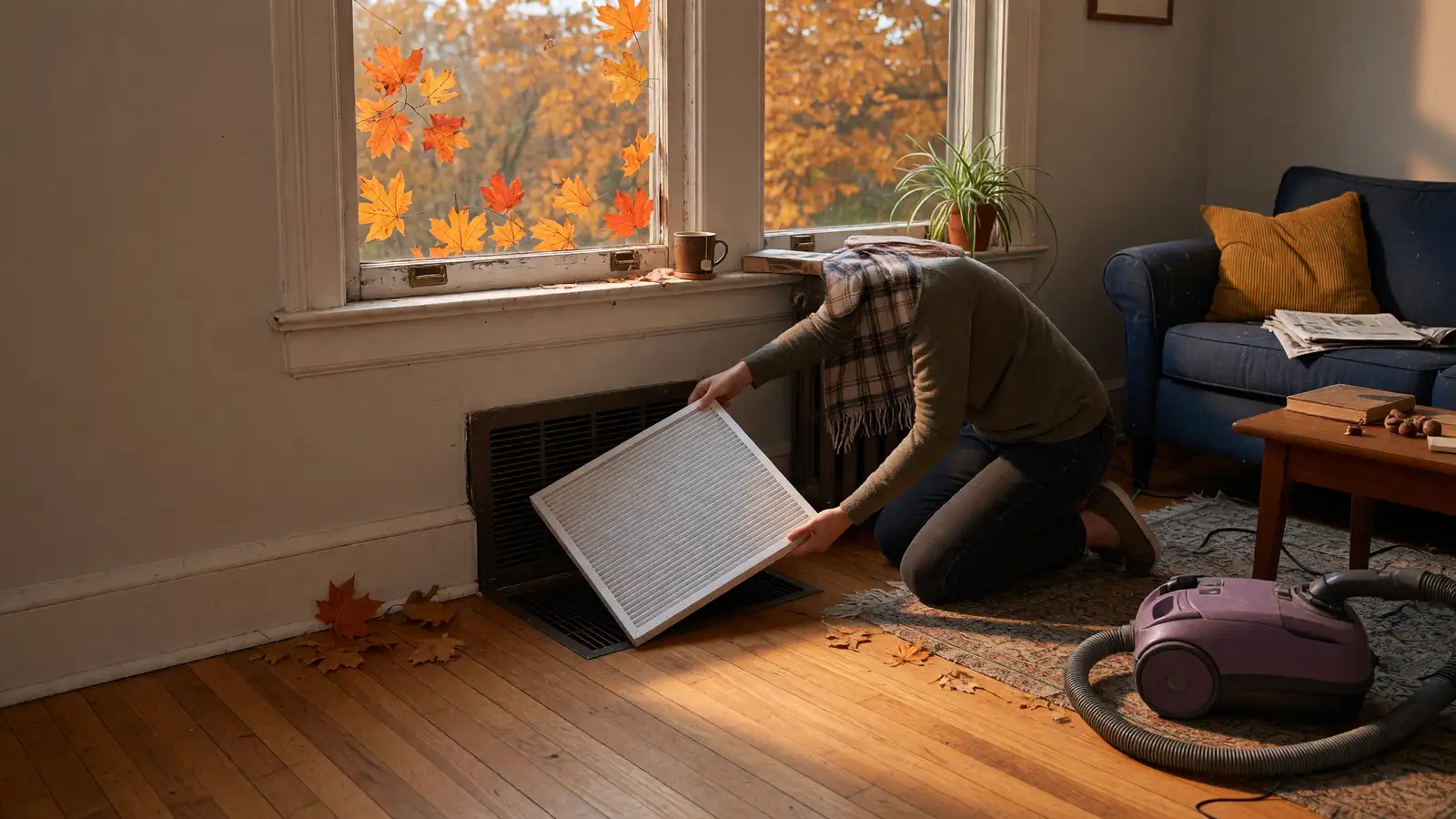
Fall brings leaf debris, increased indoor activity, and the start of heating season. Heating systems circulate dust that has settled in ducts over the summer. Your purifier will capture this dust, which means filters fill faster than they did in the summer months.
Replace any filters that are more than six months old before the heating season starts. Clean the pre-filter thoroughly. Check the air intake vents for any debris that accumulated over the summer and clear them completely.
Winter maintenance
Winter means closed windows and recirculated indoor air. The purifier becomes your primary defense against the stale, stuffy air that accumulates in sealed homes. Make sure the unit is positioned for maximum airflow. Move it at least three feet away from walls, curtains, and furniture that could block the intake or exhaust.
Humidity drops in winter, which is good for filter longevity but bad for static electricity. Dry air causes dust to cling to surfaces more stubbornly. A quick pass with a microfiber cloth on the unit exterior weekly prevents this buildup.
Where you put it matters
A purifier pushed against a wall or hidden behind furniture cannot pull air from the room. That sounds obvious, but it is one of the most common mistakes.
The sweet spot is a central location with at least three feet of clearance on all sides. Height matters too. A unit on the floor cleans air near the floor. One on a shelf or table cleans at breathing height, which is where you actually care about air quality.
Stay away from doors, windows, or air vents. Drafts disrupt the airflow pattern and the purifier ends up fighting competing currents instead of cleaning the room. It should be the dominant airflow source in its immediate area.
Keep it away from heat-generating electronics too. A television or computer radiating heat right next to the purifier’s intake creates warm spots that affect performance. Three feet of distance from heat sources is a good rule of thumb.
Signs something is wrong
You do not need to wait for a scheduled check if the purifier is showing these symptoms.
Reduced airflow
Put your hand near the exhaust vent. If you feel less air than usual, the filters are probably clogged. Most units have an airflow indicator on the display if you want a number to back up your hand test.
Louder than normal
Air purifiers should be quiet. If the gentle hum has turned into a whine or a rattle, the motor is pushing too hard against a dirty filter. Filter change time.
Smells from the exhaust
Clean air does not smell like anything. If you can detect odors coming from the exhaust, the carbon filter is saturated and releasing what it already caught. Replace it now.
Dust on surfaces despite running
If your furniture is still collecting dust while the purifier runs 24/7, the filters have stopped capturing particles. Check for visible debris around the intake vents, which means particles are bypassing the filtration entirely.
The cost of doing nothing
A neglected air purifier is a waste of money. You paid for clean air and got a machine that shuffles dirty air around the room while using electricity. The motor wear from pushing against clogged filters shortens the unit’s lifespan, and replacement motors cost more than a year’s worth of filters.
The health side is more serious. The American Lung Association recommends properly maintained air purifiers for people with asthma, allergies, or respiratory conditions (American Lung Association, 2025). A dirty filter does the opposite. It makes symptoms worse and gives you false confidence that the air is being cleaned when it is not.
Thirty minutes of maintenance per session. A few filter replacements a year. That is the entire cost of keeping an appliance that was supposed to protect your health from becoming the thing making you sick. Clean the filters. Check the seals. Let the purifier do its job.