Yahoo’s home desk put a certified organizing coach on a 2026 to-do list with three moves: toss one thing a day, stop buying non-essentials, and work one room in 10 to 15 minutes. That is a calendar. A closet is still a volume problem. If you follow the rate and skip the zone, you will own 30 fewer objects in November and the same jammed rod.
We already ran a 30-day minimalism challenge and a purge list that repeats every year. Last week Prime Day sold the bag. This week is the inbound valve. The coach is not wrong about the math. The math is not a storage plan.
Spot-and-toss is a rate, not a zone
Margo’s first move is “spot and toss.” You walk through the house. If you see something you no longer want, need, or love, you pitch it. Dried-out mascara goes in the trash. A book you will not reread goes in a donate box. The point, Yahoo says, is to stop rehearsing the sunk cost. You paid for it. That is a closed transaction. Keeping it does not get the money back.
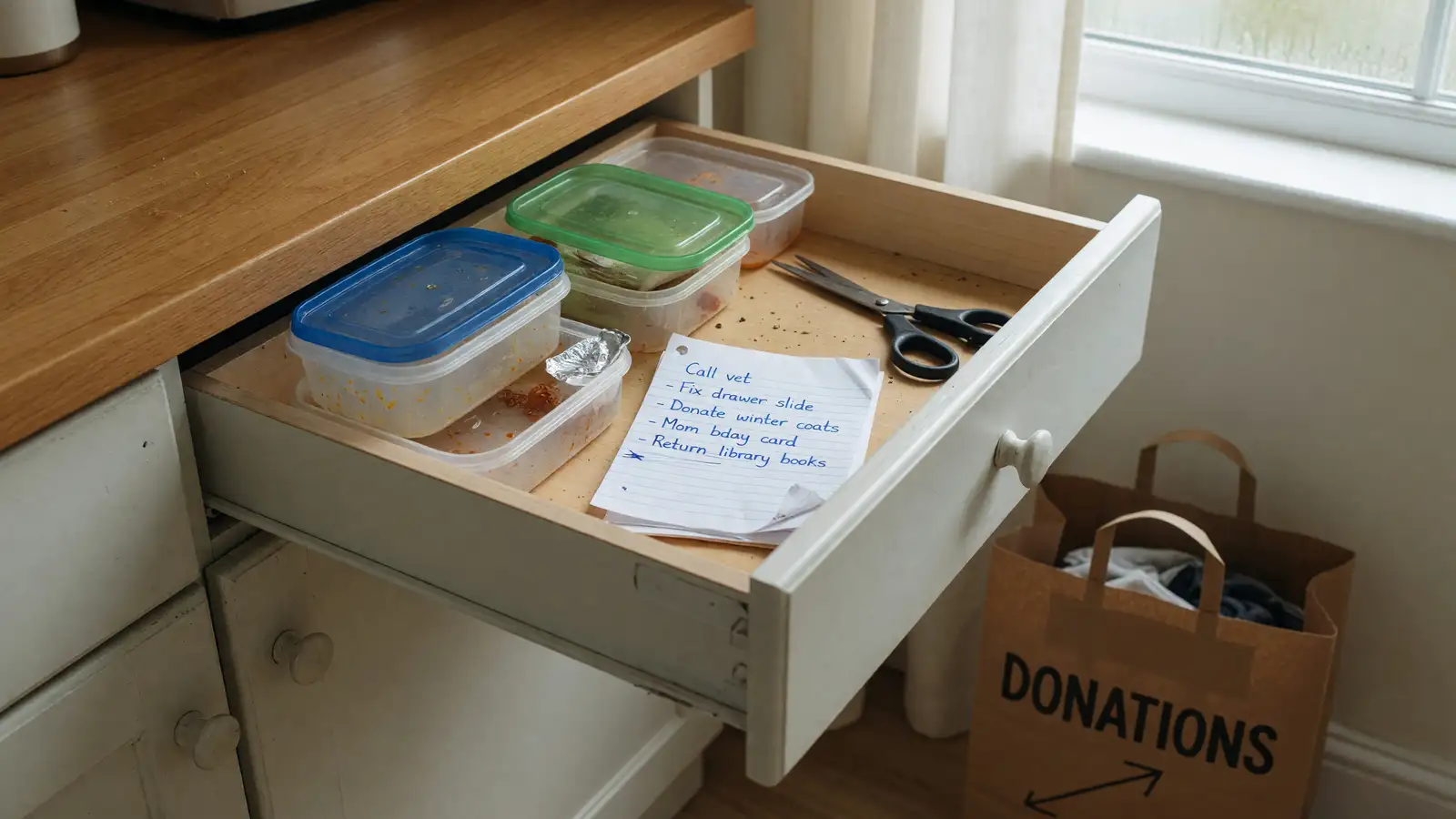
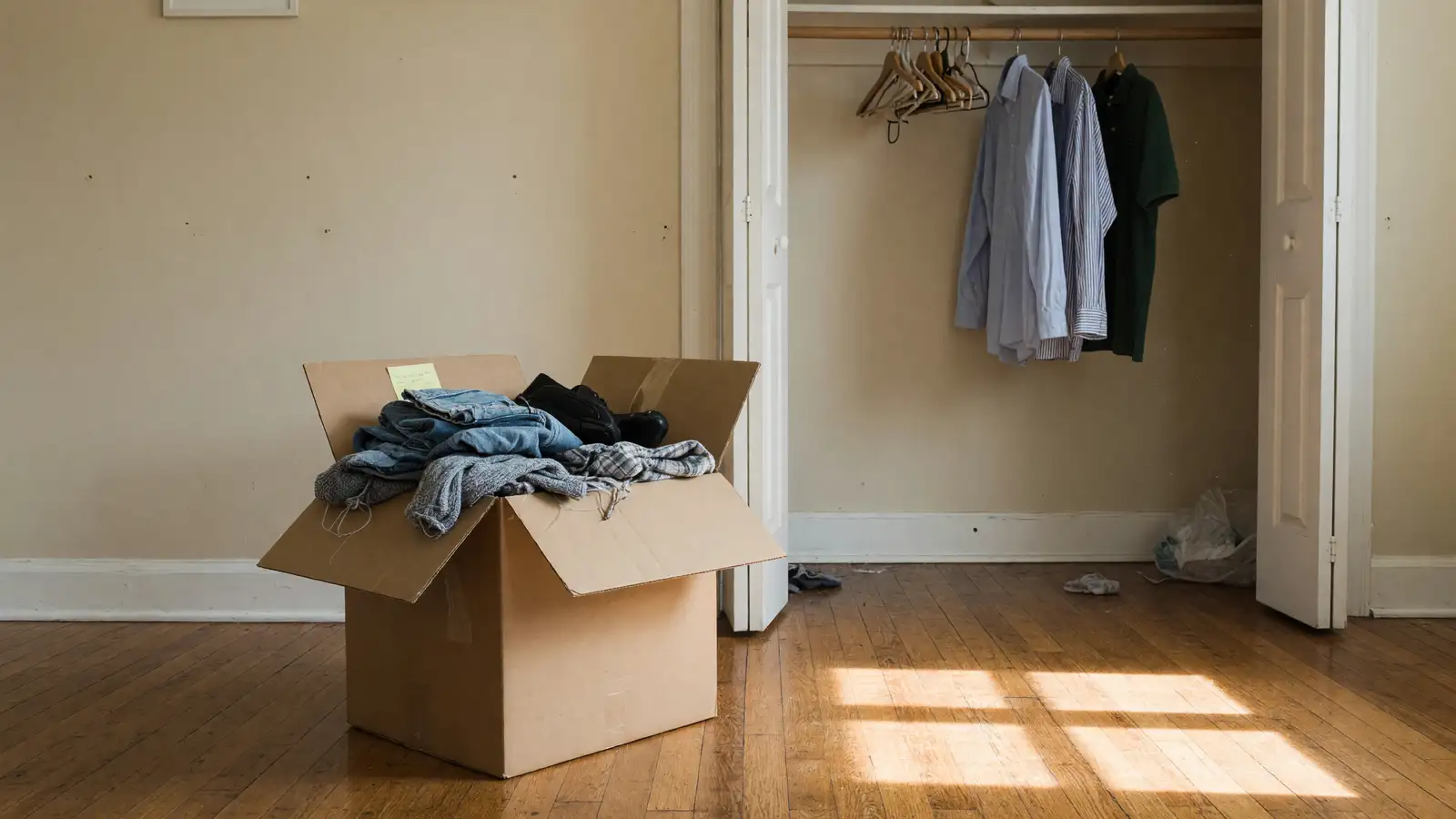
Keep a small cardboard box in each room so the decision has a landing pad. At the end of the month, tape the boxes and take them out. Thirty items is a real number. It is also 30 items that happened to be in your eyeline. The winter coats behind the guest towels never get spotted because you do not walk that shelf on a Tuesday.
That is the gap. A rate limit works on whatever crosses your path. A closet works on a category. If the job is clothes, you need a rod, a keep pile, and a leave pile in the same hour, not a mascara and a novel that happened to annoy you. Use spot-and-toss for the obvious trash. Do not promote it into a wardrobe edit.
Good Housekeeping’s keep list still ends in a bathroom purge. Same lesson. A published method is a prompt. The room is the unit.
The inbound freeze is the actual method
The line that matters in the Yahoo piece is the shopping pause. Thirty to 60 days. Margo’s quote is blunt: one of the worst things you can do when you start to declutter is to start bringing more things in. That is not a vibe. That is inventory. If 30 objects leave and 40 arrive as “organizers,” you ran a store, not a project.
Yahoo names an app, Euna, that tracks a no-purchase streak and a wishlist. Treat that as her suggestion, not a requirement. A notes file and a 48-hour wait do the same job. The Homes & Gardens no-buy write-up is more honest about the exceptions: groceries, medication, a dead lightbulb. The author is trying 30 days off non-essential household goods, including décor, storage bins, kitchen gadgets, clothing, toys, and seasonal stuff. Storage bins are on the banned list. That is the sentence most “declutter hauls” refuse to print.
Meghan Cocchiaro, a certified professional organizer at Organized by Meg, told Homes & Gardens to keep the first attempt laid-back so the challenge does not collapse. That is not permission to cheat. It is a warning that a total freeze you abandon on day six is worse than a narrow freeze you keep. Pick the category that is actually overflowing. If the closet is the fire, freeze clothes. If the pantry is the fire, freeze food storage gadgets. Do not freeze “stuff” as an abstraction and then buy a cart because it was on sale.
Unsubscribe the retailer mail. That is in the Homes & Gardens piece for a reason. The algorithm will restock the house for you if you leave the tap on.
10 to 15 minutes is a timer, not a Saturday
The third Yahoo step is one room, 10 to 15 minutes, once or twice a week. When the timer ends, you stop. Start with an easy room: guest bedroom, hallway closet. Quick wins, then the hard drawer.
A timer is useful if the alternative is never starting. It is useless if the room is a 90-minute extraction and you keep stopping at the interesting object. Fifteen minutes will clear a single drawer. It will not empty a childhood closet. Do not pretend it will. Book a longer block for the category that is actually stuck, and use the 15-minute slots for maintenance after the first cut.
“Dot and ditch,” also in the Yahoo article, is a delayed version of the same idea. Red sticker, one-month deadline. If you do not reach for it, it leaves. That is a time-test bin with stationery. Date the box. Do not let the dotted objects migrate back onto the shelf because the month felt busy.
None of this needs a new product. The cardboard box is the product. Last week’s fabric cubes are overflow. They are not a decision.
No-buy still buys storage if you are not careful
Homes & Gardens frames the freeze as a way to save toward a house. Fine if that is your number. The organizing lesson is smaller. Every “helpful” object you add during a declutter is a second project. A label maker. A matching hanger set. A six-pack of windows bags. Those are inbound. They belong in the freeze unless the current hanger is broken.
The 48-hour wait in that piece is the practical test. Write the object down. Walk the house. If you already own a version, you were shopping a mood. If you do not, and the job is a broken tool, buy the tool. A no-buy that forbids replacing a dead bulb is a stunt.
Cocchiaro’s “laid-back first attempt” is how you keep the freeze from becoming a personality. Thirty days on one category beats a year of announcing you are a minimalist. The 30-day challenge we already published fails the same way when day 12 is a Target run “just for bins.”
If you need a script: no new storage furniture, no new decorative boxes, no new seasonal décor, 30 days. Donate on a scheduled Saturday. Do not donate wet, broken, or recalled goods. We already covered what not to hand a thrift counter. The freeze does not change that.
Disposal is a directory. Editing is a decision
The Washington Post’s Oct 6 guide is titled as an A-to-Z for clothes, books, instruments, and more. The public deck is the list of exits: selling, repurposing, donating, swapping, composting. The setup is familiar. Garage too full for the car. Closet so packed you cannot find a thing except the old prom dress. Toys that seem to reproduce overnight. The question they ask is how to get the volume out without making your own landfill.
That is a map of destinations. It is not a keep rule. You still have to decide that this object is leaving. Yahoo’s instinct toss is one way to start. A category session is faster for clothes. Composting is for food waste and some paper, not a polyester blouse. Selling is a second job. If you will not photograph it this week, donate it. Do not build a boutique in the spare room and call it minimalism.
The Post piece is behind a meter, so I am not going to fake the letter M. Use the exits it names. Pair them with the freeze so the directory is not a revolving door.
One box per room is logistics, not a personality
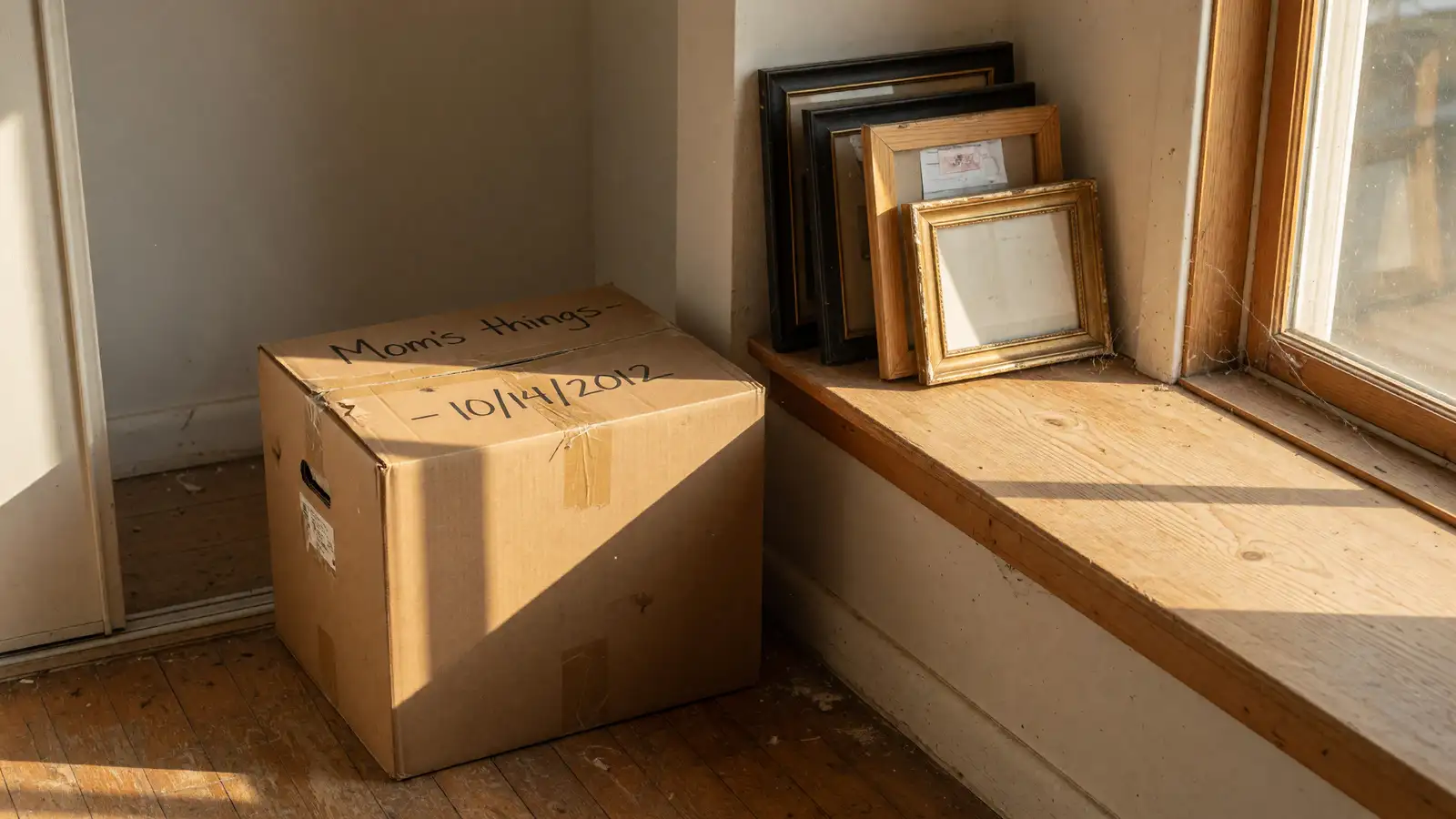
Yahoo’s cardboard box in every room will fail if you treat it as décor. Put the box where you already drop mail: bedroom chair, kitchen counter, hallway floor. If the box has to be fetched from a closet, you will not use it. At month end, the instruction is to pack those boxes and donate. That is a Saturday on the calendar, same as a bulk pickup. If you cannot name the Saturday, the boxes become a second stash.
Spot-and-toss is built for objects with no identity crisis. Mascara. A cracked spatula. A book you already finished and will not lend. Clothes fail that test because size, season, and “I spent $80” all talk at once. Do the instinct pass on trash first so the later closet session is only clothes. Mixing categories in one 15-minute block is how you spend the timer on a single sweater.
Homes & Gardens tells you to wait 48 hours on a questionable buy and to check what you already own. Do that check in the room, not in the app. Walk to the drawer. If a peeler is there, you were not missing a peeler. If the drawer is the problem, the freeze still holds. You do not get a new divider because the old ones are messy.
The 30-day and 60-day pauses in Yahoo are not two products. Start at 30. If inbound is still the habit on day 31, extend. A 90-day freeze from the Homes & Gardens SMART list is available if 30 felt easy. Easy usually means you were not buying much. The people who need the freeze are the ones who feel itchy on day four.
Selling is in the Post’s public list of exits. Selling is also a store you now run. Photograph this week or donate. Swapping is a friend with a date. Composting is food and some paper. None of those exits replace the keep/leave split on the bed.
What to do this week
Put one box on the bedroom floor. That is the only new object allowed, and it should be a box you already own. For seven days, anything you spot that is trash or an obvious donate goes in. Do not open a second category until the box leaves the house.
In parallel, freeze non-essential shopping for 30 days in the room that is actually failing. If that room is the closet, the freeze is clothes and hangers. If you already scheduled a 15-minute block, use it on one drawer, not “the vibe of the house.”
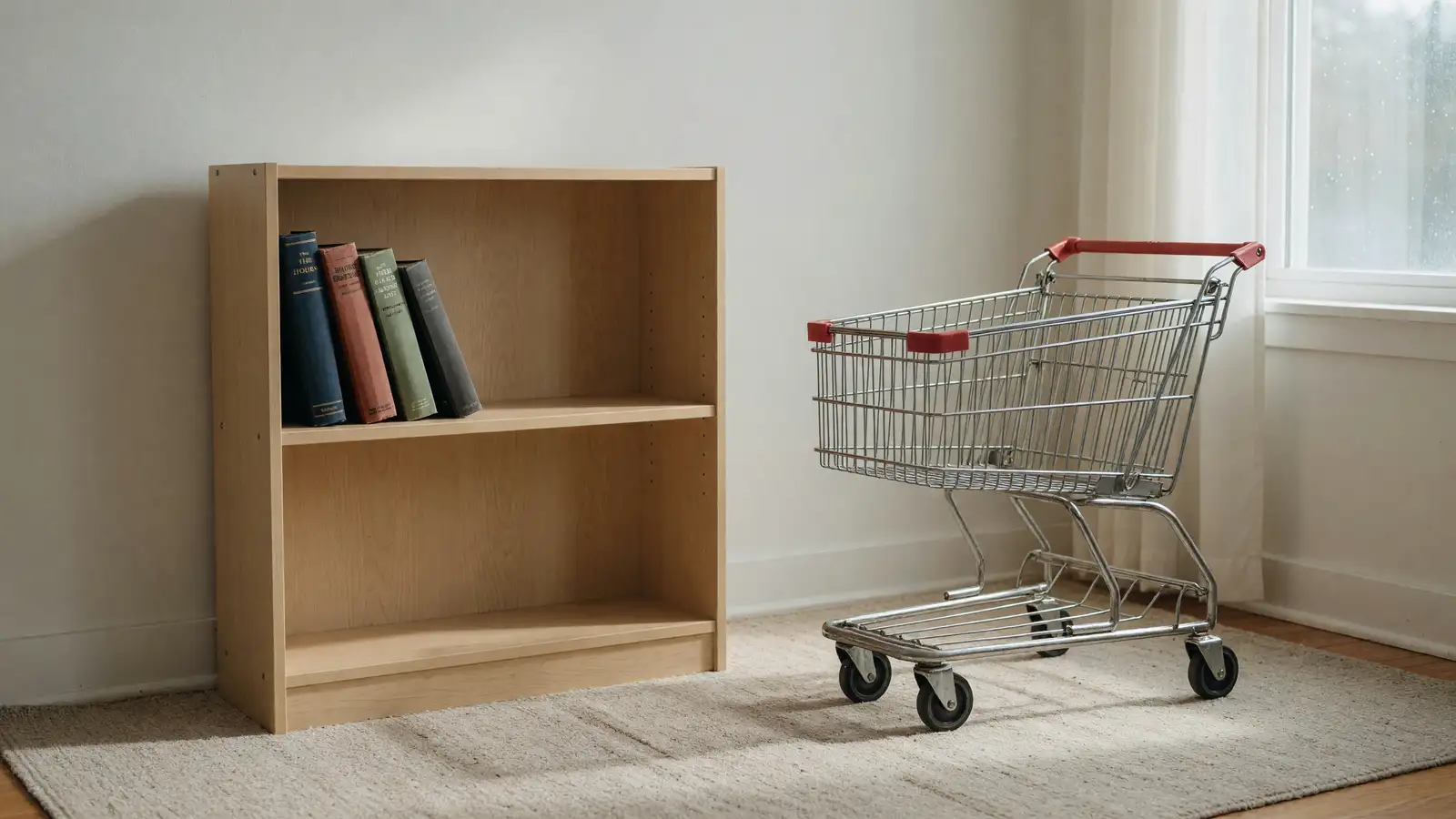
Count outbound items at the end of the week. If the number is zero, the method is not the problem. The walk-through never happened. If the number is 12 and you also bought a cart, you undid the week.
Write the Saturday donate date on the box in marker. If the date passes and the box is still in the hall, you did not declutter. You relocated.
A rate is a start. A closet still needs a yes pile, a no pile, and a date when the no pile leaves. The coach gave you the rate. You still have to pick the shelf.