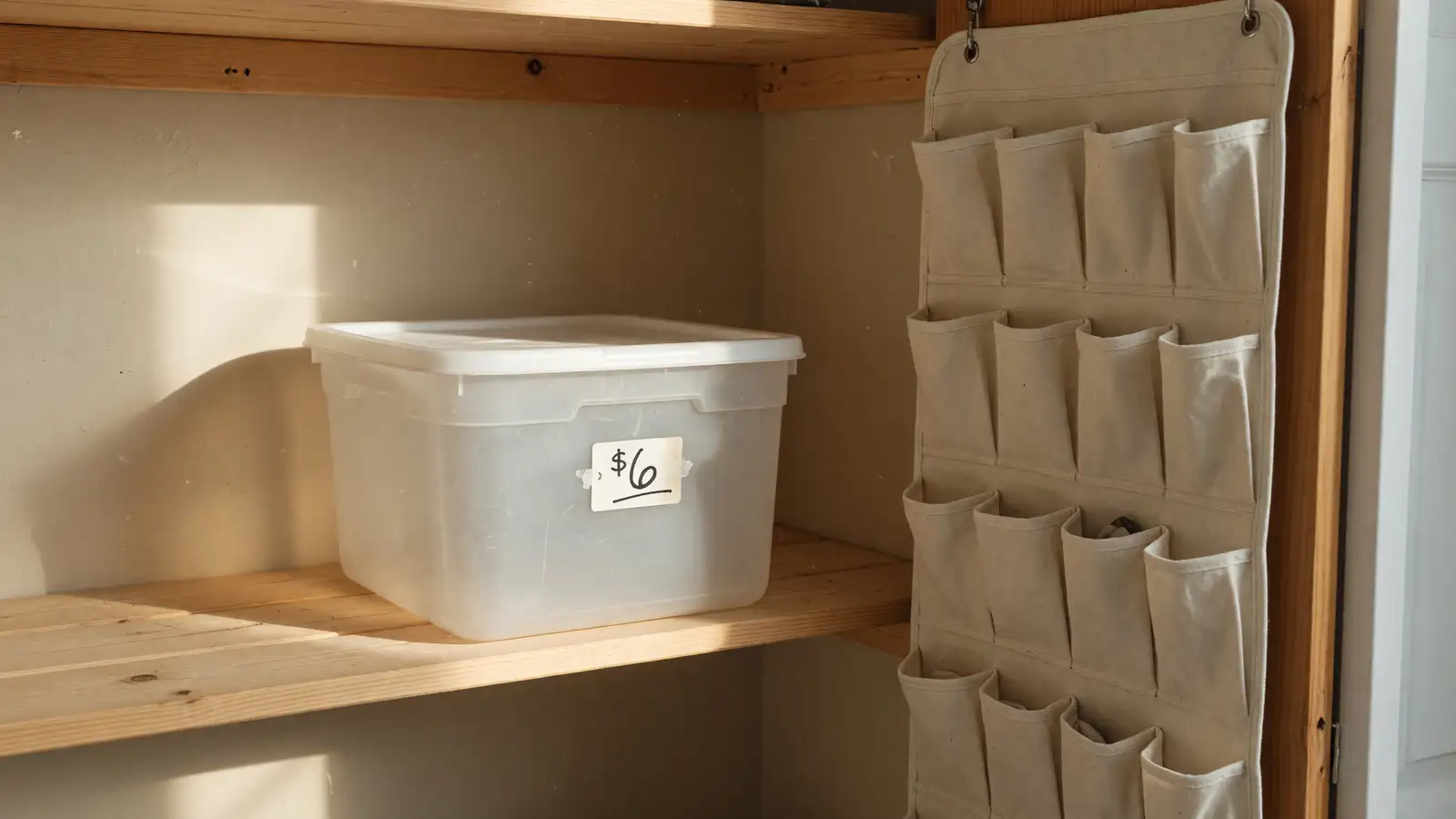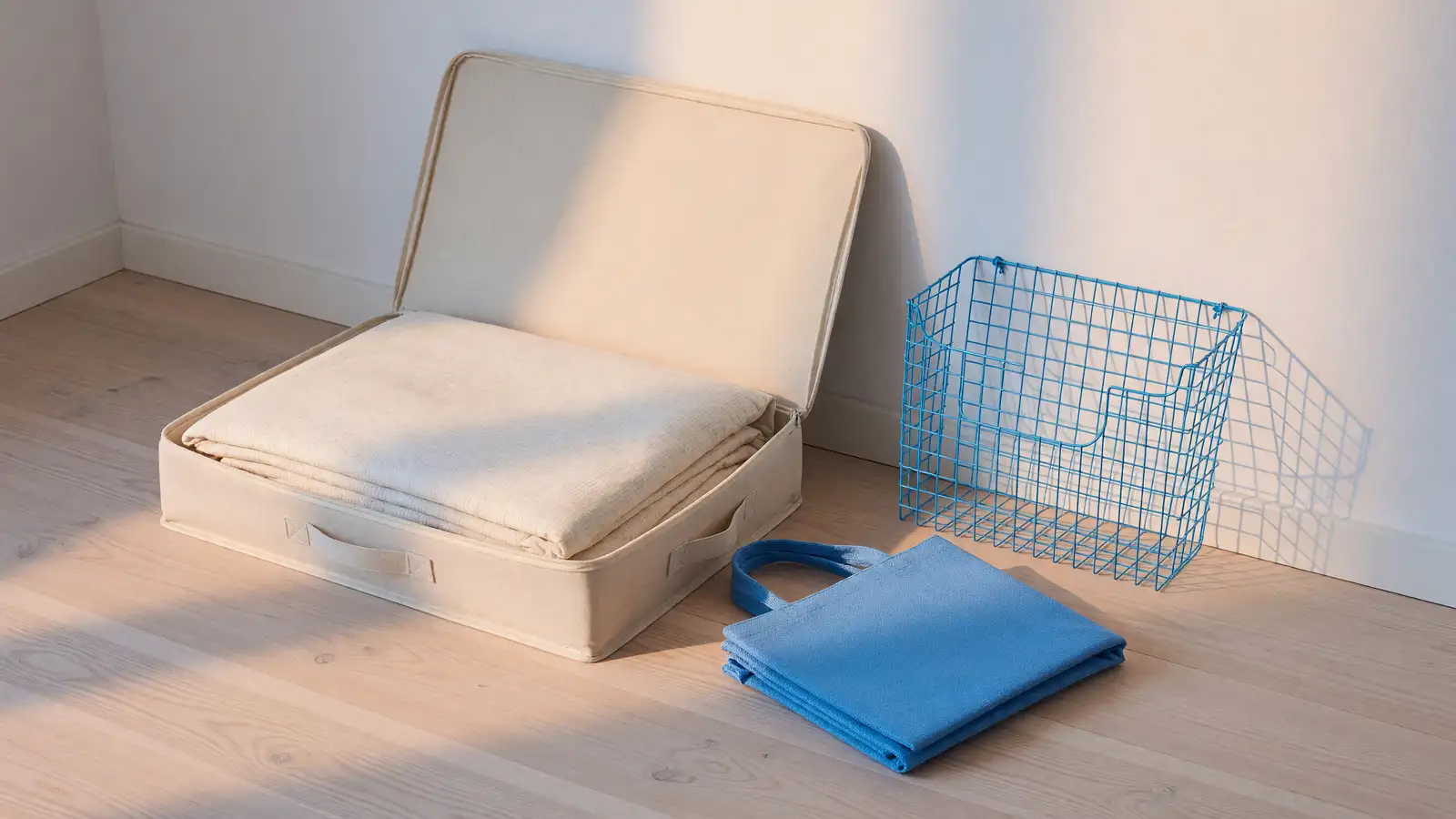
Homes & Gardens put IKEA’s GÖRSNYGG storage case at $2.99 on October 18, “while stocks last.” Ottilie Blackhall’s use case is spare bedding when the seasons flip. That is a sale SKU. It is not a closet.
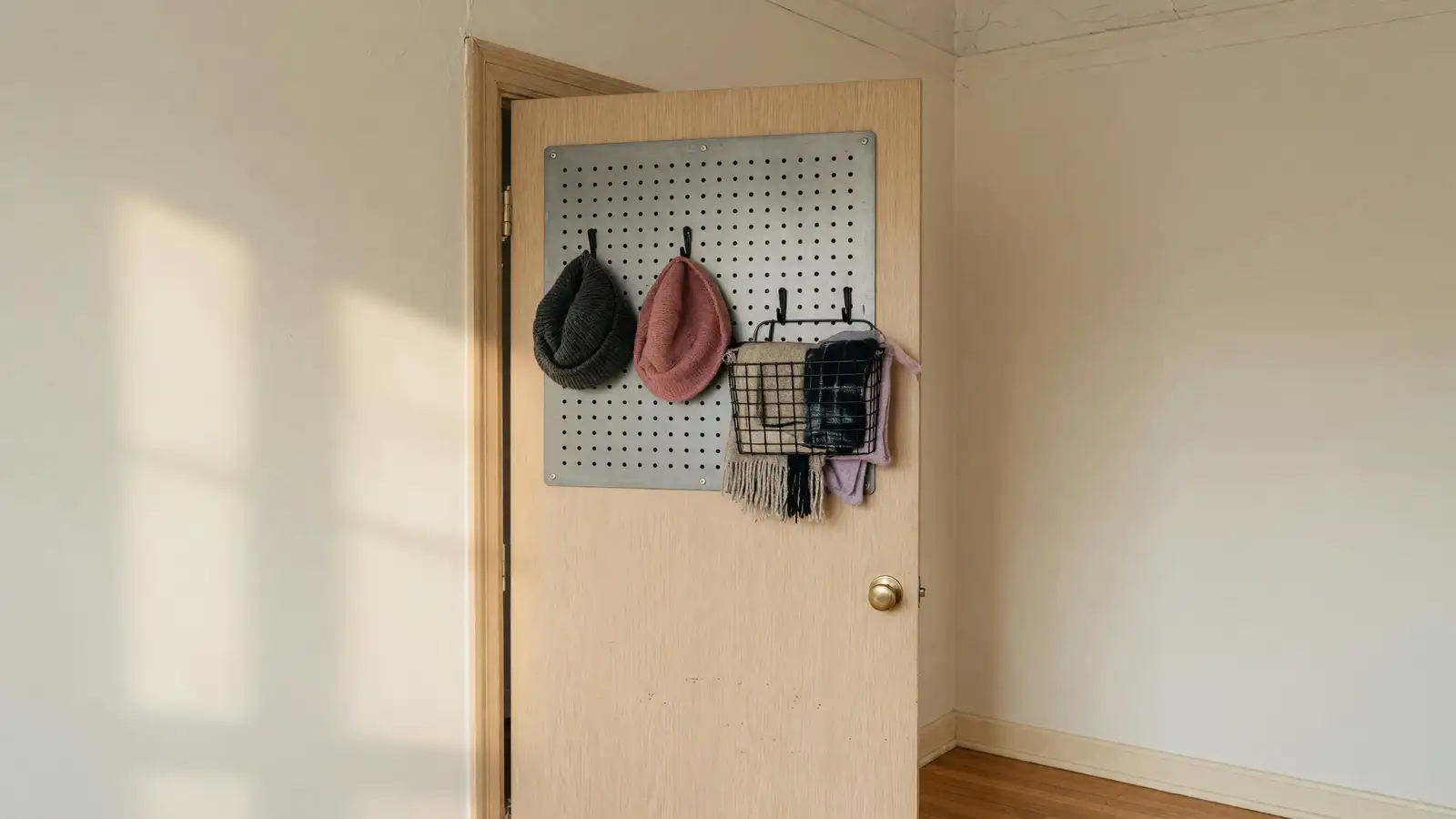
Apartment Therapy is selling a different object. GREJIG is a steel wall pocket, 22 7/8 inches wide, 11 inches tall, 6 3/4 inches deep, $7 in the body of that piece, in-store only, and you bring your own screws. IKEA’s newsroom on October 13 celebrated 30 years of FRAKTA with a bag now made from at least 90% recycled material. A Des Moines Register press release dated October 15 quotes NAR/NARI at 83% cost recovery for closet renovations. Four numbers. Four jobs. Mix them and you buy a bag and call it a renovation.
We already filed CR’s IKEA cart against an actual home and Good Housekeeping’s cabinet toss against a shelf. This week the cheap object is under the bed.
GREJIG is a wall, not a hangar count
Apartment Therapy’s writer wanted five GREJIG pockets. The store had one. That sentence is the product. A wall grid you can complete later is not a closet system you install on Saturday.
The pocket is open wire and powder-coated bright blue. The piece says it does not look like a bulky shelf and does not stick out as far. Uses they name: books, reusable bags, purses, pet leashes, notebooks, sunglasses. Add S-hooks for keys. None of those are hangers. If your problem is shirts in a pile, this SKU does not take shirts.
In-store only, “at least for now.” Check the site or call. If you order a Pax-shaped fantasy from the app and expect GREJIG in the box, you will get neither. Screws are not in the bag. A $7 organizer that needs a stud is still a $7 organizer plus a trip to the hardware aisle.
The URL slug on that article still says “35.” The body says $7. Quote the body. If your store tags it differently, believe the shelf tag, not a headline.
We already ran budget storage under $50. Steal one rule from it: price per zone, not price per object. GREJIG is an entryway zone if you actually hang it at the door you use. It is clutter if it leans against the wall in the bag.
A wall pocket next to the coats is a drop zone. A wall pocket in the bedroom because the closet rod is full is a delay. The delay is how under-bed cases multiply.
FRAKTA turned 30. It is still a bag
IKEA’s October 13 newsroom post is a birthday, not a storage catalog. FRAKTA launched in 1996 as a carrier for the parking lot. The update keeps the look and the low price and switches the material to a minimum of 90% recycled content. Production is fully automated. Handles are fused into the sheet instead of stitched. The bag is in stores worldwide.
The same post lists what people already do with it: laundry, storage, recycling, moving. That list is a warning. A bag that can be all four jobs will be all four jobs in the same hallway. Laundry in a FRAKTA on Monday becomes “storage” on Thursday because nobody emptied it.
Ninety percent recycled is a materials claim. It does not add a lid. It does not add a label. It does not keep moths out of wool. If you need a sealed bin for winter bedding, GÖRSNYGG or a lidded box is the closer SKU. FRAKTA is how you carry the bin to the car.
Fused handles matter if you have ever had a stitched handle peel. They do not matter if the bag sits open under a bed and takes dust. Pick the failure you actually have.
Do not use the anniversary as permission to buy ten. One bag for the car, one for recycling if that is already your system, and stop. A 30-year icon in a stack of twelve is a pile.
83% is a renovation number
The NAR/NARI 83% figure arrived this week inside a contractor press release. Strickland’s Home in Wilmington, North Carolina, and North Myrtle Beach, South Carolina, designs closets, pantries, garages, laundry rooms. The release is careful in one useful place: 83% is an estimate, not a guarantee, and it applies to closet renovations, not pantry or garage work. Local market, scope, materials, and buyers still move the number.
That is the opposite of $2.99. A closet renovation is labor, measurements, and a system that matches the clothes you already own. Cost recovery is a resale story. If you are not selling the house, 83% is trivia. If you are selling, a $2.99 under-bed case will not show in the listing photos the way a built-in does.
Do not average the two. You cannot 83% your way out of a $2.99 impulse buy, and you cannot $2.99 your way into a NAR closet.
Custom work, in that release, starts with dimensions, intended use, and the belongings you already have. That sentence is the part worth stealing even if you never call North Carolina. Measure the rod. Count the hangers. Then decide if the gap is a bin, a wall pocket, or a carpenter.
Garage and pantry are explicitly out of the 83% claim. If your mess is the pantry, do not quote closet ROI at yourself. Different room, different payback, different SKU.
Under-bed is overflow, not a zone
Homes & Gardens is honest about the category. Storage cases and under-bed solutions are not new. They are cheap. GÖRSNYGG at $2.99 is the extreme end of cheap. The pitch is spare bedding as the seasons change. That only works if the bed has clearance, the case actually closes, and you can pull it out without a fight.
If the case is the home for “I might need this,” it is a maybe box on the floor. We have been through maybe boxes. Under-bed is just a maybe box with a dust ruffle.
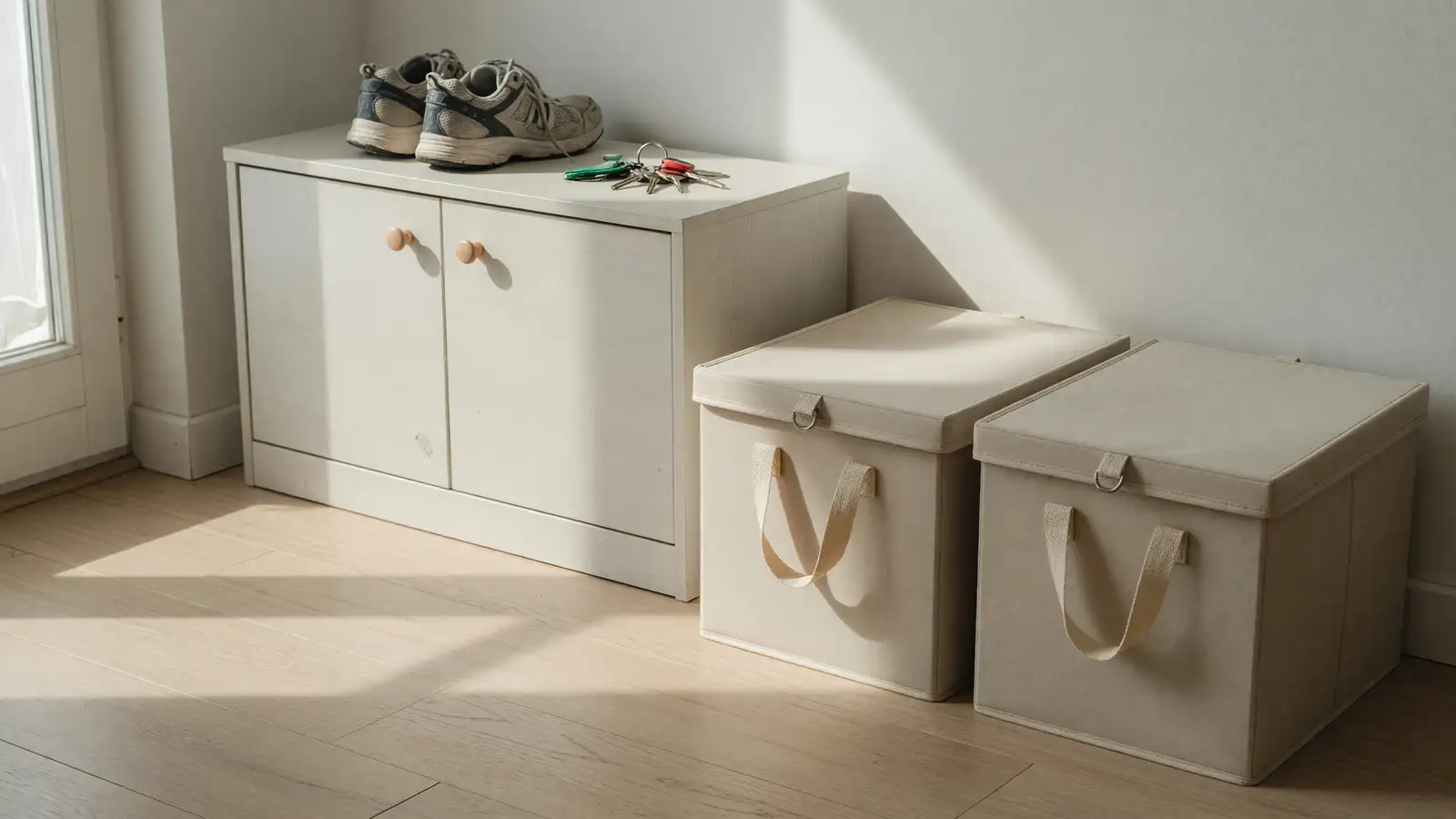
Blackhall also points at DIMPA, a transparent polypropylene bag that is easy to wipe and billed as inhibiting mold, and at KUGGIS, a lidded box you can stack. Those are different tools. DIMPA is bulky and visible. KUGGIS is a cube with a lid. GÖRSNYGG is the $2.99 under-bed case. Buy the one that matches the object. Do not buy all three because they appeared in one roundup.
The wearable GÖRSNYGG bag in that same piece is a backpack for moving or heavy groceries. It is not under-bed storage. If you put bedding in a backpack under the bed, you have invented a worse case.
Seasonal bedding is a real category. Two duvets, summer and winter, can live in one case if you actually swap them. Four extra blankets “for guests” are how the second and third cases appear. Guests can use the closet shelf you just cleared. The floor under the bed is for the swap, not the archive.
Clearance is a measurement. If the case only fits when you compress it, you will not pull it out in November. A $2.99 object you never open is more expensive than a $12 box you use.
What to buy this week, and what to skip
If the bed has height and you have one seasonal swap, $2.99 GÖRSNYGG is a fair experiment. One. Label the short side facing out. If you cannot name the contents in three words, do not buy the case.
If the mess is the door you actually use, GREJIG at $7 is the tighter spend, provided the store has it and you own a drill. Hang it at the height your hand already goes. Books or bags, not both, until you see which one sticks.
If you need a carrier, FRAKTA’s 30-year update is the same bag with a greener sheet. You probably already own one. The recycled claim does not require a second.
If the closet cannot hold the clothes you wear in a normal week, you are in NAR territory, not IKEA’s under-bed aisle. Measure first. The 83% figure is for people who will write a check to a closet shop. It is not a coupon for more bins.
Skip the set of five wall pockets until the first one earns the wall. Skip stacking KUGGIS “because they stack” if you do not have a shelf. Skip DIMPA for wool. Skip quoting 83% on a pantry.
Label makers are cheaper than a second case. If you cannot see the label from a standing position, you will not rotate the bedding. Under-bed only works as overflow when the retrieval cost is lower than walking to a labeled bin on a shelf. If retrieval means moving a vacuum and a pair of shoes, you will not retrieve. That is how a $2.99 case becomes landfill with sheets still in it.
DIMPA, in the same Homes & Gardens roundup, is the bulky cousin: transparent, wipeable, polypropylene that the copy says inhibits mold. The examples there are car tires, sports gear, seasonal clothing. That is garage and hall-closet volume. It is not GÖRSNYGG. If you put a duvet in DIMPA you will be able to see it, which is good, and you will not slide it under a low bed, which is the point of the $2.99 SKU. KUGGIS is the cube with a lid that stacks. Stacks need a wall or a shelf. Under a bed, a stack is a trap.
The NAR release names two showrooms. Wilmington, North Carolina. North Myrtle Beach, South Carolina. If you do not live near either, the 83% figure is still just a national estimate riding a local contractor’s pitch. You can steal the process without the showroom: dimensions, intended use, belongings you already own. You cannot steal a carpenter from a press wire.
Entryway vs bedroom is the other split. GREJIG belongs where you drop keys. GÖRSNYGG belongs where you store the duvet you are not using. FRAKTA belongs in the car or the recycling run. When all three live in the bedroom, you have built a store aisle, not a home. We already said the floor is not a system. Under-bed is still the floor.
The week is a price list. $2.99, $7, 90% recycled, 83% recovery. Only one of those is a closet. The rest are bags, pockets, and a press release. Put the bedding in one case if you must. Put the keys on the wall. Leave the renovation number for the day you measure the rod.