A September reset gets summer out of the house. That is a different job from what happens after the first cold night, when you close the windows and keep them closed. The air you breathe for the next five months is mostly last month’s air, pushed through a filter you have not looked at since June.
Quartz’s September 7 roundup of Reader’s Digest advice is not a Pinterest board. It is a list of unglamorous jobs: heating before you need it, drafts, gutters, outdoor water that will freeze, fireplace, detectors. Carrier’s version on KPVI the same day is even more blunt. Clear the gutters, pull leaves off the outdoor unit, change the filter, test the alarms. None of that is “spark joy.” All of it decides whether the house smells like last year’s dust by Thanksgiving.
We already published a September cleaning reset built around one task a day so you do not lose a weekend. Keep that pacing. Change the target. Closed-house season is about recirculation: filters, the surfaces that feed them, and the outdoor equipment that either keeps water away from the foundation or dumps it into the basement.
Why a closed house collects a different kind of dirt
Open-window months are forgiving. Cooking smells leave. Dog hair finds the yard. You can steam a bathroom and then actually dry it. Once the house is sealed, every particle you kick up has one exit: a return vent, a purifier, or your lungs.
That is why the fall list keeps circling HVAC even when you came here for a mop. Reader’s Digest, via Quartz, tells you to check filters in furnaces, air conditioners, air handlers, humidifiers, and air cleaners, not just the rectangle in the hallway. Anthony Carrino’s line in that piece is the one worth taping to the utility closet: clogged filters make the system work harder and burn more energy. Clean filters are airflow. They are not a vibe.
The dirt itself also changes. Summer dust is pollen and grit from shoes. Fall dust, once the heat kicks on, is a mix of that leftover grit plus whatever has been sitting in ductwork, plus the first load of dry skin and pet coat. If you only wipe the coffee table, you are cleaning the display, not the reservoir.
A closed house also hides water. You stop seeing condensation on the inside of windows because you stop looking. You stop noticing the shower film because the bathroom door stays shut to keep heat in. TODAY’s 2026 shower-cleaner tests are shopping content, but the useful sentence is not a brand name. Cleaning and disinfecting are not the same job. If you only “clean” glass, you still have a wet room with no air exchange. That is a mold schedule, not a shine schedule. We already walked through bathroom mold prevention. The fall version is shorter: squeegee, then crack the door after the shower even if the hallway is cold.
The filters you forgot exist
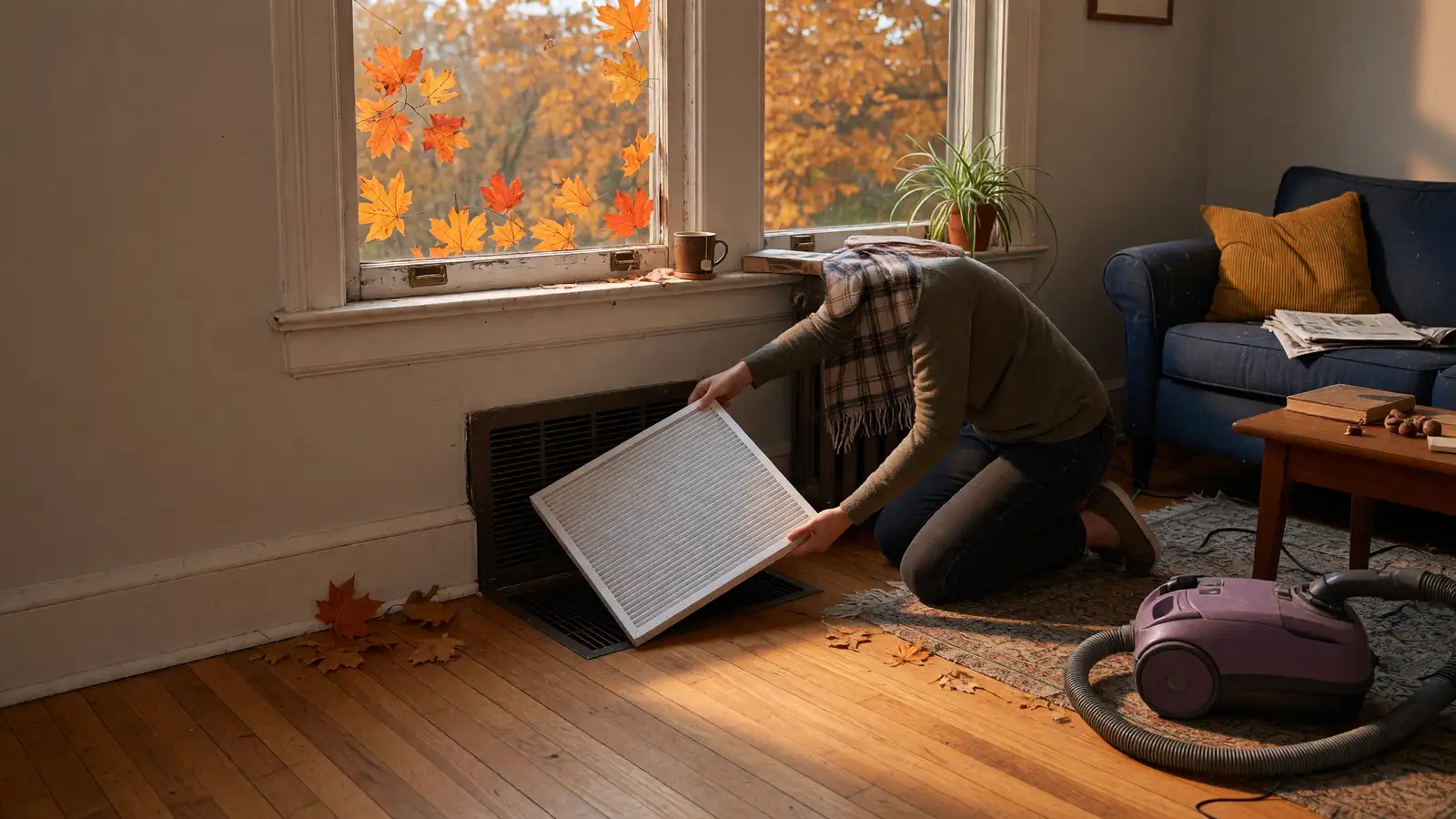
Start with the furnace or air handler filter, before the first full week of heat. Carrier’s checklist says to inspect it before you switch the system over and then keep checking it all winter, typically every one to three months. Reader’s Digest uses 30 to 90 days. Those ranges agree. What people skip is the other filters in the same house.
Humidifiers. If you run one in winter, last year’s mineral crust is still in the tank. A dirty wick is a science fair of white dust on the nightstand. Clean the tank, replace the wick or pad, and put the filter change on the same calendar as the furnace filter so you do not invent a second chore.
Air cleaners and portable purifiers. We already have a seasonal air-purifier maintenance guide. The fall-specific move is to do it the week you close the windows, not when the “replace filter” light finally nags you in January. If the machine has been sitting since April, vacuum the intake grill before you turn it back on. Otherwise you blow spring pollen into a sealed room.
The dryer. It is not HVAC, but it is a heat appliance you will run more as wet coats come inside. If the September reset never reached the vent hose, do that before you run a “cozy bedding” wash. A clogged dryer vent is a fire problem wearing a laundry costume.
Outdoor condenser or heat-pump unit. Carrier’s note is simple: pull leaves, grass clippings, and debris away from the cabinet so air can move. A heat pump that is wearing a leaf coat will short-cycle and you will blame the thermostat.
Do not buy a four-pack of filters in a random size because the hardware store display was on the way to the apples. Pull the old one, photograph the size printed on the cardboard frame, then shop. A too-small filter leaks dirty air around the edges, which is worse than a slightly dirty filter that actually fits.
Health-first zones, not a prettier coffee table
On September 3, Southern Living asked Sandy Willis, a Molly Maid owner, what she does in her own house. She deep-cleans every three to four months, not twice a year. She splits the house into zones and spends a few hours a week for about two weeks. She also admits she puts it off, which is the most useful sentence in the article. If a professional delays baseboards, you are allowed to delay them. You are not allowed to pretend wiping the TV stand counts.
Her health-first list is the closed-house list: carpets, upholstery, high-touch surfaces, baseboards, behind appliances, window treatments. Those last three are where summer dust waits for the furnace to wake it up.
Behind the fridge and stove is not a “someday” job in September. It is a heat-season job. The coils and the floor strip collect grease and pet hair that the return air will redistribute. Pull the fridge if you can do it without tearing the water line. Vacuum. Wipe. Put it back. One zone, one evening.
Window treatments. You closed the windows. The drapes are now a filter you never wash. Vacuum them on a brush attachment, or take the machine-washable ones down the same week you change the HVAC filter. If they smell like last winter’s cooking, they are contributing to the smell you will blame on the furnace.
Baseboards and the first two feet of wall. That band is where the vacuum misses and the heat registers blow. A damp microfiber cloth does more than a scented spray.
Upholstery and carpets. You do not need a truck-mount for a seasonal pass. Vacuum slowly, including the underside of cushions. If someone in the house has allergies, this is the week to run the machine you keep saying you will rent. Willis puts carpets on the health list for a reason: they store what the air later recirculates.
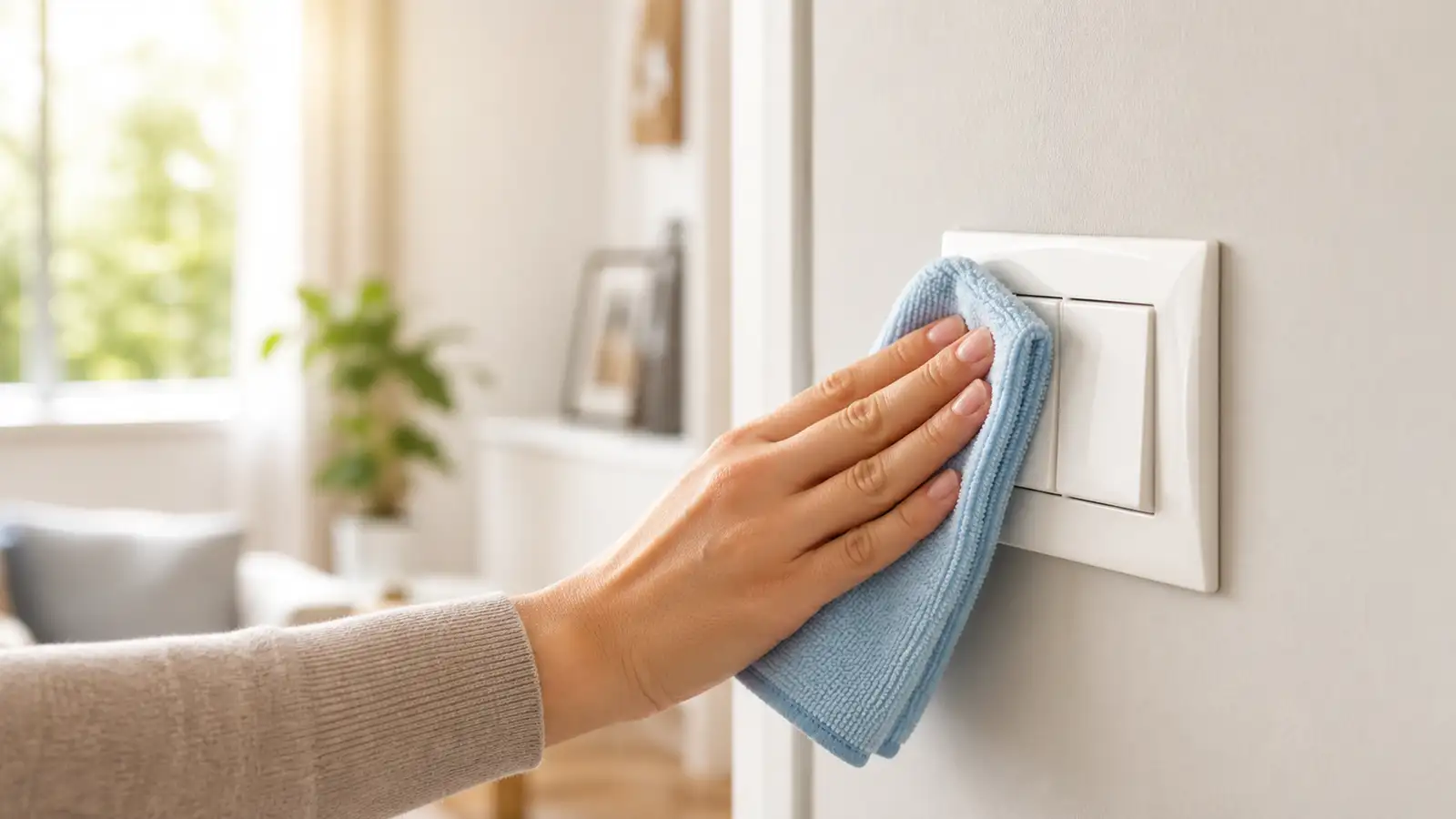
High-touch surfaces are the cheap win. Light switches, door handles, remote controls, the thermostat. Closed-house season is also cold-season virus season. You do not need a manifesto. You need a cloth and a disinfectant that is actually a disinfectant.
Gutters and the outdoor unit are indoor work
It feels like yard work. It is moisture control for the rooms you sleep in.
Carrier’s first item is gutters and downspouts. Leaves pack in, water backs up, ice dams form after the first freeze, and water goes where you do not want it: fascia, attic, basement. You do not have to become a roofer. You do have to get the channels clear while you can still stand outside without losing feeling in your fingers. If the house is two stories and you are not comfortable on a ladder, pay someone. Falling off a ladder is not a cleaning routine.
Quartz, still following Reader’s Digest, adds the water you forget: hoses, sprinklers, pressure washers. Drain them. Water expands when it freezes. A split hose is annoying. A split outdoor faucet can become an indoor ceiling stain in February.
Trees. Weak branches near the house pick up ice and hit roofs and power lines. That is not dusting. It is the reason you might be cleaning a wet living room later. If a limb is over the roof and you cannot tell whether it is dead, that is an arborist, not a Saturday.
Decks. Clean and reseal or stain before winter if the wood is due. Sealing now keeps water out of the surface through freeze-thaw. Skip it if the deck was done last year and still beads water. Do not invent a project because a checklist had a number 8.
While you are outside, look at the dryer vent flap and the bathroom exhaust hoods. If they are packed with lint or painted shut, indoor moisture has been staying indoors. That is the mold article again, just with a different door.
Drafts, windows, and the dust in the tracks
Quartz’s second job is the unromantic one: small gaps around windows, doors, and pipes. Cold air is a comfort problem and a dirt problem. Incoming air carries grit. It also makes you crank the heat, which stirs the reservoir we already talked about.
Do a cheap test. On a windy afternoon, hold the back of your hand around the window frames and the bottom of exterior doors. Where you feel moving air, you have a gap. Foam weatherstrip and a door sweep are not decorating. They are how you stop paying to heat the porch.
While you are at the windows, vacuum the tracks. That gray felt is last summer. Closed windows do not make the tracks clean; they just stop you from noticing them. Wipe the sills. If you have interior storms or inserts, this is the week to put them on, after you clean the glass, not before. Trapping dirt between panes is a classic own-goal.
Ceiling fans. If you reverse them for winter (updraft, to push heat off the ceiling), clean the blades first. Otherwise you will decorate the room with a gray ring the first time they spin. We already covered how to clean ceiling fans without a dust storm. Do that before you flip the switch, not after.
Fireplace, detectors, and the first fire
If you have a wood-burning fireplace, the first fire of the season is a cleaning deadline, not a mood. Quartz flags smoke and carbon monoxide detectors in the same breath as wood, propane, and charcoal. Those fuels can push CO to dangerous levels. A detector with a dead battery is wall art.
Carrier’s checklist pairs detector tests with the clock change. Do not wait for the clock if you will light a fire in September. Test them this week. Replace batteries if they chirp or if you cannot remember the last time you did it. CO alarms belong near sleeping areas and wherever you burn fuel, following the instructions on the unit, not a guess.
The fireplace itself: look at the damper, the screen, and the last bag of ash. If you have not had the chimney swept and you burn wood every winter, this is a hire, not a YouTube. Creosote is not a metaphor.
If you do not have a fireplace, you still have a furnace. Same week, same detectors. The closed house is now a box with a combustion appliance in it. Treat it that way.
Skip mixing products while you are in a heroic mood. TODAY’s shower piece repeats the rule people still break: bleach plus ammonia makes chloramine vapors. Respiratory harm. High concentrations can kill you. Closed-house season makes that worse because you have less outdoor air to dilute a mistake. One product. Ventilate. Leave.
A two-week zone schedule that fits around the reset you already started
Use Willis’s two-week, few-hours-a-week shape. Overlay it on the September reset if you are still in the middle of that. Do not run two marathons.
Week A, two evenings plus one outdoor block
- Evening 1: pull and photograph every HVAC, humidifier, and purifier filter. Replace what is dirty. Vacuum the grills. Write the next date on the calendar at 45 days, not “sometime.”
- Evening 2: one hidden zone. Behind the fridge, or the window treatments in the rooms you actually live in, or the baseboards on the main floor. Pick one. Finish it.
- Outdoor block: gutters if you can, outdoor HVAC cleared of leaves, hoses drained, dryer flap checked. If any of those needs a pro, schedule the pro this week, do not add it to a mental list.
Week B, two evenings plus detectors
- Evening 1: carpets and upholstery in the rooms with the most sitting. Slow vacuum. Cushions out.
- Evening 2: bathrooms as wet rooms, not as perfume. Squeegee. Disinfect high-touch. Do not mix bleach and ammonia. Leave the door open after showers for a while even if the hall is chilly.
- Anytime: test smoke and CO. Fireplace or furnace visual check. Weatherstrip the door that always whistles.
That is not a whole-house deep clean. Willis does not even pretend a single Saturday covers a real house. The point of a closed-house routine is to stop last season’s dust from becoming this season’s air supply.
If you already did the September one-task-a-day list, you do not redo the pantry. You do the sealed-envelope jobs that list never reached. If you did nothing in September, start here anyway. The apples will wait. The filter will not.