Ceiling fans are the most neglected cleaning surface in most homes for a simple reason: they are overhead, out of sight, and cleaning them typically results in dust raining down on everything below. The dust that accumulates on the top of fan blades is substantial enough that one cleaning can undo an hour of vacuuming if not done correctly.
The good news is that ceiling fan cleaning, when done with the right technique, is neither messy nor difficult. Here is the method that keeps dust contained and fans running smoothly.
The Pillowcase Method
The most effective technique for cleaning ceiling fan blades without spreading dust is deceptively simple. Slide an old pillowcase over each blade one at a time, press the fabric against the top and bottom of the blade, and pull the pillowcase toward you. The dust is captured inside the pillowcase rather than falling onto the floor and furniture below.
This method works for both sides of the blade simultaneously and requires no cleaning products. The pillowcase traps the dust, and when you are finished, you take the pillowcase outside, turn it inside out, and shake it vigorously. Wash the pillowcase before using it for bedding again.
For fans with wide blades or heavy dust buildup, a microfiber cloth used with the same trapping motion works similarly. Wrap the cloth around the blade, press firmly, and pull. The dust stays in the cloth.
The Extended-Reach Tools
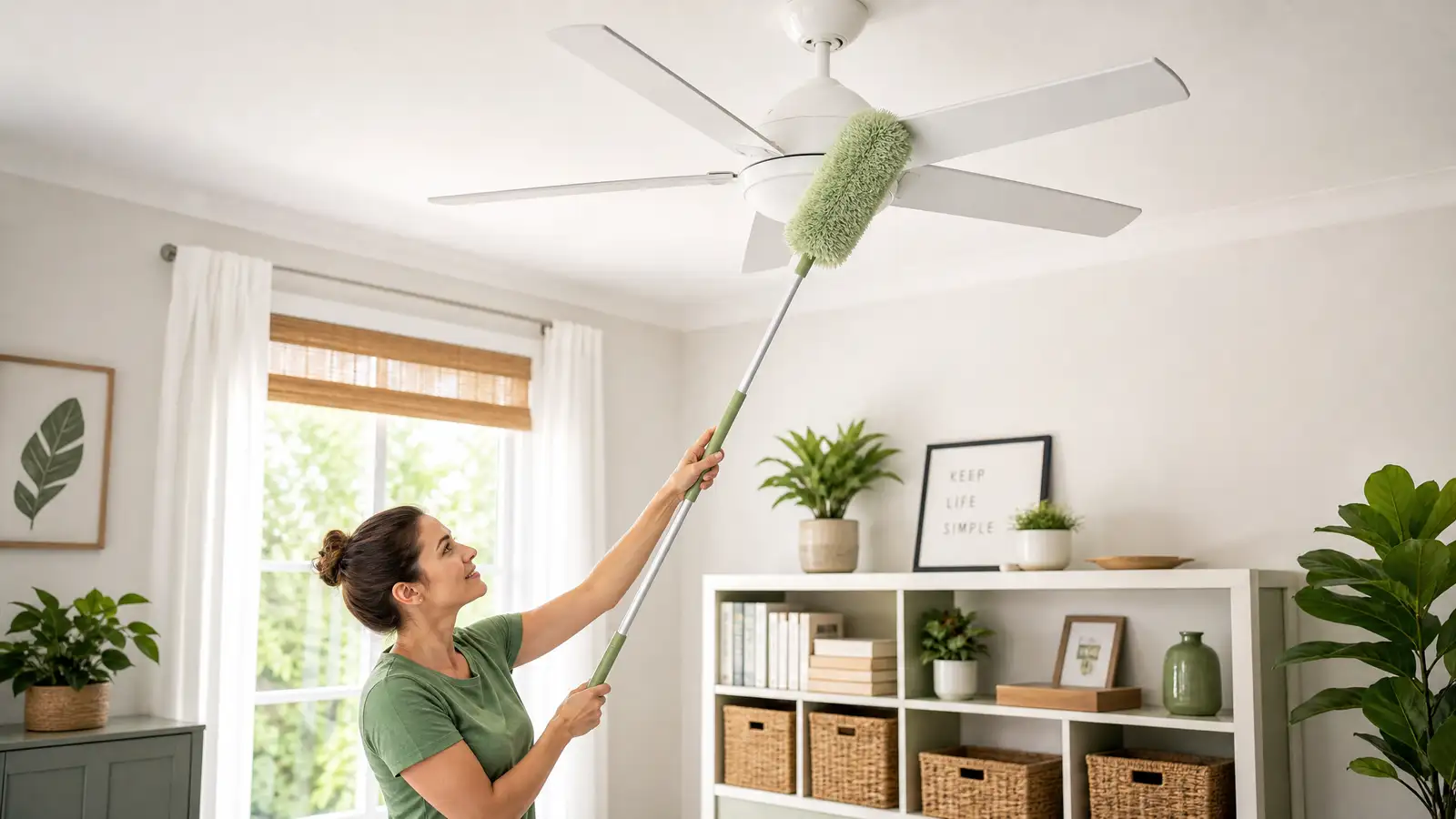
For ceilings higher than eight feet, a ladder is both inconvenient and potentially unsafe on uneven floors. An extendable duster with a microfiber head reaches ceiling fans from floor level and bends to the angle of the blades. The U-shaped or hinged head is essential — straight dusters cannot clean both the top and bottom of a blade simultaneously.
For stubborn dust that a dry duster cannot remove, a slightly dampened microfiber cloth attached to the duster head handles the job. Wring the cloth thoroughly so it is barely damp. Excess moisture drips and creates water spots on whatever is below.
The Seasonal Maintenance
Ceiling fans should be cleaned at the start of each season when you change the direction of the fan. Clockwise in winter to push warm air down from the ceiling. Counterclockwise in summer to create a cooling breeze. The direction change is the natural reminder to clean the blades.
During the cleaning, check the fan’s operation. Wobbling indicates loose blade screws or a blade that is out of balance. Tighten all visible screws with a screwdriver. If wobbling persists, a balancing kit — included with most new fans and available at hardware stores for under ten dollars — attaches a small weight to the offending blade.
A light coating of furniture polish or a dryer sheet rubbed on the blades after cleaning creates an anti-static surface that repels dust. The coating lasts several months and noticeably extends the time between cleanings. Apply sparingly. Excess polish becomes sticky and attracts dust rather than repelling it.
The Forgotten Components
The light fixture attached to most ceiling fans is cleaned on the same schedule as the blades. Remove the glass shade, wash it in warm soapy water, dry thoroughly, and reinstall. Dust the light bulbs while the shade is off. The bulbs accumulate a surprising amount of dust that dims the light output.
The pull chain and the motor housing also accumulate dust. A quick wipe with a microfiber cloth handles both. For the motor housing vents, a vacuum crevice tool removes the dust that otherwise gets pulled into the motor, where it can cause overheating and premature failure.
Ceiling fan cleaning takes ten minutes per fan, four times per year. The payoff is cleaner air, a fan that runs quietly and efficiently, and the absence of the dust bunnies that eventually drop from neglected blades onto your furniture.