A living room full of toys does not have to look like a daycare exploded in it. I learned this the hard way after my daughter turned two and our once-minimalist coffee table vanished under a mountain of Duplo. Here is what actually worked.
The single biggest shift was accepting that toys belong in the living room and planning for them instead of fighting it. When you pretend the living room is a toy-free zone, toys just pile up on every surface. When you give them a proper home, they stay contained.
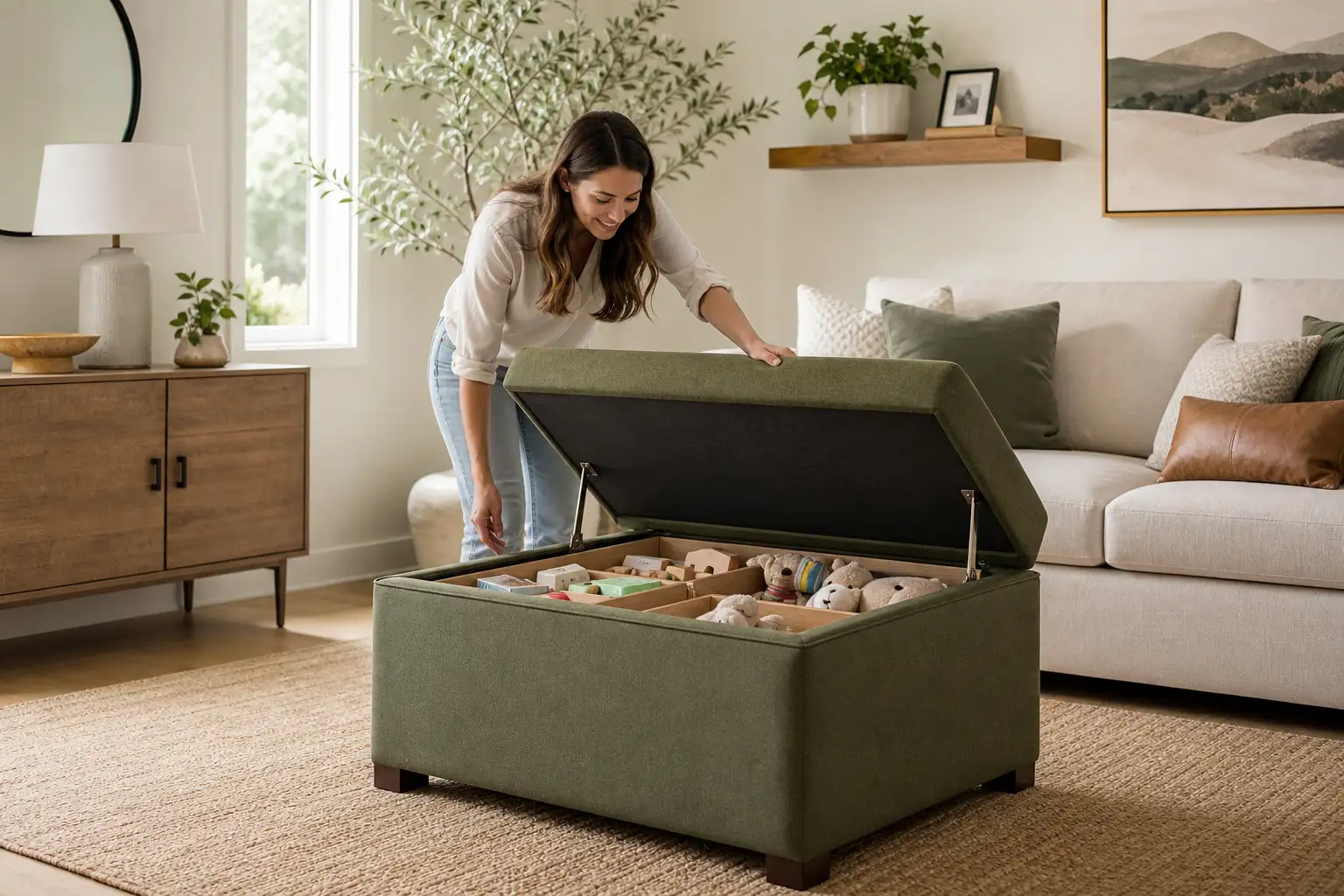
Storage ottomans are the MVP here. Pick one with a hinged lid that opens easily and make it the dedicated toy box. The key is that an ottoman looks like furniture, not toy storage. Guests sit on it without knowing there are forty Hot Wheels inside. I prefer a rectangular one that doubles as a coffee table; the IKEA Kivik ottoman with storage or the Songesand bench both work well if you add a tray on top for drinks.
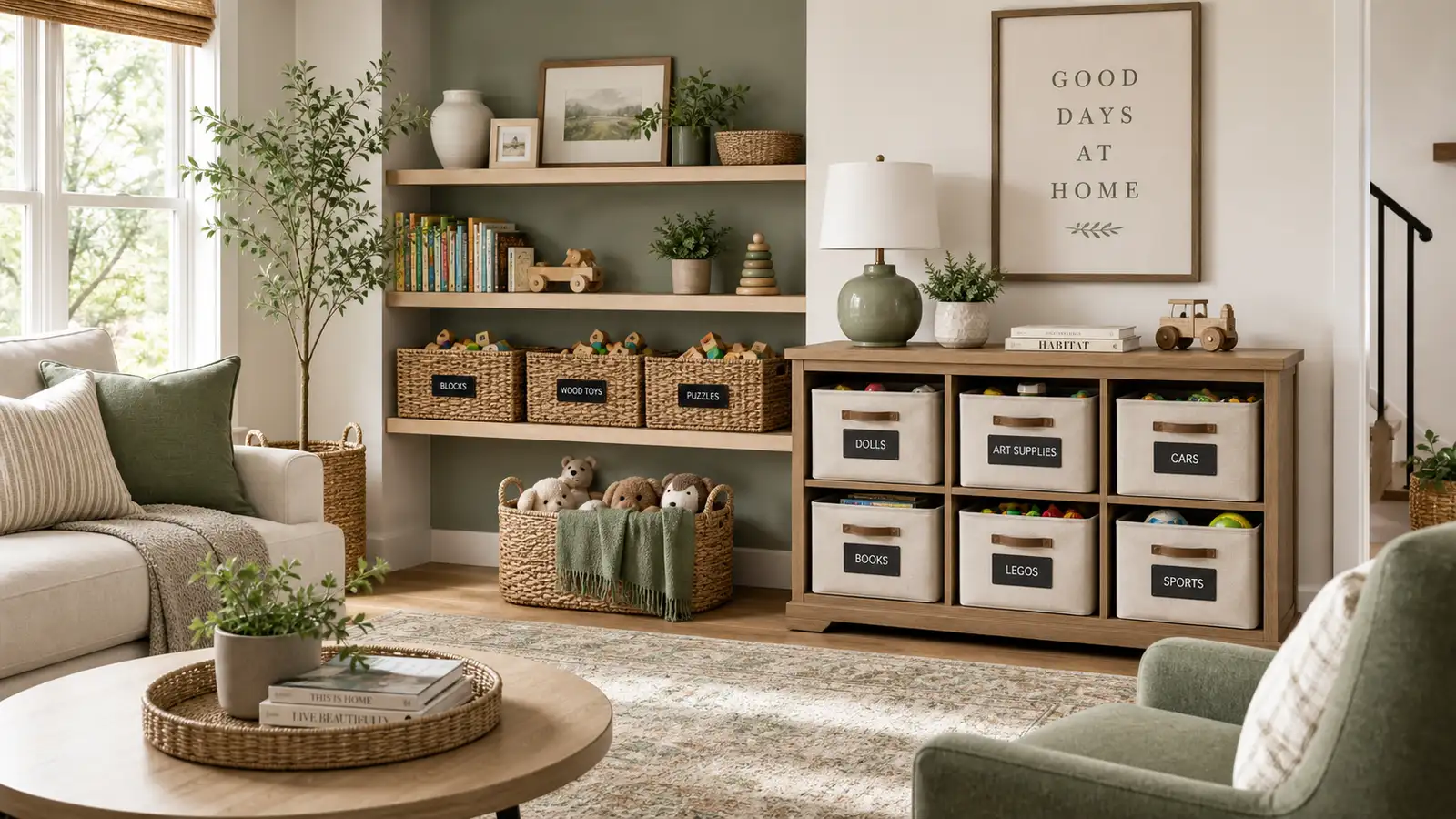
Cube shelving with fabric bins is the other workhorse. An IKEA Kallax unit on its side, eight cubes across, can hold an astonishing amount of stuff. Label each bin with a picture for pre-readers or a word for older kids: blocks, cars, animals, puzzles. The visual labels mean kids can clean up without help. Here is the trick nobody mentions: use open bins, not lidded boxes. Toddlers will not open a lid to put a toy away. They just will not. If the bin has no lid, they toss the toy in and move on. Lidded boxes end up with toys stacked on top of them.
Wall-mounted book ledges changed how my kids interact with books. Instead of a bookshelf where only spines show, picture ledges display covers face-out. Kids pick books they can see. IKEA Mosslanda ledges are cheap and mount in ten minutes. Keep only the current rotation of fifteen to twenty books on display and store the rest in a closet. Swap them out every few weeks.
The toy rotation system sounds fancier than it is. Keep a few large clear bins in a closet with about two-thirds of the toys packed away. Every two or three weeks, swap the bins. Kids treat the returning toys like brand new ones. This single habit cut the amount of visible toy clutter in our living room by more than half. The bins in the closet are labeled by category so the swap takes five minutes.
Everything needs a designated home, and that home needs to be obvious. A basket for dress-up clothes. A low hook for the firefighter helmet. A small bin on a shelf for the tiny random plastic things that accumulate from birthday parties. If a toy does not have a home, either make one or donate the toy.
The clean-up routine matters more than the storage system. We use a clean-up song that is exactly two minutes long. When it plays, everyone puts things in bins. Kids as young as two can participate if the system is simple enough. The song signals the end of playtime in a way that a parent’s nagging voice does not.
For older kids, the rule is simple: you can have as many toys as fit in your designated storage. If the bin is full and you want something new, something old has to go. This teaches the one-in-one-out habit early.
The living room should still feel like a living room when toys are put away. Keep adult things visible too: a stack of books, a throw blanket, a plant. The message is that this space belongs to everyone. When kids see you treating the space with care, they pick up on it.