The living room serves two competing purposes in a household with children. It is a space for adults to relax and socialize, and it is a space for children to play. Without intentional storage, the toys win. They spread across the floor, colonize the coffee table, and migrate under the sofa, turning the adult space into a playroom by default.
The solution is not to ban toys from the living room. It is to design storage that makes toys disappear when playtime ends. Here are the strategies that work.
Furniture with Hidden Storage
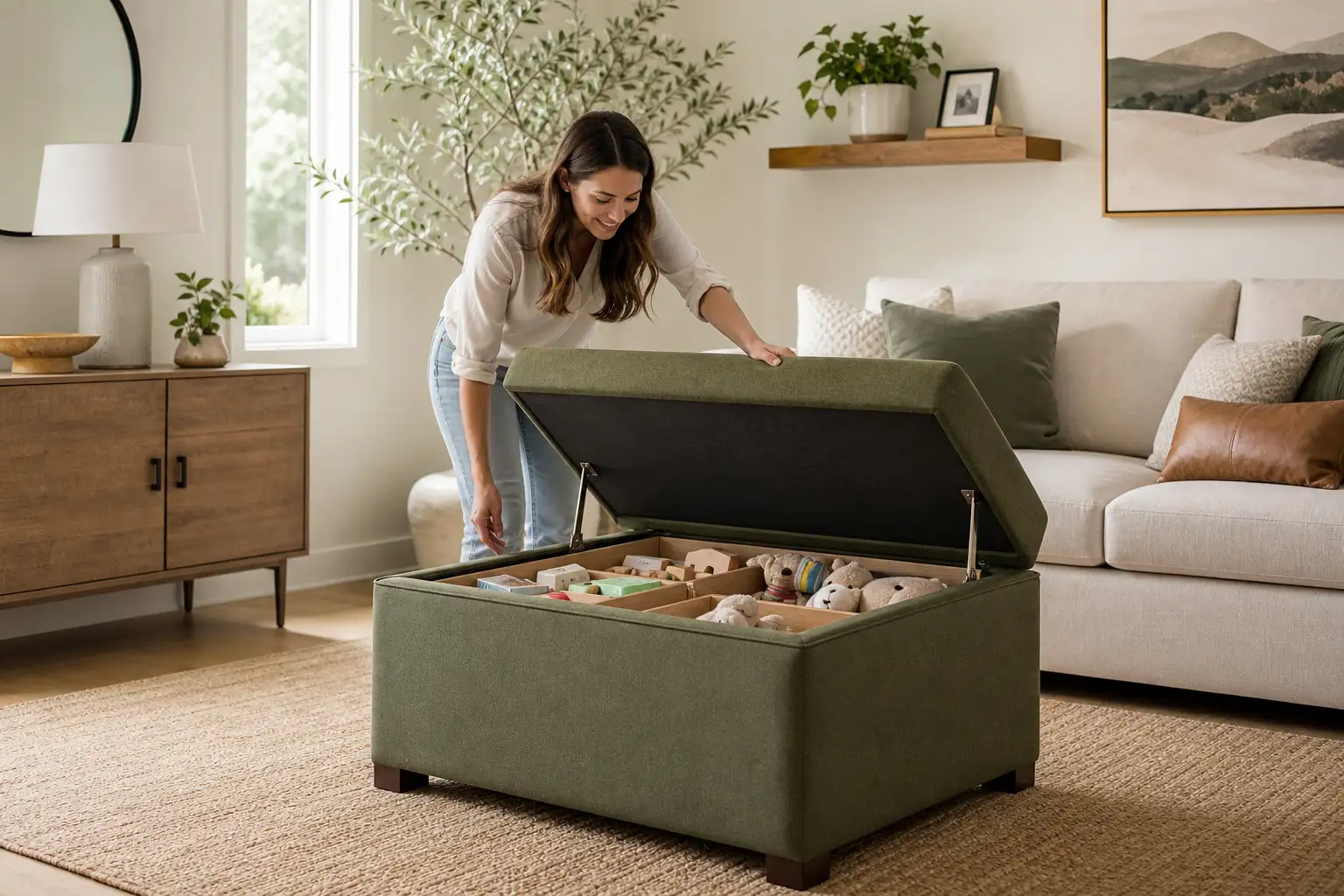
Storage ottomans and benches are the most versatile toy storage solution for living rooms. They serve as seating, footrests, or coffee tables during adult hours, and they swallow a surprising volume of toys inside. A single large storage ottoman holds as many toys as a dedicated toy bin, but it looks like furniture rather than toy storage.
Choose an ottoman with a hinged lid that stays open on its own, so children can access toys without the lid crashing down on fingers. A safety hinge is worth the small premium. The interior should be a single open cavity rather than divided compartments, which limit what fits.
Coffee tables with lift-tops reveal hidden storage beneath the table surface. The lift mechanism raises the tabletop to a comfortable height for working or eating, and the cavity below stores board games, puzzles, and art supplies. These tables serve three functions — coffee table, work surface, and toy storage — in one piece of furniture.
The Basket Strategy
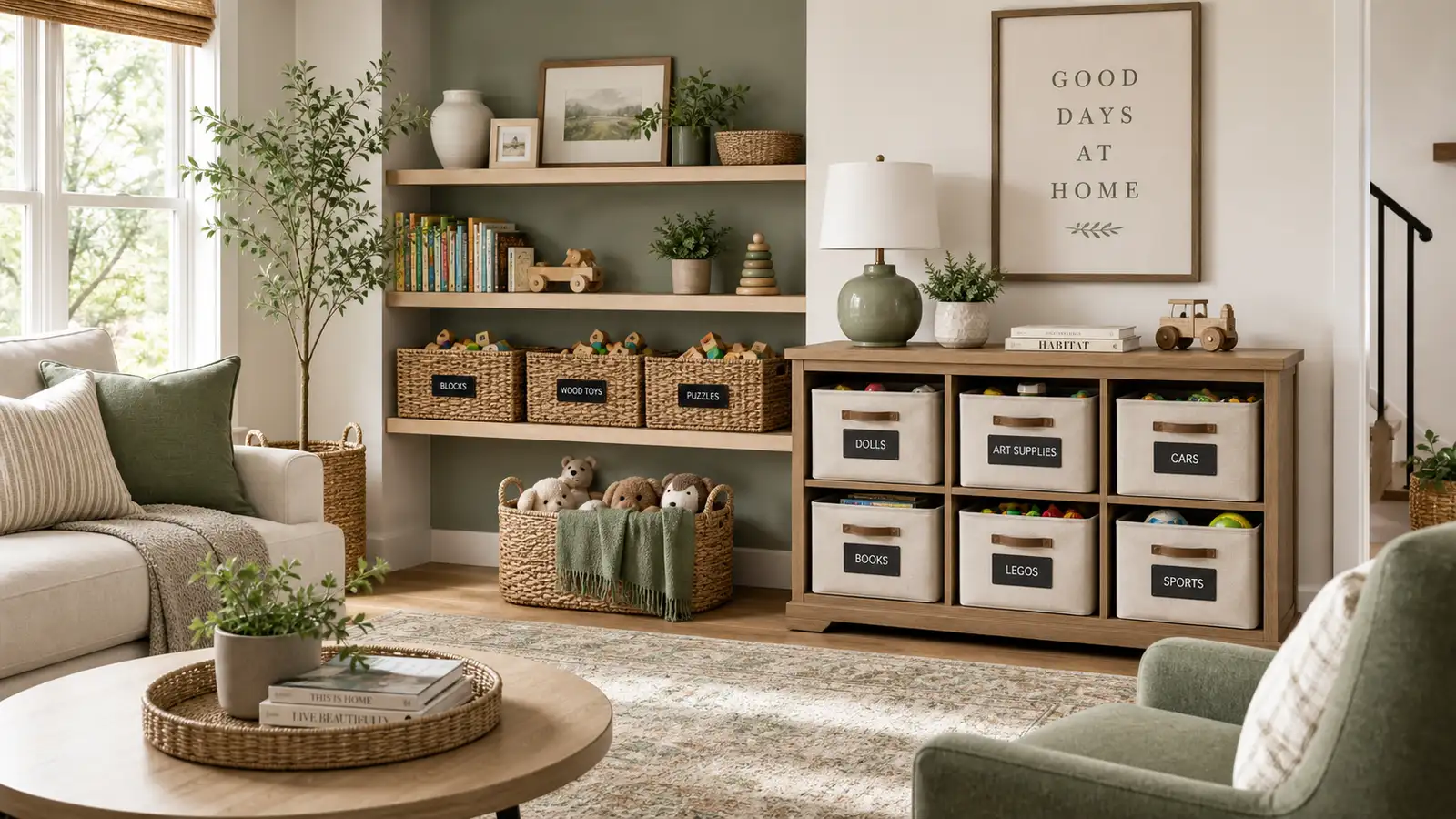
Decorative baskets placed strategically around the room absorb toys without looking like toy storage. A large woven basket next to the sofa holds stuffed animals and dolls. A smaller basket on a lower shelf of the coffee table holds building blocks. The baskets look intentional as decor while performing the essential function of containment.
The key to the basket strategy is matching the basket to the room’s aesthetic. Seagrass, water hyacinth, and canvas baskets in neutral tones blend with most decor. Bright plastic bins in primary colors announce themselves as toy storage and undermine the adult-friendly goal.
Label baskets subtly or position them so contents are visible from above. The labeling does not need to be obvious to guests. A small tag on the inside rim or a specific basket designated by material serves the same function. What matters is that family members know where things go.
The Rotating Collection
The most impactful strategy for controlling living room toys is limiting how many live there at any given time. A weekly rotation keeps five to seven toys accessible and the rest in storage elsewhere. When the accessible toys are rotated, returning toys feel novel and exciting.
The rotation also prevents the accumulation creep where toys slowly multiply until the storage solutions are overwhelmed. When the designated storage is full, toys must be swapped rather than added. The containers enforce the limit.
A living room that serves both adults and children is possible, but it requires storage that bridges the gap between the two functions. Hidden storage in furniture, decorative baskets, and a rotating toy collection keep toys accessible when needed and invisible when not. The result is a room where bedtime cleanup takes five minutes and adult dinner guests never know they are sitting in the primary play space.