Thanksgiving dinner ends the same way in most houses. Plates stack up, someone asks for a container to take home, and the turkey sits on the counter while the conversation runs another hour. The food that made the meal is now the job nobody scheduled. A storage plan made before dinner turns that job into fifteen minutes of packing.
The plan has three numbers in it. Perishable food belongs in the fridge within two hours of leaving the oven. Refrigerated leftovers keep for three to four days, which puts the deadline on Monday, 30 November, for a Thursday meal. Reheating needs 165°F all the way through. Everything else in this guide is storage work that makes those three numbers easy to hit: a clear shelf, shallow containers, portions sized for one meal, and a date on every lid.
The two-hour clock starts at the table
The U.S. Department of Agriculture’s Food Safety and Inspection Service sets the limit at two hours for perishable food outside safe temperature control, or one hour when the temperature is above 90°F. Fever Magazine’s Thanksgiving leftovers guide, published 21 November 2026, lays out what that means at a real table. The clock starts when food leaves safe hot or cold holding, not when the last person stops eating. A platter set out at three in the afternoon needs to be refrigerated by five under ordinary indoor conditions. Moving it from the dining table to the kitchen counter changes its address and nothing else.
A phone timer set when the food goes out works better than one set at the deadline. The timer at the deadline leaves the packing for the moment it should already be done. Set it for ninety minutes after serving, and the packing starts while there is still slack in the schedule. Each dish has its own deadline if it came out at a different time, so the turkey that went out first gets packed first.
Smell and appearance offer little help with the decision to keep or discard food. Bacteria that cause illness do not always change how food smells or looks, a point Virginia Tech’s food science department makes in its leftovers guidance, as reported by HowToDos’ storage and reheating guide, published 19 November 2026. Food that sat out beyond the two-hour limit should be thrown away. Reheating it longer does not make it safe again, because the problem is what grew while it sat out.
Hot food that is still being served needs a different rule. The USDA advises keeping hot food at 140°F or above while it waits. A practical way to do that is to bring a smaller platter to the table and keep the rest hot in the kitchen, refilling as people ask for more. The food waiting in the kitchen stays safe, and the platter on the table is the only dish being tracked.
Clear the fridge before dinner, not after it
Every part of this plan gets harder if the fridge is full when dinner ends. The packing has to happen in the same hour as the washing up, and a crowded fridge turns each container into a negotiation about where it fits. Clearing a shelf before dinner takes a few minutes in an empty kitchen. It takes much longer when someone is trying to fit a whole roasting pan past the milk.
Start with the shelf where the leftovers will go, and clear it completely. Move drinks, condiments, and sturdy produce into a cooler with ice if space is short. That swap frees a shelf for perishables and keeps the drinks cold at the same time. Check the refrigerator temperature in advance, too. The USDA limit is 40°F or below, and finding out the fridge runs warm on Thanksgiving evening leaves no time to fix it.
Set out clean containers and lids on the counter before people sit down, and find the food thermometer now rather than after the meal. The thermometer is the one tool this plan depends on, for checking the fridge, checking reheated food, and checking anything a guest brings that needs reheating. A thermometer buried in a drawer during the busiest hour of the evening is the same as not owning one.
Portion by the next meal, not by the dish
The platter that feeds ten people is useful for serving and useless for storage. At packing time, pack for the next three or four meals. A container packed for one lunch cools faster, reheats evenly, and saves the household from taking the whole batch out tomorrow for a single serving.
Cut the remaining turkey into slices and smaller pieces, and divide gravy, potatoes, stuffing, and casseroles among shallow containers. The carcass can go in a separate bag if the household wants stock later. Pour gravy into its own small lidded container instead of over the turkey, because a half cup of gravy frozen on its own is easier to use for a small dinner than a whole container of turkey and gravy that has to come out together.
Think about Friday’s menu while packing. Turkey works in soup, sandwiches, or a pot pie, and cooking it into a new dish counts as reheating, so the same 165°F target applies. Packing one container for Friday lunch and freezing the rest on Thursday means the weekend has a plan before the fridge door closes. A family with weekend plans can freeze those portions on Thursday rather than discovering on Sunday that the food is at the edge of its window.
The freezer takes the portions the household already knows it wants later. It runs at 0°F or below, and food kept frozen stays safe indefinitely, though quality is best within two to six months. Freeze in meal-sized portions so only what gets eaten comes out. A zone-based freezer system keeps those portions findable instead of buried under older bags, which matters when the freezer holds both everyday meal prep and a holiday’s worth of turkey.
Shallow containers are the whole trick
A whole turkey or a deep pot of stuffing takes too long to cool to a safe temperature in the middle. That is the single most important fact in the USDA guidance, and it is why the container matters more than the fridge. A deep batch cools at the edges while the center stays in the danger zone between 40°F and 140°F, where bacteria multiply quickly. Shallow containers, no more than a few inches deep, let cold air reach the center.
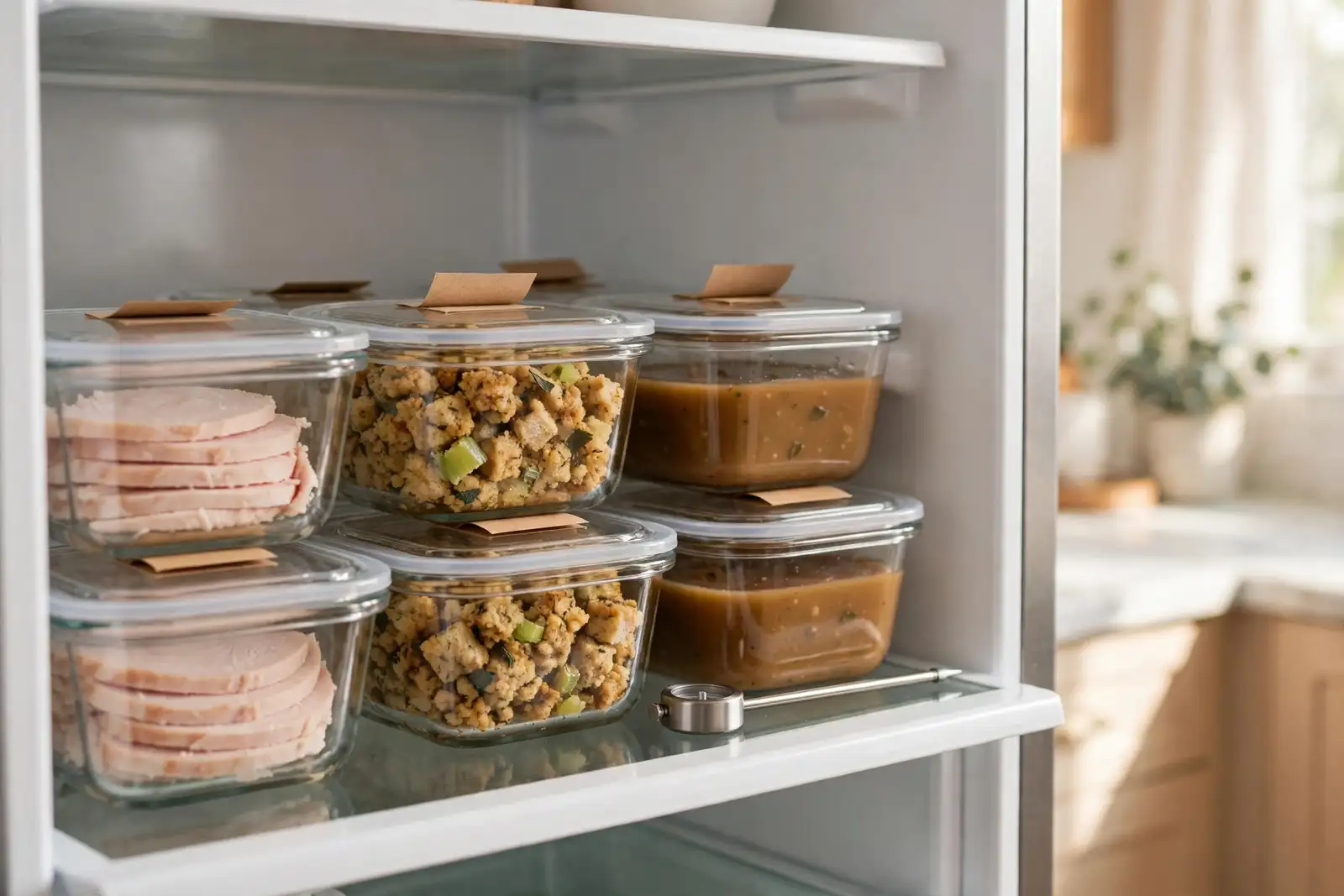
Divide large amounts into smaller containers rather than leaving food in the baking dish. Spoon stuffing, mashed potatoes, and casseroles into shallow containers. Put pies with dairy or egg fillings, such as pumpkin pie, in the fridge too. Cover everything with lids or airtight wrapping, as the USDA recommends, to keep bacteria out and hold in moisture.
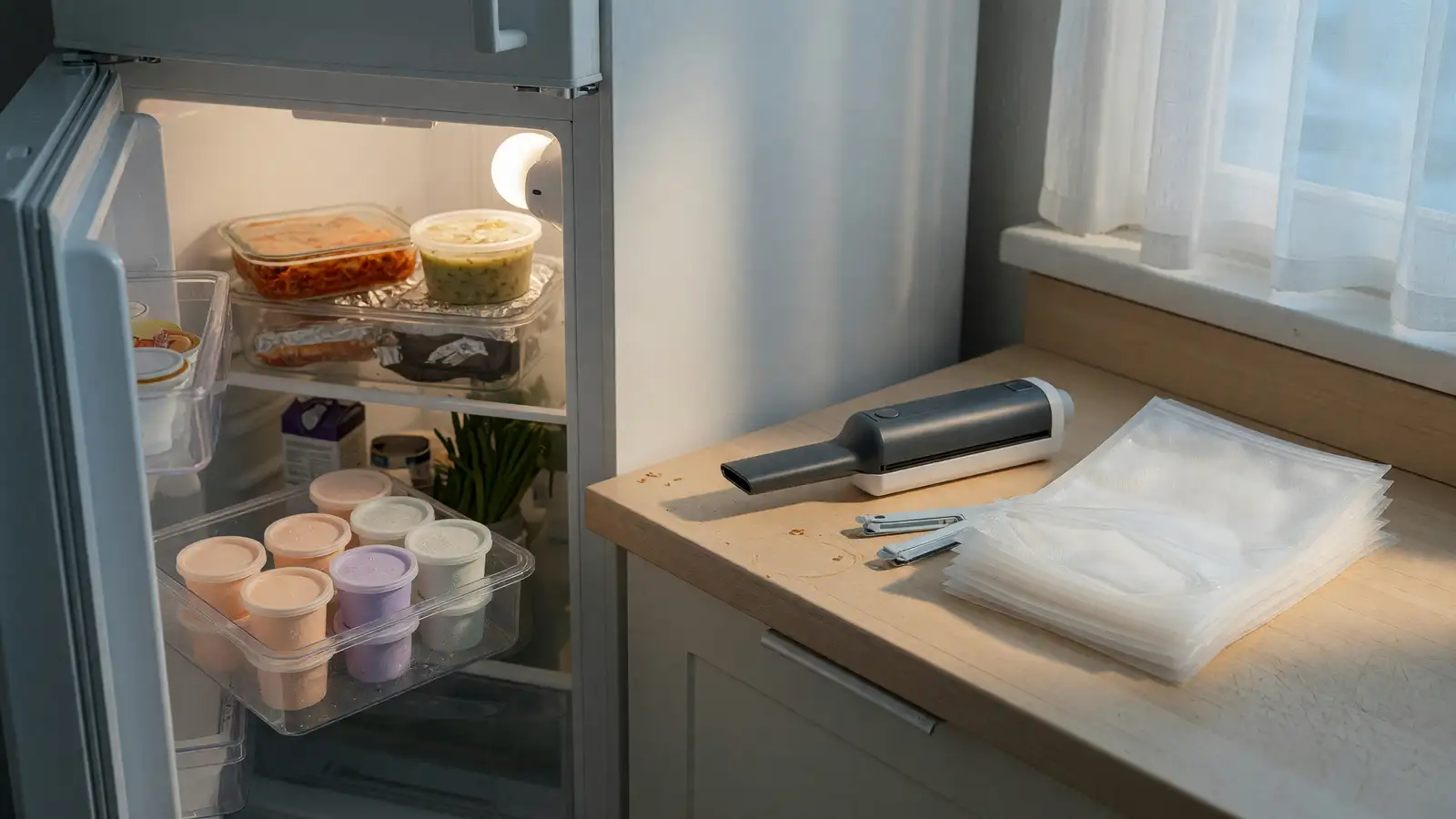
Hot food can go straight into the fridge, even while it is still steaming. Waiting for food to reach room temperature on the counter only adds time in the danger zone. Leave a little space between containers on the shelf so air can circulate, and do not stack hot containers directly on top of each other. A fridge packed tight with warm containers cools slowly, which defeats the purpose of packing quickly.
Glass and plastic both work for this job, and the choice is mostly about what happens next. Glass reheats in the same container it was stored in, and lids that seal keep the food from picking up fridge smells. This site’s container guide compares glass and plastic in detail, including what testing reveals about lids and seals. Whatever the material, the container needs a lid that closes, a size that matches one meal, and a shape shallow enough to cool through.
Label every lid with the date
Write the dish and the date on each lid with a marker or a strip of tape. It sounds fussy on Thursday, and it is the only thing that makes Sunday easy. By then, most people cannot remember whether the stuffing came from Thursday or from a second round on Friday. A date on the lid turns that question into a glance.
The label also carries the deadline. Refrigerated leftovers keep for three to four days, and for a Thursday meal that means Monday, 30 November. Saturday is a good point to look in the fridge and decide what gets eaten over the weekend and what should go into the freezer while it is still inside that window. Freezing has to happen within those four days, so the decision cannot wait until Monday.
Stacking makes labels more important, not less. When containers sit two deep on a shelf, the date written on Thursday is easier to use than the date someone tries to remember on Sunday. Keep the labels facing out, and keep the containers that expire first at the front. A fridge where the oldest food hides at the back is a fridge where food gets thrown away.
The USDA’s FoodKeeper app lists storage times for individual foods and can remind the household when each one is due. Use it as a backup. The labels on the lids are what someone sees when opening the fridge.
Packing food for the drive home
Sending food home with guests is the same job with a colder ending. Refrigerate their portions when the household’s own food goes away, then hand them out cold just before guests leave. The take-home containers can stay in the fridge while people help clean up or get the kids into coats. Names on the lids and bags near the door keep the handoff from becoming a search.
For a longer drive, pack a cooler with enough ice or frozen packs to hold the food at 40°F or below, and use a thermometer to check. The same plan helps on a short drive that includes a fuel stop, a visit to another relative, or a car that stays warm after parking. At the other end, the portions go into the refrigerator promptly. If a guest has hours on the road and no way to keep food cold, agree on what travels safely before portioning the turkey.
A cooler can do two jobs during the visit. Keep the drinks people reach for regularly in their own cooler, and leave the one set aside for leftovers closed until it is time to load the car. An insulated bag works the same way when ice packs and a thermometer keep the portions cold for the whole trip.
The handoff deserves a sentence of its own. A guest may assume the meal went into the fridge soon after serving, while the host may assume the guest has a cooler. A quick exchange gives both sides the missing information. Saying when the food was packed is also useful for the person deciding what to eat first once they get home, because the destination refrigerator is part of the trip.
One easy way to cut the scramble is to leave a note with the invitation. If someone wants leftovers and has a long drive, ask them to bring a small cooler with ice packs. If the meal is at the host’s place and there is an extra cooler, offer it at the start of the evening. That also gives the host the option to say the food has been out too long if dinner goes differently from the way it was planned.
Reheat to 165°F, and check the middle
Reheating is where most leftovers fail, usually by coming out dry or unevenly hot. The USDA figure is 165°F, checked with a food thermometer in the thickest part. Sauces, soups, and gravies should come to a rolling boil. The number is the same for turkey, stuffing, and casseroles, and it applies whether the food comes from the fridge or the freezer. Frozen leftovers can be reheated without thawing, though it takes longer.
Cover the dish while reheating so the food keeps its moisture and heats all the way through. A splash of broth over turkey slices helps them stay juicy. In the microwave, spread the food evenly in a covered, microwave-safe dish, vent the lid, and stir or rotate partway through. Microwaves leave cold spots, so let the food stand briefly and then check the temperature in several places. A shallow bowl makes stirring easier. When a few things share one plate, check the thickest or densest portions, including the center of any compact mound of stuffing or mashed potatoes. A bubbling edge gives information about the edge. The middle of a deep dish can still be cooler.
Do not use a slow cooker to bring cold leftovers back up to temperature. The USDA advises against it because the food can spend too long warming through the range where bacteria grow quickly. If the household wants hot sandwiches for a few people, heat the portion of turkey that gets used and check it with the thermometer, then deal with the bread and toppings while the rest stays in the fridge.
The plan scales down to dinner for two. Put one container in the fridge for lunch and freeze the portions that will be welcome in December. It scales up to a potluck if one person takes charge of the storage space and another takes a clear time to start packing. Both jobs are brief when people know which dishes have been out and the lids are easy to find.
How this plan was put together
This guide synthesizes published food-safety guidance. No kitchen trials were run for it. Every temperature and time in the article comes from the USDA Food Safety and Inspection Service and FoodSafety.gov, as reported in two guides published in November 2026: Fever Magazine’s leftovers guide from 21 November and HowToDos’ storage and reheating guide from 19 November. Where the two guides agree, the article states the figure once. Where they add different details, such as the cooler plan for the drive home or the FoodKeeper app, the article says which guide the detail comes from.
Readers can check the plan themselves with two tools and one page. A food thermometer verifies the fridge at 40°F or below and reheated food at 165°F. The FoodSafety.gov leftovers guide carries the same limits in the USDA’s own words. The container and freezer advice can be compared with this site’s own guides on food storage containers and freezer organization, which cover the same containers and zones from the storage side rather than the food-safety side.
That split is the point of the plan. Food safety sets the limits, and storage decides whether a household can meet them without thinking about it at midnight. A clear shelf, shallow containers, and dated lids do not change the rules. They make the rules fit inside an evening that already has enough to do.
The same habit carries past the meal. Once the leftovers are packed and labeled, the next storage job on the calendar is the decorations, and the same system applies: sort before packing, give fragile pieces their own compartments, and label each bin by room instead of writing one word on the side. This site’s decoration storage guide works through that version in detail. The turkey comes first because its clock runs in hours. The ornaments can wait until the fridge is closed.