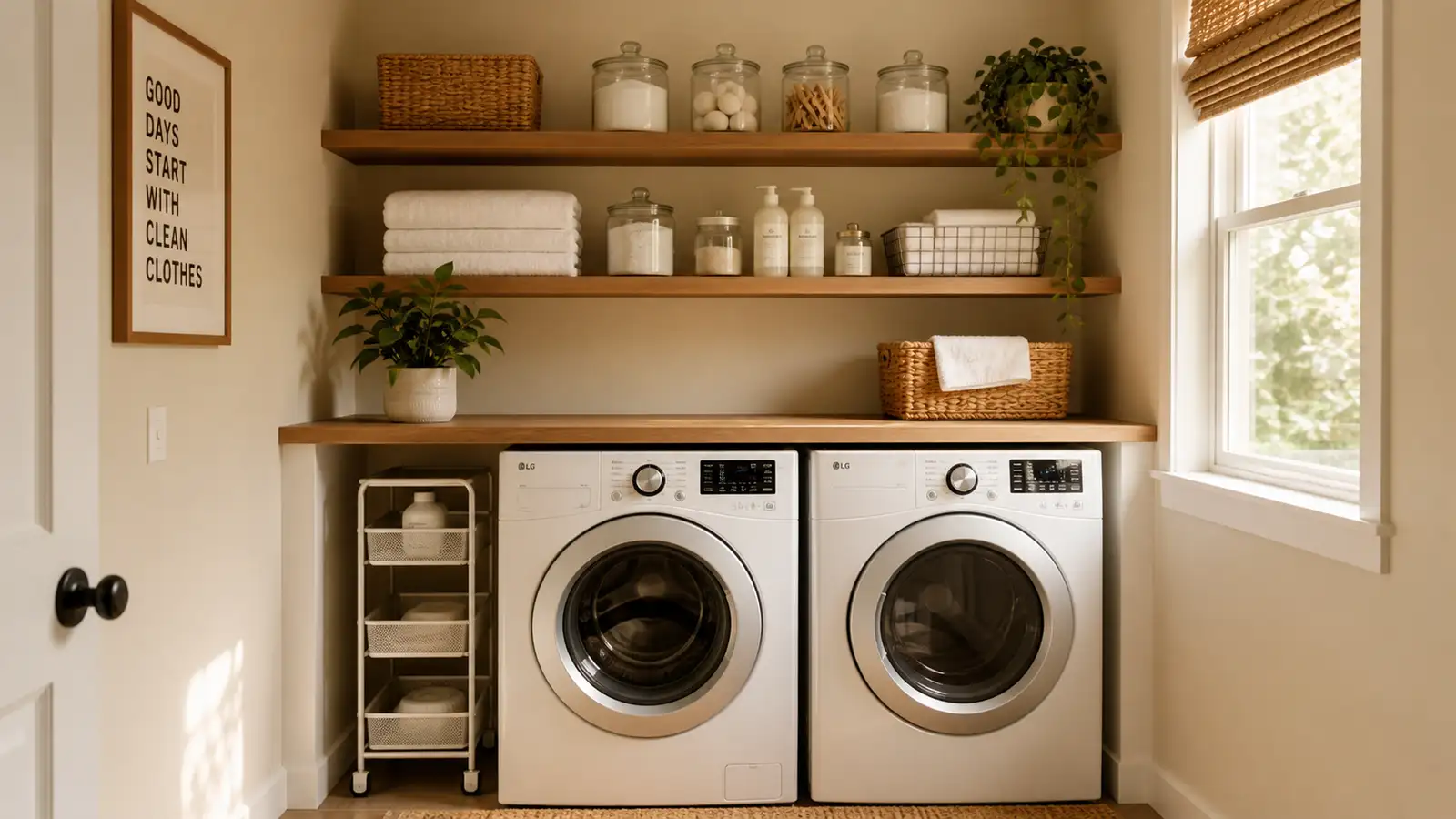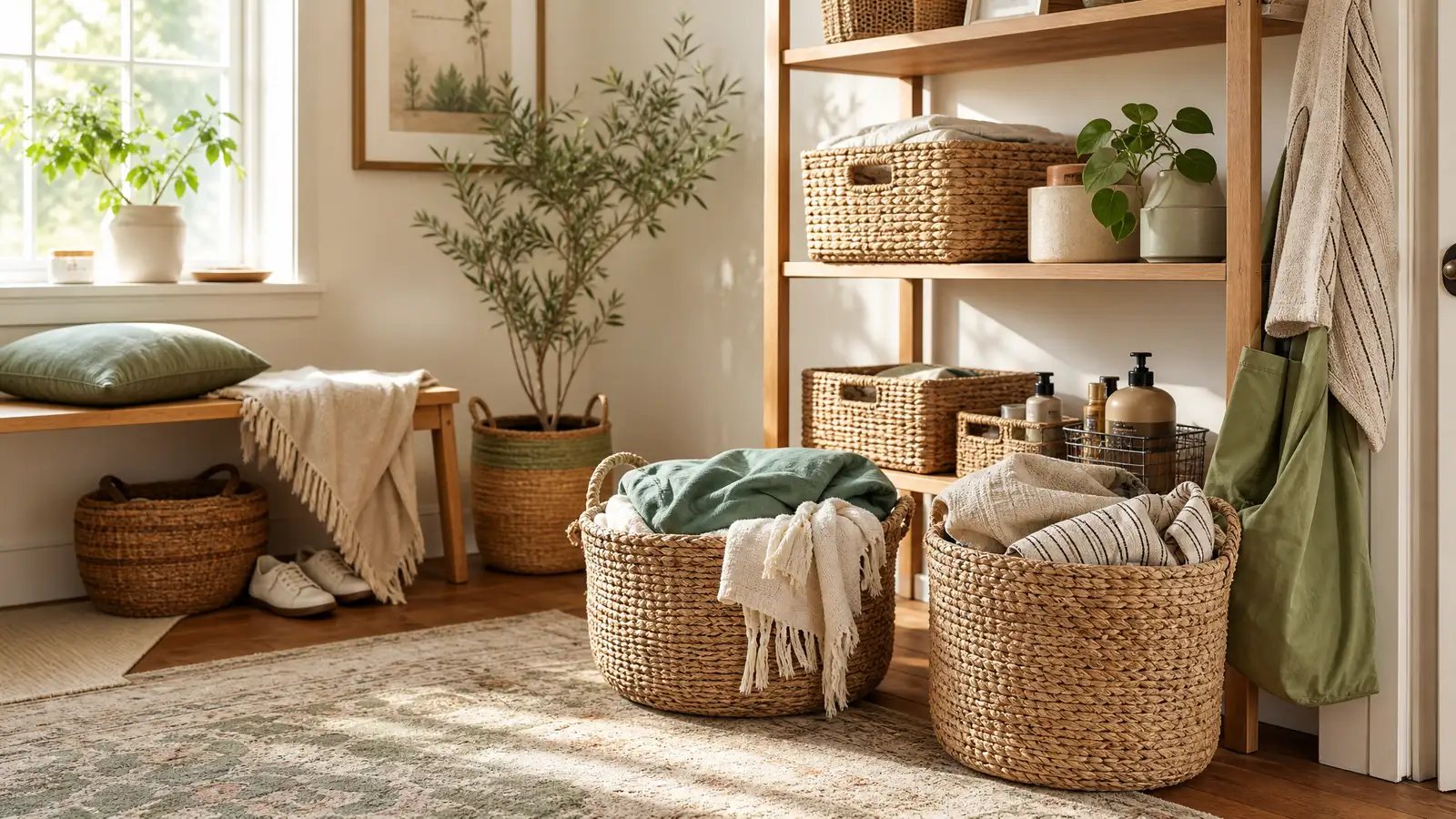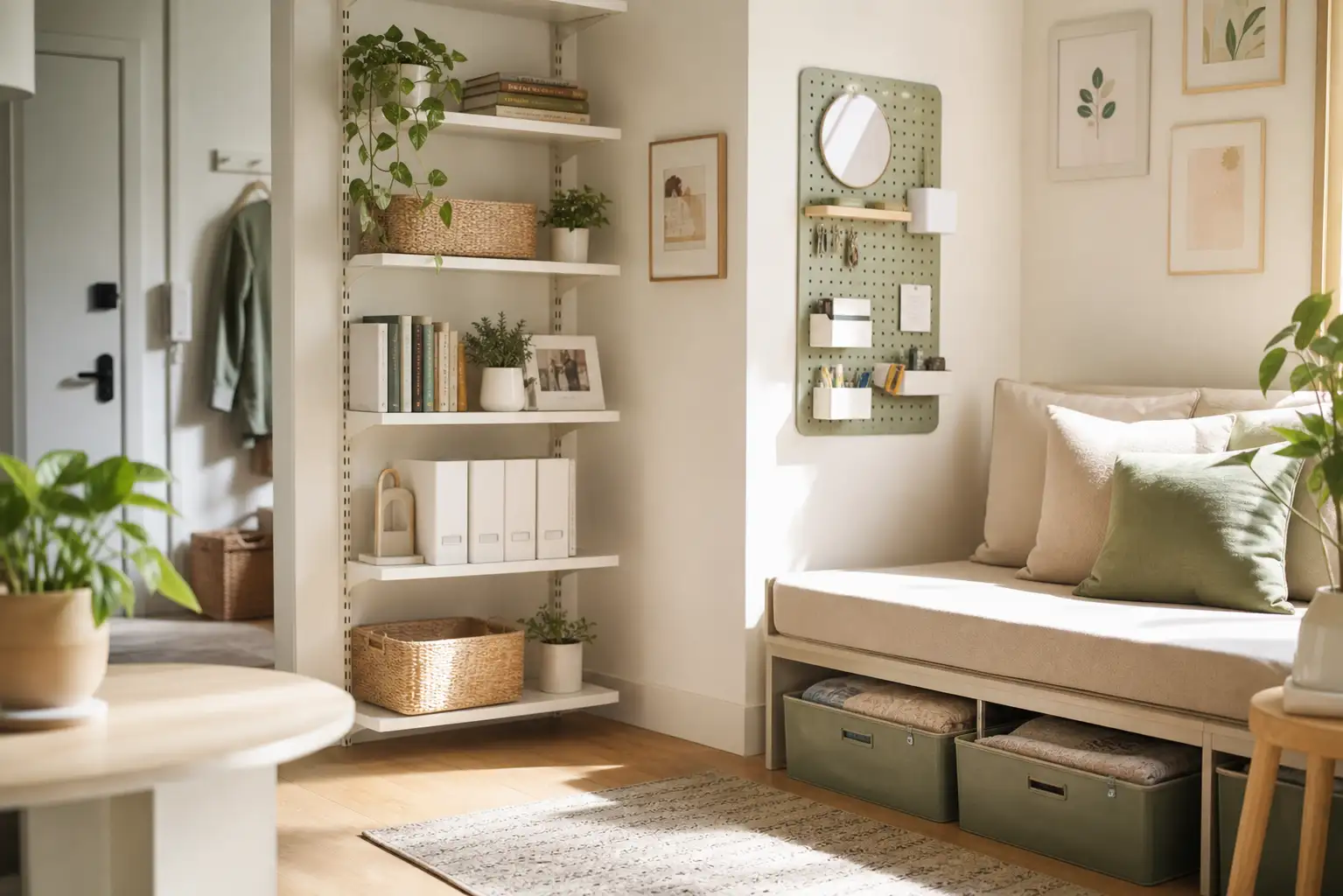
A full day of pulling things off shelves can end with the same visual mess you started with. That complaint is ordinary enough that Good Housekeeping UK put it on the front of a household-advice piece on 12 November 2026. Writer Katie Mortram asked four professional organisers why a home can still feel messy after the bags are packed, and what actually changes the room. The answers are less about owning fewer objects and more about whether the objects you keep have a place that matches the way the household already moves.
That distinction matters for storage, not as a slogan. A cupboard that is half empty and still a jumble fails the test people use when they walk into a room. A smaller set of supplies, parked where a hand can reach them and then hidden or lined up, can pass the same test. The Good Housekeeping interviews spell out the failure modes. A separate storage note published on 14 November 2026 by grapee shows one narrow attempt to give toilet supplies a shelf and a cover. Neither piece is a scientific trial. Together they describe a sequence that decluttering weekends often skip: decide what stays, give it a home, get the leaving pile out of the building, and stop before the project swallows the whole house.
Clearing a shelf is not the same job as storing what remains
Emma Kenwrick-Meehan, founder of Home Nip & Tuck, told Mortram that decluttering does not automatically make a home feel tidy. You can carry out bags of unwanted belongings and still watch the mess return if the things you keep have no proper home, or if the storage and the layout do not fit how people actually live. Her line is blunt: it is not always about having too much stuff. Sometimes the home is not set up to make everyday life easy.
That is a storage problem wearing a decluttering costume. People schedule the purge because the room feels full. The purge removes objects that were never going to be used. It does not install a hook, a tray, or a shelf at the spot where coats, mail, and school papers land every evening. The next day those objects land in the same place, because that place is still the path of least resistance.
Mortram’s own framing of the organisers’ point is visual. A cupboard filled with items that are labelled and lined up looks better than a cupboard that is half full, messy, and hard to reach. Volume is not the signal the eye uses. Order and access are. If you have to kneel, unstack, and re-stack to put a pan away, the pan stays on the worktop. The worktop then reads as clutter even if the cupboard behind it has spare space.
Vicky Silverthorn, of You Need A Vicky, made the same split from the other side. She told Mortram it is common to feel in disarray after decluttering, especially if the systems are not in yet. Removing unwanted items is a real start. Without some order for what is left, the room can still feel chaotic. The emotional letdown people describe after a Saturday purge is often this gap. The bags by the door prove work happened. The surfaces do not.
Follow the pile, then change the setup
Kenwrick-Meehan’s practical test is to watch where the mess keeps rebuilding, instead of tidying that spot on a loop. Are things left on the kitchen worktop because the cupboards are awkward to open? Are coats and bags piling up because there is nowhere convenient to put them? The fix she describes is not another reminder to “put it away.” It is a change to the setup so that putting it away is the easier move.
A tidy-feeling home, in her words, is not necessarily one with less stuff. It is one where everything has a practical place and the systems work for the people who live there. That is a design constraint. A beautiful bin in a distant closet loses to a ugly hook by the door, every evening, if the hook is the one on the way in.
Mortram applies that to two ordinary piles. If junk mail stacks in the hall, set aside time each week to go through it, and use a mail organiser to sort what is important. If objects keep landing on the kitchen table, look at what they are and, if a container would hold them, put a basket there. The basket is not a moral victory. It is a boundary. Loose papers spread. Papers in a basket occupy a known rectangle. You can still decide later which ones to keep. You are no longer negotiating with a surface that has no edge.
Other people in the home may be feeding the same piles. Silverthorn’s warning is that it does not matter how much you declutter, or how many systems you install, if the household is not on the same page. The room will not feel tidy. Labelling is her tool for that shared page, and she treats it as a way to get children into the process rather than as decoration. A label that says “school papers” is a rule a child can follow. A rule that lives only in one adult’s head gets broken by everyone else, including the adult, on a tired night.
Group by type before you buy another box
Silverthorn’s second move is categorising. Group items by type, see how many of each thing you have, and then decide where those things can live. The count is the point. People underestimate duplicates until the duplicates sit in one pile. Three half-used bottles of the same cleaner, four phone chargers, a drift of unmatched lids: the pile makes the number obvious in a way a crowded cupboard does not.
She also says the grouping shows where storage is not big enough, which is where overflow starts. That is the moment a lot of organising advice quietly turns into a shopping trip. The Good Housekeeping piece does list products, from vacuum bags to drawer dividers. Those prices are a retail module, not evidence that a particular box solves a particular cupboard. The organisers’ claim that survives without the shopping list is simpler. If the category does not fit the space you already have, either the category shrinks or the storage changes. Pretending a too-small shelf will hold the full category is how items migrate back to the worktop.
Andrea Lewis, founder of The Organised Curator, ties the visible result to finishing. Decluttering is messy work, she told Mortram, and the rewards are large only if you follow through. Factor in enough time to organise what you are keeping. That organising pass, not the bagging pass, is where the home starts to look tidier. A room mid-sort, with keep piles on the bed and donate piles in the hall, looks worse than the room you began with. If the day ends there, the project has produced evidence of effort and no evidence of order.
The leaving pile has to leave
Helen Sanderson, The Clutter Therapist and author of The Secret Life Of Clutter, names a failure Mortram calls churn. Items get sorted into donate or sell piles and then never leave the house. The categories exist. The objects remain. From the doorway, churn looks like clutter, because it is still in the room.
Sanderson’s sequence is physical, not motivational. Donations go out: into the car, or straight to the charity shop. Recycling and rubbish go outside into the bins. Larger items go to the tip. Things that still need a decision or a task go into a box, with a sticky note that says what the task is, so they are contained. The note matters. An unlabeled box of “later” becomes furniture. A box that says “return this library book Thursday” is a queue with a date.
She also says the project may simply have been too big, or the time allowed too short. Stick to one manageable area and finish it before moving on. That rule protects the rest of the home from becoming a staging floor. It also matches Lewis’s point about finishing. One drawer, fully decided, stored, and with the rejects already in the bin or the car, changes how that corner feels. Six half-started rooms change nothing you can see.
Sanderson adds a limit that storage hardware cannot fix. Some clutter is tied to feelings that the physical sort did not touch. She suggests not decluttering those things until you are ready, working gradually, and taking breaks so decision fatigue does not make you either keep everything or discard something you will want back. A storage plan that requires you to be emotionally finished with every object in one afternoon will stall. The box-with-a-note is a way to park that stall without letting it coat every surface.
A small cover can do the job a purge does not
The grapee editors, in a storage piece dated 14 November 2026, describe a toilet corner rather than a whole-house purge. They write that they bought two Daiso tension rods at 110 yen each, tax included, and an embroidered cafe curtain at 220 yen. The curtain has a floral stitch and slides onto a rod. They are reporting their own install and their own photos. This desk did not repeat that install, and the prices are what they printed on that date. Their note says prices and stock can change.
The sequence they describe is a compressed version of the organisers’ advice. First they gave the supplies a place: a tension rod mounted on the wall above the hand-wash basin, set 7 to 8 centimetres out from the wall. Spare toilet paper and toilet sheets sat on the rod. A spray bottle hung from it. The gap, they write, lets objects lean on the wall and stay put. Then they covered the supplies with a second rod and the curtain, because leaving the bottles in plain sight still read as daily clutter. They say the curtain took away the cluttered impression, and that the embroidery made the small room look more finished.
Two limits in their piece belong next to any “hide it and it is tidy” idea. Tension rods have a load rating. They tell readers not to put heavy things or breakable things on the rod. If someone needs a higher rating, they point to a wall-mounted guard made for that hardware. A curtain that hides an overloaded rod is not a storage system. It is a delay before something falls.
Read against Kenwrick-Meehan, the curtain is doing a specific job. The supplies still have to live near the toilet. Removing them from the house would make the next cleaning trip worse, which is the “layout does not match how you live” failure. The rod is the home. The curtain is the visual boundary, the same role as Silverthorn’s labels and Mortram’s basket, scaled to a room where open shelving would put bottles in the sightline of anyone who walks in.
It is also a single zone, which is Sanderson’s rule. They did not reorganise the flat. They finished one wall. That is why a 330-yen pair of rods can change a feeling that a Saturday of bagging sometimes does not. The scope was small enough to complete, and the things that stayed got both a place and a cover.
What to do with a room that still looks the same
If a decluttering day ended and the room looks unchanged, the Good Housekeeping interviews suggest checking four facts before you schedule another purge.
Did the things you kept get a place you can reach without a fight? If the cupboard is awkward, the worktop will refill. The next purchase, if you make one, should answer that awkwardness, not add a bin in a room you do not walk through.
Did the household agree on the labels, or does one person know the system? Silverthorn’s point is that a private system is not a system. Write the category on the container. If children use the space, the words have to be ones they can read or pictures they can match.
Did the donate, recycle, and rubbish piles leave the building? If they are still in the hall, you are looking at churn. Sanderson’s car-or-charity-shop step is the one that changes the square footage. A labelled donate bag in the corner is still a bag in the corner.
Did you finish one area, including the organising of what stayed? Lewis is explicit that the tidy appearance shows up when the keepers are put away, not when the rejects are identified. If the bed is still a sorting table, the project is unfinished, and the room is allowed to look worse.
None of those checks require a new personality. They require a smaller job and a place for the objects that are going to come back tomorrow, because people live in the home. Mail will arrive. Coats will come through the door. Toilet paper will need a spare roll within reach of the toilet. Storage that pretends those flows stop after a purge will lose to the flows.
The organisers are also not promising that a labelled home cures every uneasy feeling about possessions. Sanderson separates the physical sort from the parts you are not ready to decide. A box with a dated note is an honest pause. An endless “later” pile on the dining table is how the pause becomes the room.
For a wider look at how tight floor plans punish unfinished piles, the earlier note on small-space decluttering habits walks through why a studio cannot absorb a weekend of half-sorted heaps. The November interviews add the missing half of that picture. Even when the heaps are gone, the room feels messy until the keepers have a home that the household will actually use, and until the leavers are no longer in the house.