There is a dark side to the decluttering boom that nobody talks about in the before-and-after photos. The garbage bags. When the organizing high fades and the keep pile is sorted, most people are left staring at black plastic sacks stuffed with clothes that do not fit, kitchen gadgets that were used once, and decor that no longer matches anything in the house. Those bags go to the curb, and from the curb they go to a landfill where synthetic fabrics will outlast the grandchildren of the person who tossed them.
Sustainable decluttering is the alternative. It is the practice of removing excess from your home without making it the planet’s problem. In 2026, this approach has moved from niche eco-blogs into the mainstream, and for good reason. The average American discards over eighty pounds of textile waste per year, and donation centers are so overwhelmed that a significant percentage of donated goods still end up in landfills or shipped overseas to markets that cannot absorb them. The old advice to simply bag it up and drop it at Goodwill is no longer enough.
The Waste Problem Behind Traditional Decluttering
Decluttering methods like KonMari and Swedish Death Cleaning have helped millions of people reclaim their living spaces, and that is genuinely valuable. Living in a home filled with things you do not use or love drains mental energy that most people do not even realize they are losing. The problem is not the philosophy. The problem is the disposal.
When you fill a garbage bag with old clothes and put it on the curb, you are sending materials to a landfill where they will sit for decades or centuries. Polyester and nylon do not biodegrade. They break down into microplastics that leach into soil and water. Even natural fibers like cotton, when buried in the anaerobic conditions of a landfill, release methane, a greenhouse gas far more potent than carbon dioxide.
Donation is better, but it is not the clean solution it appears to be. Charity shops and thrift stores receive far more than they can sell. What does not move off the racks within a few weeks gets baled and sold by weight to textile recyclers or exported. Much of it still ends up as waste. The most responsible approach to decluttering starts before anything leaves your home: you need a plan for where each category of item is actually going.
The Responsible Disposal Hierarchy
Think of sustainable decluttering as a pyramid. At the top, the best outcome: you keep using the item. But since we are talking about things you have already decided to let go of, the next best thing is finding someone who genuinely wants and will use it.
Sell what has real value. Facebook Marketplace, eBay, Poshmark, and local consignment shops work for furniture, electronics, designer clothing, and collectibles. The money is nice, but the real win is knowing your item went to someone who actively sought it out, not someone who grabbed it from a bin because it was there.
Donate strategically, not indiscriminately. Before dropping bags at the nearest thrift store, research where your items are actually needed. Animal shelters need old towels and blankets. Women’s shelters need professional clothing and unopened toiletries. Libraries accept recent books in good condition. Tool libraries and maker spaces take working tools and craft supplies. Schools and daycare centers often need art materials and children’s books. A targeted donation has a much higher chance of being used than a mass drop-off.
Recycle what cannot be donated. Textile recycling programs have expanded significantly in the last few years. Brands like Patagonia, H&M, and The North Face have in-store take-back programs for worn-out clothing. Terracycle accepts difficult-to-recycle items including snack wrappers, toothbrushes, and pens through mail-in programs. Electronics should go to certified e-waste recyclers, not the trash. Many municipalities run hazardous waste collection days for paint, batteries, and chemicals.
Upcycle creatively before trashing. A stained t-shirt becomes a cleaning rag. Glass jars become pantry storage. An old wooden ladder becomes a blanket rack. The internet is overflowing with upcycling ideas, and while not all of them are practical, the principle matters. Every item you repurpose is an item that stays out of a landfill for another cycle of use.
The Mindset Shift: Buy Less to Declutter Less
The most sustainable decluttering strategy is the one that prevents future decluttering sessions from being necessary. Every item you bring into your home is an item you will eventually need to manage, store, clean, and ultimately dispose of. When you start seeing purchases through that lens, the math changes.
The one-in-one-out rule popularized by minimalists works because it forces a tradeoff: if you want the new thing, you have to lose something you already own. But an even stronger version is pausing before the purchase entirely. The twenty-four-hour rule is simple: when you want to buy something non-essential, wait a day. Most impulse purchases lose their emotional charge within hours. The ones that survive the waiting period are the ones you are more likely to actually use.
A related practice that has gained traction in 2026 is the buy-it-for-life approach. Instead of purchasing the cheapest version of an item and replacing it every two years, invest in the version that will last a decade or more. It costs more upfront but reduces both cumulative spending and cumulative waste. A well-made wool sweater outlasts ten fast-fashion acrylic ones and biodegrades at the end of its life.
Starting Your Sustainable Declutter
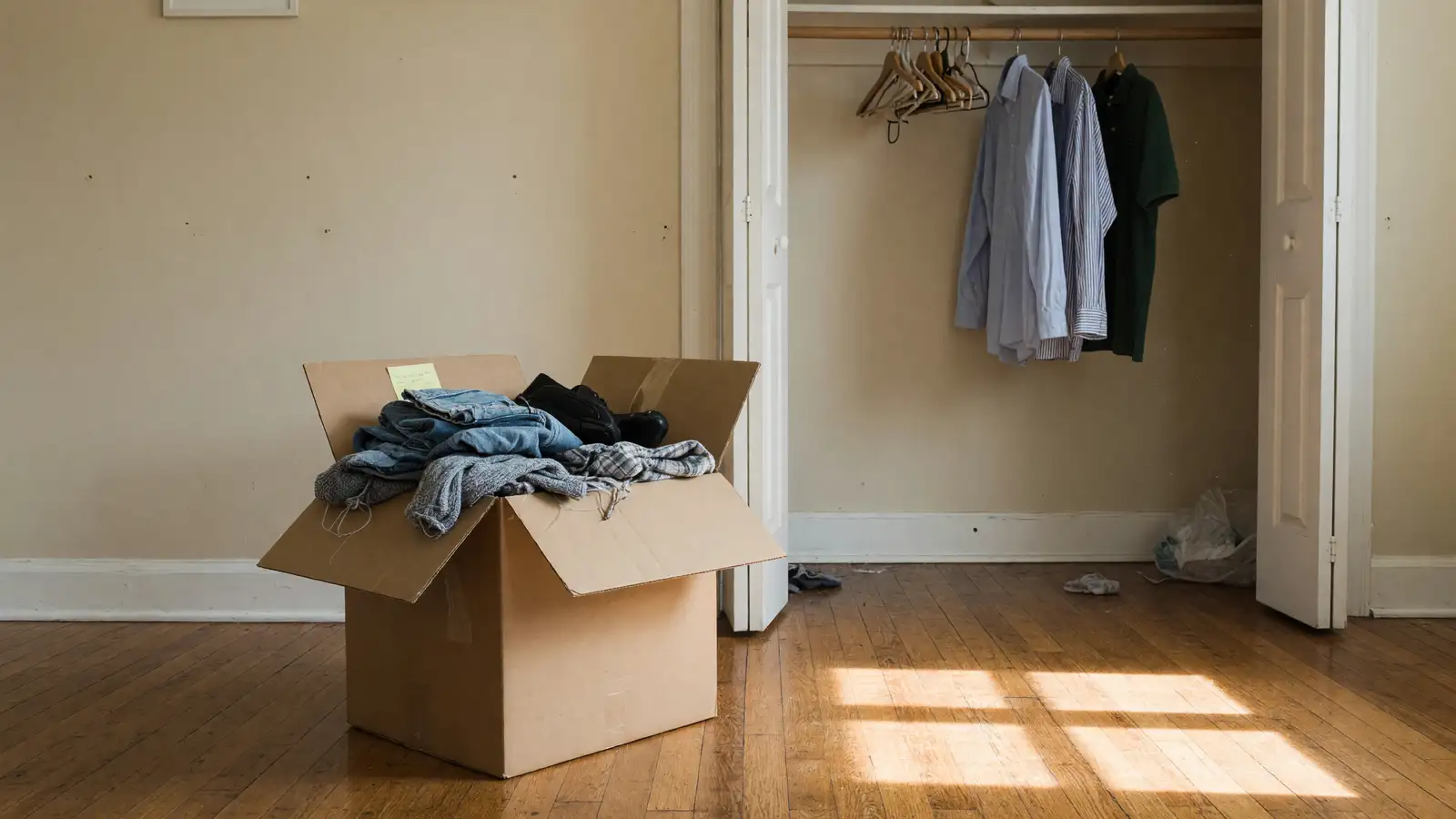
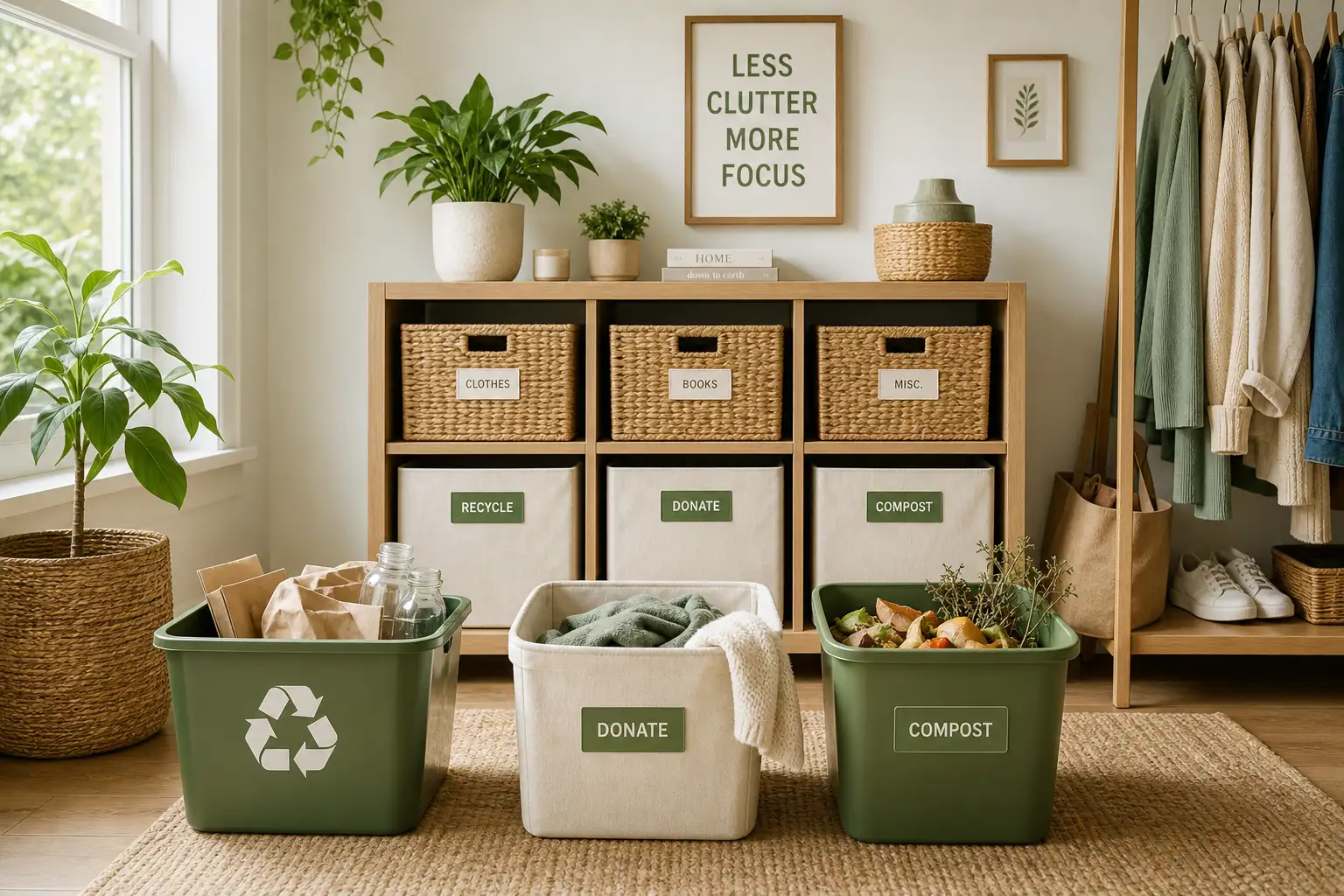
Pick one category and one room. Clothes are the easiest place to start because the donation and recycling infrastructure for textiles is relatively mature. Go through your closet with three bags or boxes labeled sell, donate, and recycle. Be honest about what you actually wear. The dress that has hung untouched for three years is not suddenly going to become your favorite. Let it go to someone who will love it.
For each category of items you declutter, research disposal options before you start pulling things off shelves. Knowing that your local animal shelter needs towels gives you momentum to clear out the linen closet. Knowing that Best Buy accepts old cables and chargers for recycling makes it easier to tackle the drawer of tangled electronics.
Sustainable decluttering takes more time than throwing everything in trash bags. It requires research, trips to different drop-off locations, and sometimes the effort of listing items for sale. The payoff is a home that feels lighter and the knowledge that your lighter home did not come at the expense of a heavier planet. That is minimalism worth practicing.