The average reach-in closet measures just six feet wide by two feet deep. That is twelve square feet of floor space to contain an entire wardrobe, shoes, accessories, and whatever else gets shoved behind the sliding doors. No wonder the closet is the most complained-about storage space in home satisfaction surveys.
Expanding the closet is rarely an option. Expanding how you use the space you have is always an option. These strategies focus on extracting every usable inch from a compact closet without requiring construction or major investment.
The Vertical Stack
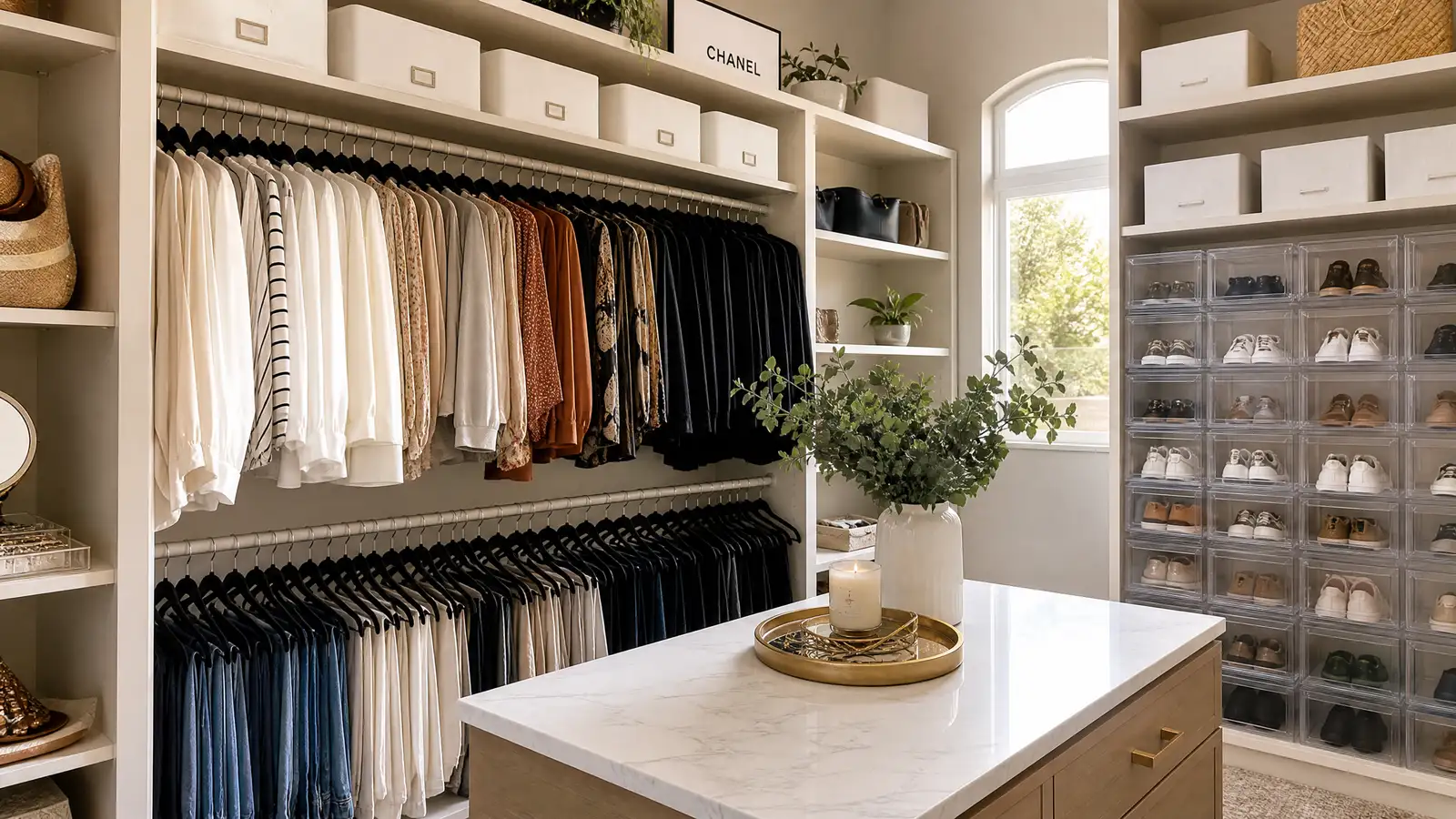
The single biggest mistake in small closet organization is treating the hanging rod as the only storage mechanism. A single rod wastes the space above it and below it. A double-rod system doubles the hanging capacity instantly, with the upper rod for shirts and jackets and the lower rod for pants and skirts. The rods should be positioned so that the lower rod sits roughly forty inches from the floor, leaving the upper rod at around seventy-eight inches.
The space above the top rod, typically the top twelve to eighteen inches of the closet, is prime shelf territory. This is where out-of-season clothing in vacuum bags, extra bedding, and rarely used items belong. Clear bins with labels prevent this zone from becoming a graveyard of forgotten storage.
The floor beneath the lowest hanging items should not be a pile of shoes. A two-tier shoe rack doubles the number of pairs that fit in the same footprint. For closets where hanging items extend to within a foot of the floor, slim shoe cabinets that sit flush against the back wall utilize depth that would otherwise be dead space.
Door-Mounted Storage
The inside of the closet door is an entire vertical panel of storage opportunity that most people ignore. Over-the-door organizers with clear pockets are ideal for accessories: scarves, belts, jewelry, socks, and small handbags. The visibility of clear pockets means you actually see and use what is stored there.
Hooks mounted directly to the door hold robes, tomorrow’s outfit, or a bag of items destined for the dry cleaner. A full-length mirror mounted to the inside of the door eliminates the need for a floor mirror elsewhere in the bedroom, saving additional square footage beyond the closet itself.
The key measurement for door-mounted storage is clearance. Measure the gap between the door and the closest hanging items when the door is closed. If that gap is less than two inches, choose slim-profile organizers specifically designed for shallow clearance.
The Slim Hanger Revolution
The hangers in most closets are the free plastic tube hangers from dry cleaners, each consuming roughly half an inch of rod width while looking terrible. Replacing them with slim velvet hangers, which are one-quarter inch wide and grip clothing without slipping, increases hanging capacity by a factor of two to three on the same rod.
The velvet surface also prevents the shoulder bumps that plastic and wire hangers create in knit fabrics. Clothes stay on the hanger rather than sliding onto the floor. At roughly one dollar per hanger in multi-packs, a full closet conversion costs under thirty dollars and pays back in both capacity and appearance within the first week.
Seasonal Rotation as a Space Strategy
The most cost-effective way to double a small closet’s functional capacity is to halve what lives inside it at any given time. Off-season clothing stored elsewhere — under the bed, in a guest room closet, or in vacuum bags on the top shelf — frees up fifty percent of the rod and shelf space during the months those items are not worn.
The seasonal swap happens twice a year: spring and fall. During the swap, every item gets evaluated. Anything not worn during the past season gets donated. The swap is the natural maintenance cycle that prevents a small closet from accumulating items that no longer earn their place.
A small closet will never feel spacious. But with double rods, door storage, slim hangers, and seasonal rotation, it can feel twice as functional. And function, not square footage, is the metric that actually matters when you are getting dressed in the morning.