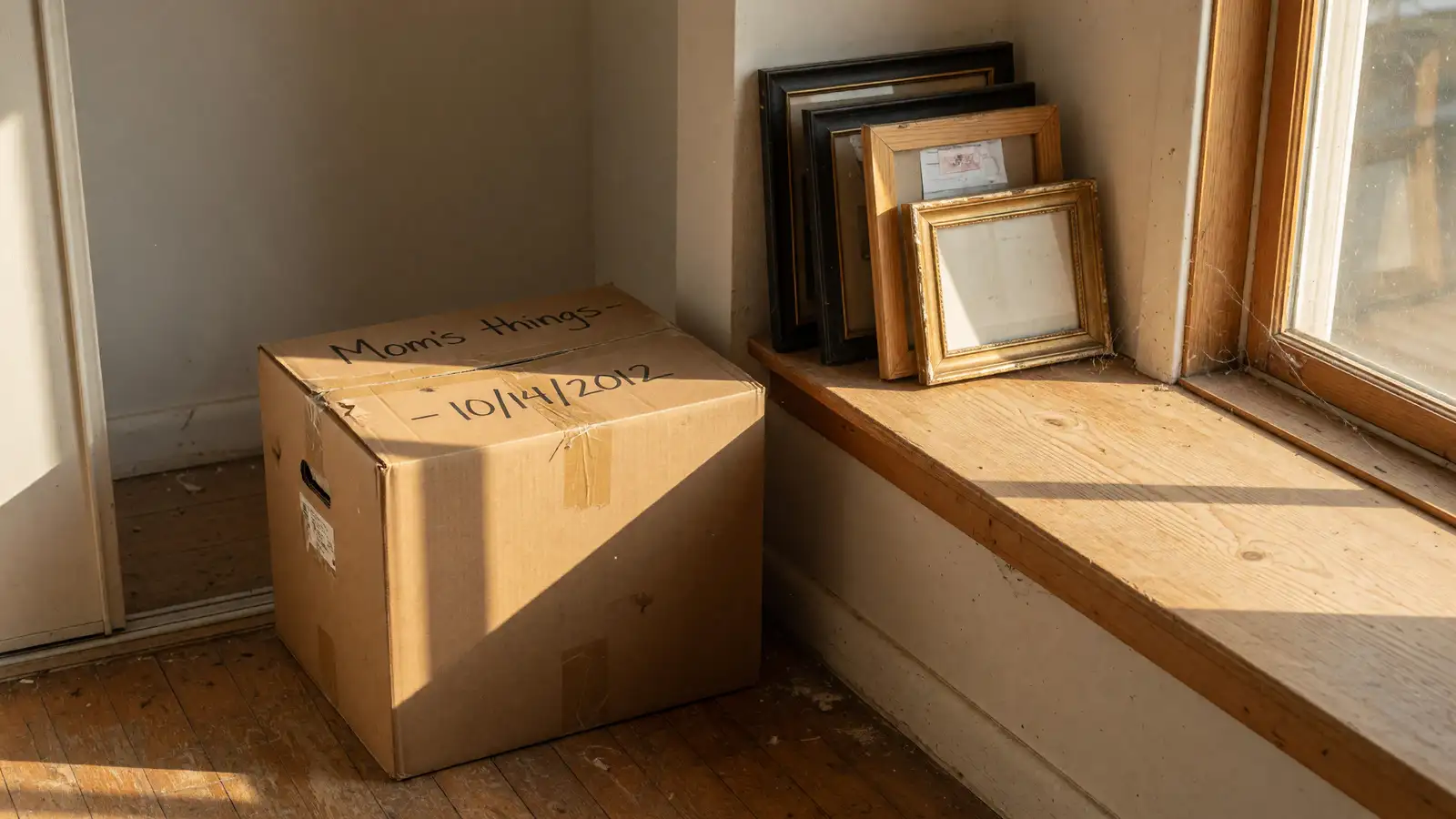
The hardest items to declutter are not the ones that cost money. They are the ones that carry memory. Your child’s first pair of shoes. The concert ticket from your first date. The stack of birthday cards spanning a decade. The t-shirt from a college event you barely remember attending but cannot imagine discarding.
Sentimental items operate under different rules than other possessions. The usual decluttering questions — “Does this spark joy?” or “Have I used this in the past year?” — are inadequate because the item is not about utility. It is about identity. Getting rid of the object can feel like getting rid of the memory itself, even though intellectually you know that is not true.
The Memory vs Object Distinction
The foundational insight of sentimental decluttering is that the memory and the object are separate things. The object triggered the memory, but the memory exists independently in your mind. Getting rid of the concert ticket stub does not erase the concert. It just stops the stub from taking up physical space in your home.
This distinction is easy to articulate and hard to feel. The emotional connection to the object is real, and logic alone does not dissolve it. The trick is to transfer the emotional connection from the object to a preserved form of the memory before letting the object go.
The Curated Keepsake Box
Instead of scattering sentimental items throughout your home where they become invisible background clutter, consolidate them into a single curated container. One well-chosen box, trunk, or bin that holds the items that genuinely represent your life’s meaningful moments.
The container itself enforces curation. When the box is full, something must leave before something new can enter. This natural limit prevents sentimental accumulation from expanding to fill all available space. A box roughly the size of a carry-on suitcase holds a surprising number of meaningful items when thoughtfully packed.
What earns a spot in the keepsake box? Items that, when you hold them, instantly transport you to a specific time, place, or person. Items that would be impossible to replace. Items that represent a chapter of your life now closed. Everything else is a candidate for digital preservation and physical release.
The Digital Preservation Protocol
For sentimental items that do not earn a spot in the physical keepsake box, digital preservation bridges the emotional gap. Photograph the item from multiple angles. Write a brief note about why it mattered: who gave it to you, when, what it represents. Save the photo and note in a dedicated digital album called Keepsakes.
The act of documenting the item before letting it go satisfies the same psychological need as keeping it — the need to honor the memory — without the physical burden. Most people find that once an item is properly documented, the emotional attachment to the physical object diminishes significantly.
For paper items like cards, letters, and children’s artwork, a high-quality scan preserves the handwriting, the drawing, the personal touch that makes the item meaningful. A flatbed scanner produces better results than a phone photo for flat items. Scan at a high resolution, organize by year or person, and back up to both cloud and external storage.
The One-Representative Rule
For categories of items where you have many similar pieces — children’s artwork, travel souvenirs, sports trophies — select one representative example and release the rest. The single best drawing from each school year. The single most meaningful souvenir from each major trip. The award that represents the achievement rather than every certificate of participation.
The one representative tells the story. The duplicates only repeat it. Your child’s artistic development is better represented by twelve carefully chosen drawings spanning their childhood than by three hundred drawings crammed into a storage bin where nobody ever looks at them.
Sentimental decluttering is not about being ruthless. It is about being intentional. The goal is not to erase the past but to honor it in a way that does not burden the present. The memories that shaped you will always be part of you. They do not need a physical monument in every corner of your home to remain true.