Cleaning randomly leads to either overlooked areas or unnecessary重复劳动。 A thoughtful weekly schedule ensures every space receives appropriate attention while preventing the accumulation that makes deep cleaning necessary. This comprehensive guide provides a complete room-by-room breakdown for maintaining a consistently clean home.
The key lies in distribution rather than concentration. Rather than spending entire Saturdays scrubbing entire homes, dividing tasks across weekdays keeps everything maintained with minimal daily effort. Each room receives attention when issues are still manageable.
Monday: Kitchen Deep Focus
The kitchen typically requires the most attention due to daily food preparation. Monday serves as the reset point after weekend cooking and entertaining.
Morning tasks focus on appliance maintenance. Clean the refrigerator interior, removing expired items and wiping shelves. Check the microwave for splatters requiring attention. Run the dishwasher on the sanitize cycle with vinegar or specialized cleaner.
Afternoon brings cabinet and counter attention. Wipe cabinet fronts and handles. Organize pantry items, checking expiration dates and arranging by category. Sweep or vacuum kitchen floors, addressing the high-traffic area after weekend use.
Evening completes kitchen refresh. Clean stovetop thoroughly, including burners and control knobs. Sanitize garbage disposals with citrus peels or specialized cleaner. Take out all trash and recycling accumulated through the weekend.
Tuesday: Bathroom Refresh
Bathrooms require regular attention to prevent mold, mildew, and buildup that makes deep cleaning more difficult. Tuesday maintains these spaces after Monday’s kitchen focus.
Morning addresses surface cleaning. Clean toilets inside and out, including bases often overlooked. Wipe mirrors and glass surfaces with streak-free cleaner. Sanitize faucet handles and other high-touch areas.
Afternoon targets showers and tubs. Use appropriate cleaners for your surface materials. Marble, tile, or acrylic work soap scum before it accumulates. Clean drain covers and check for slow drainage indicating buildup requiring attention.
Evening completes bathroom maintenance. Restock toilet paper, hand towels, and soap. Launder bath mats and immediately replace them. Ensure exhaust fans run adequately to prevent moisture damage.
Wednesday: Living Areas
Common living spaces accumulate dust, debris, and general disorder daily. Wednesday keeps these areas fresh and organized.
Morning emphasizes quick tidying. Declutter coffee tables, remotes, and decorative items. Dust surfaces using appropriate methods for your materials. Address any visible fingerprints on glass or polished surfaces.
Afternoon focuses on floor care. Vacuum all carpeted areas, including under furniture where possible. Sweep and mop hard floors. Give attention to high-traffic zones requiring more frequent care.
Evening creates evening ambiance. Fluff and arrange pillows. Straighten bookshelves and entertainment centers. Address any areas of visible disorder before family time or guests arrive.
Thursday: Bedrooms and Personal Spaces
Bedrooms require different attention than common areas, focusing on sleep environment quality and personal organization.
Morning prioritizes laundry. Start wash loads, transfer dried items to fold or hang. Change bed sheets if scheduled for this day. This ensures fresh linens for upcoming sleep.
Afternoon addresses organization. Declutter nightstands and dressers. Sort through items that migrated from their proper places. Assess closet organization, addressing anything visibly disorganized.
Evening creates sleep sanctuary. Make beds properly. Remove any clutter accumulated during the day. Ensure sleeping environment promotes rest. Dark curtains closed, appropriate temperature, minimized visual chaos.
Friday: Entryways and High-Traffic Zones
Entryways set first impressions and handle daily transitions. Friday prepares for the upcoming weekend and week ahead.
Morning addresses practical maintenance. Clean and organize entryway storage. Coats, shoes, bags work Wipe down doors, handles, and light switches. Address any debris or disorder accumulated during the week.
Afternoon focuses on transitions. Ensure all family members have what they need for weekend activities. Organize any items requiring attention before the weekend. Create order for smooth week-start Monday.
Evening prepares for rest. Final declutter of main living areas. Confirm weekend provisions are in place. Relax knowing the home stands ready for weekend enjoyment rather than cleaning obligation.
Weekend: Maintenance and Deep Tasks
Weekends should focus on maintenance and tasks impossible during weekdays rather than basic cleaning. Reserve these days for what truly requires them.
Saturday mornings work well for quick whole-home tidying. Address anything missed during the week. Complete any laundry behind schedule. Ensure all spaces feel fresh.
Sunday should remain largely cleaning-free. Prepare for the coming week. Plan meals. Handle administrative tasks. The goal is entering Monday refreshed rather than exhausted from cleaning.
Monthly deep tasks can distribute across weekends when needed. Clean windows, detail appliances, address any areas requiring more intensive attention than weekly sessions allow.
Adapting the Schedule
This schedule provides a framework requiring customization for specific households.
Larger homes may divide areas across multiple days. An estate might dedicate Monday to kitchen and Monday afternoon to formal dining, splitting spaces that smaller homes handle simultaneously.
Families with children may need additional daily attention in high-chaos zones. Playrooms, kids’ bathrooms, and family living areas often require more frequent care than adult-focused schedules assume.
Pet households require additional attention to pet areas, furniture, and floors. Build in specific pet-focused tasks rather than attempting to squeeze them into existing slots.
Working households may prefer morning routines rather than evening, or may need to distribute tasks more thinly across more days. Adapt rhythm to your actual availability.
Making It Stick
Schedules only work when implemented consistently. Several practices support lasting adoption.
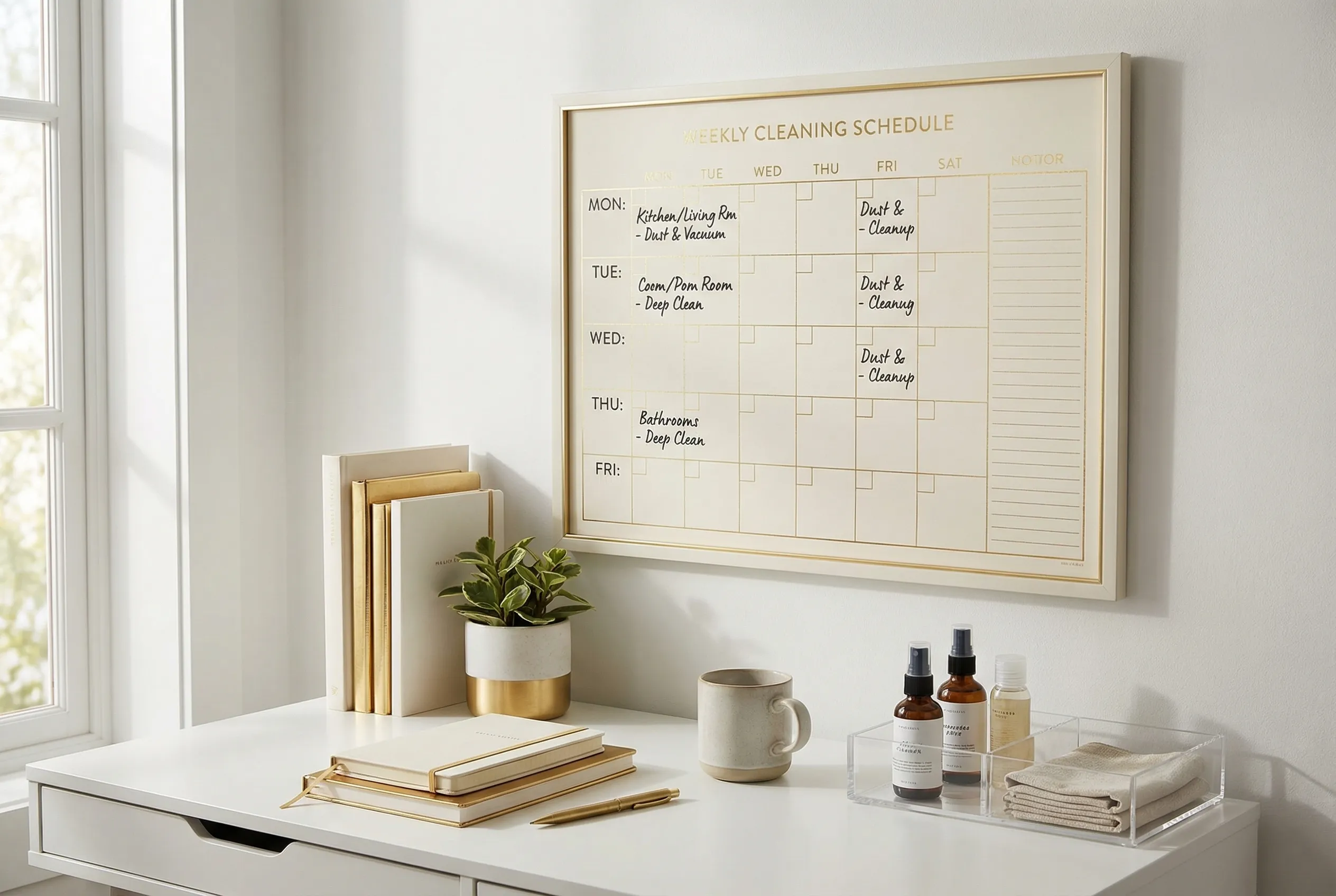
Write tasks where they can be seen daily. Print schedules for refrigerator posting. Create phone reminders. Whatever provides consistent visual cue works.
Start with manageable expectations. Incomplete adherence to an ambitious schedule beats complete failure of an unrealistic one. Build habit before adding complexity.
Track completion to see progress. A simple check-mark system provides satisfaction and reveals patterns in adherence. Most people find visual progress motivating.
The Weekly Rhythm Result
A proper weekly rhythm creates a home that feels perpetually maintained rather than cyclically overwhelmed.
Accumulation never reaches overwhelming levels because regular attention prevents buildup. The deep cleaning required periodically becomes progressively lighter as maintenance improves.
Psychological benefits emerge alongside physical ones. Walking through a consistently clean home provides calm rather than anxiety. The mental load of cleaning decreases dramatically.
Weekends transform from cleaning marathons to genuine rest. The original purpose of weekends is restoration and enjoyment. This becomes possible when basic maintenance occurs throughout the week.
This schedule provides the structure enabling this transformation. Begin today, adapt to your household, and discover what consistent weekly attention makes possible.