The traditional approach to home cleaning sets people up for failure. Waiting until weekends to address accumulated mess means marathon cleaning sessions that consume precious leisure time and energy. The solution involves neither hiring help nor lowering standards. It requires redistributing effort across manageable daily increments.
Fifteen minutes represents the sweet spot for cleaning consistency. This duration feels achievable even on busiest days. It fits within commercial breaks, before morning showers, or during lunch breaks. Most importantly, fifteen minutes daily prevents the accumulation that makes cleaning overwhelming.
Professional cleaners and organized home managers consistently recommend daily attention over weekly overhauls. The difference in quality of life proves substantial. Your home stays consistently welcoming, cleaning never becomes dreaded, and weekends free for enjoyment rather than scrubbing.
Understanding Daily Cleaning Fundamentals
Effective daily cleaning targets high-traffic areas and quick-reverting mess rather than comprehensive deep cleaning.
Concentrate on spaces used most intensively: kitchens and bathrooms. These areas develop problems fastest and most noticeably. Daily attention keeps them functional and pleasant without requiring extensive effort.
Address quick-reverting issues like made beds, rinsed dishes, and folded blankets. These tasks take moments individually but create significant visual disorder collectively. Quick fixes maintain overall appearance between deeper sessions.
Focus on prevention alongside cleaning. Wiping counters after meal preparation prevents buildup requiring scrubbing. Running bathroom fans reduces moisture damage. Small actions upstream prevent large problems downstream.
Your 15-Minute Cleaning Blueprint
Structure your daily fifteen minutes strategically for maximum impact.
Minutes one through five address the kitchen. Wipe counters and stovetops after breakfast. Load or unload the dishwasher. Quick attention after each meal prevents accumulation requiring weekend marathons. Evening attention addresses the day entirely.
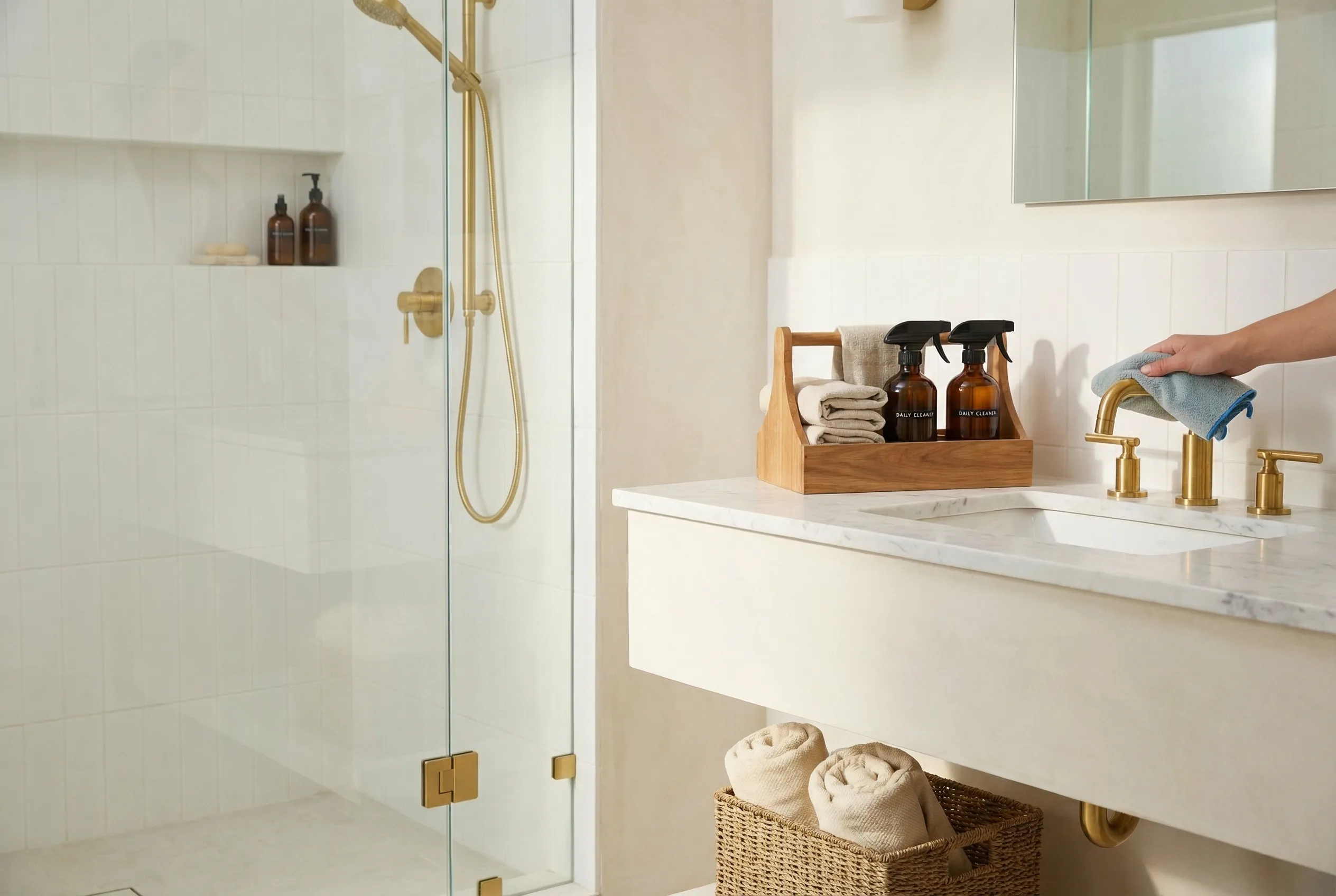
Minutes six through ten target bathrooms. Wipe counters and sanitize high-touch surfaces. Hang towels to dry properly. A quick daily refresh prevents the grime buildup that makes deep cleaning necessary. This maintenance takes minutes but delivers continuous results.
Minutes eleven through fifteen tidy living areas. Make beds if not already done. Fluff pillows and fold blankets. Address visible disorder in main living spaces. This quick attention maintains the welcoming appearance that makes a home comfortable.
This framework provides structure while remaining adaptable. Adjust times based on your specific needs and which areas require most attention.
Implementing Sustainable Habits
Consistency matters more than intensity. Establish routines that survive busy periods and low-motivation days.
Attach cleaning to existing habits for automatic triggering. After morning coffee, wipe counters. After evening teeth brushing, freshen bathrooms. These associations create automatic behavior chains that reduce decision fatigue.
Clean at the same time daily for consistency. Morning cleaners often find evening energy depleted. Evening cleaners may struggle with morning time constraints. Choose a time matching your natural energy patterns and household rhythms.
Keep cleaning supplies accessible and ready. Caddies with necessary products move easily between rooms. Stocked supplies prevent excuse-making when motivation wanes. Preparation enables execution.
Maximizing Limited Time
Fifteen minutes feels short when you know what to do. Strategic approaches multiply impact.
Work top to bottom for efficiency. Clean higher surfaces first, allowing debris to fall to lower areas addressed later. This systematic approach prevents re-cleaning and ensures comprehensive attention.
Keep supplies where you need them. Bathroom cleaner in bathrooms, kitchen spray in kitchens. Movement wastes time; proximity enables speed.
Embrace the “two-minute rule.” If a task takes two minutes or less, do it immediately rather than scheduling for later. This prevents tiny tasks accumulating while you handle larger ones.
What to Skip in 15 Minutes
Equally important: understand what daily cleaning should not include.
Deep cleaning tasks belong in weekly or monthly rotations, not daily sessions. Scrubbing floors, cleaning appliances inside, or detailed window washing require more time and occur less frequently.
Areas receiving minimal use need less frequent attention. Guest bedrooms, formal living rooms, and storage areas tolerate weekly or biweekly cleaning without issue.
Perfectionism destroys daily cleaning consistency. Accept “good enough” that maintains reasonable standards rather than pursuing impossible perfection. A consistently clean home beats an occasionally pristine one.
Building Family Participation
Cleaning should not rest solely on one household member. Distribute responsibility for sustainability.
Assign age-appropriate tasks to children. Young children manage toys and making beds. Teens handle laundry and bathroom cleaning. Involvement builds life skills while reducing adult burden.
Rotate tasks to maintain interest. Same tasks daily become tedious; rotation provides variety while distributing effort fairly.
Make cleaning collaborative rather than punitive. Music, podcasts, or audiobooks transform cleaning from drudgery into shared time. Some families find the routine creates valuable daily connection.
The Compound Effect
Daily fifteen-minute sessions create remarkable results over time.
Weekly totals reach nearly two hours through daily fifteen-minute sessions. This is more than enough for consistent cleanliness without the intensity of weekend work.
Accumulated dirt never reaches the level requiring aggressive cleaning. Regular maintenance prevents deep staining, grime buildup, and deterioration that requires professional intervention.
Visual chaos never develops. The overwhelming mess triggering cleaning dread simply does not form when daily attention prevents accumulation. This prevention creates psychological benefits beyond physical cleanliness.
Energy remains available for other pursuits. Without weekend cleaning obligations, time becomes available for family, hobbies, rest, and everything else life requires.
Starting Today
Begin immediately, regardless of current home state.
Start today with whatever time remains before bed. Clean for fifteen minutes regardless of how long it has been since last attention. Initial sessions may feel overwhelming. This passes quickly.
Do not wait for weekend or month-end. Starting today builds momentum. Tomorrow’s session becomes easier. Within a week, fifteen minutes feels normal rather than burdensome.
Track completion, not perfection. Some days will be shorter. Life interrupts. Return to routine without guilt or elaborate restart procedures. Consistency over time matters more than individual session quality.
The home you want is consistently clean, perpetually welcoming, never requiring marathon sessions. These await through this simple daily commitment. Fifteen minutes transforms everything.