Decluttering stalls for one reason more than any other: the “what if” question. What if I need this someday? What if this comes back in style? What if I regret getting rid of it? These hypotheticals create decision paralysis that keeps closets full and surfaces cluttered.
Joshua Fields Millburn and Ryan Nicodemus, known as The Minimalists, developed a rule that cuts straight through this paralysis. It is called the 90/90 rule, and it reduces every decluttering decision to two simple questions.
The Two Questions
Look at the item in your hand and ask: have I used this in the last ninety days? If the answer is yes, keep it. If the answer is no, ask the second question: will I use this in the next ninety days?
If you have not used it in the past three months and cannot honestly say you will use it in the next three months, the rule says: let it go.
The genius of the 90/90 rule is that it replaces vague future scenarios with a concrete timeframe. You are not deciding whether you might need a bread maker at some undefined point in the future. You are deciding whether you will use a bread maker in the next ninety days. For most people who have not touched their bread maker in three years, that answer is refreshingly clear.
Why Ninety Days
Ninety days is roughly one season. It is long enough to capture most regular usage patterns but short enough to be honest about. A year is too long. You can easily convince yourself that you might use something sometime in the next twelve months. Three months forces clarity.
The timeframe also aligns with seasonal cycles. If you evaluate items in January, ninety days covers winter and the beginning of spring. If you evaluate in July, ninety days covers summer and the beginning of fall. Items that are genuinely seasonal reveal themselves because they sit in the “not used in ninety days but will use in the next ninety” category.
The Seasonal Exception
This brings us to the most important exception to the 90/90 rule: genuinely seasonal items. A snow shovel in July fails the past-ninety-days test. So does a beach umbrella in January. But both will clearly be used within the next ninety days if you live in a climate with snow or beaches.
Holiday decorations are another clear exception. Christmas lights evaluated in March fail both tests but will absolutely be used in the next ninety days if evaluated in October. The rule works when you apply it with common sense about what “seasonal” genuinely means.
The key distinction is between seasonal and aspirational. Seasonal items have a predictable, recurring use pattern. Ski equipment used every winter is seasonal. Ski equipment bought five years ago and used twice is aspirational. Be honest about which category your items fall into.
The Sentimental Exception
Sentimental objects also deserve an exception from the 90/90 rule, but a carefully bounded one. The 90/90 rule was designed for functional items, not for your grandmother’s letters or your child’s first shoes. Applying a usage rule to sentimental objects misses the point of why you keep them.
That said, sentimental items should be curated rather than hoarded. The 90/90 rule is not the right tool for this, but other decluttering methods address it. The KonMari method’s spark-joy test works better here. So does the container method: designate a single box for sentimental items from a particular source and keep only what fits.
The danger is using “sentimental” as a blanket excuse to keep everything. Most clutter is not sentimental. Most clutter is aspirational purchases, gifts you feel guilty about, and items kept out of inertia. Reserve the sentimental exception for things that genuinely hold emotional weight.
Combining the 90/90 Rule With Other Methods
The 90/90 rule works best as a first-pass filter. Use it to clear the obvious clutter quickly, then switch to more nuanced methods for the items that remain.
Start a decluttering session with a laundry basket. Walk through the room and toss anything into the basket that clearly fails the 90/90 test: clothes not worn in a year, gadgets still in boxes, duplicates of tools and kitchen utensils, books read once and forgotten. This first pass takes fifteen minutes per room and removes the low-hanging fruit.
Once the obvious clutter is gone, switch to the KonMari category approach. Go through remaining clothes together. Then books. Then papers. The 90/90 rule thins the herd so that the deeper work of deciding what sparks joy becomes manageable rather than overwhelming.
Room-by-Room Examples
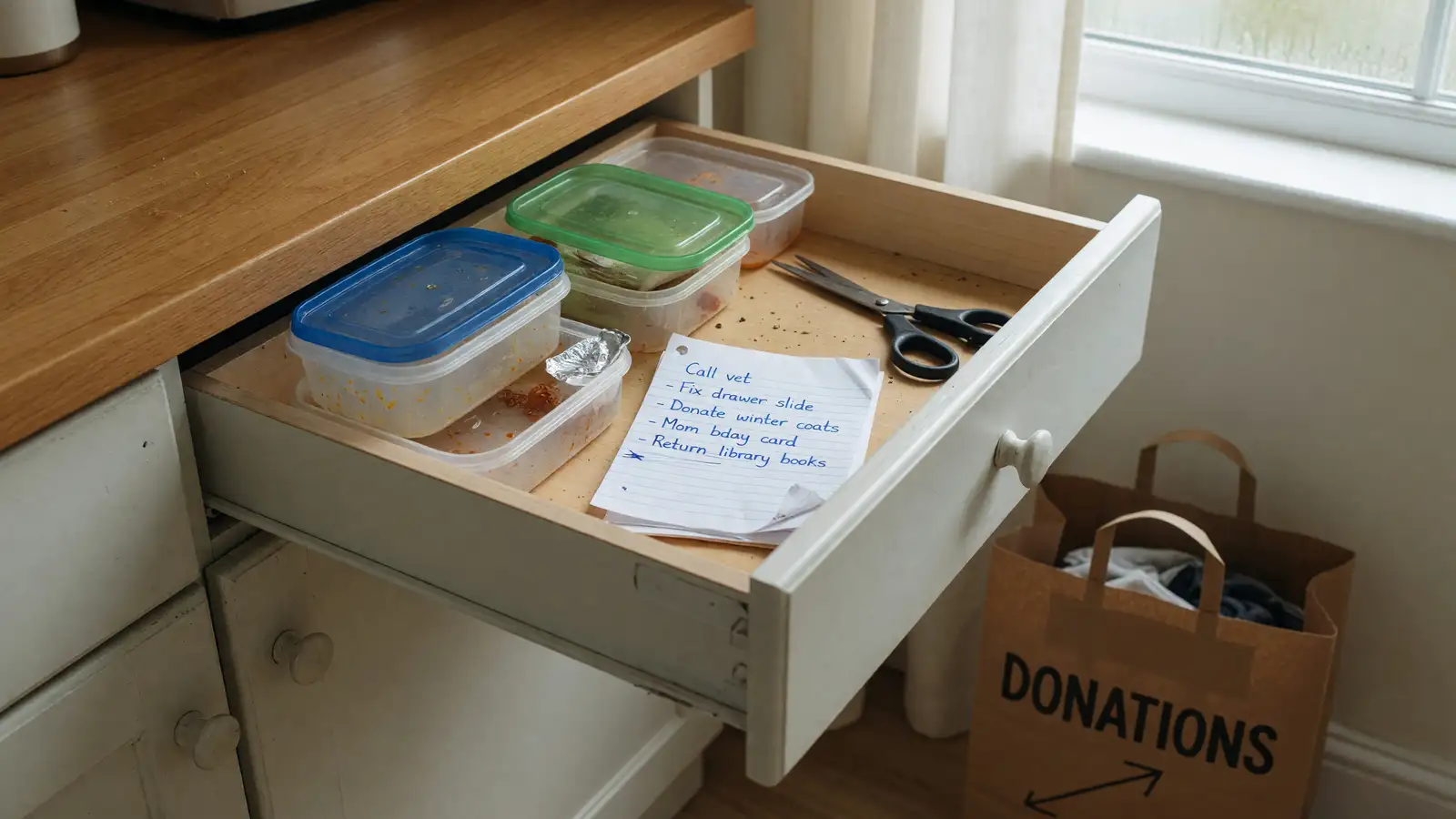
In the kitchen, the 90/90 rule targets the back of the gadget drawer. The pineapple corer, the avocado slicer, the egg separator, the panini press. If you have not used a specialized kitchen tool in ninety days and do not plan to in the next ninety, it can go. Keep the tools that earn their space through regular use.
In the closet, the rule exposes clothes that you keep for a version of yourself that no longer exists. The dress you will fit into again someday. The suit from a job you left five years ago. The shoes that hurt but looked great. If you have not worn it in ninety days and will not wear it in the next ninety, donate it to someone who will.
In the bathroom, the 90/90 rule clears out the half-used products that accumulate under the sink. The hair product you tried once, the lotion that smells wrong, the sample sizes from hotels. These items fail the test decisively.
In the garage, the rule confronts the aspirational hobby supplies. The camping gear from a trip planned but never taken. The woodworking tools from a project started and abandoned. Letting go of these items is hard because it means admitting the aspiration did not become reality. But the physical space and mental clarity gained are worth the brief discomfort.
The 90/90 rule is not the only decluttering tool, but it is one of the fastest. It replaces the exhausting internal negotiation of “maybe someday” with a simple yes or no. For most of the items in most people’s homes, the answer is no. And that clarity is a relief.