The standard decluttering advice has a rhythm to it. Empty everything. Sort into piles. Be ruthless. Do it all in one weekend. And if you can’t? The implication is you weren’t committed enough.
That framing works for some people. For everyone else, it creates what the Washington Post recently called “perfection paralysis” — the state where thinking about the project feels so exhausting that nothing happens at all (Washington Post, July 2026).
The alternative is something quieter: soft decluttering. No dramatic purges. No guilt if a drawer stays messy for another week.
What soft decluttering actually means
Soft decluttering is a shift in posture, not a new system. Instead of treating clutter as a problem to be conquered in one brutal push, you treat it as something you chip away at in small, sustainable increments.
The difference matters because the all-or-nothing approach fails more often than it succeeds. A 2025 survey by the National Association of Productivity and Organizing Professionals found that 67% of people who attempt a full-home declutter over a single weekend abandon the project before finishing the first room. The same survey reported that people who decluttered in 15-to-30-minute daily sessions were three times more likely to maintain the results six months later.
Soft decluttering borrows from the same logic that makes “atomic habits” work across other domains. You don’t overhaul your fitness by running a marathon on day one. You start with a ten-minute walk. Decluttering works the same way.
The key difference is psychological. When you decide “I’ll tackle the junk drawer today, and that’s enough,” the task feels achievable. You finish it. You get the small dopamine hit of completion. And the next day, you’re more likely to do another one.
Why the big-purge method backfires
The KonMari method and Swedish Death Cleaning both have their place — but they demand a level of time, energy, and emotional readiness that many people simply don’t have on a random Tuesday. When the method is too ambitious, the default outcome isn’t partial success. It’s total avoidance.
There’s another problem. Big purges often lead to rebound clutter. You empty a closet, donate six bags, feel victorious — then slowly refill it over the next few months because the underlying habits never changed. Soft decluttering addresses the root cause: the slow, unconscious accumulation that happens day to day.
The same pattern shows up in other areas. People who do crash diets tend to regain the weight. People who try to completely reinvent their daily schedule in one day tend to burn out by Wednesday. Sustainability lives in the small, repeatable moves. Not in the dramatic gesture.
Cathy Orr, a certified KonMari master and co-founder of The Uncluttered Life, told Martha Stewart that clutter “rarely comes from one big purchase. It builds slowly through small, habitual ones that don’t have a clear purpose or a realistic place to live” (Martha Stewart, July 2026). Fighting that pattern with one dramatic event misses the point. What you actually need is a new default setting.
7 micro-decluttering actions you can do in 10 minutes
These aren’t life-changing on their own. Stack enough of them across a few weeks, though, and the difference is visible.
1. The one-surface reset. Pick one flat surface — your nightstand, the kitchen counter by the door, your desk. Remove everything that doesn’t belong there. Put those items where they actually live. Done.
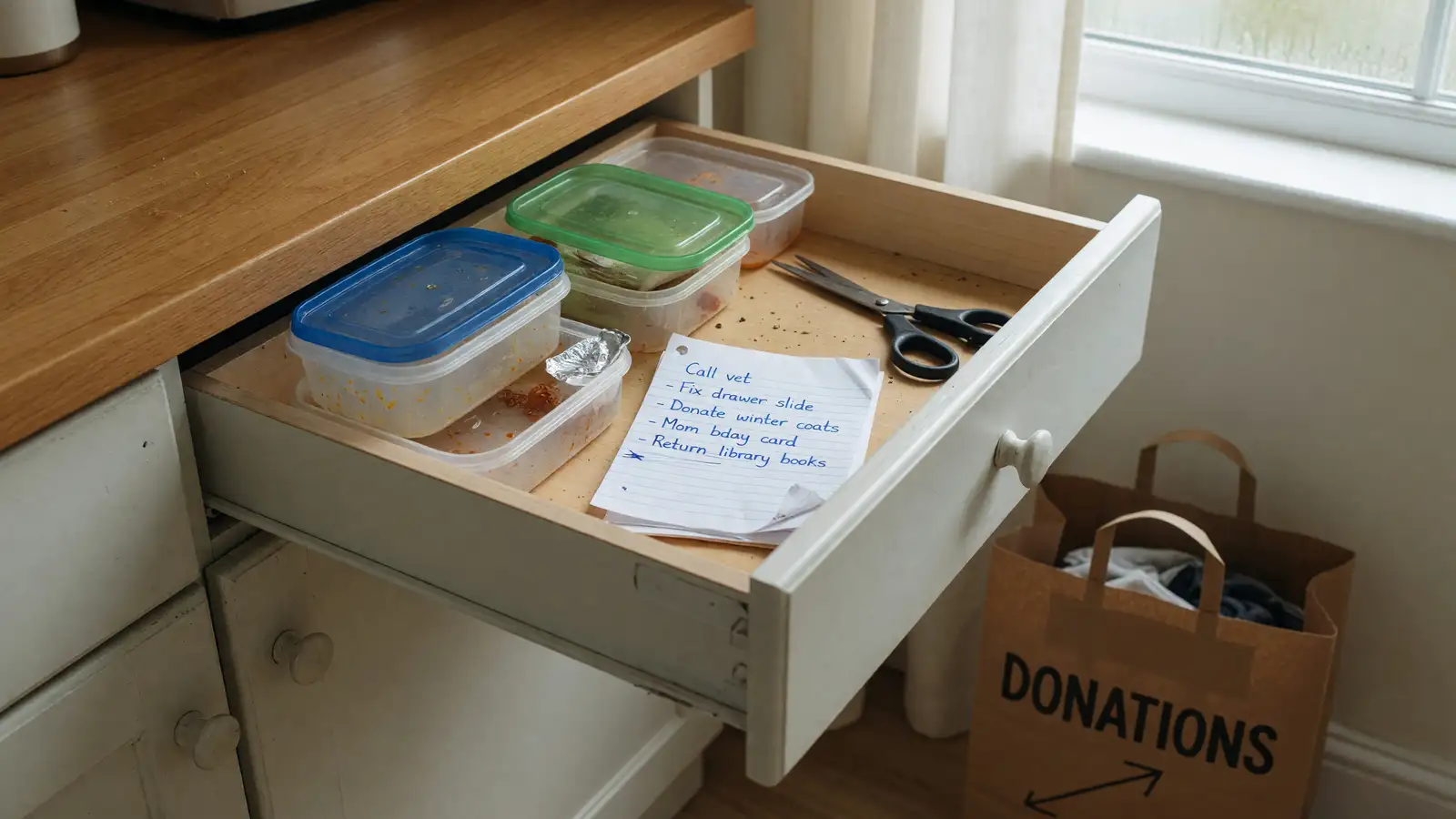
2. The five-item drawer edit. Open any drawer. Find five things you haven’t used in a year. Toss, donate, or relocate them. Close the drawer.
3. The hanger test. Turn all the hangers in your closet backward. When you wear something, put it back with the hanger facing forward. After 30 days, anything still on a backward hanger is a candidate for donation.
4. The bathroom cabinet sweep. Open your bathroom cabinet or medicine drawer. Toss anything expired. Consolidate duplicates. If you bought a product six months ago and never opened it, you probably don’t need it.
5. The email unsubscribe blitz. Open your inbox. Search “unsubscribe.” Pick five newsletters or promotional emails you ignore every single time. Unsubscribe from all five. This isn’t physical clutter, but digital noise drains the same mental bandwidth.
6. The “does this have a home?” walkthrough. Walk through one room with a small basket. Pick up anything that doesn’t have a designated spot. Either assign it a permanent home right now, or put it in a “decide later” box. The box gets revisited once a week.
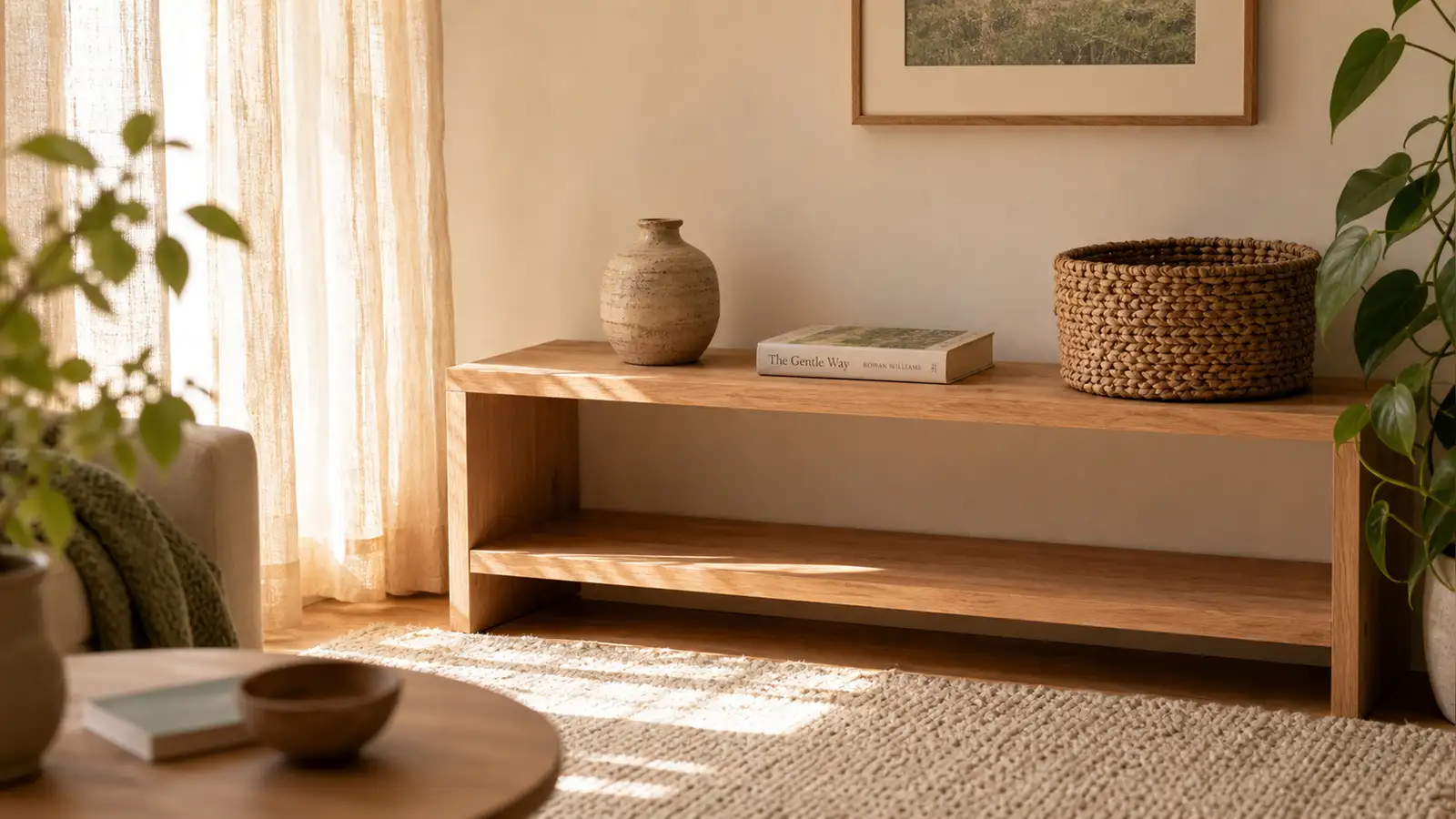
7. The front-door reset. The entryway is ground zero for daily clutter — mail, shoes, bags, keys. Spend ten minutes returning everything to its place and asking whether your entryway setup actually supports the way you come and go. If shoes always pile up, you need a shoe rack there. If mail covers the console, add a small tray.
None of these require hauling out every item you own or dedicating a full Saturday. The point is that ten minutes, repeated consistently, outperforms a biannual panic-purge.
What minimalists actually stop buying
Part of soft decluttering is slowing the inflow. You don’t need to become an ascetic, but noticing what you bring home changes the math.
Audra George, a professional organizer at Pretty Neat, told Martha Stewart that minimalists tend to avoid purchases that “create more friction than they’re worth” (Martha Stewart, July 2026). Here are the categories that come up most often:
Decorative objects without a function. Seasonal knick-knacks, word-art signs, and trendy shelf filler. Orr calls these out specifically: “They don’t age well, and tend to be a short-lived fad.” Instead, minimalists keep pieces that serve a purpose or carry personal meaning. Fewer objects, but each one earns its spot.
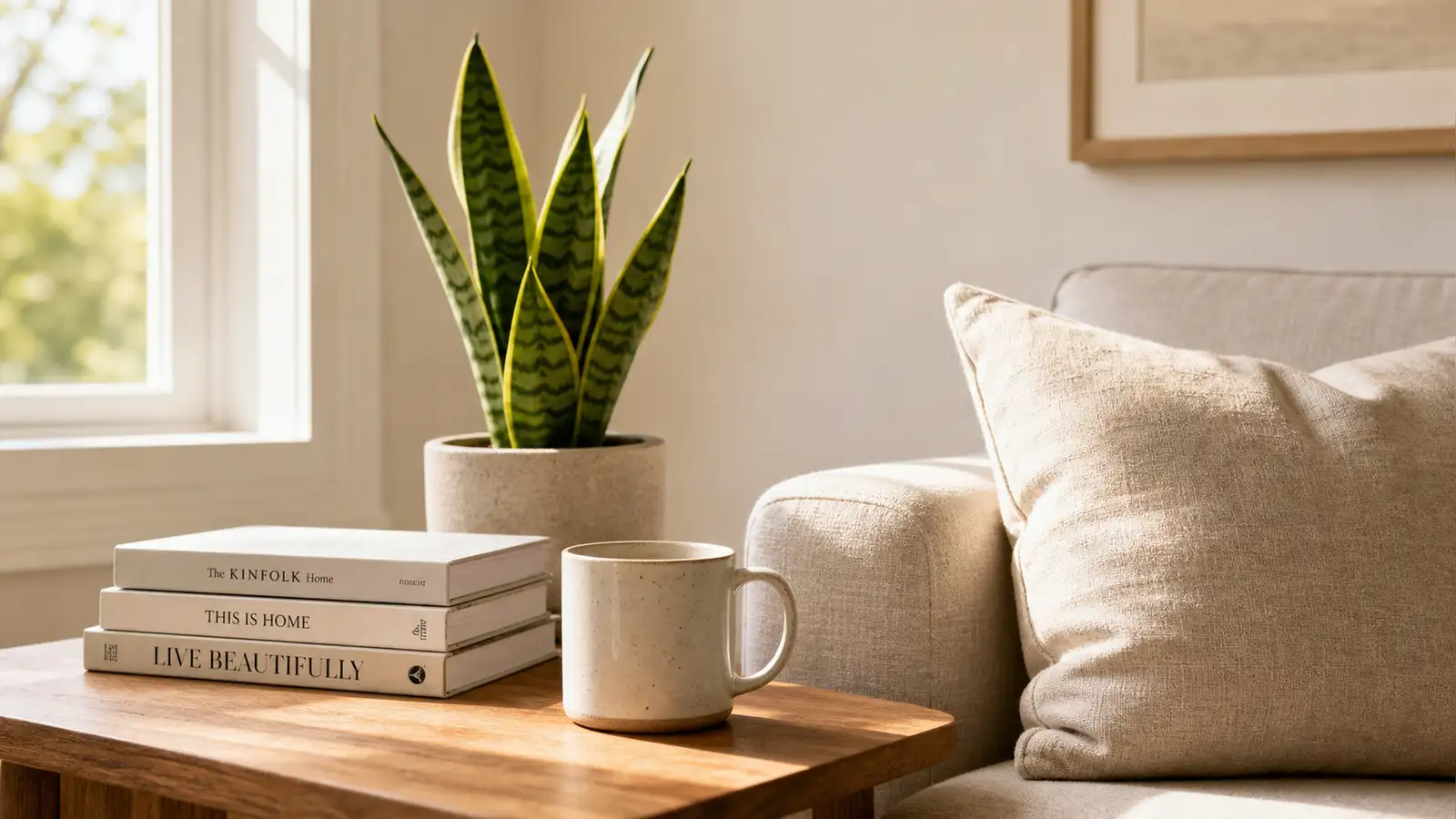
Excess throw pillows. They’re the poster child for visual noise. Two work. Six don’t make the sofa six times more comfortable.
Trays without a job. Orr puts it bluntly: “I love a good tray, but sometimes they just become clutter. Large ones are hard to store because of the difficulty getting them in and out of cabinets. So they stay out with little to no purpose.” If the tray isn’t actively corralling something specific (keys, remotes, spices), it’s just another surface collecting dust.
Impulse “organization solutions.” Buying bins before you know what you need to contain. The sequence should be: declutter first, then measure what’s left, then buy storage that fits. Doing it in reverse just gives you neatly binned clutter.
Sentimental items you don’t actually like. This is the hardest one. Orr’s advice: “You don’t have to keep a gift just because someone gave it to you. The gift already served its purpose — it communicated that the person was thinking of you.” Keep what genuinely matters. Take a photo of the rest if it helps.
None of these rules are absolute. Soft decluttering isn’t about deprivation. It’s about noticing, over time, that some purchases add more work than value. When you start paying attention to that pattern, you shop differently.
Intentional living is the quieter goal
The point of decluttering isn’t the empty shelf. It’s what the empty shelf gives you.
Balance Through Simplicity, a blog focused on intentional living, describes the shift this way: “In choosing what you keep in and what you keep out, you’re getting clear on what really matters to you in life and defining your priorities” (Balance Through Simplicity, July 2026). The absence of stuff isn’t the prize. The prize is the mental space, the easier mornings, the not having to move three things to find the one thing you actually need.
That’s why soft decluttering works better as a lifestyle than a project. When decluttering is framed as a one-time event, it’s something you survive. When it’s framed as an ongoing practice of asking “does this earn its place here?”, it becomes background maintenance — like brushing your teeth, not like moving house.
Making habits that actually stick
The hardest part of any decluttering effort isn’t the initial cleanup. It’s not sliding back.
Balance Through Simplicity puts the goal in broader terms: “The time, space and freedom gives us scope to do more of what we love and fill our days with more ease and less stress.” The clean shelf is nice. The easier morning is what you’re actually after.
Here’s what works, drawn from the research and from people who’ve maintained clutter-free homes for years:
Tie it to an existing habit. Declutter for ten minutes while your coffee brews. Sort mail while dinner cooks. The habit piggybacks on something you already do without thinking.
Lower the bar, not the frequency. Five minutes daily beats two hours monthly, every time. The momentum of doing something small every day keeps the practice alive.
One in, one out. For every new item that enters your home, one item leaves. This rule alone prevents slow re-accumulation.
Define a “clutter threshold.” Decide what “too much” looks like before it happens. If the mail pile reaches the edge of the tray, you deal with it. If the coat closet won’t close easily, you edit. Having a trigger removes the guesswork.
None of this requires a life-changing overhaul. It requires noticing, consistently, what you bring in and what you let pile up. That’s a smaller ask than emptying your garage in one weekend, but it’s what actually lasts.
If you’re the type who has avoided decluttering because the whole thing felt like a mountain you’d never climb, soft decluttering is the approach that meets you where you are. Ten minutes. One surface. That’s enough for today.
And here’s the quiet payoff that the dramatic-before-and-after crowd rarely mentions: when you stop treating your home as a project to be fixed and start treating it as something you tend to in small, regular doses, the anxiety around it shrinks. You stop dreading the weekend purge because there is no weekend purge. You just do a little bit, most days, and after a month the place looks different. After three months, your default habits have shifted enough that you barely register the effort. That’s what makes soft decluttering stick where big methods fail — it doesn’t ask you to become a different person. It just asks you to start.
Related reading: The 50% Rule: The Decluttering Method That Makes Any Space Manageable, Guilt-Free Decluttering: How to Overcome the Emotional Obstacles to Letting Go, What Clutter Actually Does to Your Brain — and the Minimalist Fix That Works