The fitness industry wants you to believe that getting in shape requires a gym membership, a Peloton, a rack of dumbbells, resistance bands in five strengths, a yoga mat, a foam roller, and a subscription to a workout app. The reality is that an effective fitness routine requires almost none of these. The human body is the only piece of equipment you genuinely need, and it comes pre-assembled.
A minimalist exercise routine is not about doing less. It is about doing the exercises that produce the most results with the least complexity, in a format that you can sustain indefinitely. Here is how to build one.
The Bodyweight Foundation
Bodyweight exercises are not easier than weighted exercises. They are differently challenging, and for most fitness goals — general health, functional strength, mobility, body composition — they are entirely sufficient.
A complete bodyweight routine covers four movement patterns. Push exercises like push-ups and dips work the chest, shoulders, and triceps. Pull exercises like pull-ups and inverted rows work the back and biceps. Leg exercises like squats, lunges, and step-ups work the lower body. Core exercises like planks and leg raises work the midsection.
Progress in bodyweight exercises comes from increasing difficulty rather than increasing weight. A standard push-up becomes a diamond push-up, then an archer push-up. A bodyweight squat becomes a pistol squat. The progression paths are well documented and produce continuous strength gains for years.
The Minimal Equipment List
If bodyweight alone is not sufficient for your goals, three pieces of equipment cover everything. A pull-up bar that fits in a doorway costs under thirty dollars and enables the pulling exercises that are otherwise difficult to replicate without equipment. A set of gymnastics rings hung from the pull-up bar adds instability that dramatically increases the difficulty of push-ups, rows, and dips. A single kettlebell or pair of adjustable dumbbells adds weighted leg work that bodyweight squats eventually outgrow.
That is it. A pull-up bar, rings, and a kettlebell. The total cost is under two hundred dollars, and the footprint is a doorway and a corner of a room. Compare that to a gym membership at fifty dollars per month, and the equipment pays for itself in four months.
The Routine Structure
A minimalist workout routine follows a simple template. Three sessions per week, alternating between strength and conditioning. Each session lasts thirty to forty-five minutes. The consistency of three sessions per week produces better results than a more ambitious plan that you cannot sustain.
Session A: strength focus. Three sets of a push exercise, three sets of a pull exercise, three sets of a leg exercise, and a core finisher. Rest two to three minutes between sets. The total workout takes roughly thirty-five minutes.
Session B: conditioning focus. A circuit of five bodyweight exercises performed for time rather than reps. Forty seconds of work, twenty seconds of rest, repeat the circuit three to five times. The total workout takes roughly twenty-five minutes.
Alternate sessions A and B. The variety prevents boredom, and the different stimuli — strength one day, conditioning the next — produce more balanced fitness than either approach alone.
The Consistency Secret
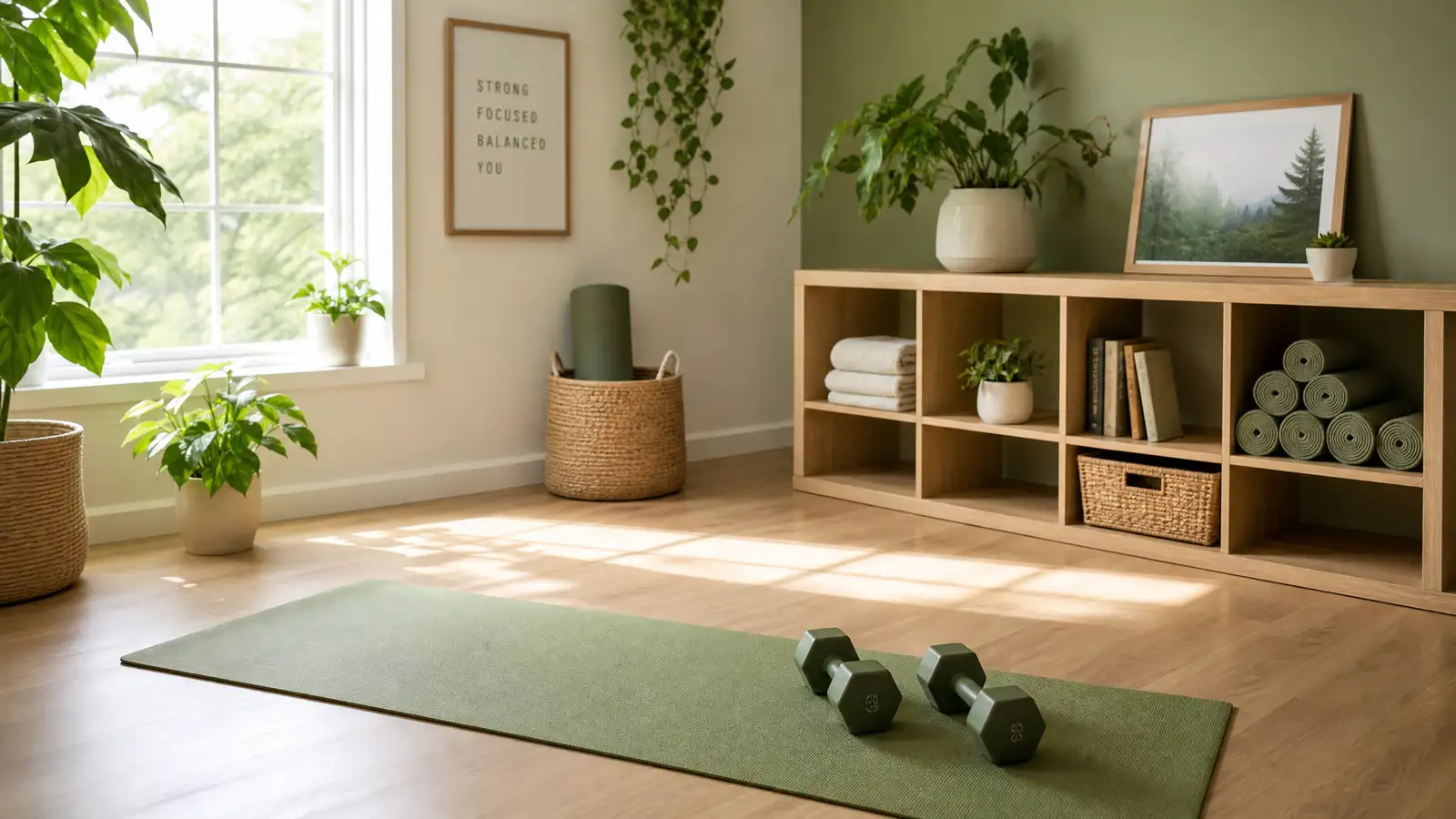
The most effective exercise routine is the one you do consistently. A minimalist routine supports consistency because it removes the friction of going to the gym, waiting for equipment, and navigating crowded locker rooms. When your workout is a pull-up bar in the doorway and a cleared space on the floor, the barrier to starting is nearly zero.
Schedule workouts at the same time on the same days. The consistency of timing turns exercise into a habit, and habits do not require motivation. When Tuesday at 7 AM means workout time, you stop needing to decide whether to exercise. The decision is already made.
A minimalist approach to fitness strips away the complexity that the fitness industry layers on top of a simple truth: move your body against resistance several times per week, consistently, for years. Everything else is optimization around the edges.