The kitchen pantry is the most-used storage space in most homes and the most disorganized. You open the door, scan shelves of half-empty bags and mystery containers, buy duplicates of things you already have, and close the door on the quiet chaos until the next meal. The pantry should make cooking easier, not harder.
In 2026, pantry organization has moved past the Instagram-perfect rows of matching jars. The focus has shifted to systems that are genuinely functional: containers that keep food fresh, layouts that match how you actually cook, and storage that works whether you have a walk-in pantry or two shelves in a cabinet. Here is how to build a pantry organization system that lasts.
The Container Rule
The single most transformative action you can take in any pantry is removing food from its original packaging and transferring it into airtight containers. This is not about aesthetics, though a pantry of uniform containers looks satisfying. It is about visibility, freshness, and pest prevention.
Original packaging hides contents. A half-empty bag of rice looks identical to a full one from the side. A box of pasta collapses as you use it and spills loose noodles across the shelf. Flimsy bags tear, twist ties fail, and chip clips vanish. Within weeks of opening, dry goods in their original packaging begin absorbing moisture and losing quality.
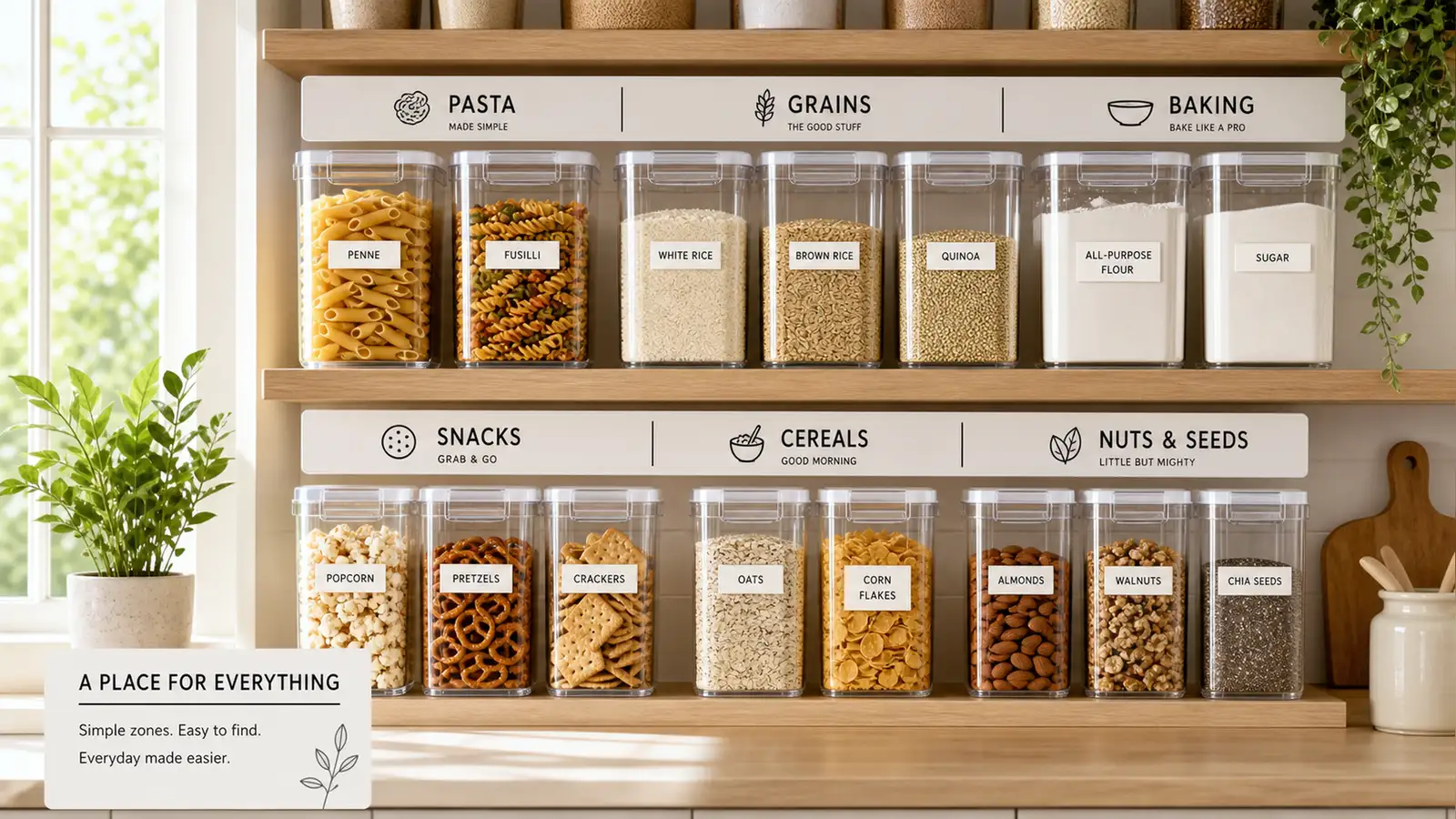
Airtight containers solve all of these problems at once. Clear containers let you see exactly what you have and how much remains. Sealed lids keep out moisture, pantry moths, and the staleness that creeps into opened bags. Rectangular or square containers use shelf space more efficiently than round ones, and stackable designs let you build upward on each shelf rather than spreading outward.
The upfront cost of a full container set can be significant, but it is a one-time expense. Glass containers with silicone seals last indefinitely and do not absorb food odors or stains. BPA-free plastic containers are lighter, less expensive, and less likely to break if dropped. Both work. Choose one material and stick with it for consistency.
The Zone System
A pantry organized by food type sounds logical: all the grains together, all the canned goods together, all the snacks together. The problem is that food type does not match how you cook. When you are making dinner, you need the pasta and the tomato sauce and the olive oil, not the breakfast cereal and the granola bars.
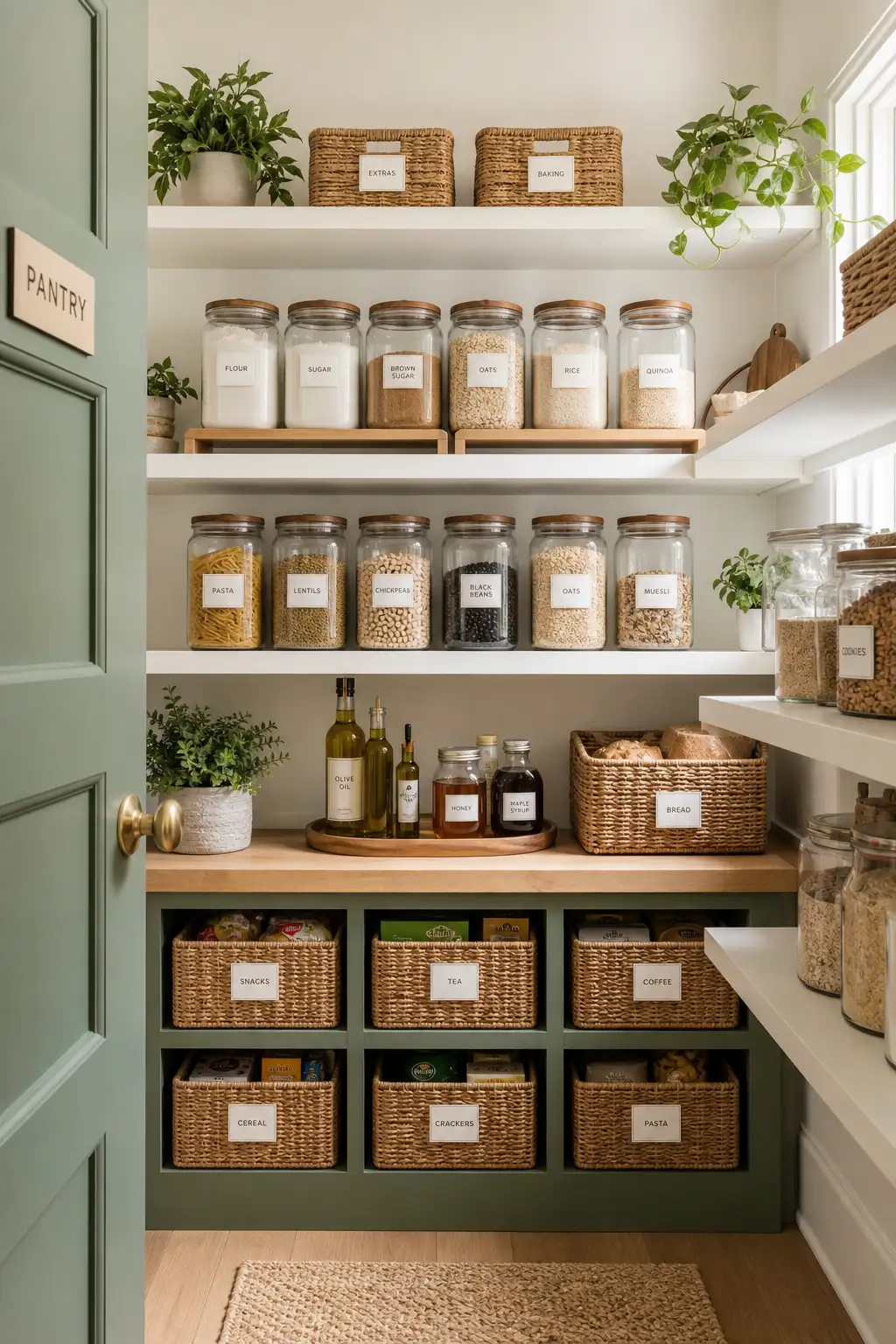
Zone-based organization groups items by how you use them. The five most useful zones for most households are:
The baking zone groups flour, sugar, baking powder, vanilla extract, chocolate chips, and sprinkles together. When a baking project starts, everything needed lives in one area.
The breakfast zone holds cereal, oatmeal, granola, pancake mix, syrup, and coffee supplies. Morning routines run faster when breakfast ingredients are not scattered across three shelves.
The snack zone is the most-accessed area of the pantry and should be the easiest to reach. Granola bars, crackers, dried fruit, nuts, and after-school snacks live here. If you have children, place this zone at their eye level so they can serve themselves without pulling everything off the shelves.
The dinner prep zone contains pasta, rice, canned tomatoes, beans, oils, vinegars, and the spices and sauces used for weeknight cooking. This zone should be at adult eye level and within arm’s reach of the stove if your pantry layout allows it.
The bulk and backup zone holds overflow: the extra bag of flour, the Costco-sized pack of paper towels, the spare jar of peanut butter. These items live on the highest or lowest shelves, out of the prime-access territory. When a container in the main zone runs low, you refill from the backup zone.
The Labeling Discipline
Labels are the difference between a system that works for a week and one that works indefinitely. Every container needs a label with the contents and, where relevant, the expiration date or the date it was opened.
A label maker produces clean, durable results, but painter’s tape and a permanent marker work just as well and are easier to update when you repurpose a container. The label should face forward so it is readable without touching anything. If you use opaque containers, labels are non-negotiable. If you use clear containers, labels still help because flour and powdered sugar look identical through glass.
For the backup zone, label the shelf or bin itself rather than individual items. A bin labeled “pasta backup” tells you at a glance that the lasagna noodles and the spaghetti refills live there, even if the specific contents rotate over time.
Small Pantry Solutions
Not everyone has a dedicated pantry room. Many kitchens rely on a single cabinet, a narrow pull-out, or a few deep shelves that swallow items into the dark recesses of the back. Small spaces benefit from the same container principles but require more deliberate choices.
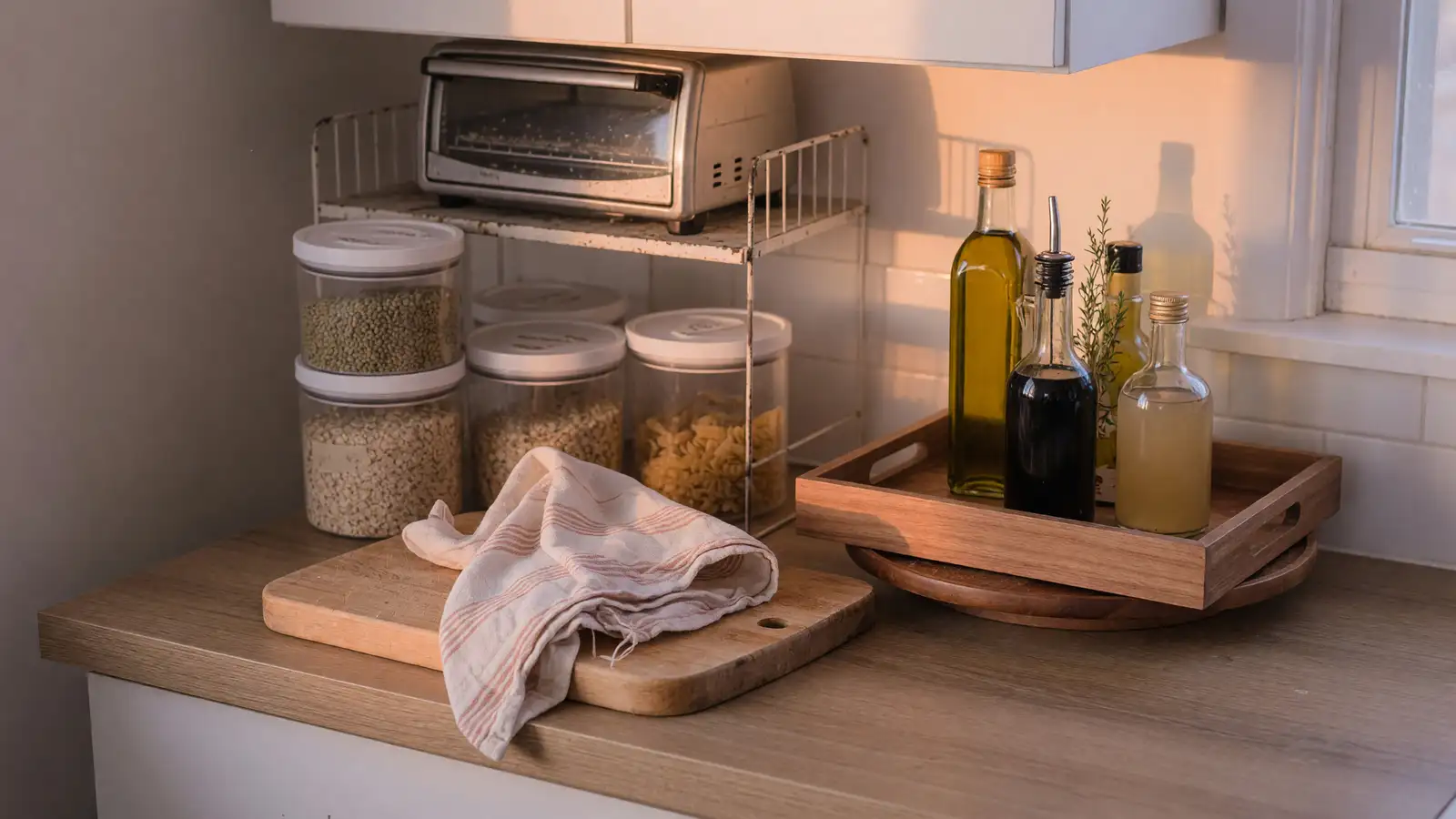
A narrow pull-out pantry benefits from containers that are tall rather than wide. Stackable bins with front-facing labels turn a six-inch-wide cabinet into functional storage for dozens of items. Shelf risers create a second tier on each shelf, doubling the usable surface area without any construction. Over-the-door organizers with clear pockets hold spice jars, sauce packets, and small items that would otherwise disappear on a shelf.
The cardinal rule of small pantry storage is that nothing should be stored behind anything else. If you have to move one item to access another, the item in back functionally does not exist for daily use. Deep shelves need pull-out bins or lazy Susans that bring everything forward. If a shelf is too deep for a lazy Susan, store only backup items on it and keep daily-use items on shallower shelves.
The Maintenance Protocol
The best pantry system fails without a reset routine. Once a month, spend ten minutes scanning containers for low stock and moving items from the backup zone to the main zone. Once a quarter, check expiration dates and wipe down shelves. The quarterly reset is also the right time to adjust zones if your cooking habits have shifted — if you started baking sourdough in February, the baking zone probably needs more shelf space by April.
A pantry organized with containers, zones, and labels transforms cooking from a scavenger hunt into a straightforward process. You know what you have, where it lives, and when it needs to be used. That knowledge eliminates duplicate purchases, reduces food waste, and removes the low-grade frustration that comes from staring into a chaotic pantry at five thirty in the evening trying to figure out what dinner looks like.