Most organization products are designed to hide your stuff. Baskets, bins, solid drawer organizers. They all operate on the same premise: if you can’t see the mess, it’s not there. This works for things you rarely touch, like holiday decorations in the attic. It’s a disaster for things you use every day.
Clear containers flip this logic. They make things visible. And visibility, it turns out, changes behavior. When you can see the half-empty bag of rice or the three bottles of the same salad dressing, you stop buying duplicates. When the bathroom cabinet makes your skincare products visible at a glance, you actually use them before they expire. When your desk supplies are in clear acrylic drawers, you don’t buy another pack of batteries because you forgot the one you already have.
The problem isn’t the container material itself. It’s that most people buy a few clear bins, toss things in, and call it done. That’s not a system. That’s a slightly more transparent version of the same clutter. A real clear-container system uses zones: designated areas where items are grouped by function, not by what happened to fit.
Here’s how to build one that works across every room in the house, without spending hundreds of dollars on matching “organizing products.”
Why Clear Containers Actually Change Behavior
Opaque storage works on the “out of sight, out of mind” principle. The problem is that principle cuts both ways. Yes, you don’t see the mess. But you also don’t see what you own. A 2023 survey by the food waste nonprofit ReFED found that American households throw away roughly 30% of the food they buy, and one of the top cited reasons was losing track of what was in the fridge or pantry.
Clear containers solve this by making inventory a glance rather than a search. There’s no digging through a bin to find out if you still have pasta. The pasta is right there, visible through the side.
This also reduces what behavioral economists call “duplicate purchasing”: buying something you already own because you forgot you had it. Spices, condiments, batteries, office supplies, skincare products: all categories where households routinely accumulate multiples of the same item simply because they couldn’t see the original.
Visibility also makes maintenance easier. When a container looks half-empty, you notice. When a shelf in the fridge starts to look chaotic, you see it immediately rather than discovering it two weeks later during a frustrated clean-out.
The Zone System: How to Divide Any Space
Professional organizers don’t think in terms of “where does this fit.” They think in zones: groups of related items that live together because they’re used together. Your morning coffee zone has beans, filters, mugs, and a spoon. Your lunch-packing zone has containers, lids, and a marker for labeling. Your bedtime zone has skincare, a book, and whatever else you reach for at 10 p.m.
The zone approach works because it aligns storage with behavior rather than forcing behavior to adapt to storage. You don’t have to remember where the tape is. It’s in the gift-wrapping zone with the scissors and ribbon. You don’t have to walk across the kitchen to grab the cutting board. It’s in the prep zone next to the knives.
To set up zones in any space:
-
Watch where things actually land. Don’t design zones based on where you think things should go. For a week, notice where items accumulate naturally. Mail lands on the kitchen counter? That’s your incoming paper zone. Work bag drops by the front door? That’s your launch pad zone.
-
Group by frequency, not category. Daily-use items belong at arm’s reach. Weekly items can sit on a lower shelf. Monthly or seasonal items go high up or in deep storage. A kitchen spice rack at eye level for the five spices you use every meal is worth more than an alphabetized drawer of 40 spices you reach for twice a year.
-
One container per zone, not one container per item. This is where most clear-container systems fail. You don’t need a dedicated bin for garlic and another for onions. You need a “meal prep aromatics” bin that holds garlic, onions, shallots, and ginger together. The zone is the organizing principle; the container is just its boundary.
-
Standardize container sizes within each room. Mixing brands and dimensions creates visual noise even when everything is technically organized. Three matching clear bins look intentional on a shelf. Five mismatched ones look like a storage aisle clearance sale.
Kitchen and Pantry: Where Clear Containers Earn Their Keep
The kitchen is where clear containers make the biggest practical difference because food has expiration dates and refrigerators are black holes.
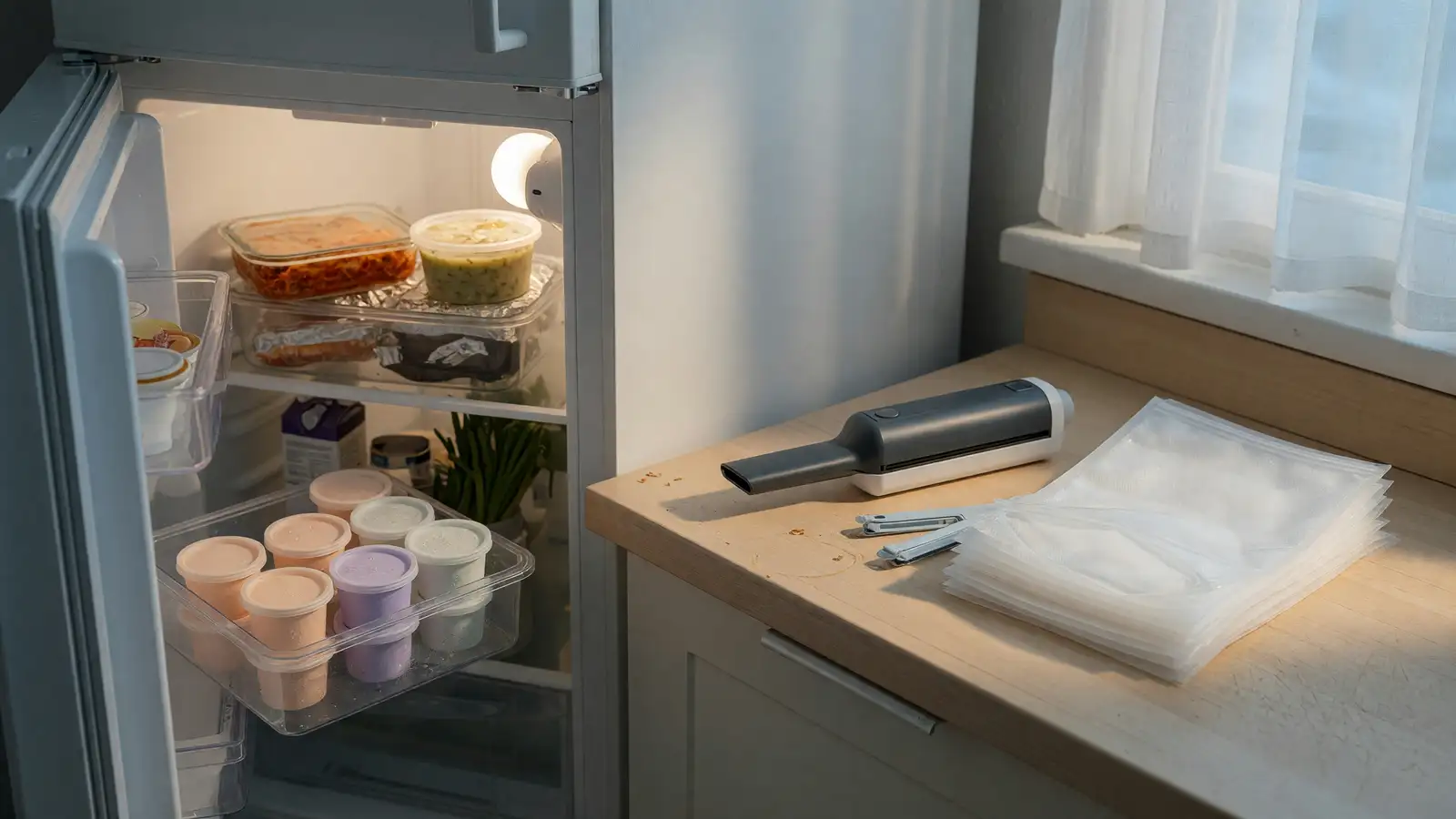
In the refrigerator, create four basic zones: breakfast (yogurt, spreads, fruit), meal prep (chopped vegetables, pre-cooked proteins, sauces), snacks (cheese sticks, cut fruit, hummus), and leftovers. Each zone gets one clear bin or tray. When a category bin is getting full, you eat from it. When it’s empty, you restock. No more science experiments in the back of the bottom shelf.
ALDI’s Crofton Clear Trays, launched in late July 2026 at $4.99, are a good example of how this doesn’t need to be expensive. Home editor Sarah Warwick at Homes & Gardens tested them in small, large, and drink-can sizes and found they worked for everything from yogurt cups to sauce bottles, and noted they’re useful beyond the fridge in pantries and bathrooms too.
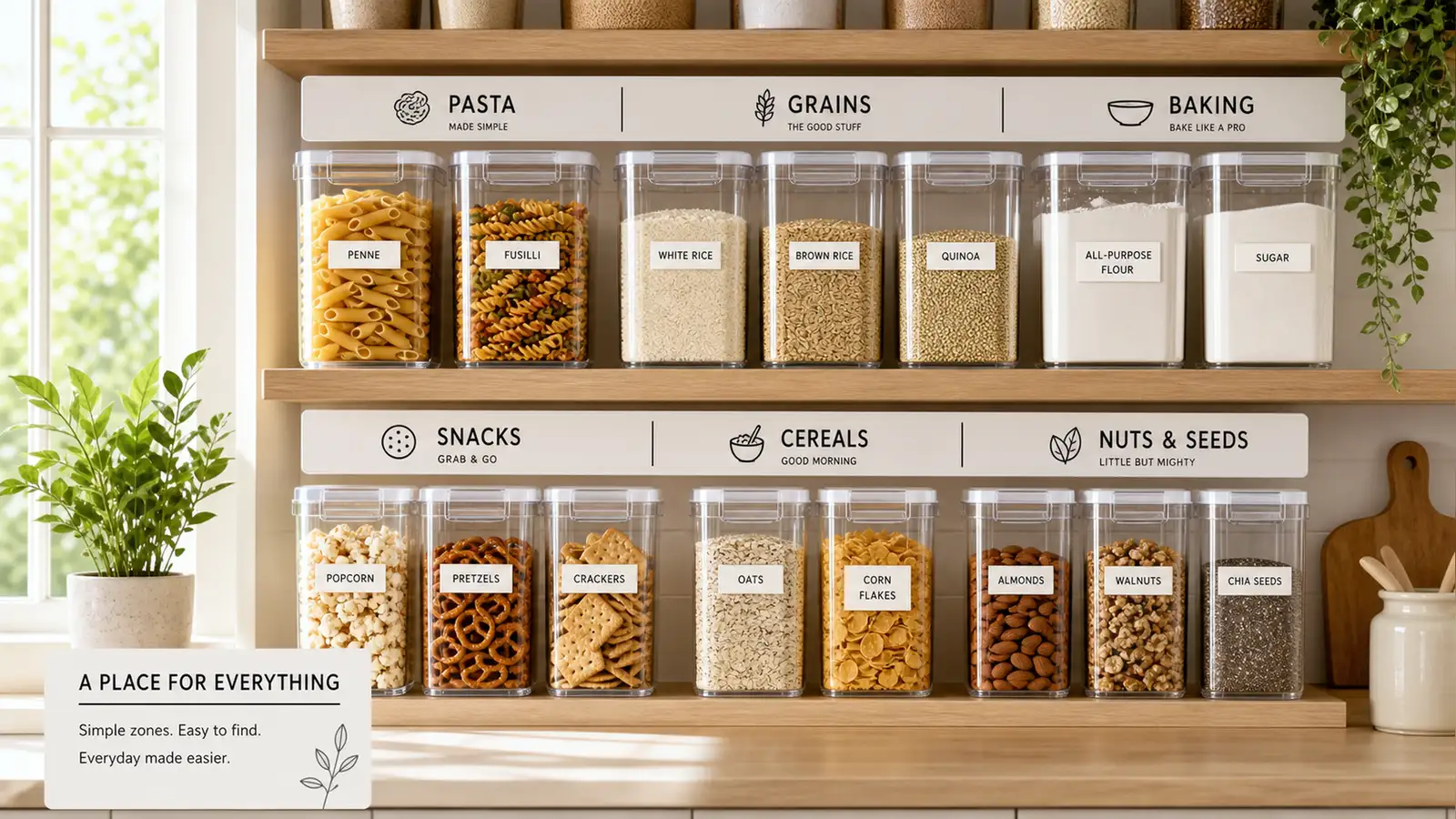
In the pantry, clear containers are most useful for dry goods: flour, sugar, rice, pasta, cereal, snacks. Pouring ingredients from original packaging into uniform clear canisters isn’t just aesthetic. It makes it obvious when you’re running low, prevents pantry moths from infesting opened bags, and lets you buy in bulk without the visual clutter of half-empty chip bags.
One rule most people skip: label the container, not the shelf. When you label the shelf, you’re locking yourself into a layout. When you label the container, you can rearrange without confusion. A simple label maker or masking tape and a Sharpie is all you need.
Bathroom and Linen Closet: From Chaos to Hotel-Like Order
Bathrooms are full of small, identically-shaped items that all look the same in packaging. Skincare serums, hair products, first aid supplies, cotton swabs. They’re all vaguely cylindrical and impossible to distinguish when jumbled in a drawer.
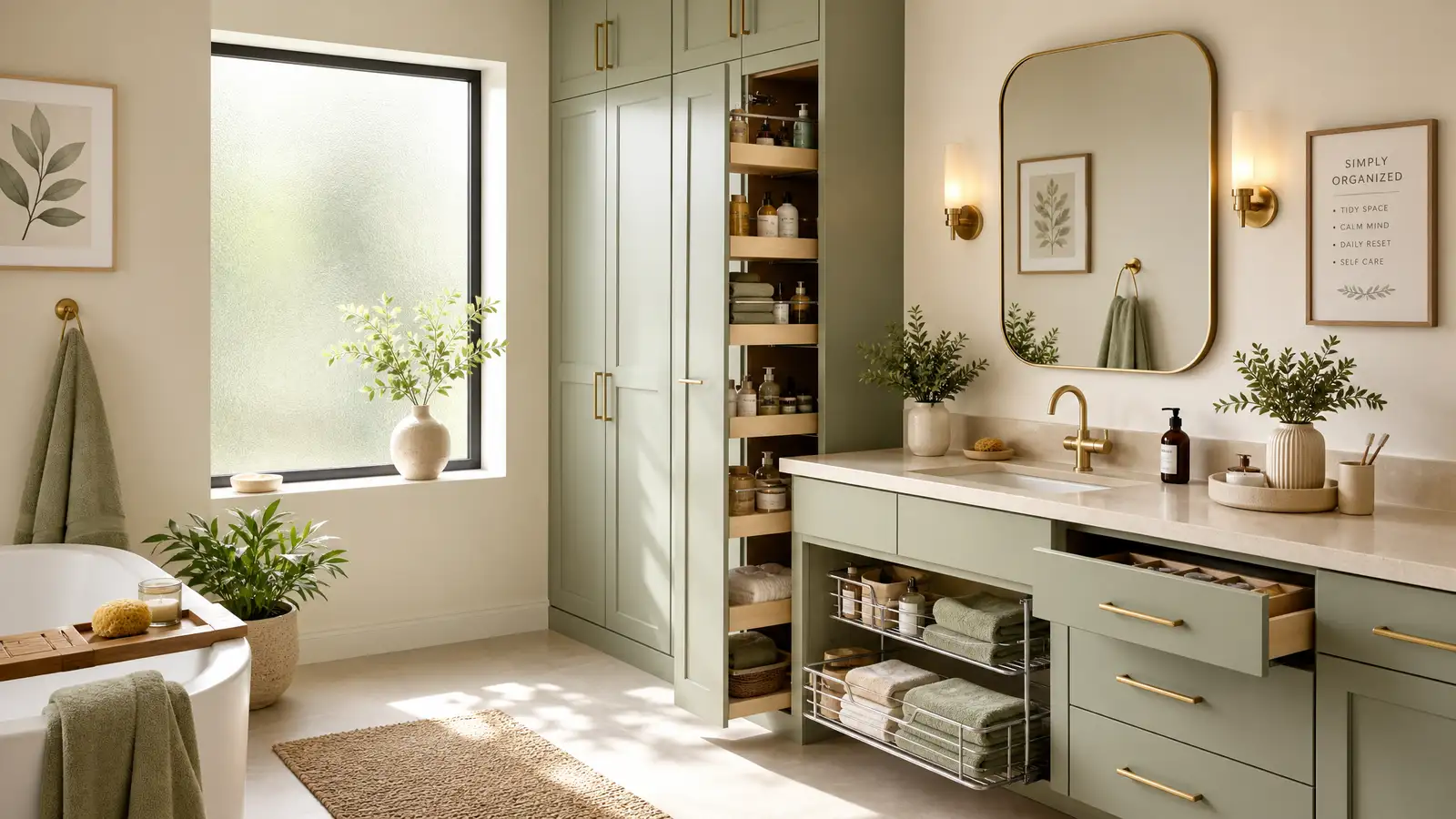
Clear drawer dividers or small acrylic bins solve this by creating compartmentalized zones: morning skincare in one bin, evening routine in another, hair tools in a third. The key is grouping by routine, not by product type. Everything you need for a morning face routine lives together, so you’re not opening three drawers every time you get ready.
For under-sink storage, clear stackable bins prevent the “pile and forget” problem. Cleaning supplies, spare toilet paper, first aid — each category gets its own labeled bin. Stackable designs let you use vertical space without losing visibility of the bottom bin, which is the usual failure point.
Medicine cabinets benefit from the same approach but with a safety caveat: if you have young children, lockable clear containers or high placement is non-negotiable. Clarity and safety aren’t mutually exclusive, but clarity doesn’t replace childproofing.
Home Office and Entryway: The Spaces You’re Ignoring
Desks and entryways collect the same kind of debris: things that don’t have a designated home. Receipts, keys, pens, charging cables, spare change, mail you haven’t opened. The pile grows because there’s no obvious container for “small random things that need processing.”
The fix is a two-container system: one clear bin for “incoming” (items that need action: bills to pay, forms to sign, packages to open) and one for “supplies” (items that get used: pens, sticky notes, paper clips). The incoming bin gets processed weekly. The supplies bin gets restocked as needed. Everything else goes where it belongs or gets thrown out.
In the entryway, a clear wall-mounted organizer with labeled pockets handles the daily chaos: keys, sunglasses, masks, dog leash, mail key. Wall-mounting is crucial here. Horizontal surfaces in entryways become clutter magnets within 24 hours. Vertical storage keeps the surface clear and makes each item visible before you walk out the door.
For shoes, clear front-drop boxes are a divisive topic among organizers. Some swear by them; others say they’re overkill for daily-wear shoes. A middle ground: use clear boxes for out-of-season or occasional shoes (dress shoes, hiking boots) and open shelving or a simple rack for daily shoes. The daily shoes don’t need containers. You know where they are because you wore them yesterday.
The Budget Reality Check
Organizing product marketing wants you to believe you need matching containers, custom drawer inserts, and professional label systems. You don’t. Some of the best clear storage solutions are repurposed food containers: large yogurt tubs, takeout containers with clear lids, glass jars from pasta sauce.
The ALDI Crofton trays at $4.99 show that even new, purpose-built clear containers don’t need to be expensive. Similar options exist at Target’s Brightroom line ($3–$12), IKEA’s VARIERA series ($2–$8), and Amazon Basics clear bins ($15–$25 for multi-packs).
The real cost isn’t the containers. It’s buying containers before you declutter. This is the most common mistake in home organization, and it’s worse with clear containers because the visible clutter inside a clear bin looks worse than clutter hidden in a solid bin. Declutter first. Then measure your shelf depth, width, and height. Then buy containers that fit those measurements. The sequence matters.
You don’t need to convert your entire house to clear containers in one weekend. Start with one zone. The fridge, or the bathroom drawer, or the desk. Live with it for a week. If the system holds, expand. If it doesn’t, adjust. A single working zone is worth more than an entire house of half-implemented systems.
Making It Stick
The best storage system is the one you actually maintain, and maintenance usually fails for two reasons: the system is too rigid, or the containers are too hard to access.
Rigid systems break because life is messy. You’re not going to sort mail into the “incoming” bin when you walk in the door at 9 p.m. after a long day. That’s fine. That’s what forgiving storage systems are for. Design your zones with a “dump and go” option for the bad days and a “reset” protocol for the good ones.
Access matters more than aesthetics. If you stack three clear bins on top of each other, the bottom bin is functionally invisible because you have to unstack the top two to reach it. Drawer-style clear organizers (the kind that slide out like a drawer) solve this. They cost a bit more but you’ll actually use the bottom bin.
The simplest maintenance habit: every time you open a container and notice something is wrong (low stock, expired, doesn’t belong there), fix it right then. Don’t make a mental note. Don’t add it to a weekend to-do list. Fix it in the moment. These micro-corrections compound and prevent the need for hours-long reorganization sessions.
Clear containers work because they make inventory visible and decisions easier. But the containers themselves aren’t the solution. The zone-based thinking behind them is. Once you start seeing your spaces in terms of functional zones rather than storage capacity, the containers almost pick themselves.