Most people fill every surface they own. The bookshelf is packed. The walls are covered. The kitchen counters hold appliances, mail, fruit bowls, knife blocks, and decorative jars. Every horizontal plane in the house carries something. The message is clear. Empty space is wasted space.
This belief is backwards. Empty space is not wasted. It is the most functional design element in your home. It lets your eyes rest. It gives important objects room to stand out. It makes a room feel calm instead of chaotic. Here is why empty space matters and how to create it.
Visual rest zones reduce mental fatigue.
Your brain processes every object in your field of vision. Not consciously, most of the time. But the cognitive load is real. A cluttered room forces your visual system to work constantly, sorting through competing stimuli to figure out what matters. This background processing drains mental energy you could use for things that actually require thought.
Empty space is the opposite. When your eye lands on a clear counter or a blank section of wall, your brain gets a micro-break. It does not need to decode anything. It does not need to decide whether that pile of mail is urgent. It just rests. A room with visual rest zones feels peaceful because your nervous system is literally working less hard to navigate it.
This is not about living in a sterile white box. It is about giving your eyes deliberate places to land that are not busy. One empty shelf. One clear surface. One wall without art. These are gifts to your brain.
The breathing room concept in Japanese and Scandinavian design.
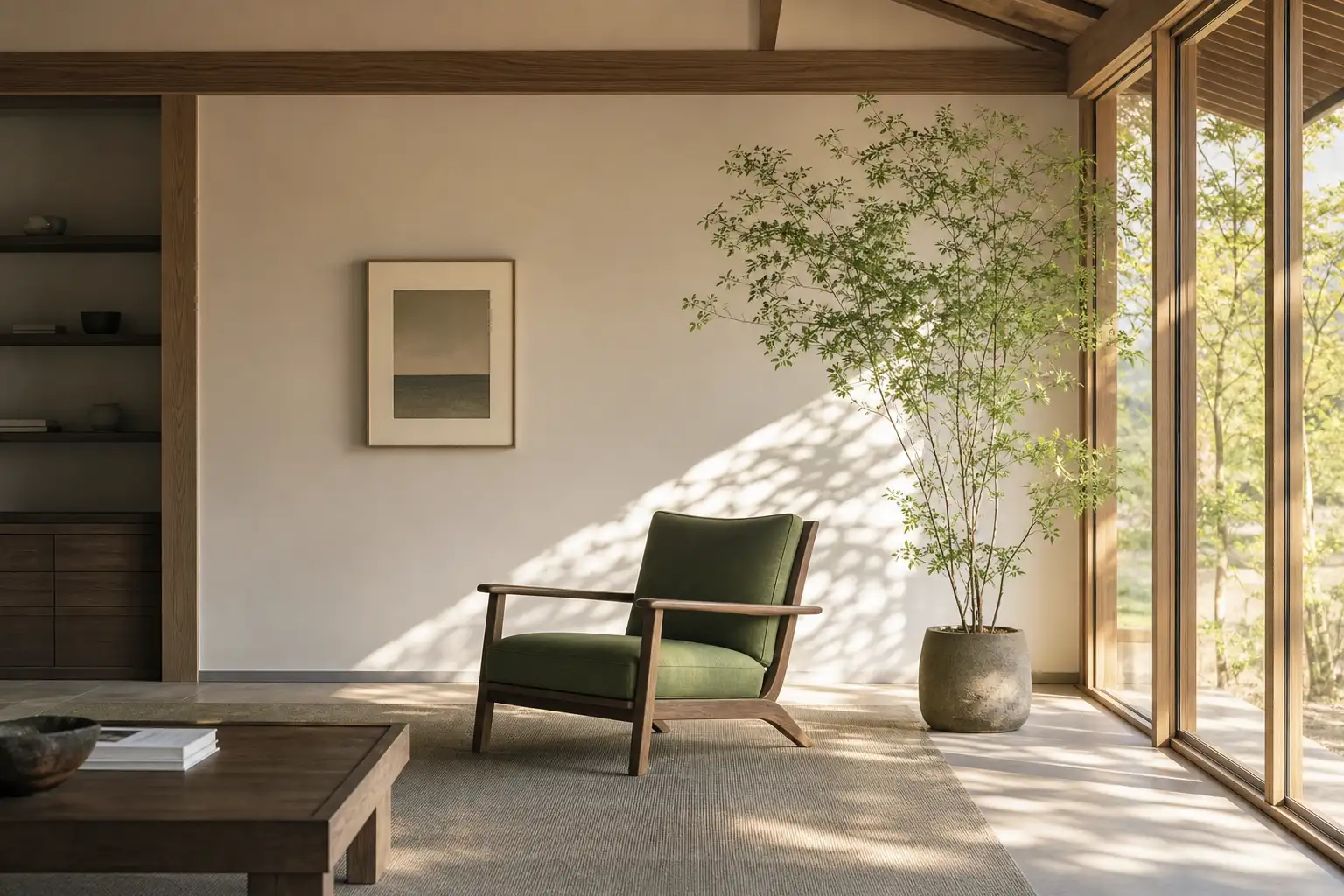
Japanese design has a word for this. “Ma” roughly translates to the space between things. It is the pause in music. The silence in conversation. The empty space in a room that gives the objects around it meaning. In a traditional Japanese home, rooms are sparsely furnished. A single scroll hangs on an otherwise empty wall. A single flower arrangement sits in the tokonoma alcove. The emptiness makes the object important. The object makes the emptiness intentional.
Scandinavian design arrives at the same place through a different route. Nordic interiors prize functionality, natural light, and calm. Surfaces stay clear because clutter interferes with the function of the room. A kitchen counter needs to be empty so you can cook. A nightstand holds a lamp and a book. Nothing more. The restraint is practical before it is aesthetic.
Both traditions understand the same thing. Objects need space around them to be seen and appreciated. A room full of things has no focal point. Every item fights for attention. Nothing wins.
Why every wall and surface does not need something on it.
Walk through a furniture showroom and you will see every wall decorated and every surface styled. This is marketing, not design advice. The showroom wants to sell you more things. It creates the impression that a complete room is a full room.
A complete room is a functional room. If a wall has nothing on it and that works for the space, the wall is complete. You do not owe your walls decoration. You do not owe your shelves objects. The pressure to fill every empty spot is a consumer impulse disguised as taste.
Before you add something to a room, ask what it does. Does it serve a function? Does it bring you genuine joy to look at? If the answer to both is no, the room is better without it. The empty space is doing more for you than the object would.
One empty shelf per bookcase.
Here is a practical rule you can apply today. Every bookcase or shelving unit in your home gets one empty shelf. Not styled with a single object. Actually empty. Just the shelf, the wall behind it, and air.
This single empty shelf transforms the whole bookcase. The books and objects on the other shelves suddenly look curated instead of crammed. The eye has a place to pause as it scans across. The bookcase breathes.
If you have a tall bookcase with six shelves, five hold your things and one holds nothing. If the idea makes you uncomfortable, sit with that discomfort. It tells you something about your relationship with empty space. The discomfort fades. The calm remains.
A clear nightstand.
Your nightstand is the last thing you see before you sleep and the first thing you see when you wake. It should be calm. A lamp. A book you are currently reading. Maybe a glass of water. That is the complete list.
Not a stack of books you might read someday. Not a phone charger with a tangle of cords. Not hand cream, lip balm, a sleep mask, tissues, loose change, and three hair ties. Clear everything off tonight. Put only the lamp and the book back. Notice how it feels to wake up and see an empty surface instead of a to-do list of objects.
Bare kitchen counters.
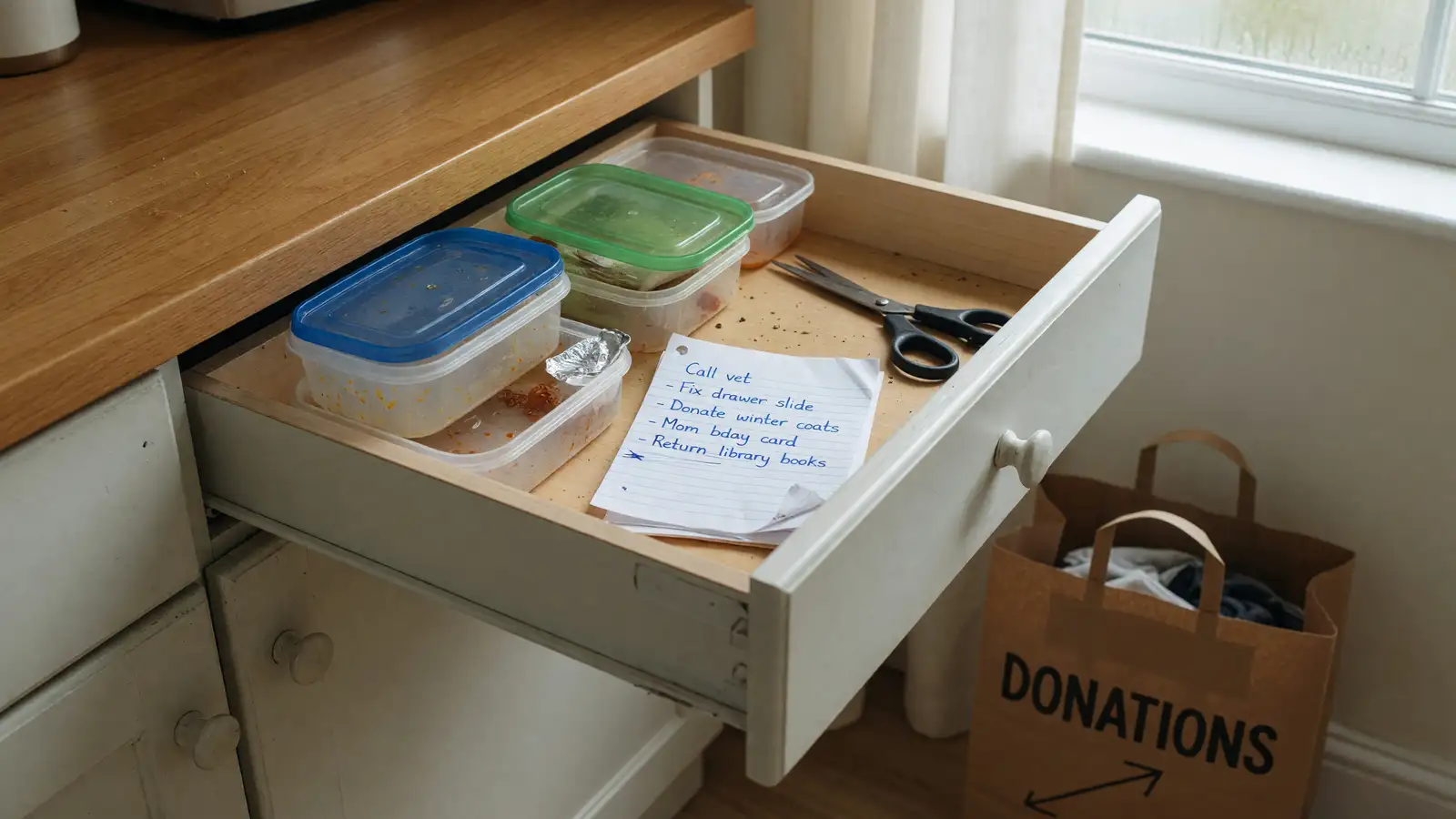
Kitchen counters are the hardest surface to keep clear. They collect mail, small appliances, snacks, keys, and everything else that enters the house. But a clear counter is a functional counter. You can cook on it immediately. You can wipe it down in ten seconds.
Store small appliances in cabinets unless you use them daily. The toaster lives in the cabinet if you make toast once a week. The blender stays out only if you make smoothies every morning. The coffee maker earns its counter space. The stand mixer that comes out twice a year does not.
Put the mail somewhere else. A wall-mounted organizer near the door works. A drawer in the entryway. Anywhere that is not the kitchen counter. The kitchen is for food preparation. Treat it that way and it will function better.
The one-month empty surface challenge.
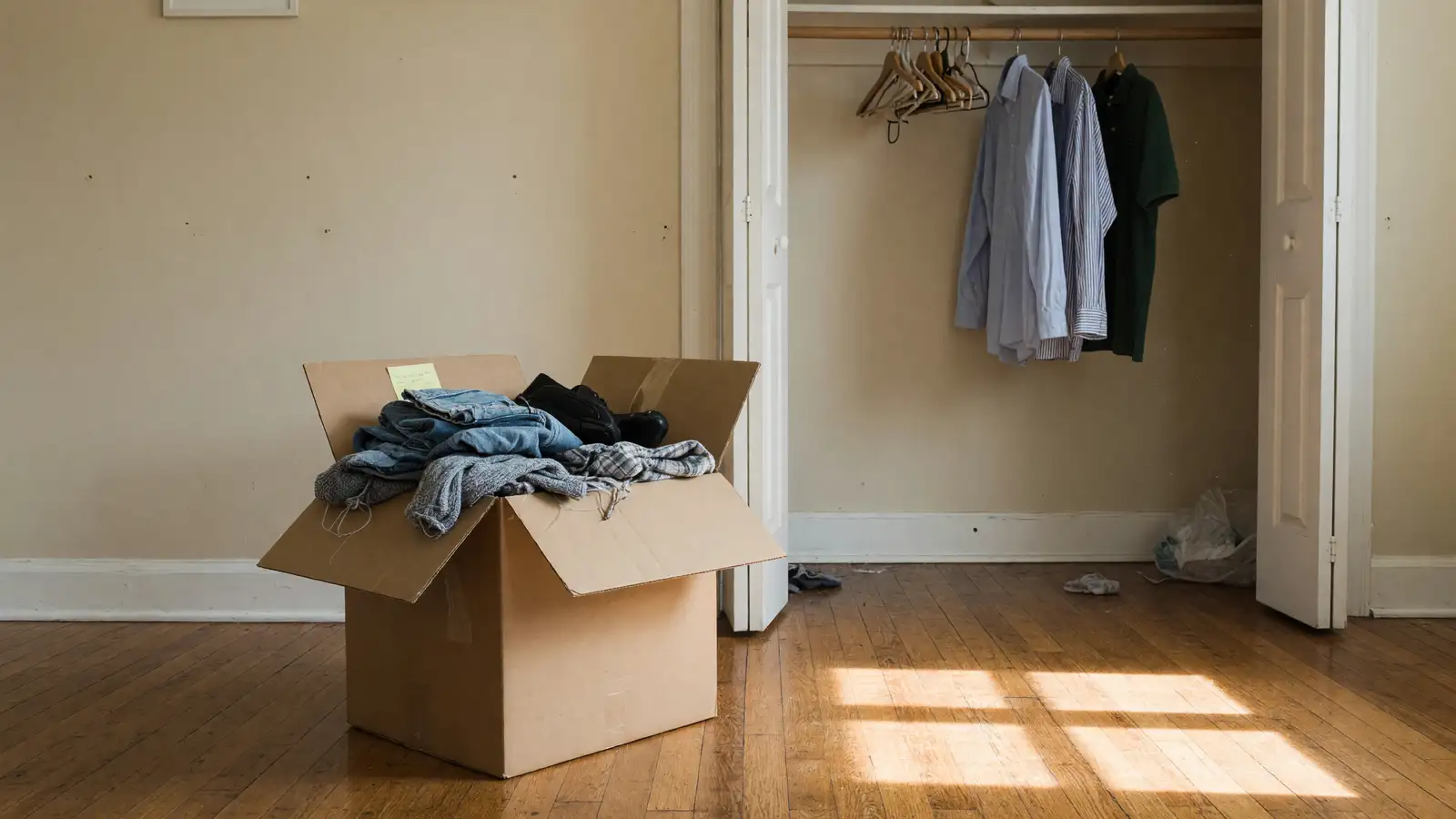
Pick one surface in your home. The coffee table. The bathroom counter. The top of your dresser. Clear everything off it. Put the objects in a box in another room. Leave the surface completely bare for one month.
During that month, pay attention. Do you miss anything that was there? Do you retrieve anything from the box because you actually need it? Does the room feel calmer with the empty surface?
At the end of the month, only the items you retrieved go back. Everything else gets donated or thrown away. Most people retrieve one or two things and realize they never thought about the rest. The empty surface stays mostly empty. It becomes a visual rest zone they had not realized they needed.
Empty space is a design choice, not an oversight.
An empty wall is not unfinished. An empty shelf is not waiting to be filled. A clear counter is not wasted space. These are intentional design decisions that improve how your home feels and functions.
The next time you feel the urge to fill an empty spot, pause. Ask whether the emptiness is actually serving you better than whatever you were about to put there. The answer is often yes. Space is not the absence of design. It is the foundation of it.