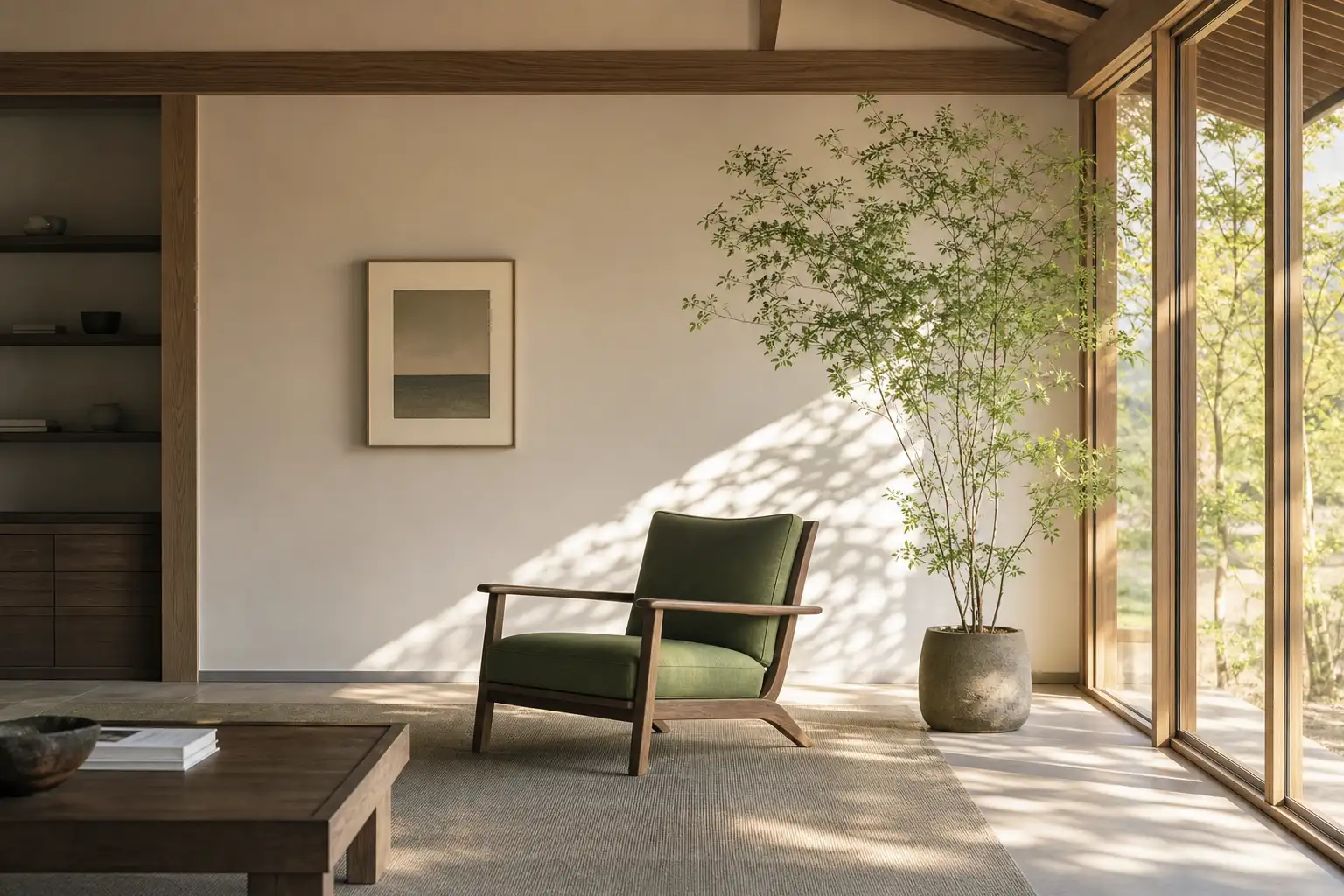
For years, minimalism in home design meant white walls, bare surfaces, and an aesthetic that felt more like an art gallery than a place where people actually lived. That version of minimalism is fading. In its place, a warmer, more textured approach is taking hold, one that prioritizes how a space feels over how it photographs.
The slow living movement, which emphasizes intentionality, presence, and quality over quantity, is driving this shift. In home design, slow living translates to spaces that encourage you to linger: a reading nook with a comfortable chair and good light, a dining table that invites long meals, a living room arranged for conversation rather than television.
Warmth Over Sterility
The defining characteristic of the new minimalism is warmth. Where the old minimalism celebrated white, the new minimalism embraces cream, beige, terracotta, and muted greens. These colors absorb light differently, creating shadows and depth that make rooms feel enveloping rather than exposed.
Natural materials are central to this aesthetic. Unfinished wood with visible grain, hand-thrown ceramics with slight irregularities, linen upholstery that wrinkles authentically, and wool rugs with tactile texture all signal that a space is meant to be touched and used. These materials age gracefully, developing patina over time rather than looking perpetually new.
Builder Magazine recently documented this shift, noting that home buyers in 2026 are prioritizing warmth and comfort in design choices. Open floor plans, once the unquestioned standard, are being reconsidered in favor of rooms with defined purposes and acoustic separation. People want spaces where they can cook without hearing the television and read without hearing the dishwasher.
Intentional Objects, Not Empty Rooms
The slow living approach to minimalism does not dictate how many objects you own. It dictates that every object you do own should have clear purpose, whether functional or emotional. A shelf with five carefully chosen books and a single ceramic vessel can feel richer than a shelf crammed with fifty paperbacks.
This is where the overlap with decluttering becomes practical. The goal is not to own as little as possible but to own only what earns its place. A well-made wooden cutting board that lives permanently on the counter because it is beautiful enough to display is not clutter. It is an intentional object that contributes to both the function and the feeling of the kitchen.
The one-in-one-out rule, long a staple of organizing advice, takes on new meaning in this context. It is not just about controlling quantity but about raising quality. When you replace an item, choose a version that is better made, more durable, and more visually considered than what it replaces.
Designing for Ritual
Slow living recognizes that daily rituals ground us. Morning coffee, evening reading, Sunday meal prep — these are not chores to be optimized but experiences to be designed for. A kitchen arranged so that the coffee-making station is its own distinct zone, with the beans, grinder, and favorite mug all within arm’s reach, transforms a caffeine delivery mechanism into a daily ritual.
Lighting plays an oversized role in ritual design. Overhead lighting is for tasks. Lamps at eye level are for living. Every room should have at least two sources of warm, dimmable light placed where people actually sit. The harsh blue-white light of an uncovered ceiling fixture flattens any room, no matter how thoughtfully furnished.
Window treatments matter more than most people realize. Natural light is the most valuable design element in any room, and the ability to control it — to filter, diffuse, or block it entirely — gives you command over how the space feels throughout the day. Heavy curtains that pool slightly on the floor add warmth and acoustic dampening that blinds cannot match.
The Environmental Alignment
Minimalism and sustainability have always been natural allies, but the slow living movement makes the connection explicit. Buying fewer things of higher quality produces less waste than buying more things cheaply. Natural materials biodegrade. Vintage and antique furniture, already abundant and often better constructed than new equivalents, fits perfectly into the warm minimalist aesthetic.
This alignment has shifted how people shop for their homes. Instead of seasonal decor that changes with every trend cycle, the slow living approach favors permanent pieces that work year-round. A linen throw blanket in a natural tone, a solid wood side table, a ceramic table lamp — these items do not have a season. They just belong.
The most radical idea in slow living home design might be the simplest: your home does not need to be finished. It is allowed to evolve. The empty corner can stay empty until you find the right piece. The wall can remain bare until art that genuinely moves you comes along. Patience, in design as in life, is the slow living superpower.