The average person spends over seven hours per day looking at screens. That is roughly one-third of waking life spent with eyes fixed on a glowing rectangle. The consequences are well documented: disrupted sleep, shortened attention spans, increased anxiety, and a pervasive sense that you are always available and never fully present. Yet the idea of a digital detox — completely disconnecting for days or weeks — feels unrealistic for anyone whose work, relationships, and daily logistics depend on being reachable.
The alternative to an extreme digital detox is a sustainable reduction. You do not need to abandon technology. You need to redesign your relationship with it so that you control the screen rather than the screen controlling you.
The Phone Reconfiguration
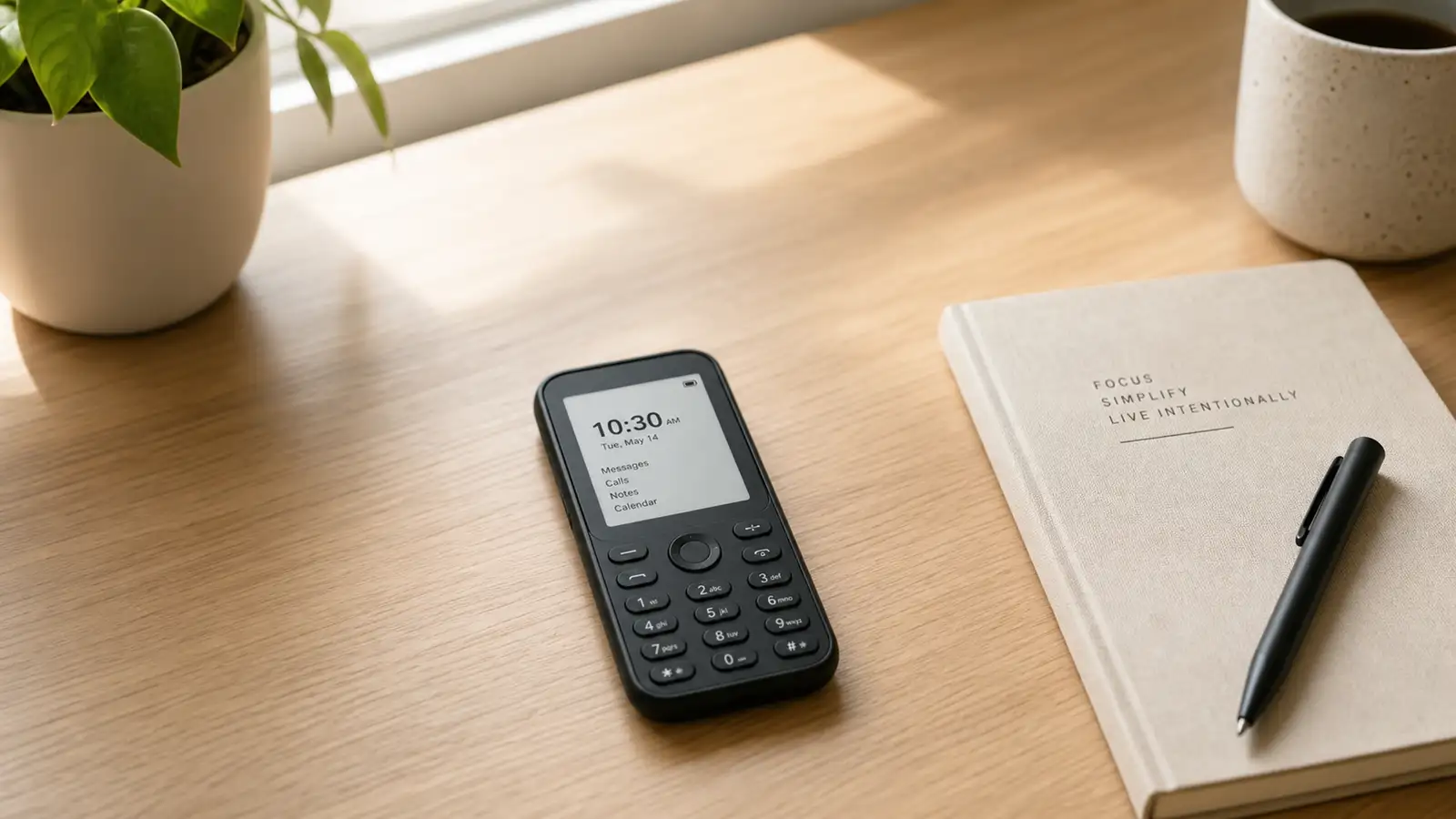
The phone is the primary vector for digital distraction because it is always within reach. A few configuration changes dramatically reduce its gravitational pull.
Delete social media apps from your phone. Access them only from a computer at designated times. The apps are engineered to be addictive, and having them in your pocket means they win every moment of boredom or idle time. Removing them is not abandoning social connection. It is moving social connection to a context where you are intentional about it rather than reactive.
Turn off all notifications except those from actual humans: phone calls, text messages, and messaging apps from close contacts. Every app that sends you a notification is competing for your attention. If it is not a person trying to reach you, it can wait until you choose to open the app.
Move your phone out of the bedroom at night. Buy an alarm clock for ten dollars. The phone on the nightstand is the last thing you see before sleep and the first thing you reach for upon waking. Both of those moments shape the quality of your rest and the tone of your morning. Neither benefits from a screen.
Set your phone to grayscale. Color is the primary attention-grabbing mechanism of app design. Without it, apps lose their visual appeal, and your phone becomes a tool rather than a source of entertainment. The setting is in Accessibility on most devices. Try it for one week and notice how much less you reach for your phone.
The Computer Boundary
For knowledge workers, the computer is unavoidable during work hours. The boundary is not about eliminating computer time but about containing it.
Close email and messaging apps when doing focused work. Batch email into two or three designated sessions per day rather than keeping it open continuously. Every notification that pulls you out of focused work carries a cognitive switching cost that can take twenty minutes to recover from.
Install a website blocker and schedule it to block distracting sites during work hours. Willpower is a limited resource that depletes throughout the day. A technical block removes the need for willpower entirely. The sites are simply unavailable, and the decision is already made.
The Evening Wind-Down
The hour before bed is the highest-leverage screen-free window. Screen light suppresses melatonin production and delays sleep onset, but the deeper issue is that screens keep your brain in a state of active engagement when it should be winding down.
Establish a screen-free evening routine: a book, a conversation, a walk, a hobby that uses your hands rather than your eyes on a screen. The specific activity matters less than the absence of screens. After a week, falling asleep becomes noticeably easier and sleep quality improves measurably.
A digital detox is not about deprivation. It is about reclamation. You are not giving up screens. You are taking back the hours of your life that screens currently consume without your consent. The goal is not to use technology less but to use it more intentionally.