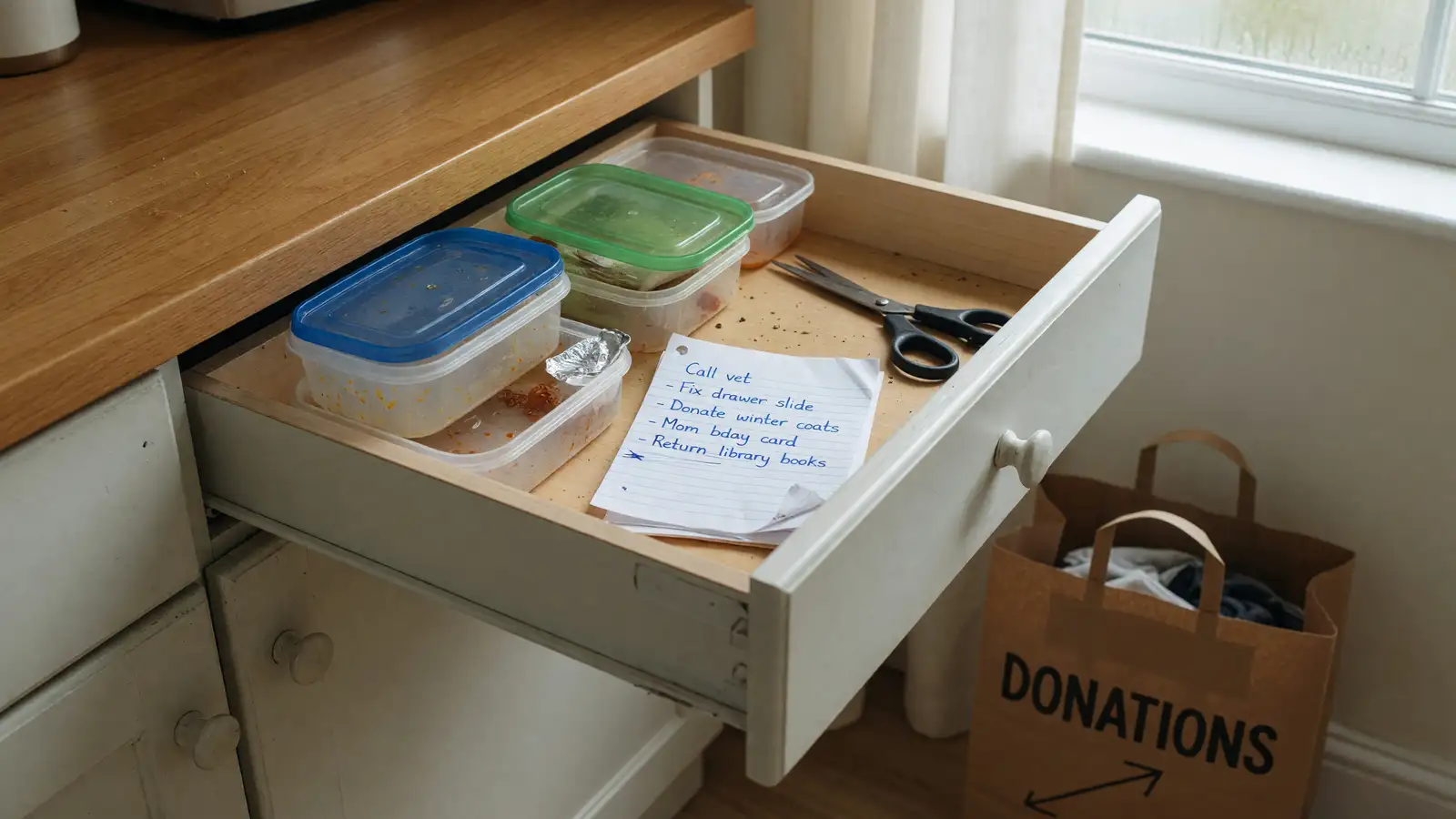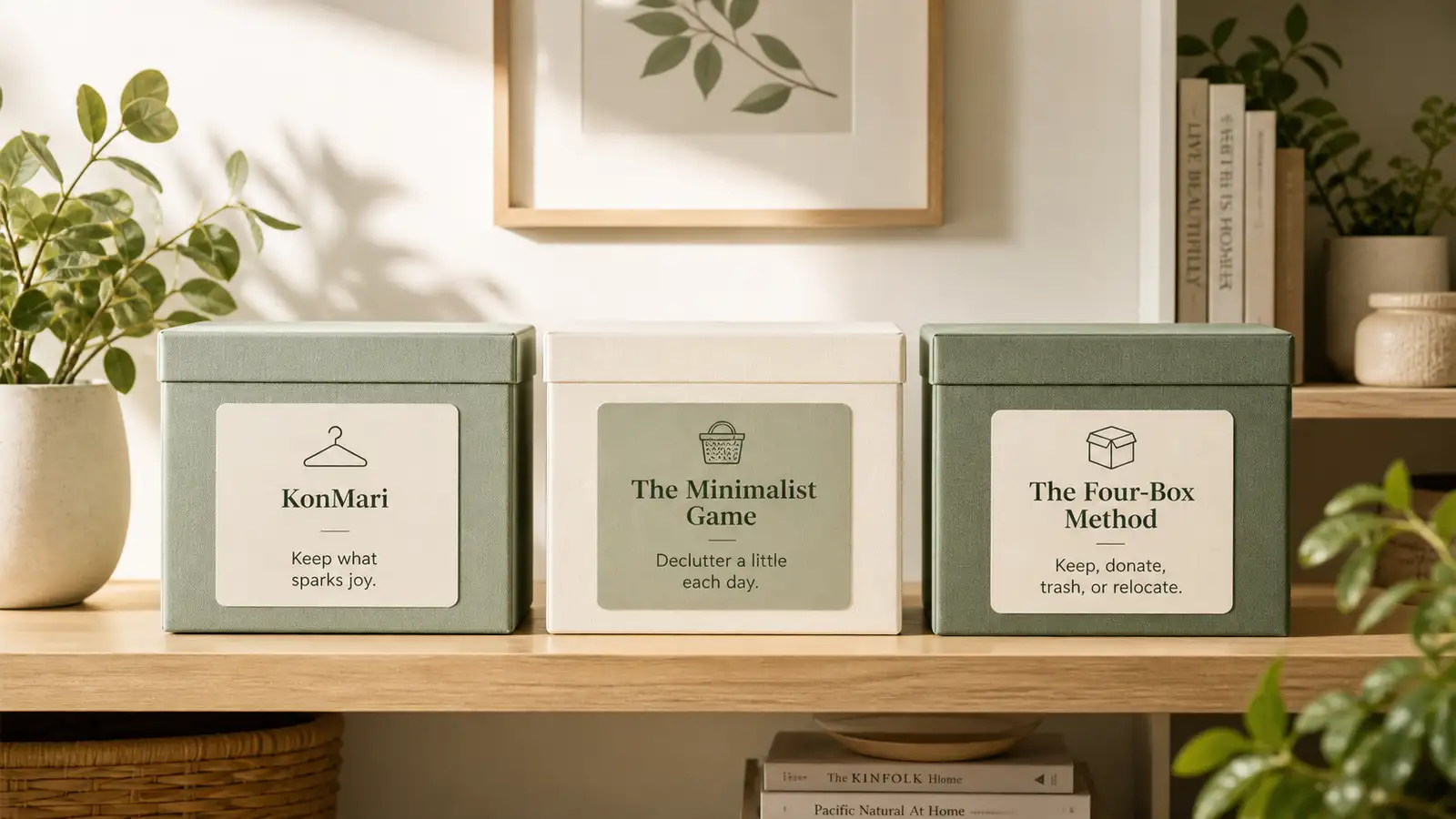
You’ve read the books, watched the Netflix specials, and bought the matching storage bins. But six months later, the clutter is back. The problem isn’t willpower — it’s that most decluttering advice assumes everyone makes decisions the same way.
Here’s how three of the most popular decluttering philosophies map to different personality types, and how to pick the one you’ll actually follow through on.
The 1-3-5 Rule: Best for Overwhelmed Beginners
The premise is simple: each day, declutter one big item (a piece of furniture), three medium items (a drawer, a shelf), and five small items (a pen, an old receipt). The graduated scale prevents decision fatigue while maintaining a sense of daily progress.
Who it works for: People who freeze when facing a whole room. The 1-3-5 rule replaces the paralyzing question “where do I even start?” with a concrete, achievable checklist. It’s also ideal for those with ADHD or executive function challenges — the structure is external, not internal.
Who it doesn’t work for: People who want fast, dramatic results. At nine items per day, decluttering a three-bedroom house takes months. If you’re preparing for a move or hosting a holiday gathering next week, this method is too slow.
Real-world success rate: Professional organizer Shira Gill, who popularized the 1-3-5 framework in her 2025 book Organized Living, reports that 78% of her clients who start with this method are still maintaining their systems after six months — significantly higher than the industry average of 40-50% for intensive weekend decluttering blitzes.
The KonMari Method: Best for Sentimental Decision-Makers
Marie Kondo’s approach is fundamentally emotional: hold each item and ask whether it sparks joy. The method proceeds by category (clothes, then books, then papers, then komono, then sentimental items) rather than by room.
Who it works for: People who struggle to let go of items with emotional weight. The “spark joy” framework gives permission to keep things that genuinely matter while releasing guilt about the rest. It also appeals to visual thinkers who benefit from seeing all items in a category at once — the famous “pile everything on the bed” step.
Who it doesn’t work for: Highly analytical people who find “spark joy” frustratingly vague. If your internal monologue says “what does ‘joy’ even mean for a spatula?”, you’ll spend more time debating the framework than using it. The method also requires a significant time investment upfront — Kondo recommends 4-6 hours per category for a typical household.
Recent evolution: Kondo herself has acknowledged, in a widely-discussed 2025 interview, that her own standards relaxed after having children. The “spark joy” bar can and should shift with life circumstances.
Swedish Death Cleaning (Döstädning): Best for Practical Minimalists
Margareta Magnusson’s approach asks a different question: “If I died tomorrow, would I want my family to have to deal with this?” The framing is blunt but effective — it removes sentimentality by focusing on the burden your belongings place on others.
Who it works for: Downsizers, empty-nesters, and anyone who has cleaned out a deceased relative’s home and vowed “I will not do this to my kids.” The method is ruthlessly efficient because the emotional calculus is externalized: you’re not deciding what you want to keep, you’re deciding what you want to impose on others.
Who it doesn’t work for: Younger people who don’t yet feel their own mortality. If you’re 28 and renting, the death framing may feel too abstract to motivate action. The method also offers little guidance for organizing what remains — it’s primarily a reduction strategy, not an organization system.
The Hybrid Approach That Actually Sticks
After interviewing twelve professional organizers for this piece, a pattern emerged: the most successful clients use the 1-3-5 rule for daily maintenance, KonMari’s category-based approach for the initial deep declutter, and Swedish Death Cleaning’s question as a tiebreaker for genuinely difficult decisions.
Start with a KonMari-style clothing purge this weekend. Then maintain with the 1-3-5 rule each evening. When you’re stuck on a borderline item, ask the Swedish Death Cleaning question. It’s the combination — not any single method — that creates lasting change.