Pinterest spent years teaching people that a “good” home looks almost empty. Pale sofa. One plant. A coffee table with nothing on it except a book you have never opened. That look is losing. In its 2026 Hobbies Trends Report, Pinterest says “curated clutter” is rising: collections treated as identity, not mess. Apartment Therapy framed it as a truce after a decade of minimalism versus cluttercore.
If you have been trying to live with less, this can sound like the internet changed its mind again. It did, a little. It did not cancel the work of editing. What changed is the target. People are tired of rooms that look like a rental listing. They still hate hunting for the charger they own three of. Those are different problems, and mixing them up is how a trend becomes another pile on the dining table.
What Pinterest means by curated clutter
Pinterest’s own wording is oddly useful. Curated clutter is what happens when collections become “styled identity statements.” You are not starting a random pile of objects and hoping it reads as personality. You are choosing what is allowed to be seen, and you are arranging it on purpose.
That is closer to how a good bookshelf works than how a junk drawer works. A bookshelf with paperbacks, a couple of objects, and a gap is a display. A drawer of unmatched cables is inventory with no home. The trend is about the first thing. It does not magically fix the second.
Apartment Therapy’s write-up is careful on this point. The report is based on millions of Pinterest users looking for ways to show trinkets without being swallowed by them. People are searching for “choosy,” not “more.” If your takeaway is “I can stop putting things away,” you misread the chart.
We already covered a related middle on this site: midimalism sits between sparse and maximal, and warm minimalism is the cozier version of owning less. Curated clutter is the display layer on top of that. It answers a narrower question: which objects get to live in the open, and how do you stop that from spreading to every horizontal surface.
Why the empty-room look bounced
NewsHub’s September roundup describes a long beige stretch. Instagram and Pinterest sold nearly empty rooms as calm. After a while the rooms looked impersonal, which is a polite way of saying they looked like nobody lived there.
Marie Kondo’s “spark joy” rule still helps people make keep-or-go decisions. The same article points at a quieter failure mode. People bought bins, labels, and furniture to hide belongings, then called the result simplicity. The house was not simpler. The stuff had been relocated behind a cabinet door. That is storage, not a personality, and it is also not a crime. Hiding bulk items is how kitchens function. The problem starts when you hide the things you actually like and leave the counters for mail and Amazon boxes.
If clutter has a body cost, we already walked through that in what clutter does to your brain. Visual noise eats attention. An empty room can also eat attention, in a different way: you keep noticing that nothing in it belongs to you. Curated clutter is the design world’s attempt to put meaning back on the shelf without reopening the attic.
Treat that as a diagnosis, not a shopping list. You do not need a new aesthetic name to keep a bowl of matchbooks. You do need a rule for what is allowed to stay out overnight.
The part the mood boards skip: other people live here
Design essays talk about mantelpieces. Real houses fight over the kitchen bench.
On 3 September, realestate.com.au reported IKEA Australia research that is more useful than another palette of terracotta. Thirty-eight percent of respondents said kitchen clutter caused tension at home. Australians were 10 percent more likely than the international average to call the kitchen bench the hardest surface to keep clean. Forty-two percent admitted to a “silent protest”: leaving items out on purpose, hoping someone else would deal with them. Two thirds had moved another person’s things back to “the proper place” without saying a word.
Those are not styling problems. They are shared-space problems. A mantel of vintage frames does not cause a row. A bench covered with school forms, protein powder, and yesterday’s mugs does.
The same survey is full of small, specific tells. Seventy-three percent have a junk drawer of items with no permanent home. In Sydney, a quarter of people bought a replacement because they could not find the original. Almost half of Queenslanders were holding chargers and cables for devices they no longer own. More than half of Tasmanians shove clutter into another room before guests arrive. Victoria got nicknamed the “clutter capital.” One in ten Victorians called their homes disorganised; 71.5 percent hold onto sentimental possessions.
Sixty-two percent wanted a home that is organised and still looks like them. That is a clearer brief than “less” or “more.”
If you live alone, silent protests are just you losing to yourself. If you live with someone, curated clutter without a landing zone is how the dining table becomes a staging area. The trend only works if the backstage is boring and reliable: a drawer that is allowed to be ugly, a basket by the door, a rule that the kitchen bench is not a display.
Display is not storage
This is the distinction most “how to do cluttercore” posts blur.
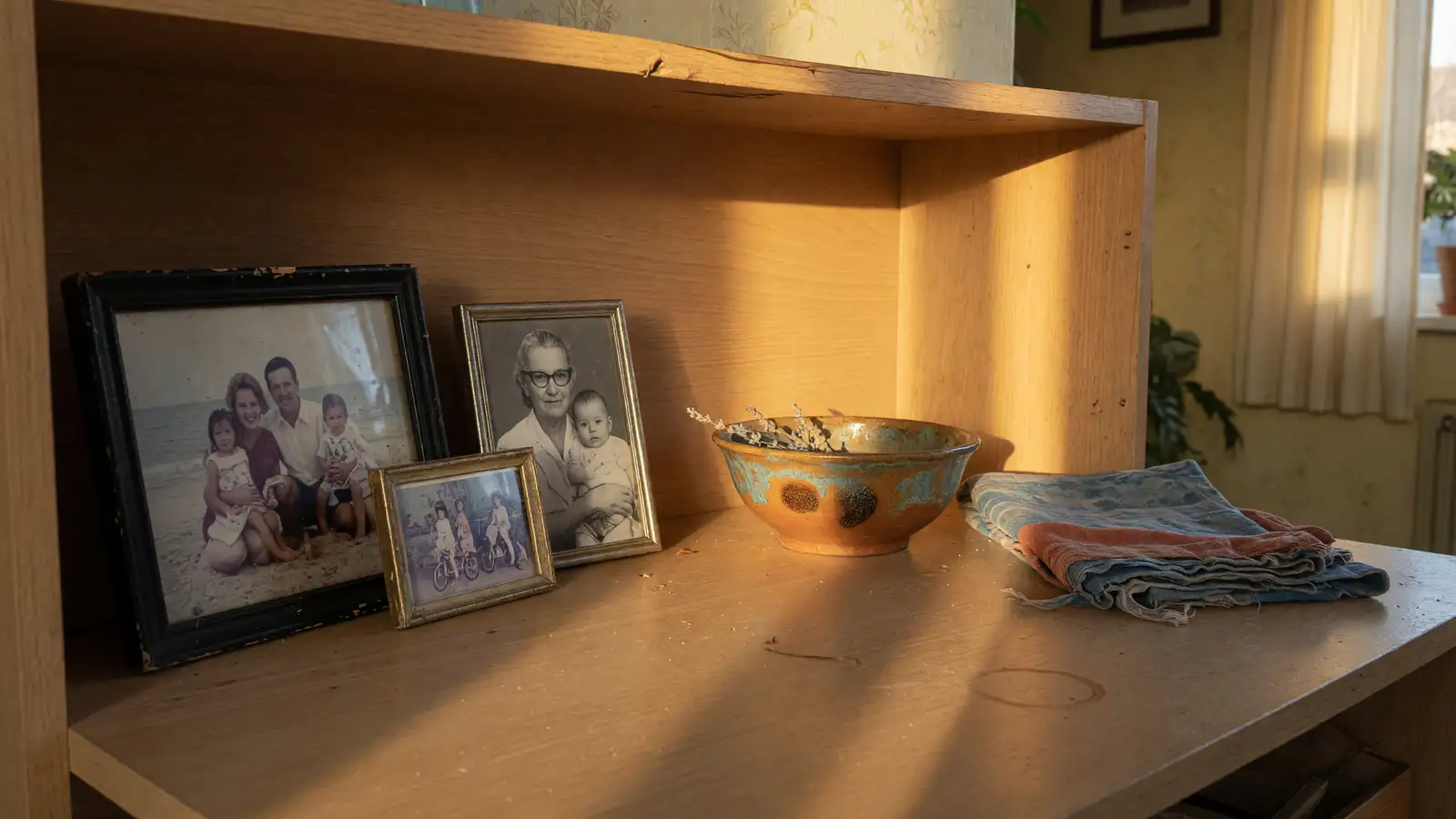
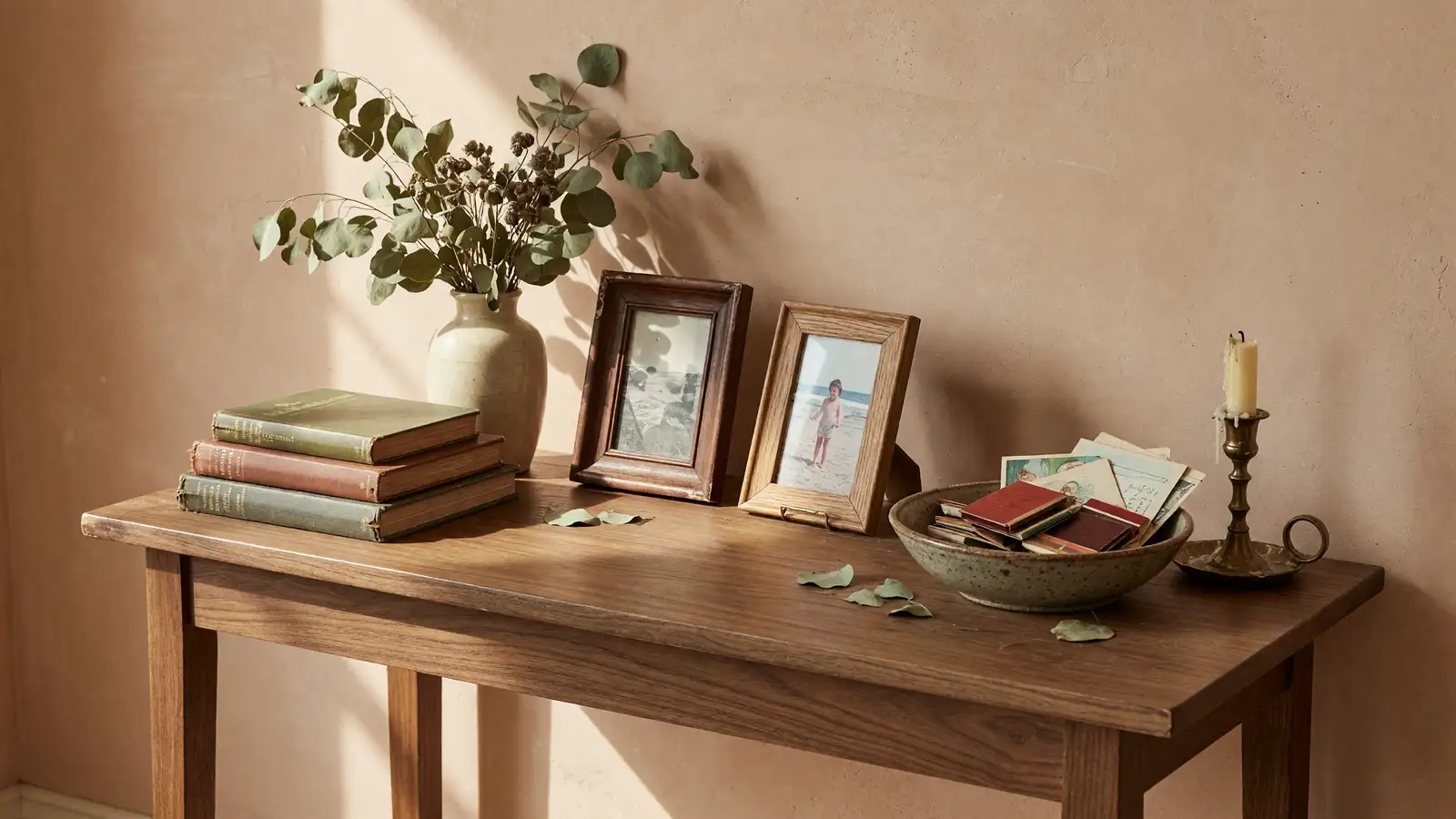
Display is for objects you want to see and, ideally, use. House Beautiful’s designer roundup from 3 September is good on this. Francesca Grace tells people to start on a fireplace mantel: a leaning mirror as the centerpiece, then vintage frames, candlesticks, a vase, a few small objects. Small surface, finite real estate. You can rearrange it in ten minutes and live with the result.
Christine Carney of Blackberry Brands says the look is items you truly love, displayed simply. She also says that once you think you have enough, one more layer never hurts. That last sentence is designer talk. In a family kitchen it is how you get a second toaster. Use it on the mantel. Do not use it on the stove.
Courtnay Tartt Elias of Creative Tonic Design in Houston suggests a bowl of matchbooks from restaurants you actually remember, a gallery wall of postcards, framed ticket stubs. The through-line is memory plus a container. A bowl is a boundary. A wall is a boundary. The kitchen island is not a boundary unless you treat it as one.
House Beautiful also pushes use: stack books next to the chair where you read, leave a chess set out if you will play. Objects that only exist to be photographed still count as clutter. They just have better lighting.
Storage is for the rest. Duplicate cables. Backup shampoo. The slow cooker you use four times a year. Sentimental boxes you are not ready to sort. Those belong behind a door, in a labeled bin, or in the “deal with this in November” box in the closet. If you put them on a mantel to make the room “personal,” you have not curated anything. You have unpacked.
A practical test I use: if you would be embarrassed to leave it out when a neighbor drops by, it is storage. If you would point at it and tell a story, it is display. Most households fail the test because they skip the middle step of assigning a home. The IKEA junk-drawer statistic is that failure, measured.
A small method that survives a week
You do not need a weekend purge. You need three decisions, written down if your household argues.
First, pick one display surface per room. Mantel, one bookshelf bay, one console, one wall. Not all four. Francesca Grace’s advice to start on the mantel is not cute. It is capacity control. When that surface is full, the answer is swap, not expand. Swapping is the adult version of “one more layer.”
Second, give the ugly stuff a legal address. One junk drawer is fine. Two is a pattern. Cables for dead devices go in a labeled bag, then out on a date you put on the bag. If you cannot name the device, you do not need the cable. Queensland’s charger graveyard is optional.
Third, take the kitchen bench off the display list. The 38 percent tension number is not mysterious. The bench is where cooking and paperwork collide. A shallow tray for today’s mail is display-adjacent. A week of mail is a pile. If you want personality in the kitchen, put it on a shelf above eye-level splash range: one crock of utensils you use, one object that can get greasy and survive.
For books, our bookshelf styling guide already covers the mix of vertical stacks, objects, and empty inches. Curated clutter without gaps is just a shop display. Leave air. The empty-space piece on this site still applies; you are choosing where the air goes, not deleting it.
Sentimental things are the usual trap. Conservation clutter is the longer version. For this trend, pick a single container per person: a box, a drawer, a bin. Ticket stubs that make the gallery wall are display. The rest of the ticket stubs are archive. Archive is allowed. Archive on the coffee table is how guests get a tour of 2019.
If you share the house, skip the silent protest. IKEA found 42 percent of people trying it, and it mostly trains the other person to stop seeing the pile. Agree on the one surface and the one drawer. Write it on a note if you have to. It is faster than another argument about mugs.
What to do with the trend without buying a new personality
You can ignore the name. “Curated clutter” will be replaced by another phrase before the year is out. The useful part is the 62 percent brief: organised, with a face.
Walk through the house once and mark surfaces as display, work, or storage. Work surfaces (desk, kitchen bench, bathroom vanity) get a nightly reset, even if that reset is shoving things into the legal drawer. Display surfaces get a monthly edit: one thing in, one thing out, same as a closet. Storage gets a season.
If a collection is growing, give it a format before it gets a second table. Postcards become a grid. Records become a crate plus ten on a shelf. Mugs become a hook rail with a number you will not exceed. Format is how collecting stays collecting.
And if the empty-room photos still appeal to you, keep them. Minimalism was never the enemy of objects. It was a way to stop objects from running the day. The Pinterest chart is people asking for the objects back on the shelf, not in the hallway. Let them on the shelf. Keep the hallway.
The kitchen bench can stay boring. That is the job minimalism still does well.