August has a strange energy. Summer is winding down, the kids are about to go back to school, and somewhere in the back of your mind you know the holidays are closer than you think. Professional organizers say this is the exact moment to stop pretending that junk drawer doesn’t exist and start clearing space before the fall rush begins.
We talked to organizers who work with real families in real homes and asked them what they’d toss first. Their answers might surprise you — most of it isn’t furniture or appliances. It’s the small stuff that quietly accumulates until your pantry feels like a graveyard of expired condiments.
1. Expired food in your pantry and fridge
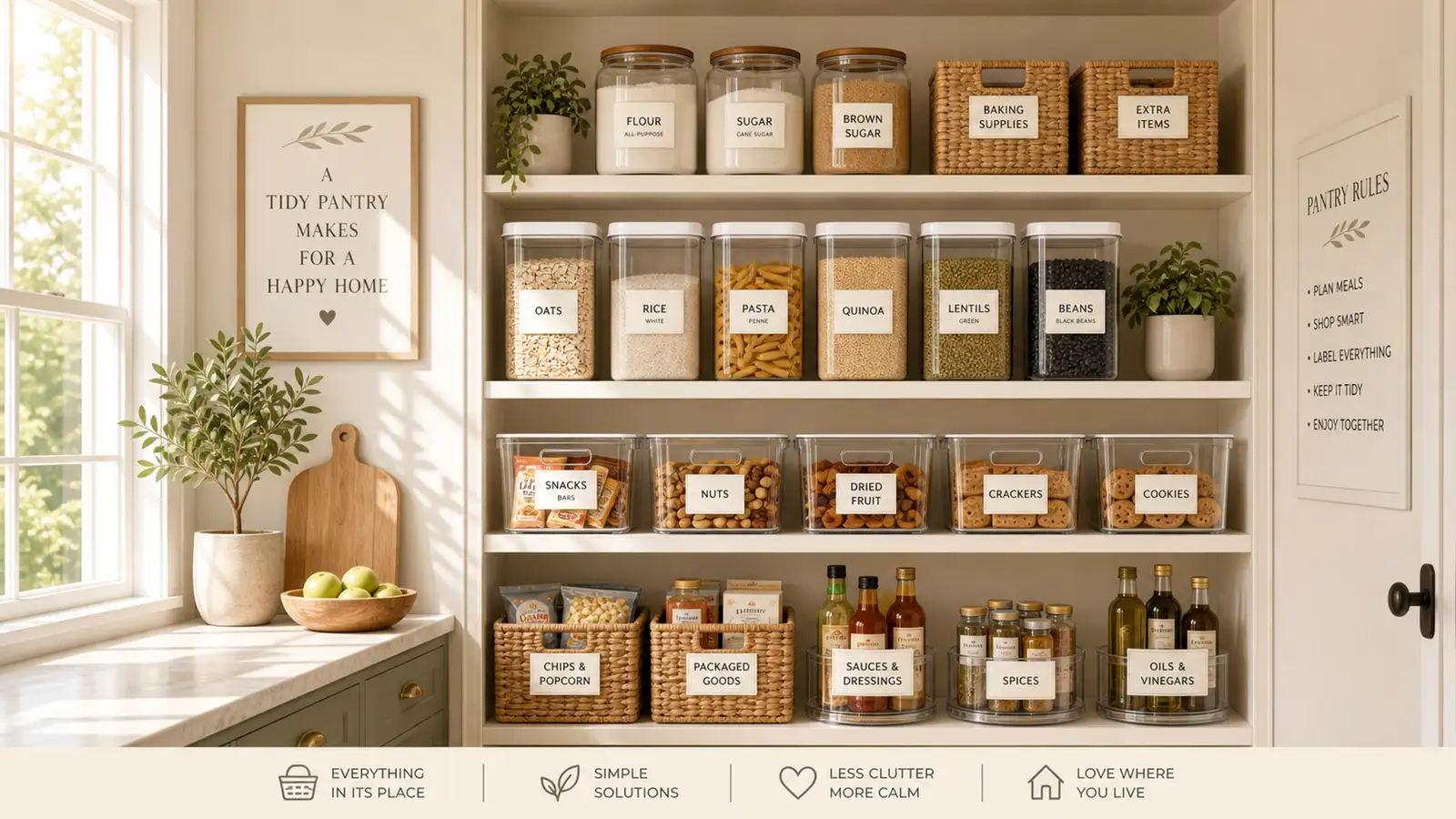
After a summer of cookouts, camping trips, and “I’ll definitely use that before it expires,” your pantry probably holds a few casualties. Professional organizer Roberts told House Beautiful that expired cans, condiments, and snacks are the first thing she tackles in August cleanouts.
“Toss anything expired, then regroup by category: Sauce with sauces, snacks with snacks,” Roberts said. “Contain them in labeled bins to restore order and visibility.”
This isn’t just about food safety. An overstocked pantry creates decision fatigue every time you open the door. You stand there scanning 30 jars of half-used sauces, wondering which ones are still good, and eventually grab takeout instead. Pulling everything out, tossing what’s gone bad, and reorganizing by category cuts that mental load in half.
Check the back of your fridge too. Those plastic containers of mystery leftovers from three weeks ago? They’ve crossed the line from “I might eat that” to “I need to Google what that was.” The condiment shelf is another culprit — most opened sauces and dressings have a shelf life of about three to six months, and that ranch dressing from April is not going to make it to Thanksgiving.
Here’s a practical approach: pull every item out of one shelf at a time. Wipe the shelf down, check each item’s date, and only put back what’s still good. Group similar items together so you can see exactly what you have. This usually takes 20 minutes per shelf, and the visual clarity afterward makes the whole kitchen feel bigger. Most people find they’ve been hoarding duplicate items — three open ketchup bottles, two jars of the same mustard — because they couldn’t see what they already had.
2. Summer decor and seasonal items you didn’t touch
Johnson, another professional organizer quoted in the same article, says people make a specific mistake every August: they buy new fall decor before dealing with the summer stuff they already own.
“Resist the urge to add more seasonal decor before you take inventory of what you already have packed away from last year,” Johnson said. “All of this frees up space both physically and mentally.”
Before you grab that cute pumpkin wreath from Target, go through your storage bins. If you didn’t use the patriotic tablecloth last Fourth of July, you probably won’t use it next year either. If the beach towels are faded and stained, they’re not making a comeback. Donate what’s still usable, trash the rest, and you’ll find you need far fewer new purchases than you thought.
The same goes for outdoor gear. Pool floats, camping equipment, and patio accessories that survived the summer in rough shape don’t deserve a spot in your garage for another nine months. Broken umbrella? Toss it. Deflated pool float with a slow leak? Gone. That set of outdoor string lights with half the bulbs burned out? Replace or discard — don’t let it sit in a bin taking up space until next June.
This is also a good time to assess what actually worked this summer. Did you use the outdoor dining set, or did you eat every meal inside? Did the kids play on the swing set, or was it decorative? Be honest with yourself about which seasonal items earned their storage space and which ones are just occupying it. The average American home has about 300,000 items, according to the Los Angeles Times, and seasonal decor that never comes out of the box is a significant chunk of that number.
3. Kids’ toys they’ve outgrown
Before the holiday gift avalanche hits in November, Johnson recommends clearing out the playroom now. “Clear out the toys kids are no longer using to make room before the deluge of holiday gifts enters your home.”
This one is tough because kids develop emotional attachments to objects that adults find baffling. The strategy that works: pull everything out of the toy box, let the kids play with it for a week, and then see which items they actually reach for. The ones they forget about are the ones to donate.
Don’t skip the broken stuff either. That Lego set missing half its pieces? The board game with a torn box and missing cards? Kids stop playing with broken toys the moment they realize they can’t complete the set. Letting go of those is easier than you’d expect.
If you want to make it painless, turn it into a teachable moment. Tell the kids they can keep everything that fits in one bin. They’ll learn to prioritize, and you’ll reclaim shelf space without a fight.
For stuffed animals specifically, the “one in, one out” rule works well. Every new stuffed animal that comes in means one has to leave. This teaches kids about physical limits on their space and prevents the slow creep of plush toys that eventually takes over an entire closet. The same rule applies to books — a shelf that’s packed tight becomes a shelf where nothing gets read because pulling one book out means three others fall.
4. Paper clutter and unopened mail
This is the one that Guadron-Wyatt, a professional organizer profiled by Southern Living, calls out as a daily habit that separates organized homes from chaotic ones: staying on top of incoming paper.
“Stay on top of all paperwork coming in order to open important things, trash junk and avoid paper clutter,” Guadron-Wyatt said. She also pointed out that unopened packages create a different problem: “Opening packages help ensure you’re not making repeat purchases.”
Think about that for a second. How many times have you ordered something online, forgotten about it, and bought the same thing again? Unopened boxes sitting in a corner are not just clutter — they’re money you’ve already spent sitting there gathering dust.
Go through every piece of mail and every package in your house right now. Open it, deal with it, recycle the packaging. If you haven’t opened a package in more than two weeks, the contents probably aren’t essential. If you’re not sure, set a timer for 10 minutes and power through the pile.
For ongoing prevention, Guadron-Wyatt recommends handling mail the day it arrives. Open it standing over the recycling bin if you have to. The junk goes straight in, and the important stuff gets filed — not stacked. A small file box with folders for “action needed,” “this month,” and “important documents” takes up almost no space and eliminates the pile that forms on your kitchen counter.
The digital equivalent matters too. Go through your phone’s photo library and delete screenshots you no longer need. Clear out downloaded files you’ve already dealt with. Digital clutter has the same psychological weight as physical clutter — it makes your phone feel heavier to use, even if it doesn’t technically slow down.
5. Items without a home
Worinkeng, founder of A Time To Organize in South Carolina, has a simple rule that cuts through a lot of organizational chaos: every item needs a designated place. Not a loose suggestion of where it might go, but an actual home.
“Your keys, purse, and wallet have homes in a drop zone next to the door used most frequently,” Worinkeng said. “Set an open bin or dish on your dresser because that is where you empty your pockets.”
The items cluttering your surfaces — the sunglasses on the counter, the charging cables draped over the couch, the random shopping bags by the door — are things without homes. They exist in a limbo state because nobody decided where they belong.
Worinkeng’s other rule is worth tattooing on your forehead: “If you can put an item away in under 30 seconds, do it right then.” This kills the “I’ll deal with it later” instinct that creates clutter in the first place.
Walk through your house and look at every surface. For each item you see, ask: does this have a home? If not, give it one. If it doesn’t deserve a home, it doesn’t deserve to stay.
This principle applies to the car too. The glove box, the center console, and the trunk all accumulate items without homes — old receipts, phone chargers, reusable bags, random tools. Spend 15 minutes clearing out each space and you’ll be surprised how much room opens up. Your car is an extension of your home, and clutter there affects your mood just as much as clutter on your kitchen counter.
Why August matters for organized homes
The timing isn’t random. August is the transition month between summer’s relaxed chaos and fall’s structured routine. Roberts says that as routines resume, the organizational systems you set up now will carry you through the end of the year.
“Labeling is essential,” Roberts said. “It removes the guesswork, helps systems stick, and elevates the visual clarity of any space.”
The three products Roberts recommends — labels, bins, and turntables — aren’t expensive. A label maker costs about $20, stackable bins run $10 to $15 each, and a lazy Susan for your pantry shelf is under $10. The investment is small; the return is daily.
Taking a weekend to tackle these five categories won’t just make your home look cleaner. It’ll make it feel lighter and more functional for the months ahead. And heading into the busiest season of the year with less stuff weighing you down is the kind of practical decision that pays off every single day.