The washing machine is the only appliance whose entire purpose is cleaning, yet it rarely gets cleaned itself. Detergent residue, fabric softener buildup, mineral deposits from hard water, and the mildew that thrives in a warm, damp environment all accumulate over time. The result is a washer that develops a musty odor, leaves residue on supposedly clean clothes, and eventually fails years earlier than it should.
Washing machine maintenance is fast, inexpensive, and required far less frequently than most people assume. Here is the routine.
The Monthly Cleaning Cycle
Once a month, run an empty cleaning cycle. For front-loading washers, add two cups of white vinegar to the detergent dispenser and run the hottest, longest cycle available. The vinegar’s acetic acid dissolves detergent residue and mineral buildup throughout the machine’s internal plumbing.
For top-loading washers, fill the tub with hot water, add two cups of vinegar, and let it agitate for a minute before pausing the cycle to let the vinegar water sit for an hour. Then resume and complete the cycle. The extended soak time reaches residue that the wash action alone cannot.
After the vinegar cycle, run a second hot cycle with a half cup of baking soda sprinkled directly into the drum. The baking soda deodorizes and provides mild abrasion that removes any remaining residue. Between the vinegar and baking soda, the washer’s interior is chemically cleaned without harsh commercial products.
The Gasket and Seal
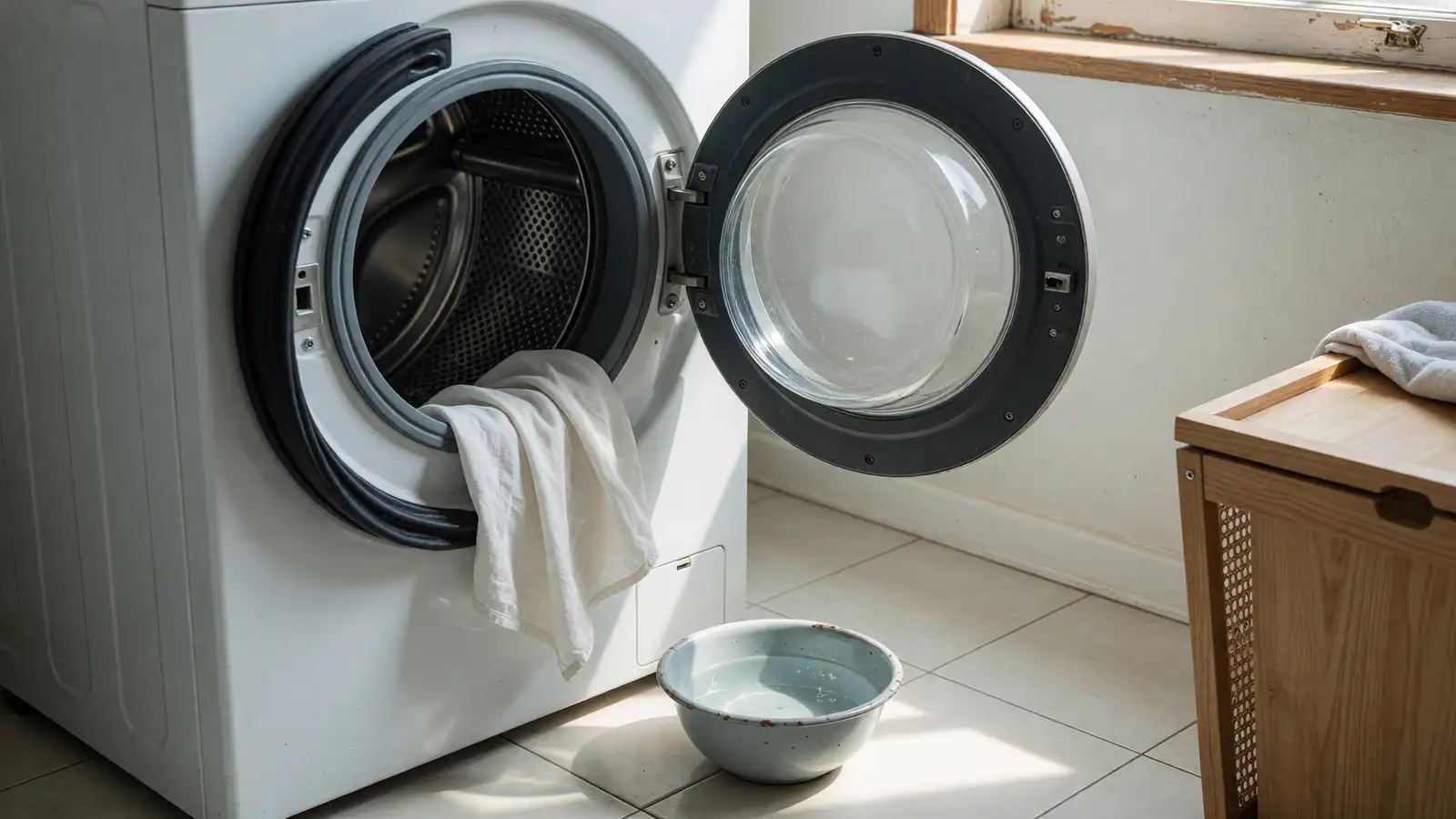
Front-loading washers have a rubber gasket around the door that creates the watertight seal. This gasket is the most common source of washing machine odor because water pools in its folds after every cycle and creates the perfect environment for mold.
After every wash, wipe the gasket dry with a cloth. Pull back the folds to reach the hidden areas where water accumulates. Leave the door slightly ajar between loads so the interior can dry completely. A closed washer door traps moisture and accelerates mold growth.
For gaskets that already show mold spots, a paste of baking soda and water scrubbed with an old toothbrush removes surface mold. For deeper staining, a cloth soaked in vinegar and left in contact with the affected area for an hour kills the mold and lightens the stain.
The Dispenser Drawer
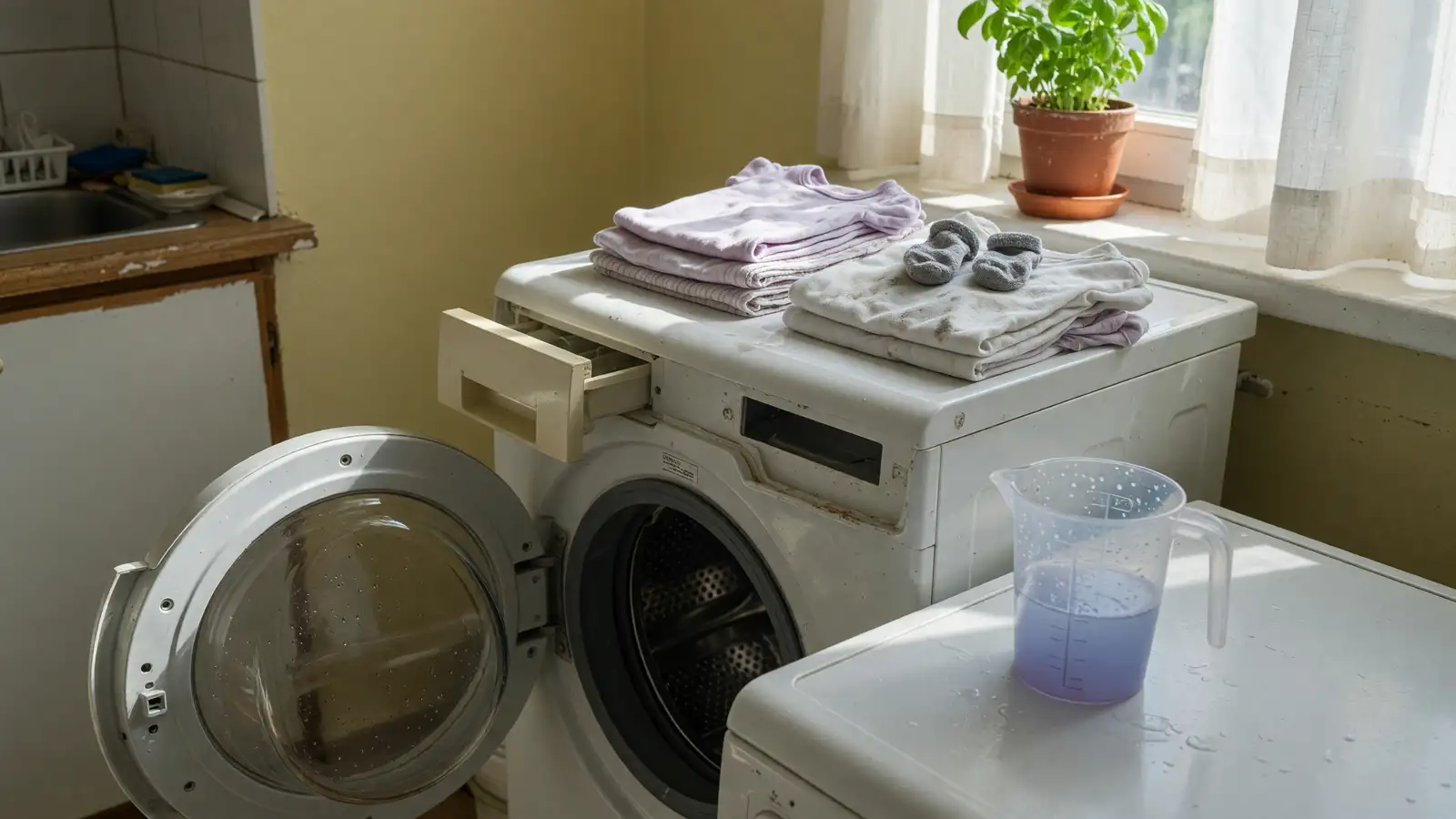
The detergent and fabric softener dispenser drawer is the most overlooked component of washing machine maintenance. It accumulates a gelatinous sludge of congealed detergent and fabric softener that eventually restricts flow and creates clogs.
Remove the drawer completely on most models by pressing a release tab and pulling. Soak it in hot water with dish soap for thirty minutes. Scrub the compartments with an old toothbrush to remove residue. Rinse thoroughly and dry before reinstalling.
While the drawer is removed, clean the housing where the drawer slides in. A flashlight reveals the accumulated residue on the top of the housing that drips down into the drum. Wipe with a cloth dampened with vinegar.
The Filter
Most front-loading washers and some top-loaders have a drain pump filter that catches debris before it reaches the pump. A clogged filter reduces drainage efficiency and can cause the washer to stop mid-cycle with an error code.
Locate the filter behind a small access panel at the bottom front of the machine. Place a shallow pan and towel beneath the panel before opening, as water will drain out. Remove the filter by turning it counterclockwise. Rinse under running water to remove lint, coins, and the other small items that somehow bypassed pockets. Clean the filter every three months.
A well-maintained washing machine should last ten to fifteen years and never develop odor. The monthly cleaning routine takes twenty minutes and prevents the gradual decline in performance that most people accept as normal aging. It is not normal. It is maintenance debt.