A vacuum cleaner is the workhorse of home cleaning, and like any workhorse, it needs regular care to keep performing. The signs of a neglected vacuum are familiar: it leaves behind visible debris, emits a burning smell, sounds louder than it used to, or simply does not seem to pick up like it once did. Most people assume the vacuum is wearing out and needs replacement. In most cases, it just needs maintenance.
Vacuum maintenance is inexpensive, requires no technical skill, and takes less than thirty minutes every three months. Here is what to do.
The Filter System
Every vacuum has at least one filter, and most have two or three. A clogged filter is the number one cause of lost suction. The motor has to work harder to pull air through a dirty filter, which reduces airflow at the cleaning head and shortens motor life.
The pre-motor filter, usually a foam or felt pad, catches larger particles before they reach the motor. This filter should be rinsed under running water monthly, squeezed dry, and left to air dry completely before reinstalling. A damp filter quickly develops mold and musty odors that the vacuum then distributes throughout your home.
The post-motor filter, typically a HEPA filter, catches the microscopic particles that pass through the motor. This filter cannot be washed. It must be replaced according to the manufacturer’s schedule, usually every six to twelve months. A saturated HEPA filter not only reduces suction but also releases captured allergens back into the air.
Bagless vacuums have an additional cyclonic filter or screen that separates debris from the airflow before it reaches the pre-motor filter. This screen clogs with fine dust over time. Remove it, tap out the loose dust into a trash can, and rinse if the manufacturer allows it.
The Brush Roll
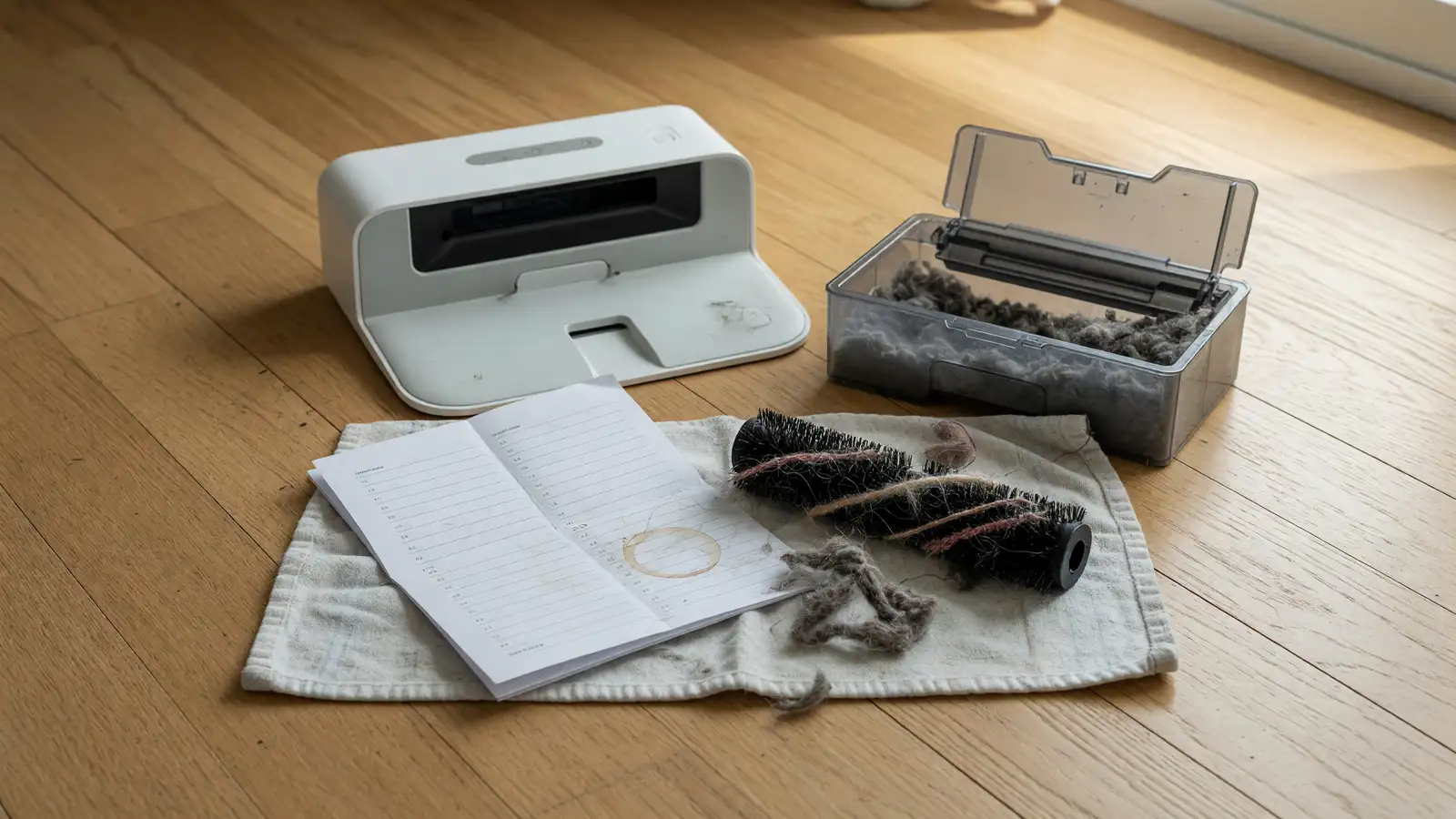
The rotating brush is what agitates carpet fibers to release embedded dirt and pet hair. When it is wrapped in hair, string, and carpet fibers, it cannot make contact with the carpet, and cleaning performance plummets.
Flip the vacuum over and inspect the brush roll. Use scissors or a seam ripper to carefully cut away wrapped hair and fibers along the brush length. Most brush rolls have a groove specifically designed to guide scissors along without damaging the bristles. Clean the brush roll monthly in homes with long-haired residents or pets, and quarterly otherwise.
While the vacuum is flipped, check the belt that drives the brush roll. A loose or stretched belt slips instead of spinning the brush at full speed. Belts are inexpensive and typically replacement takes under five minutes with a screwdriver. A fresh belt noticeably improves carpet cleaning.
The Hose and Air Path
A clog in the hose or air path mimics the symptoms of a dying motor but is fixed in seconds. Remove the hose completely and drop a coin or small weight through it. If the coin does not exit the other end, there is a clog.
A broom handle or straightened wire coat hanger pushed gently through the hose dislodges most clogs. Do not force it. If the clog resists, compressed air from either direction often breaks it free.
Check the hose for splits or holes while you have it removed. Even a small tear reduces suction at the cleaning head by allowing air to enter through the hole rather than through the nozzle. Duct tape is a temporary fix. Replacement is the permanent one.
The Simple Habit That Prevents Most Problems
The most impactful vacuum maintenance habit takes two seconds: empty the bin or change the bag before it is completely full. A vacuum operating with a full bin or bag loses suction dramatically. The motor strains. Filters clog faster. The entire system works harder for worse results.
Bagged vacuums should be changed when the bag reaches roughly two-thirds full. The bag material itself acts as a filter, and a overfilled bag has less surface area for air to pass through. Bagless vacuums should be emptied after every use or at least when debris reaches the fill line. The minor inconvenience of frequent emptying is far preferable to the major inconvenience of reduced cleaning performance.
A well-maintained vacuum should last ten to fifteen years. The ones that die in three to five years were never maintained. Fifteen minutes of care every three months extends the life of an appliance that costs hundreds of dollars and is used multiple times per week. The return on that time investment is measured in years of additional service.