You stand in the middle of your living room surrounded by boxes. Bags of clothes line the hallway. A stack of kitchen gadgets sits on the counter. The donation center closes in forty minutes, and you just want everything gone. It’s a scene that plays out in millions of homes every weekend — the frantic final push of a decluttering sprint where the temptation is to toss everything into donation bags and call it done.
But here’s the part most decluttering advice skips: not everything you own should go to a thrift store. Donation centers have strict acceptance policies. Broken items get thrown away anyway. Hazardous materials create liability. And some of what you’re about to give away is worth far more than you realize. Professional organizers see this mistake constantly, and it’s one that quietly undermines the entire purpose of decluttering.
The goal isn’t just to remove items from your home. It’s to route each thing to the place where it will actually be useful, properly recycled, or correctly disposed of. Here are the six categories that need a different exit strategy — and what to do with each one instead.
Family Heirlooms and Sentimental Items
That wedding china your grandmother left you. The oil painting from your great-aunt. A box of handwritten letters tied with ribbon. These items carry emotional weight that makes them the hardest to part with, and they’re also the ones most likely to end up in a donation box by accident.
Professional organizer D’Nai Walker recommends checking in with family members before donating anything with sentimental value (The Spruce). A cousin might want that serving platter. Your sister might treasure the letters even if you don’t have room for them. Once something goes to a thrift store, the connection is severed permanently.
The better route is a structured family distribution. Send a group text with photos of the items you’re ready to release. Give relatives a deadline — say, two weeks — to claim what they want. After that window passes, items with genuine monetary value go to an appraiser or estate sale service. Items with no monetary value but remaining sentimental weight go into a single “memory box” that you keep, rather than letting them scatter across multiple rooms.
What you should never do with heirlooms: donate them anonymously. The moment they hit a thrift store shelf, anyone can buy them. If the item matters enough to have caused you guilt about getting rid of it, it matters enough to route properly.
Broken or Incomplete Items
This is the category that causes the most friction at donation centers. Decluttering expert Michelle Urban strongly discourages donating broken items, and for good reason (The Spruce). When you drop off a blender with a cracked base or a board game missing half its pieces, you’re creating work for donation center staff who now have to sort, assess, and dispose of your trash.
Most thrift stores and donation centers list their acceptance policies online, and broken items are almost universally on the rejection list. The Salvation Army, Goodwill, and Habitat for Humanity ReStore all specify that items must be in working, usable condition. Even items that seem “mostly fine” — a lamp with a frayed cord, a chair with a wobbly leg, a book with water-damaged pages — typically don’t meet the standard.
The correct routes for broken items are straightforward. Electronics and appliances go to e-waste recycling centers, which exist in most metro areas and accept items free of charge. Furniture with structural damage goes to bulk trash pickup or a junk removal service. Clothing and textiles with holes or stains go to textile recycling bins, which many municipalities now provide alongside regular recycling.
For incomplete items — the puzzle with missing pieces, the dish set with three plates and no bowls, the children’s game without instructions — the math is simple. If you can’t identify who specifically would want the incomplete set, it goes in the recycling or trash. The fantasy that “someone might want it” is what fills donation centers with unsellable inventory.
Outdated Electronics and Cords
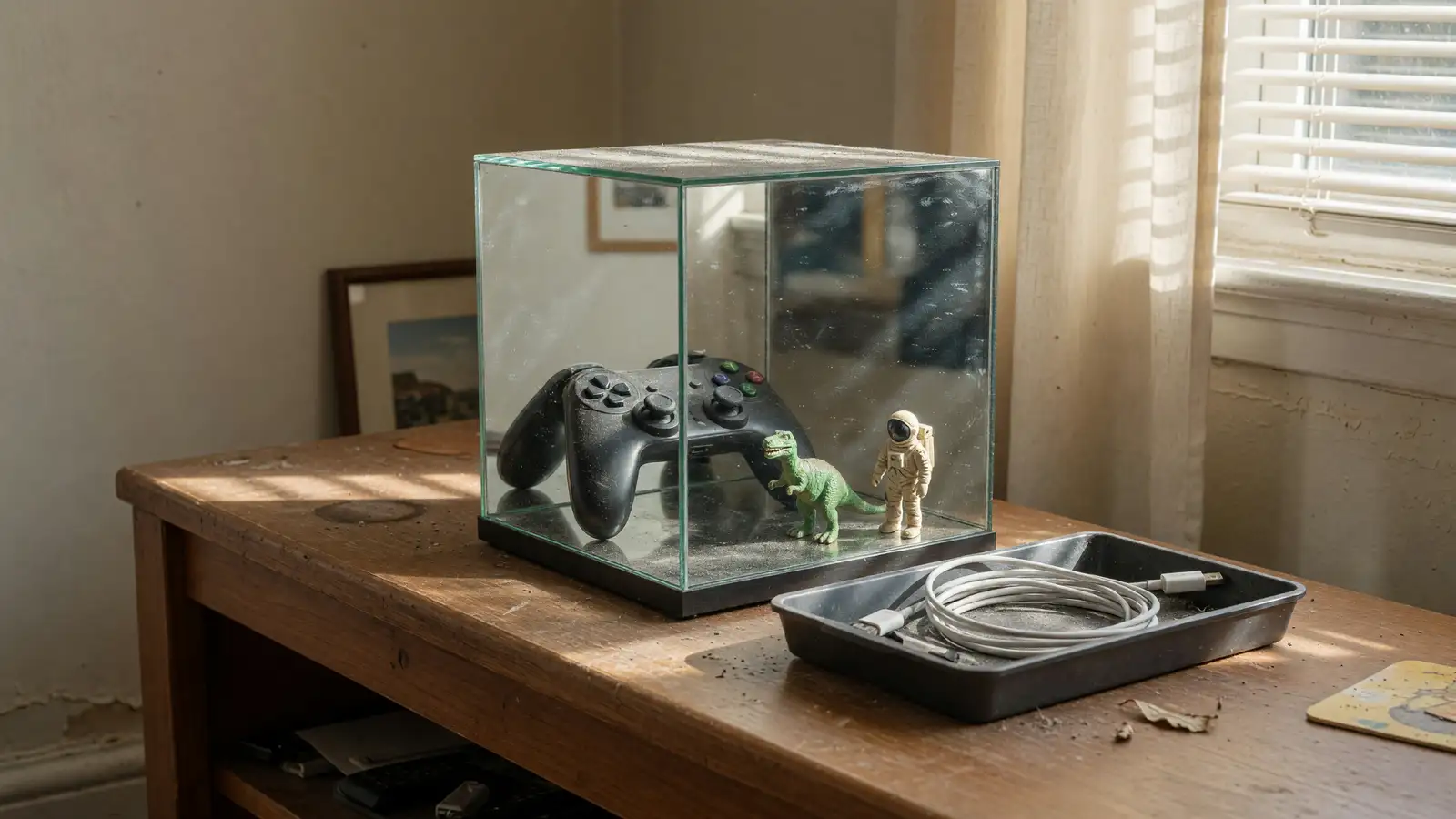
Open any junk drawer in America and you’ll find the same archaeological layers: phone chargers for devices you no longer own, USB cables of mystery origin, remote controls for TVs long since replaced, and tangled nests of wire that haven’t been connected to anything in years. This is one of the most common clutter categories professional organizers encounter, and one of the most frequently misrouted.
BHG reports that professionals see this scenario in almost every home they enter (BHG). Most people hold onto these items for two reasons: fear of discarding something they might need again, and uncertainty about how to dispose of electronics responsibly. Both concerns are valid, but neither is solved by donation.
Most donation centers won’t accept electronics at all due to data security concerns and the cost of proper disposal. Even working electronics often sit unsold because thrift stores are flooded with them. The responsible exit route is e-waste recycling. Best Buy accepts most electronics for free recycling regardless of where they were purchased. Many cities hold periodic e-waste collection events. For items with resale value — recent-model phones, tablets, working laptops — local buy/sell groups or trade-in programs offer better outcomes than donation.
The cord drawer deserves special attention. Most of those cables are for obsolete connectors. If you haven’t identified what a cable belongs to in the last six months, you won’t identify it in the next six. Bundle them, take them to an e-waste drop-off, and reclaim the drawer for something useful.
Unused Kitchen Gadgets
The kitchen is where good intentions go to become clutter. The spiralizer used twice. The bread maker still in its box from the wedding registry. The avocado slicer, the egg separator, the herb scissors, the rice cooker with a pot you never learned to measure with. Kitchens are clutter hot spots because cooking and baking require many items, and the gap between what we think we’ll use and what we actually reach for is enormous (BHG).
The tricky part with kitchen gadgets is that most of them technically work. They’re not broken, they’re not old, they’re just unused. Donation centers will accept them, but the reality is that most small kitchen appliances sit on thrift store shelves for weeks before being discarded anyway. The more effective route depends on the item’s value and condition.
Brand-new, still-in-box items go to consignment shops or online marketplaces where someone actively looking for that specific gadget will find it. Gently used items that are genuinely useful — a perfectly good slow cooker, a quality knife set — do belong at donation centers, but only if they’re complete and functional. The single-use gadgets that nobody actually needs — the avocado slicers and egg separators — go directly to the trash or recycling. This is the hardest category to be honest about, because the items aren’t broken, they’re just pointless.
Professional organizer Cathy Orr’s advice about pacing applies here: start with one drawer, one shelf, one cabinet rather than gutting the entire kitchen at once (Southern Living). When you work through the kitchen systematically, you’re more likely to identify the genuinely useful items versus the impulse purchases that can be honestly discarded.
Potential Collectibles and Vintage Finds
Buried in your closets and storage bins, there may be items worth far more than you think. Vintage clothing, first-edition books, antique furniture, mid-century modern pieces, original artwork, trading cards, vinyl records — these items have active resale markets that most people don’t realize exist until a professional appraiser points it out.
The Spruce quotes professional organizer D’Nai Walker: “Many vintage and rare items are worth quite a bit and should be appraised before dumping in a donation box. You never know what kinds of treasures you may be sitting on” (The Spruce). A vintage Pyrex bowl that you think is just old kitchenware might sell for $200 to the right collector. A box of old vinyl records could contain pressings worth hundreds each.
The problem with donating collectibles is twofold. First, the donation center won’t recognize the value, so the item gets priced at $2 and sold to someone who will resell it for its actual worth. You’ve essentially transferred your equity to a stranger. Second, some items appreciate over time, and donating them before proper evaluation means losing potential value permanently.
The correct route is appraisal first. Many antiques shops offer free or low-cost appraisals. Online platforms like eBay show you completed sale prices for comparable items. Once you know what something is worth, the decision becomes clearer: items worth over $50 go to consignment or direct sale. Items worth under $50 but above donation threshold go to thrift stores. Items with no market value go to recycling or trash.
This doesn’t mean you should hold onto everything because it “might be worth something.” It means you should spend thirty minutes researching before you hand over items that could fund your next organizational project.
Items That Donation Centers Actually Refuse
Beyond the specific categories above, there are entire classes of items that most donation centers won’t accept regardless of condition. Knowing this list in advance saves you from the frustrating experience of hauling bags to a drop-off only to be turned away.
Mattresses and box springs are rejected by virtually every donation center due to hygiene regulations and bed bug concerns. Most centers also refuse cribs and car seats due to safety recall issues. Appliances with refrigerant (old refrigerators, air conditioners) require special handling. Chemicals, paint, and cleaning supplies pose hazmat concerns. Stained or damaged furniture is typically rejected. Used underwear and swimwear are almost universally refused.
Building materials, including leftover tile, lumber, and fixtures, don’t belong at donation centers either. Habitat for Humanity ReStore accepts some building materials, but only in usable condition and specific categories.
The better approach is to check your local donation center’s website before you sort. Most publish detailed acceptance lists. Having this information before you start decluttering means you can sort items into the correct bins from the beginning, rather than making multiple trips or re-sorting everything after a rejected donation attempt.
How to Build a Post-Declutter Sorting System
The real solution to the donation problem isn’t a better list of what not to donate. It’s a sorting system that routes every item to its correct destination before it leaves your house. Here’s the framework that professional organizers use.
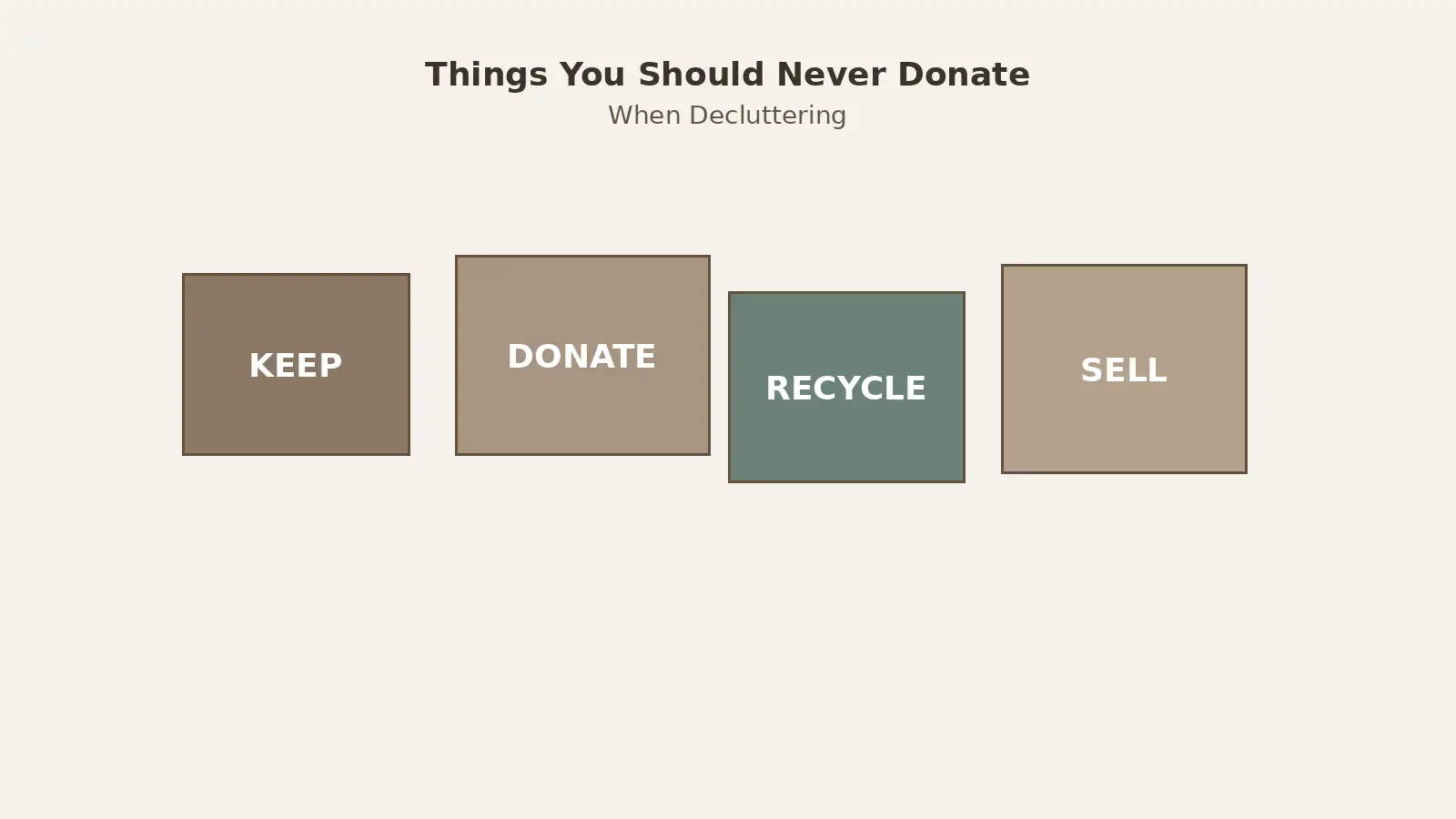
Create five categories as you declutter, not just two. Instead of “keep” and “donate,” use: keep, donate, sell, recycle, and trash. Each item gets routed to one of these five bins as you encounter it. This eliminates the common mistake of sorting everything into “donate” bags and then discovering later that half the items don’t belong there.
Label bags or boxes clearly. Use a marker to write the destination on each container. When you pick up a shirt, you decide immediately: keep, donate (in good condition), or trash (stained). When you pick up a blender, you decide: keep, donate (working and complete), sell (if it has value), or recycle (if it’s broken).
Set a deadline for each category. Donate bags go to the center within a week. Sell items get listed within two weeks or moved to the donate/trash category. Recycle items go to the appropriate facility within a week. Trash items go out with the next pickup. The deadline prevents the common trap of completed sorting that never actually leaves the house.
This system takes slightly more effort upfront than tossing everything into donation bags, but it produces dramatically better results. You end up with a home that’s actually decluttered, a donation center that receives items it can actually use, and potentially some cash from items that deserved a market rather than a thrift store shelf.