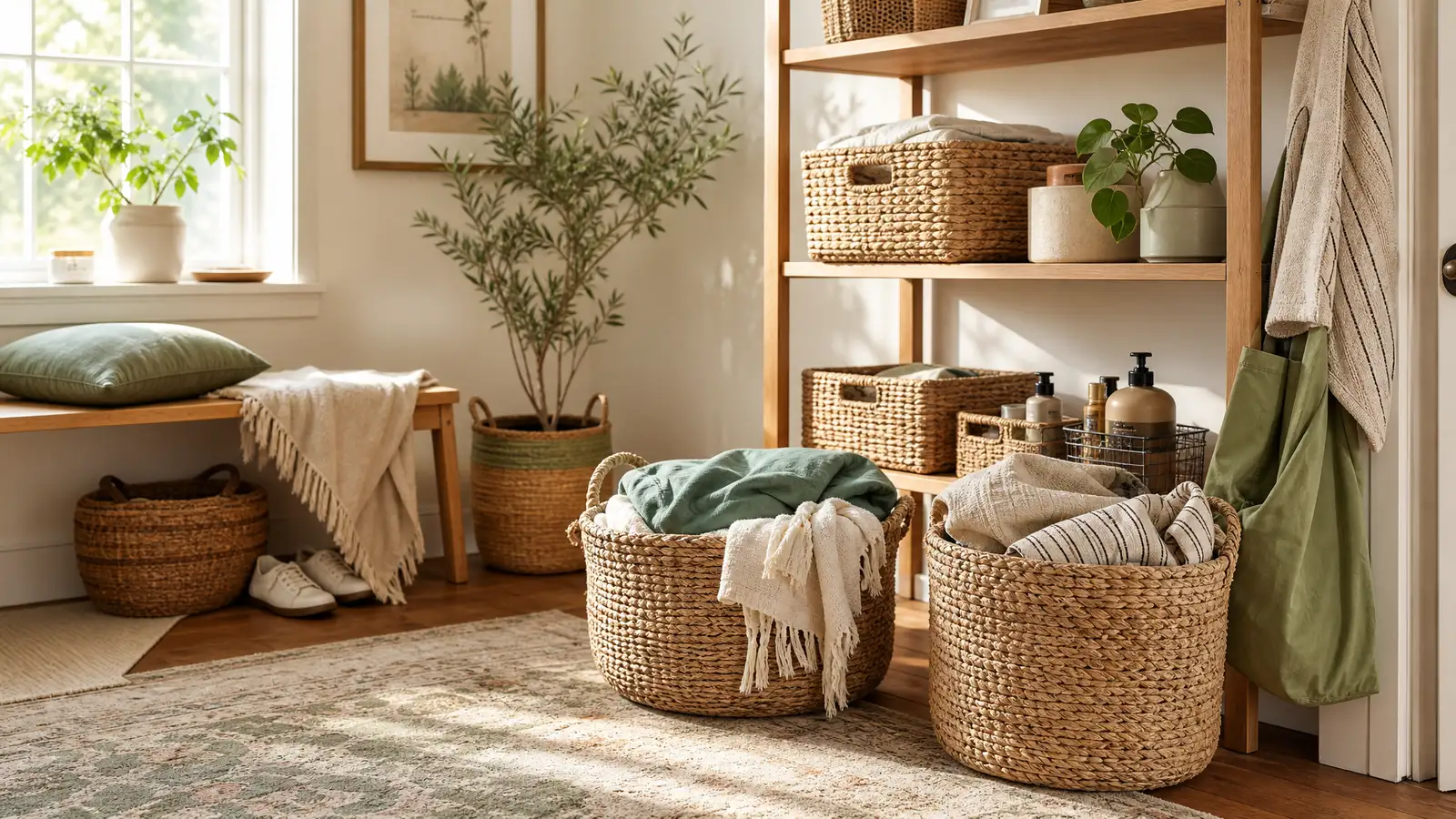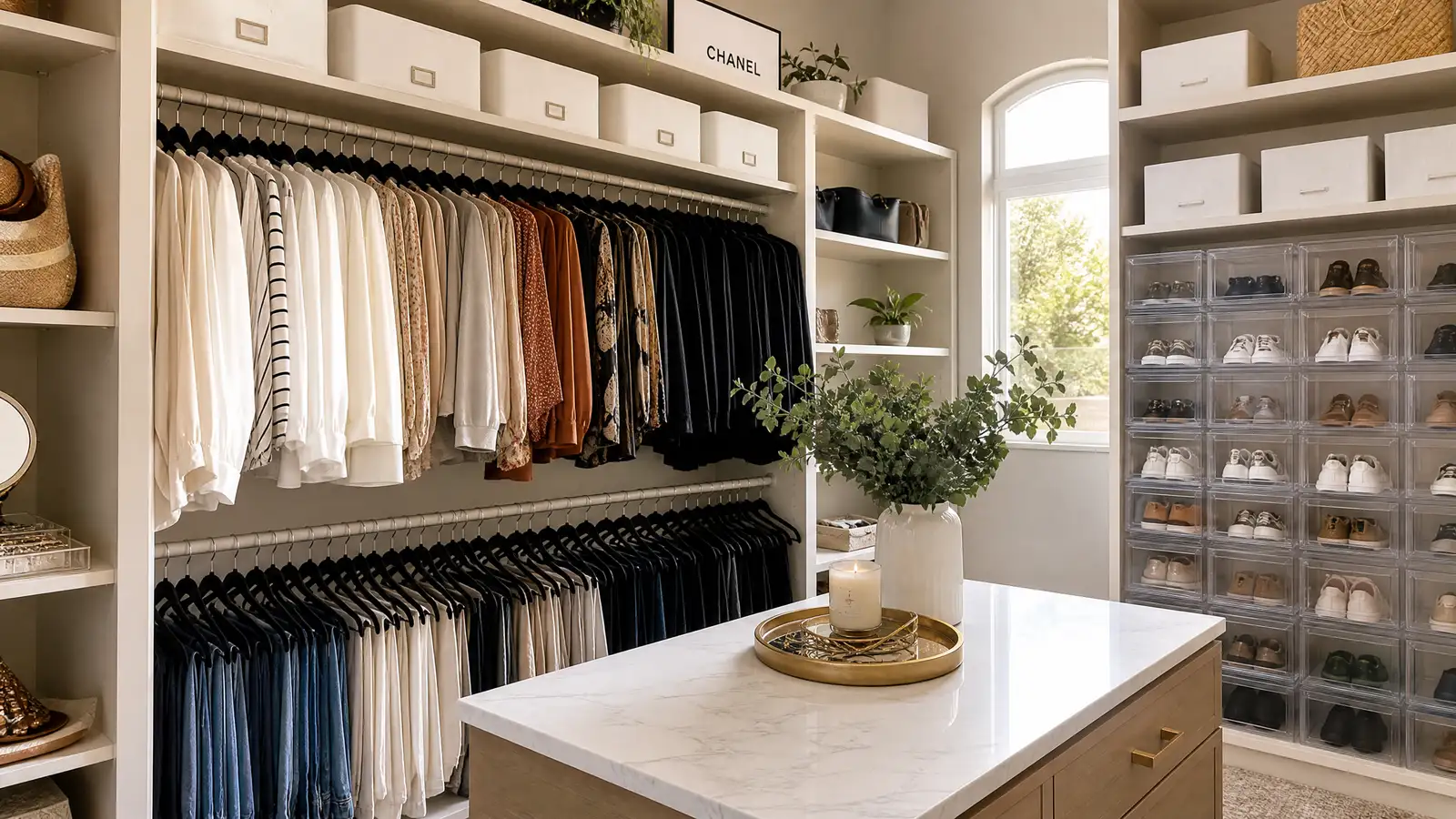
Minimalism is not just about having less stuff. It is about having smarter storage. The right storage solutions do not just hold your items—they disappear into your decor, functioning quietly while maintaining the clean aesthetic you want.
Whether you live in a tiny apartment or a spacious house, these storage strategies will help you maximize every inch without creating visual clutter.
The Philosophy Behind Minimalist Storage
Before buying containers and organizers, understand this: every item you own should have exactly one home. When everything has a designated spot, putting things away takes seconds. The chaos that builds up comes from items without homes.
Good minimalist storage does three things: hides what you do not want to see, displays what brings you joy, and makes daily life easier. If a storage solution fails any of these, it is just more stuff adding to your clutter.
Modular Shelving: The Foundation of Minimalist Storage
Modular shelving works because it adapts to your needs rather than forcing you to adapt to fixed spaces.
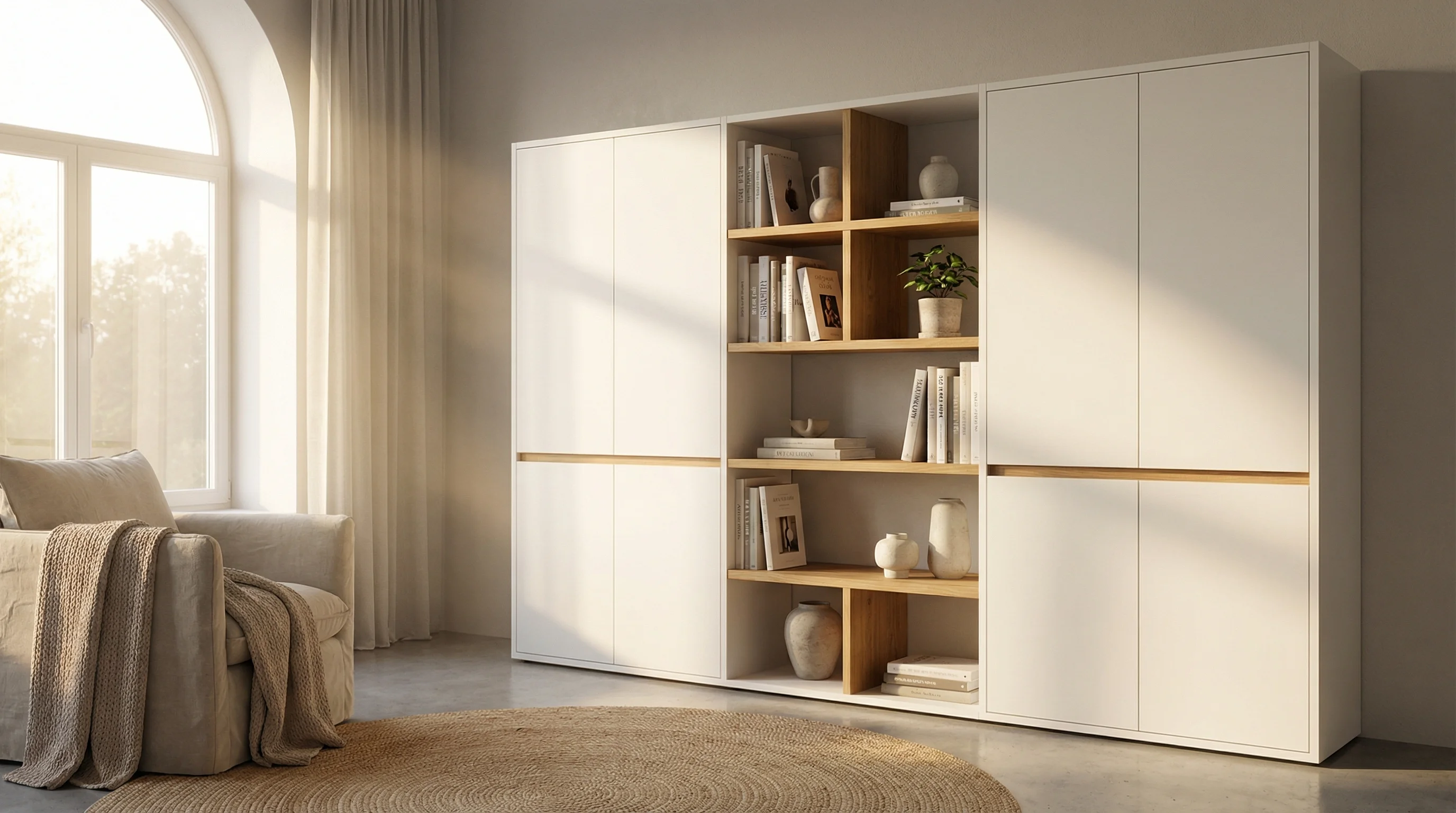
The trick is choosing systems with both open shelving and closed cabinets. Open shelves display curated items—perhaps a few favorite books or decorative objects. Closed cabinets hide the rest: office supplies, seasonal decorations, anything that does not contribute to your visual calm.
String Furniture, a company known for their modular systems, suggests making sure shelves are deep and tall enough for your belongings but narrow enough to avoid wasting floor space. The flexibility to reconfigure as your needs change makes modular shelving a long-term investment rather than a temporary fix.
Floor-to-Ceiling Cabinets: Using Vertical Space
Most homes waste vertical space above eye level. Floor-to-ceiling cabinetry transforms dead space into practical storage while maintaining clean sightlines.
Tony Ditzler, president of ShelfGenie, says their goal is “creating an open and organized space that makes your home seem expansive and welcoming, no matter the size.” Custom built-ins accomplish this, but even ready-made tall cabinets from IKEA work well too.
The interior organization matters as much as the exterior. Use that vertical space with shelf risers, stackable bins, and pull-out shelves. A cabinet that looks streamlined from the outside but contains carefully organized contents is the ultimate minimalist storage win.
Drawer Dividers: The Unsung Heroes
Drawer organization is where minimalist storage either succeeds or fails. A junk drawer undermines the calm you have worked to create elsewhere.
Acacia wood dividers from Neat Method offer a clean aesthetic while keeping utensils, office supplies, and cosmetics separated. Short, long, shallow, and deep options let you customize configurations for each drawer.
The minimalist rule applies here too: beautiful storage matters. You do not want a sleek exterior with chaos inside. Choose dividers and organizers that look as good closed as they do open.
Pull-Out Storage: Hidden Capacity
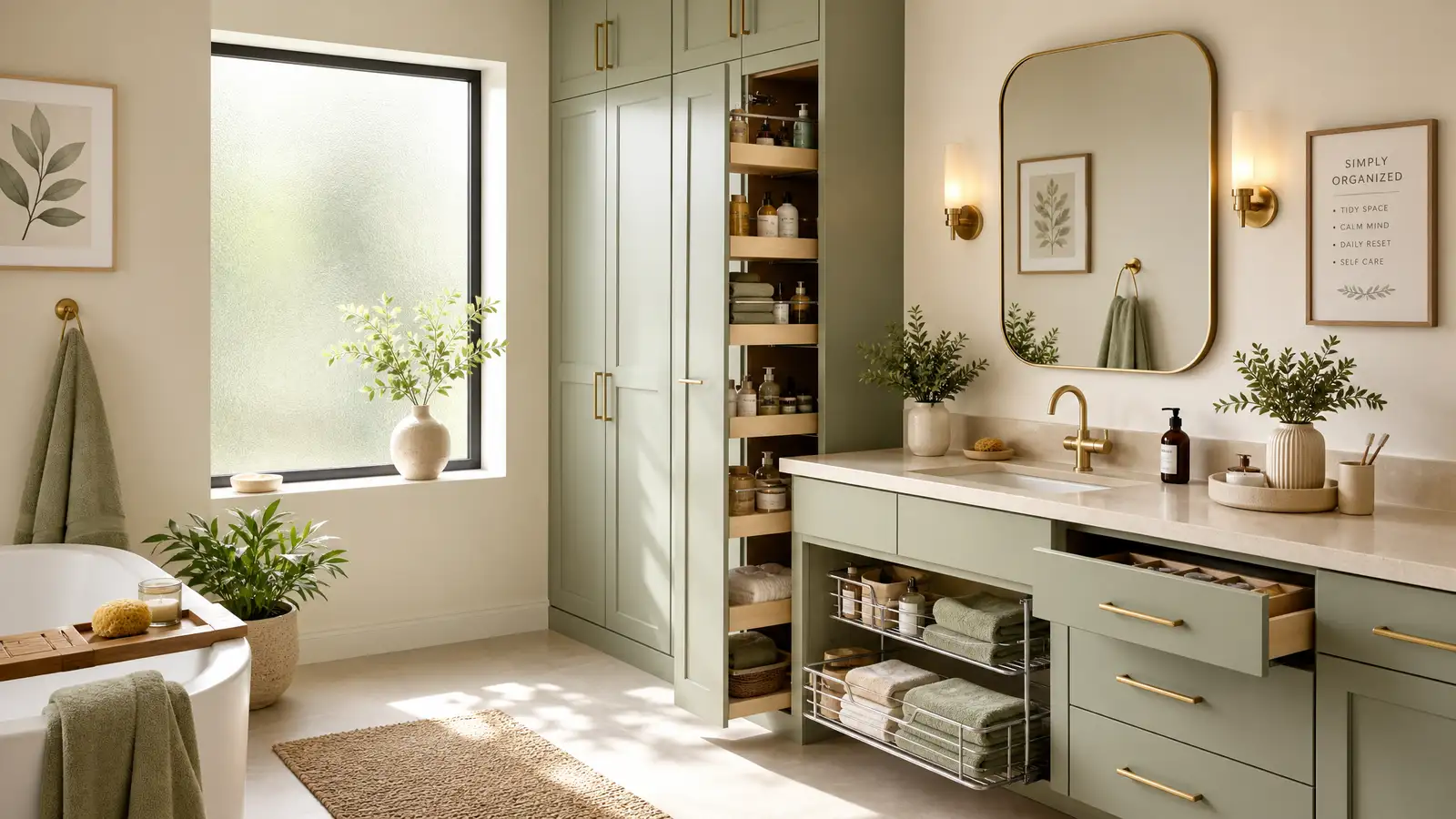
Pull-out shelving provides up to 50% more storage space while staying hidden behind cabinet doors. The mechanism brings items to you rather than forcing you to reach into dark cabinet depths.
These work especially well in kitchens, where spices, cleaning supplies, and rarely-used appliances can be stored in lower cabinets and pulled out when needed. Bathroom cabinets benefit from pull-out organizers for toiletries. Even bedroom closets can incorporate pull-out rails for better visibility.
The trick is matching the organizer to your specific needs. A pull-out spice rack only helps if you actually cook. A pull-out recycling center only works if you have the cabinet space.
Storage Beds: Invisible Function
A storage bed eliminates the need for a dresser or additional furniture while providing substantial hidden storage for out-of-season clothes, extra bedding, or items you rarely access.
Platform beds with built-in drawers work well. Under-bed storage containers with wheels roll out easily for access. The Saatva Halle storage platform combines aesthetics with function, providing drawers beneath the mattress without the bulk of a traditional bed frame.
For minimalists, this is the ideal: furniture that serves double duty, reducing both the number of items in your home and the visual weight of your furniture choices.
Multi-Functional Furniture: Doing Double Duty
Every piece of furniture in a minimalist home should earn its place. Multi-functional pieces do exactly that.
A sideboard provides storage inside while offering surface space for a book stack, decorative object, or tray of drinks. A storage ottoman serves as seating, a coffee table, and hidden storage simultaneously. A bench with built-in compartments works as entryway seating while storing shoes and bags.
Sue Jones, co-founder of OKA, recommends choosing “multifunctional pieces as this will mean you require fewer large items cluttering up space.” A contemporary sideboard that provides ample storage inside with surface space for display represents this principle perfectly.
The One-Box Rule for New Purchases
Before buying any new storage solution, apply the one-box test: can it all fit in one box? If your system requires multiple containers, bins, and organizers to function, you have probably overcomplicated things.
Minimalist storage should simplify your life. If organizing a space takes hours of configuring and reconfiguring containers, the system itself has become clutter.
Start with the basics: one good shelf, one well-organized drawer, one functional piece of multi-purpose furniture. Add more only when a genuine need emerges.
Building Your Minimalist Storage System
Begin with what you already own. Identify one area that creates daily frustration. Maybe it is the kitchen junk drawer. Maybe it is the closet where clothes pile up. Maybe it is the entryway where bags and keys accumulate.
Address that one area with the principle of designated homes. Everything in that space gets a specific spot. If it does not have a spot, it does not belong there.
Expand gradually. As one area stabilizes, move to the next. The goal is not a perfectly organized home in a weekend. The goal is steady progress toward a space that supports rather than complicates your life.
Minimalist storage is not about having nowhere to put things. It is about having exactly the right place for everything—and that place being invisible.