September 1 has a way of turning into a dare. You look at the sand in the car, the sunscreen film on the bathroom shelf, the pantry you have not opened since July, and you decide this is the Saturday you “get the house together.” Then Saturday becomes a six-hour slog, you skip lunch, and by Sunday night the bathroom is gleaming while the rest of the house looks exactly like Friday.
Caroline Sumlin at The Everygirl published a September reset this week that starts from a more honest place. She used to try to reorganize her whole life by the first of the month, in one weekend. She says that version created more anxiety than it solved. The replacement is slower on purpose: four weeks, four tasks a week, one task a day, with permission to spill into the next day.
That structure is useful. It is also mostly life-admin: wardrobe try-ons, Q4 goals, gift lists. Fine if that is what you needed. If your house still smells like summer and the calendar is about to fill with school, travel, and holidays, you need the same pacing applied to cleaning. This September cleaning reset keeps her one-task-a-day math and drops the vision-board extras. Compared with a two-hour weekend reset, you get sixteen small jobs spread across the month and you still have a Saturday.
Why a September cleaning reset should take a month
The failure mode of a “reset day” is scope, not character. A Saturday deep-clean tries to do four seasons of deferred maintenance in one block: fridge, bathrooms, windows, garage, dryer vent, guest towels. You start in the kitchen because it feels productive. You never reach the dryer vent. The vent is the thing that becomes a problem in October.
Sumlin’s useful constraint is the math. Four categories, four tasks each, sixteen total. One a day. If a task runs long, it eats tomorrow, not the rest of your life. For cleaning, I would keep her first two weeks pointed at the house and steal her last two weeks for the jobs people skip because they are not photogenic: bathrooms done with the right product, then the fall safety list firefighters keep repeating.
The other reason a month works in early September is the weather. You still have open-window days. You can run a steamer without turning the bathroom into a sauna you then have to live in. You can haul a lint-clogged vent hose outside without standing in a snowbank. Wait until November and every one of these jobs feels worse.
A month also lets you buy less. Speed-declutter first, then restock. If you shop for “fall cleaning supplies” before you have opened the medicine cabinet and the under-sink caddy, you will buy a third bottle of something you already own.
Week 1: get the summer residue out of the house
Week one is a speed pass through the places summer lands, not a deep clean.
Start with the junk surfaces: the bowl by the door, the kitchen counter end that became a mail pile, the closet floor that became a shoe dump, and the car if you have one. Sumlin specifically includes the car, which is the right call in September. Beach towels, empty water bottles, and a season of school-form paper live there. Donate what is still useful. Trash the rest. Do not “organize” it into a prettier pile.
Then do a closet pass that doubles as cleaning. Take the summer clothes off the rod, shake them, check pockets, and wash anything that sat there damp or sunscreen-stained. Try the fall stuff on before you shop, as Sumlin suggests, but the cleaning version of that step is simpler: if it is stained, torn, or smells like the back of the closet, it does not go back in. A closet full of clothes you will not wear is a dust trap with hangers.
The third task is the kitchen you cooked in all summer and then ignored. Open the pantry. Check canned goods, spices, and baking supplies for dates. Expired paprika is not a personality trait. Wipe the shelves before anything goes back. Do the same to the fridge door bins, which collect the sticky rings nobody notices until company is coming. You do not need a full fridge teardown this week. You need the shelves to stop being tacky.
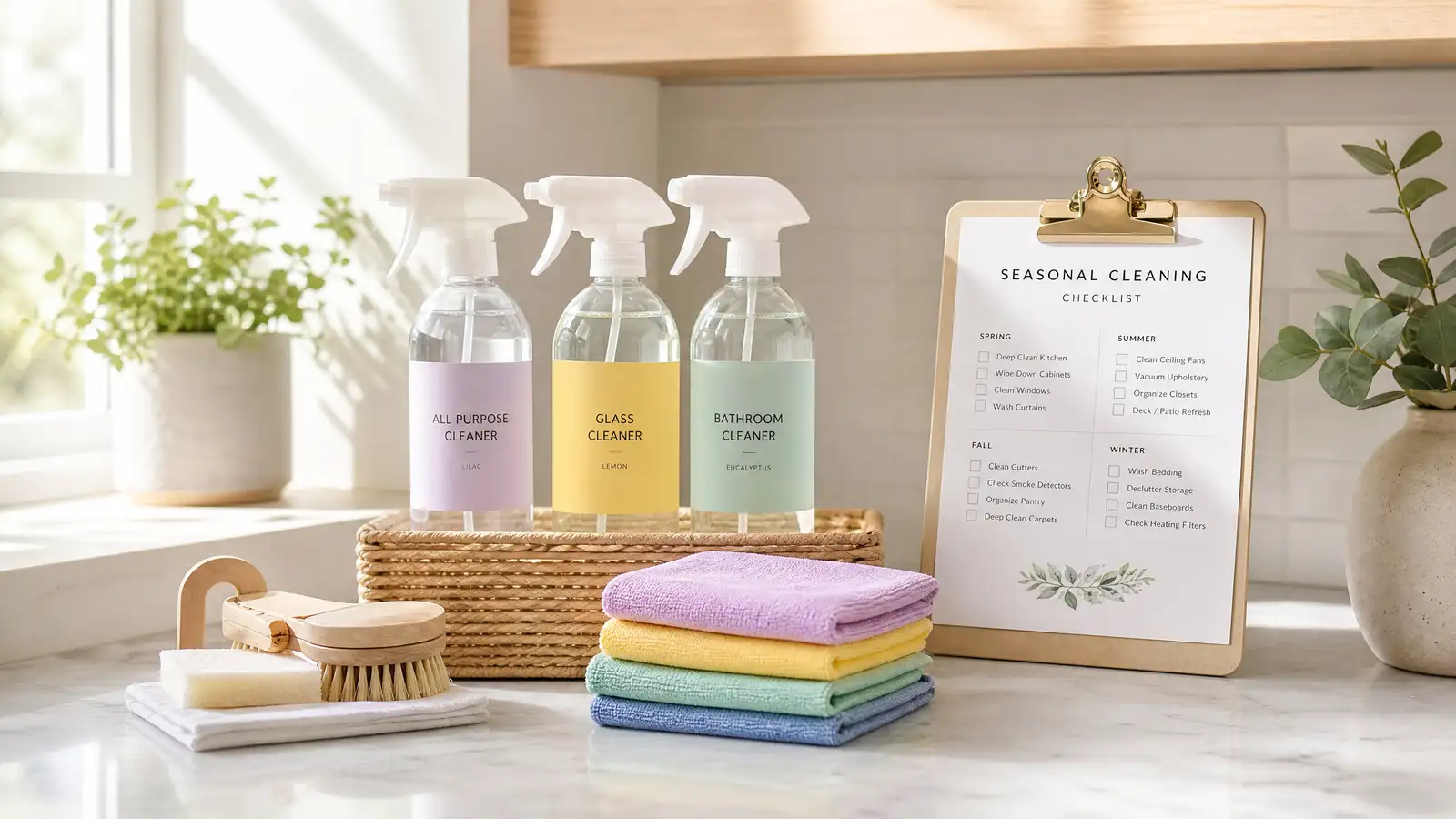
Fourth task: the medicine cabinet and the cleaning caddy together. Sumlin frames this as cold-and-flu prep, which is correct and also incomplete if you only buy lozenges. Flu season is when you go through disinfectant wipes, hand soap, and extra laundry detergent. Throw out the dried-up cough syrup and the mystery spray bottle with no label. Write one list. Shop once. If you already own three all-purpose cleaners, you do not need a fourth because it is September.
Time box: 30 to 45 minutes a day. If the pantry takes two days, it takes two days. That is the point of the structure.
Week 2: kitchen systems, then the appliances you pretend are self-cleaning
Week two is where Sumlin talks about routines, freezer meals, and a Sunday reset. Translate that into a kitchen that still functions when it gets dark at 6.
Day one: pick a default weeknight meal pattern so the sink does not become a negotiation every evening. This is only a cleaning article because dirty dishes are how kitchens die in October. If you batch a few freezer meals, as she suggests, you also get a reason to wipe the freezer walls and toss the frostbitten bag of peas from 2024.
Day two: run the appliance maintenance you keep postponing. Empty the dishwasher filter. Wipe the dishwasher door gasket. If the machine smells, the filter is full of food, not “getting old.” The washing machine cleaning guide covers front-loaders and top-loaders in more detail; this week you at least run a hot cleaning cycle and clear the detergent drawer. Lint and leftover pods in that drawer are how you get the sour smell that then gets blamed on the detergent.
Day three: restock list, not restock haul. Walk the kitchen, laundry room, and bathrooms with your phone notes app. Write what is below a one-week supply. Then stop. The September trap is buying decorative storage and a new floor cleaner because the store endcap said “fall refresh.” You need soap, dishwasher tabs, trash bags, and whatever bathroom product you already know works.
Day four: a short shared-calendar or chore split if other humans live there. Not a laminated family command center. One sentence: who wipes the kitchen at night, who takes trash, who does the bathroom on Thursdays. Systems fail when they require a meeting. They hold when the default is obvious.
If you already have a weekend reset you like, keep it. Week two is the weekday layer that stops the weekend from turning into a punishment.
Week 3: bathrooms, with products that match the mess
Most bathroom “routines” fail because people spray one bottle on everything. Soap scum, hard water, toilet rings, and grout are different chemistry problems. Good Housekeeping’s 2026 bathroom-cleaner tests are useful here because the Institute stopped pretending you can simulate a real shower in a lab. They test in testers’ homes, time how long a product takes to work, and check EPA registration on anything that claims to kill bacteria or viruses.
Their named picks are specific enough to steal as a shopping filter, not a brand religion. Best overall in that roundup is Microban Multi-Purpose Cleaner. Best for toilets: Clorox Toilet Bowl Cleaner with bleach. Most versatile: Mr. Clean Magic Eraser. Best for grout: CLR Brilliant Bath foaming spray, which also took a GH Cleaning Award. The original Magic Eraser already has the Good Housekeeping Seal; the bath version foams with a built-in cleanser when you wet it, which is the difference between “another sponge” and something that cuts film on glass doors.
Use that as a matching rule for the week:
- Counters and floors can take an all-purpose product.
- Toilets, mirrors, showers, and tubs usually want a dedicated cleaner. GH says the same thing in their shopping notes.
- Hard water on glass and faucets wants acid: vinegar or citric acid. Spray, wait a few minutes, scrub, rinse. Check the label against stone and specialty finishes before you start.
- Do not put a general bathroom cleaner on a fabric shower curtain. It is the wrong surface.
- Do not mix products. Bleach plus an acid is how you get a chemistry experiment in a room with no windows.
If you already follow the mold-and-mildew bathroom routine, keep the ventilation and squeegee habits. This week is the product reset on top of that: one cleaner per job, not five bottles of almost the same citrus scent.
Steam is the other option that showed up in this week’s shopping coverage. HuffPost flagged a handheld pressurized steamer on Labor Day sale, $40 down from $56, roughly 30 percent off. The sale is a footnote. The reviews are the useful part: shower, toilet, sinks, the kitchen range under the grates, grout, dishwashers, even hairspray on tile. One reviewer, 75, used the extension hose on baseboards and toilet bases so she did not have to kneel. Another noted the screw-top tank is annoying to open. That is a real tradeoff. Steam is water and heat. It is not a disinfectant claim by itself, and it is not magic on every surface. If you want the longer version of when steam is the right tool, the steam cleaner comparison is already on the site. This week, treat a steamer as a grout-and-film tool, then wipe with a microfiber cloth. For grout that still looks grey after steam, step up to a foaming grout product rather than scrubbing harder. The grout methods guide is the deeper dive if one bathroom is a lost cause.
Split the week: one bathroom a day, or one zone a day in a single bathroom (glass, then toilet, then floor, then the stuff on the counter). Stop when the 45 minutes is up. A half-finished bathroom you can finish tomorrow beats a whole-house rage-clean that ends at the first soap dish.
Week 4: the fall jobs that are not decorative
Week four is where lifestyle resets start talking about pumpkin decor and gift lists. Cleaning-wise, this is dryer week.
Morden Fire & Rescue’s Capt. Jonathan Baumgart put out a seasonal reminder this week that is almost aggressively unsexy, which is why it belongs here. As households switch toward heat, he wants dryer vents, furnace filters, heating systems, and carbon monoxide alarms checked. The dryer is the easy starting point. Clean the lint trap after every load. That part most people do. Lint also packs into the vent that runs from the machine to the outside of the house, and that part is what people forget.
Baumgart says clean that vent about once a year. If you have the brush kit and can pull the hose, do it. If you do not, hire it. Warning signs he named: clothes taking longer than they used to, or the dryer getting very hot while the load stays damp. Treat those as airflow problems, not a machine that “got old.” His department still sees dryer fires, maybe around once a year. The mechanism is simple: lint in the vent ignites, or the dryer overheats and the clothes inside catch. September is when you still want to be outside disconnecting a vent hose.
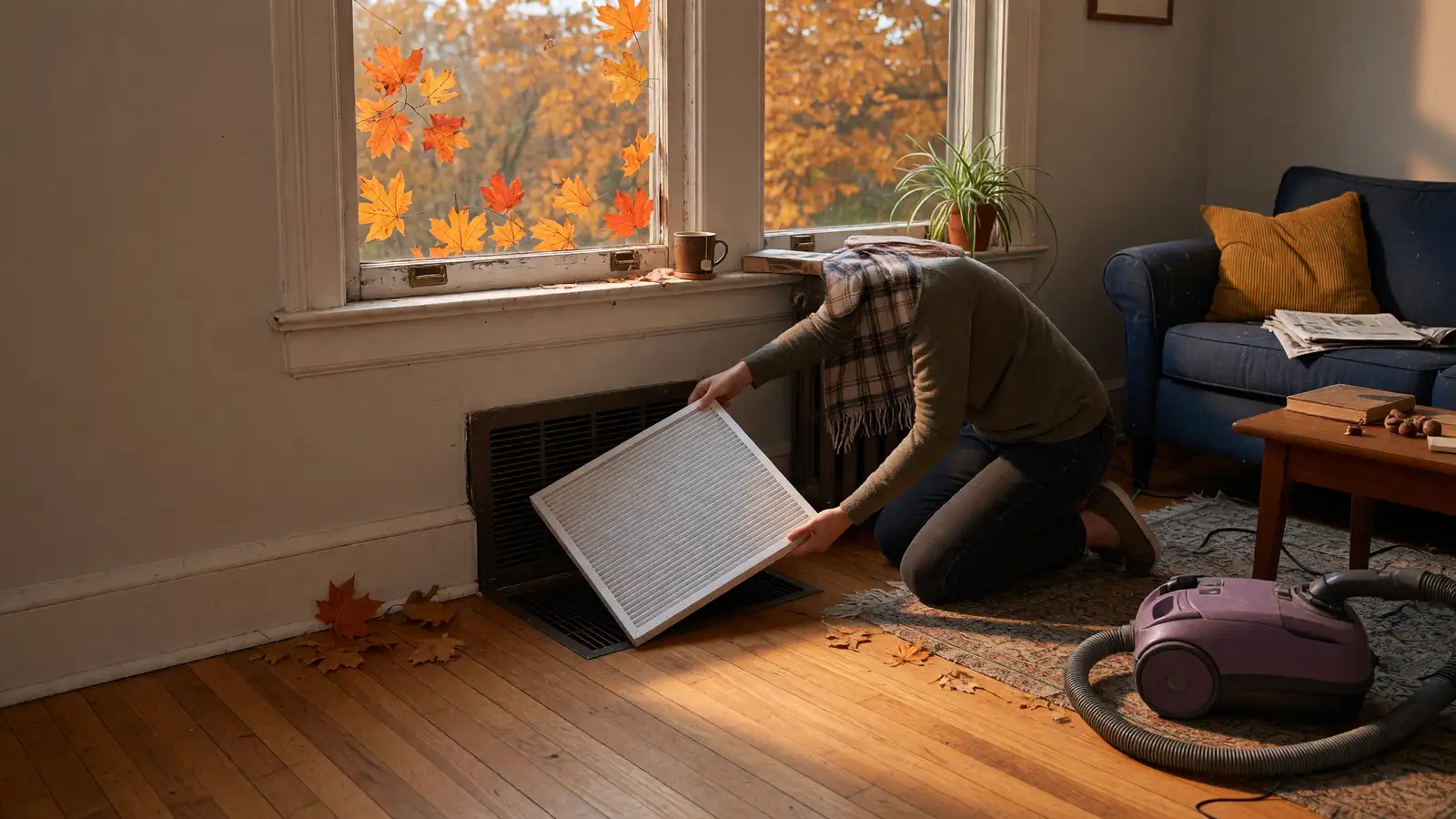
Pair that with the furnace filter and the CO alarms on a different day. You do not need to become an HVAC technician. You need to know the last time you changed the filter, and you need the CO alarms to have batteries that are not a guess. Heating season is when a blocked vent and a tired alarm occupy the same house.
Other week-four jobs, if the vent took less than a day:
- Wash or replace kitchen towels and guest towels before anyone visits. A stained towel that lives on the oven handle is still a rag.
- Pull the fall tablecloths and see if they need a wash now, not the night before Thanksgiving.
- Vacuum the fridge coils if you can reach them. Dust on coils makes the fridge work harder, which you will notice when you start packing more food into it.
- If you have a robot vac, empty the dock and wash the mop pads. Summer dust plus fall hair is how those pads become a smear machine.
Skip the decorative overhaul until the machine that can start a fire has been dealt with.
How to keep this to one task a day
The plan fails if you turn it back into a Saturday. A few rules that have nothing to do with “mindset”:
Write the sixteen tasks on a paper list on the fridge, not in an app you will ignore. Check one box a day. If you miss Tuesday, do Tuesday on Wednesday. Do not do Tuesday and Wednesday on Wednesday.
Cap the session. 45 minutes. Set a timer. When it goes off, stop even if the grout is mid-project. You can finish grout tomorrow. You cannot un-blow an evening that makes you quit the rest of the month.
Keep a “not this month” list. Window interiors can wait if the dryer vent is not done. Garage floor can wait. Organizing the spice jars by color can wait forever.
Shop from the list you made in week two. If a steamer is useful in your bathrooms and you do not own one, the sale price HuffPost cited is a data point, not an assignment. A bottle of CLR and a Magic Eraser is enough for a lot of apartments.
If you live with other people, assign week three bathrooms by person or by room. Resentment does not empty a trash can.
Sumlin’s last note is the one worth keeping even in a cleaning-only version: if you are not hosting and not traveling, swap those tasks for whatever would make the house easier to live in. For some households that is the hall closet. For others it is the shower glass. Treat the month as a container you can restock, not a personality test.
By the first week of October you should have a kitchen that is not sticky, bathrooms that match the product to the stain, and a dryer that can run without turning into a lint furnace. That is a better September than a single heroic Saturday and a house that looks like itself again by Monday.