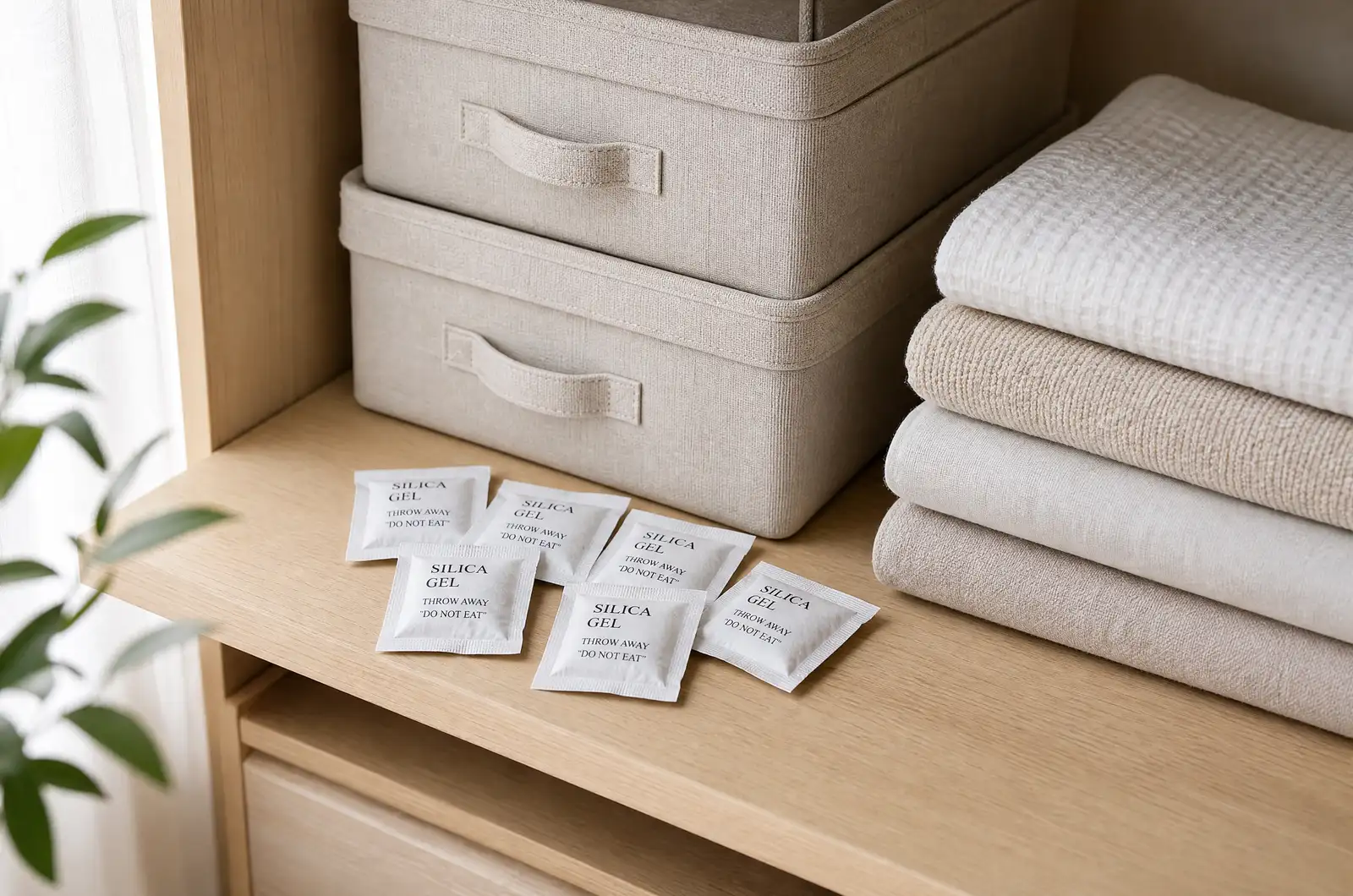
You probably have a dozen silica gel packets sitting in a junk drawer right now, pulled from shoe boxes and supplement bottles, waiting for you to toss them in the trash. Do not throw them away. Those tiny moisture-absorbing pouches are some of the most useful freebies you will ever find.
Silica gel works by pulling water vapor out of the air around it. In a sealed or semi-sealed space, that moisture reduction prevents a cascade of problems—musty smells on stored clothes, rust on tools, fogged camera lenses, warped electronics. The packets lose their effectiveness once saturated, but they are easy to recharge: bake them at 200 °F for a couple of hours and they are ready to go again.
Cleaning expert Karina Toner, who manages operations at Spekless, calls silica packets one of the most underrated tools for keeping enclosed spaces dry. Source: The Spruce via AOL Here is how to put them to work around your home.
Protect Stored Clothing and Linens
Pulling a winter sweater out of a bin and catching that damp, sour smell is a familiar frustration. Moisture builds up inside plastic bins and cardboard boxes the same way it does in any unventilated space.
Drop a handful of silica packets into any container holding seasonal clothes, bedding, or towels before you seal the lid. Toner recommends placing them in linen closets and drawers too, since those enclosed spaces accumulate humidity over months of quiet storage. The packets work silently, pulling residual moisture from the air and keeping fabrics dry enough that mold spores never get a foothold.
Pair this approach with proper folding techniques and breathable garment bags for the best results. If you are organizing a wardrobe for long-term storage, the wardrobe organization guide covers the full system.
Keep Tools Rust-Free
Rust needs three things: iron, oxygen, and water. You cannot do much about the first two in a typical metal toolbox, but controlling moisture is entirely achievable.
Toner notes that keeping humidity low inside a toolbox slows oxidation significantly. Source: AOL/The Spruce Toss a few silica packets into the bottom tray, especially if your garage or shed lacks climate control. The packets absorb moisture from humid summer air before it can condense on wrench blades and screwdriver shafts.
For larger toolboxes, you will need more packets—roughly one per square foot of internal volume works as a baseline. Refresh them by oven-baking every few months, or sooner if you live in a humid climate.
Prevent Musty Smells in Documents and Photos
Paper and photographs are extremely sensitive to humidity. Even slight dampness causes pages to stick together, photos to develop mold spots, and important documents to curl or discolor.
Store important papers in a fireproof safe or airtight plastic container, and add two or three silica packets to each container. For photo albums and scrapbooks, slide packets into the covers or place them on the shelf next to the album. The key is proximity—silica gel only affects air in its immediate vicinity, so the packets need to be close to the items you are protecting.
Save Electronics During Storage
If you rotate seasonal electronics—space heaters, fans, outdoor lighting—you know how quickly stored gadgets accumulate a stale, damp feeling. Moisture inside electronics accelerates corrosion on circuit boards and battery contacts.
Before storing any electronic device, remove the batteries, wipe the exterior clean, and seal it in a zip-lock bag or plastic container with silica packets. This approach works equally well for camera gear, gaming controllers, and spare charging cables.
Keep Your Luggage Fresh
Suitcases sitting in a closet for months develop a characteristic stale odor that transfers to whatever you pack next. Silica packets address both the smell and the moisture that causes it.
Leave a small bundle of packets in your luggage between trips. The packets absorb residual moisture from the last time you traveled—clothing dampness from humid destinations, condensation from cargo holds—and keep the interior dry until your next adventure.
Organize Your Silica Packet Supply
Now that you are collecting and reusing these packets, you need a system to keep them accessible rather than lost in drawers.
A simple approach: store unused packets in a labeled mason jar or small plastic bin. When a packet goes into active service (toolbox, storage container, luggage), replace it with a fresh one from your supply and mark the date on a piece of tape so you know when to recharge it. Most packets last three to six months between oven sessions, depending on the humidity of the environment.
The smart storage solutions article covers similar small-item organization strategies that apply here.
When to Replace Rather Than Recharge
Silica gel does eventually wear out. The beads crack, the casing tears, or absorption capacity simply drops. Replace packets when:
- The silica beads are visibly cracked or discolored
- The paper or fabric casing has torn open
- After six to twelve oven-recharge cycles, you notice they stop working effectively
Silica gel is inexpensive in bulk, so keeping a backup stash of new packets makes sense while you cycle through the ones you have saved.
The next time you unpack a delivery or buy new shoes, think of those little packets as free moisture-control tools rather than trash. A jar full of them costs nothing, takes up minimal space, and solves problems that otherwise require expensive specialty products.