The average American household throws away roughly thirty percent of the food it buys. That is hundreds of dollars per month in spoiled produce, forgotten leftovers, and expired condiments. The refrigerator is where most of that waste begins.
A disorganized fridge hides food. You cannot see the lettuce wilting behind the milk jug. You forget about the soup you made three days ago because it is shoved behind a stack of yogurt cups. By the time you find these things, they are inedible.
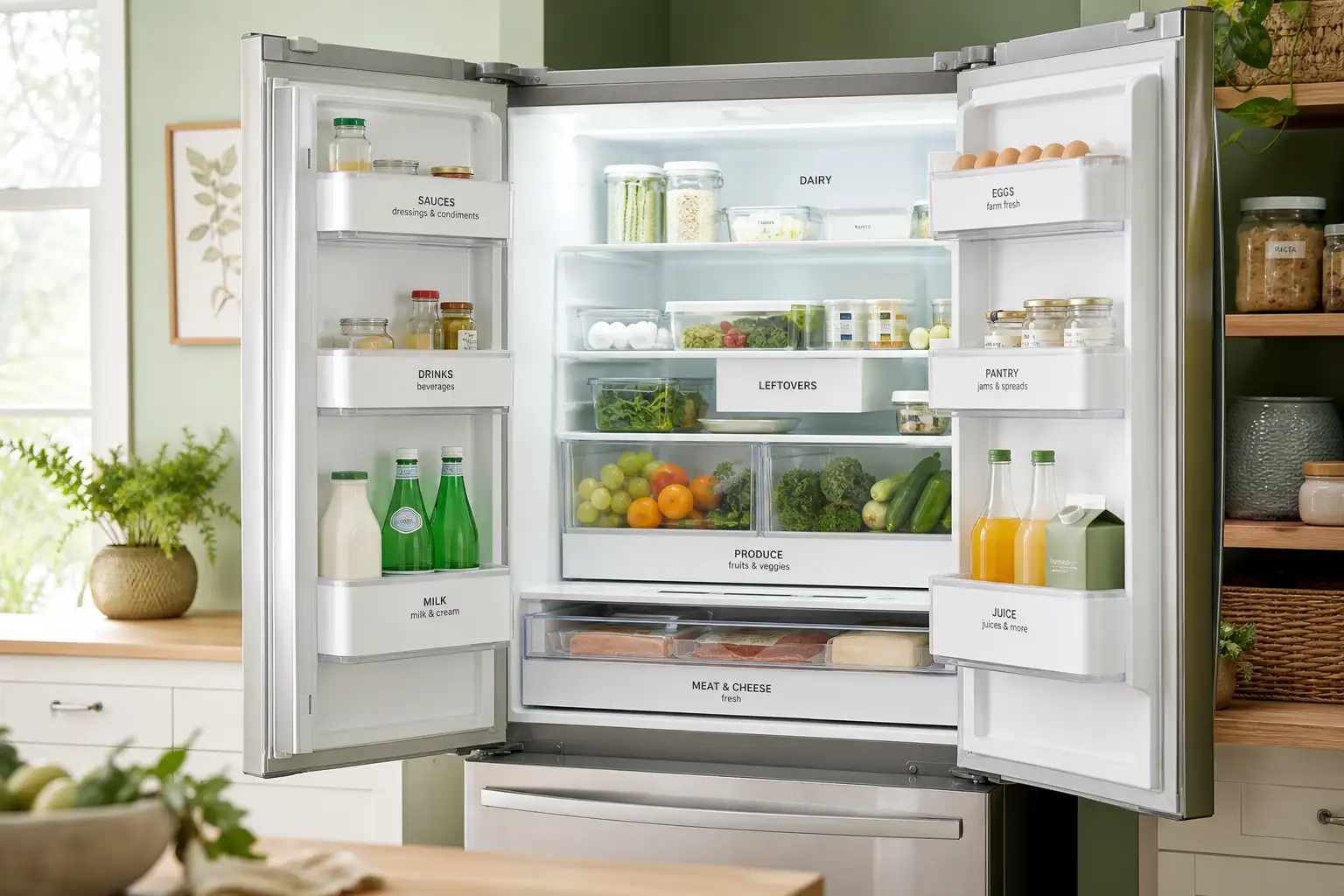
Zone-based fridge organization changes this. It assigns every type of food a specific home based on temperature, humidity, and visibility. Here is the system.
Top shelves: leftovers and ready-to-eat items.
The top shelves of your fridge have the most consistent temperature. This is where food goes that needs no further cooking. Leftovers in clear containers. Yogurt. Cheese. Deli meat. Hard-boiled eggs. Prepared salads.
Put leftovers in clear glass or plastic containers you can see through. You should be able to open the fridge and identify every container’s contents without opening lids. If you cannot see what is inside, label the lid with masking tape and a date. “Chicken soup 7/3.” This takes three seconds and prevents the mystery container problem.
Group like items together. All yogurt on the left side of the shelf. All cheeses on the right. When you open the fridge, your eye goes directly to what you are looking for. Nothing gets lost behind anything else.
The top shelf also works for drinks you access frequently. A pitcher of water or iced tea. Not milk. Milk belongs elsewhere, and I will explain why.
Bottom shelves: raw meat on trays.
Raw meat and poultry belong on the bottom shelf. Always. This is a food safety rule, not just an organization preference. If raw chicken leaks, the juices drip onto the shelf below. If that shelf holds your ready-to-eat salad greens, you have a cross-contamination problem.
Place raw meat packages on a rimmed tray or in a shallow plastic bin. The tray catches any leaks before they spread. Clean the tray regularly with hot soapy water. This is much easier than scrubbing dried meat juice off the glass shelf.
If your bottom shelf has a drawer, use it for meat. If it is just a flat shelf, designate a specific bin as the raw meat zone. The bin is easy to pull out, easy to clean, and contains any mess.
Crisper drawers: use the humidity adjustments.
Most refrigerators have two crisper drawers with adjustable humidity vents. The settings are not decorative. They serve different purposes.
The high-humidity drawer closes the vent and traps moisture. This is for leafy greens, herbs, broccoli, and anything that wilts. Lettuce stored in high humidity stays crisp instead of turning limp and sad.
The low-humidity drawer opens the vent and allows ethylene gas to escape. This is for fruits and vegetables that produce ethylene, a gas that accelerates ripening and spoilage. Apples, pears, avocados, melons, and stone fruit belong here. Some refrigerators label this as the fruit drawer.
Keep fruits and vegetables in separate drawers. The ethylene from apples will cause your lettuce to brown faster. If your fridge has only one drawer, use it for vegetables and keep fruit in a clear bin on a shelf.
Do not cram the drawers full. Air needs to circulate. An overstuffed crisper drawer creates pockets of trapped moisture where rot begins. You should be able to see the bottom of the drawer between items.
Door shelves: condiments only.
The refrigerator door is the warmest part of the fridge. Every time you open the door, the items stored there get a blast of room-temperature air. This temperature fluctuation shortens the shelf life of perishable foods.
Store condiments, sauces, jams, pickles, and other high-acid or high-sugar products on the door. These items are preserved enough to handle temperature swings. Do not store milk or eggs in the door, even if your fridge has molded egg holders there. Milk and eggs need consistent cold temperatures to stay fresh. Keep them on a middle shelf toward the back where the temperature is steadiest.
Butter is fine on the door if you use it within a week or two. If a stick of butter lasts you a month, keep it in the main compartment.
First in, first out rotation.
Restaurants use FIFO, first in first out, to prevent food waste. You can use it at home. When you bring new groceries in, move the older items to the front of the shelf and put the new items behind them. This way you see and use the food that is closest to expiring.
This is especially important for dairy products. The new yogurt goes behind the old yogurt. The new milk behind the old milk. You will reach for the front carton naturally. It is the one closest to spoiling, which is exactly the one you should use first.
Clear containers make produce visible.
The crisper drawers hide produce from view. You forget what is in there because you cannot see it. Out of sight, out of mind, into the trash two weeks later.
Decant produce into clear containers or leave it in clear produce bags. If you can see the bell peppers the moment you open the fridge, you are more likely to use them before they wrinkle. Some people remove produce from drawers entirely and store it on open shelves in clear bins. This works if your fridge has the space and you do not mind losing some drawer storage.
Another trick is to keep a small whiteboard on the fridge door listing what produce needs to be used soon. “Use: spinach, cilantro, tomatoes.” Cross items off as you use them. This is a visual cue that overrides the out-of-sight problem.
Weekly clean-out before grocery shopping.
Do not go grocery shopping with a full fridge. The day before your weekly shop, pull everything out of the fridge. Wipe down the shelves. Check expiration dates. Toss anything that has gone bad. Make a note of what you threw away.
That note is important. If you throw away half a container of spinach every single week, you are buying too much spinach. Either buy less or plan a specific meal that uses it early in the week. The clean-out tells you what your actual consumption patterns are, not what you wish they were.
Now inventory what is left. Plan meals around the produce and leftovers that need to be eaten first. Make your grocery list based on what you need to round out those meals, not based on what sounds good at the store. You will spend less money and waste less food.
This weekly reset takes fifteen minutes. It is the single highest-return organization habit you can build. A clean, visible, properly zoned fridge changes how you cook and how you shop. You stop buying duplicates of things you already have. You stop forgetting about leftovers until they grow fur. You start eating the food you paid for.