The average household throws away roughly thirty percent of the food it buys, and a disorganized refrigerator is the primary culprit. Produce wilts in the crisper drawer because it was buried under newer purchases. Leftovers become science experiments because they were pushed to the back and forgotten. Condiments multiply because nobody can see what is already open before buying more.
An organized refrigerator is not about aesthetics. It is about seeing what you have, using it before it spoils, and saving the money you would otherwise throw away. Here is how to set up a fridge that works with your habits rather than against them.
The Zone System
Professional kitchens organize refrigerators by temperature and function. The same principle works at home.
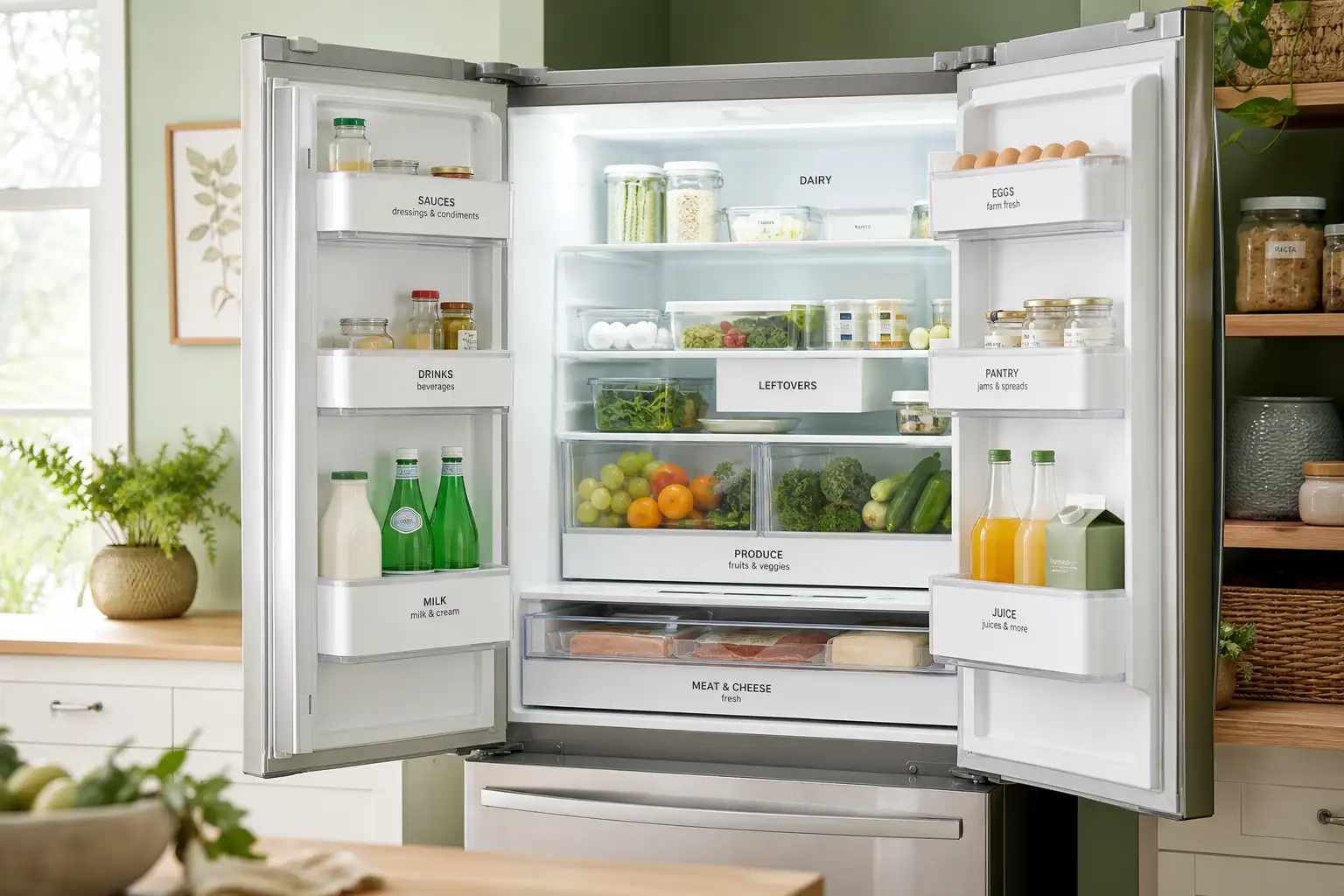
The top shelf is the warmest zone and the easiest to see. This is where ready-to-eat foods belong: leftovers in clear containers, yogurt, cheese, deli meats, and prepared foods. Because these items are the most likely to be eaten as-is, they should be the most visible when you open the door.
The middle shelves hold items that will be cooked: raw ingredients, eggs, and milk. Eggs and milk should not live in the door, despite the door shelves designed for them. The door is the warmest part of the refrigerator, and temperature fluctuations from opening and closing shorten the shelf life of dairy dramatically.
The bottom shelf is the coldest zone and should hold raw meat and fish, stored on a tray or in a designated bin to contain any drips that could cross-contaminate other foods. Raw meat should never be stored above ready-to-eat foods.
The crisper drawers are designed to maintain higher humidity than the rest of the refrigerator, which extends the life of produce. Most refrigerators have separate controls for each drawer. Set the high-humidity drawer for leafy greens, herbs, and vegetables that wilt. Set the low-humidity drawer for fruits and vegetables that rot rather than wilt, like apples, pears, and peppers.
The Clear Container Standard
The number one cause of refrigerator food waste is invisibility. If you cannot see it, you will not eat it. Clear glass or plastic containers solve this problem. Leftovers in clear containers are visible at a glance. Produce in clear bins is obvious when inventory is running low.
Square and rectangular containers maximize shelf space. Round containers leave dead space between them that adds up across an entire refrigerator. The thin edge of a square container uses every inch of shelf real estate.
Label leftovers with contents and date. A strip of masking tape and a permanent marker take five seconds and prevent the mystery container game that nobody wants to play. The date is crucial because it removes the internal debate about whether something is still good. If it is older than the recommended storage time for that food type, it goes.
The Weekly Reset
The hour before grocery shopping is the ideal time for a refrigerator reset. Remove everything that has spoiled or expired. Wipe down shelves and bins with a cloth dampened with warm water and a drop of dish soap. Consolidate near-empty containers. Take inventory of what remains.
This reset serves two purposes. First, it prevents you from buying duplicates of items you already have. Second, it creates a clean slate for the new groceries, ensuring they go into an organized space rather than being shoved in wherever there is room.
The reset also reveals which foods you consistently waste, which is actionable data for your shopping habits. If you throw away half a container of spinach every week, buy a smaller container or switch to heartier greens that last longer. The refrigerator does not lie about your actual consumption patterns.
The Deep Clean
Every three months, the refrigerator needs a deeper clean than the weekly wipe-down. Remove all shelves and drawers. Wash them in the sink with warm soapy water. While they dry, wipe down the interior walls, paying special attention to the door gasket where mold can develop. A paste of baking soda and water removes stubborn stains and odors.
The condenser coils, usually located behind a grille at the bottom front of the refrigerator, collect dust that reduces cooling efficiency. Vacuum them with the brush attachment during the quarterly deep clean. Clean coils reduce energy consumption and extend the life of the compressor.
An organized refrigerator is a quiet money-saver. When you can see everything, you use everything. When you use everything, you waste nothing. And when you waste nothing, your grocery budget stretches further without any change to what you buy, only to how you store it.