If you’ve ever opened a deep cabinet and found yourself rummaging past three expired spice jars to reach the olive oil at the back, you already know the problem that pull-out shelves solve. The question is whether they’re worth the investment — and what else you should be doing alongside them.
Professional organizers have been unusually consistent lately about this. Across multiple interviews and roundups this month, the same recommendations keep surfacing. Pull-out shelves top the list, but they’re not the only upgrade worth your time.
Why Pull-Out Shelves Keep Winning
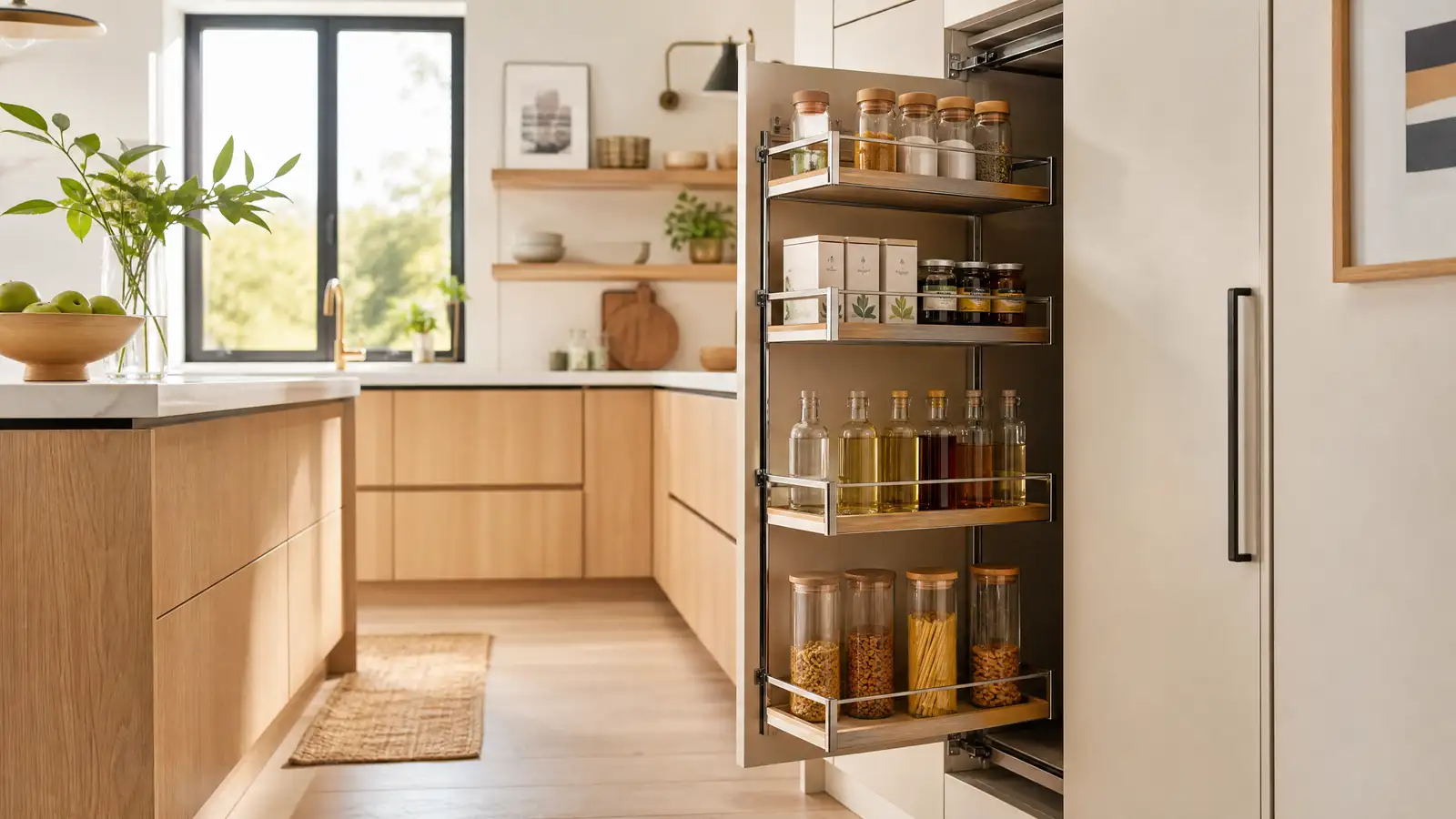
The concept is simple: instead of reaching into a dark cabinet box, you pull out a shelf that brings everything to eye level. But the reason organizers love them goes beyond convenience.
You stop buying duplicates. How many times have you bought a new bottle of vanilla extract because you couldn’t find the old one hiding behind the cereal boxes? Pull-out shelves make everything visible, so you actually use what you own.
They work with heavy items. Canned goods, small appliances, and bulk dry storage are miserable to haul from the back of a lower cabinet. A pull-out shelf turns that dead space into accessible storage.
Installation is easier than most people expect. Aftermarket pull-out shelf kits fit standard cabinet sizes and require only a screwdriver. You don’t need to replace the cabinet or hire anyone.
Five More Space-Saving Upgrades Under $40
1. Tension rods for vertical dividers
A $3 tension rod inside a cabinet creates instant dividers for baking sheets, cutting boards, or tray pans. Professional organizers use this trick constantly because it converts wasted vertical space into organized slots.
2. Under-shelf baskets
These wire baskets clip onto existing shelves and create a second level of storage. They’re perfect for items that don’t need full shelf height — tea bags, snack packs, or small containers. At $8–12 each, they’re one of the cheapest storage upgrades per square inch gained.
3. Magnetic strips for knife and utensil storage
Mounting a magnetic strip inside a cabinet door or on a wall frees up counter space and keeps blades visible and accessible. It also prevents the dulling that happens when knives jumble around in a drawer.
4. Stackable drawer organizers with adjustable dividers
The fixed-compartment drawer organizers you’ve probably bought before never quite fit. Adjustable ones do. They work in kitchen drawers, bathroom vanities, and junk drawers alike.
5. Over-the-door storage panels
Not just for shoes. Slim over-door panels hold cleaning supplies, pantry items, or bathroom essentials. They’re especially useful in apartments where drilling into walls isn’t an option.
The Real Secret Isn’t the Products
Here’s the thing professional organizers won’t tell you in a product roundup: the best storage system is the one you’ll actually maintain. A $200 pull-out shelf installation means nothing if you stuff it with random items and forget what’s inside.
The organizers I’ve spoken to all follow the same process before buying anything:
- Empty the space completely. Everything out. Wipe it down.
- Sort by category, not location. Group all baking supplies together, all snacks together, all cleaning products together.
- Measure the space and the items. Know your shelf depth before buying organizers.
- Buy the organizer last. The products should fit your sorted categories, not the other way around.
When Pull-Out Shelves Don’t Make Sense
They’re not universal. If your cabinets are shallow (under 12 inches deep), the mechanism takes up too much of the available space. In that case, risers or step shelves work better because they don’t consume the rail space.
Similarly, if you rent and can’t drill into cabinet bases, tension-based solutions or freestanding shelf inserts are your best bet.
Bottom Line
Pull-out shelves deserve their reputation as the single most impactful kitchen storage upgrade. But they work best as part of a broader system: empty the space, sort by category, measure twice, and then install. The $40 under-shelf baskets and $3 tension rods amplify the effect without adding much cost.
Your kitchen doesn’t need more storage. It needs the storage you already have to be actually usable.