You love your dog or cat. You do not love finding their fur on your black pants, your couch cushions, and somehow inside your refrigerator. Pet hair is relentless. It weaves itself into fabric. It floats through the air and lands on surfaces you just cleaned. It defies standard vacuuming.
The good news is that pet hair removal has come a long way from the sticky lint roller era. There are tools designed specifically for this problem, and they work dramatically better than the methods most people use. Here is the full arsenal.
Rubber brooms beat traditional brooms every time.
A rubber broom like the FURemover is the single best tool for pulling pet hair out of carpet and rugs. The rubber bristles create static electricity that attracts hair like a magnet. They also grip the carpet fibers and pull up embedded fur that a vacuum leaves behind.
The technique is simple. You rake the broom across the carpet in short, firm strokes. The hair gathers into clumps you can pick up by hand. It is oddly satisfying. The rubber bristles are also easy to clean. Just rinse them under water and they are ready to go again.
Use the rubber broom before you vacuum. It pulls up the deeply embedded hair so your vacuum can handle the surface debris. If you vacuum first and broom second, you are just coating your freshly vacuumed carpet with hair the vacuum missed. Broom first, then vacuum.
Rubber brooms also work on hard floors. They do not scratch and they pick up hair without sending it airborne like a traditional broom does. One tool handles every floor surface. That alone makes it worth the purchase.
The ChomChom roller versus lint rollers.
Lint rollers with sticky sheets are a recurring expense and an environmental waste. You use five sheets per couch session. The roller runs out. You buy refills. The cycle repeats forever.
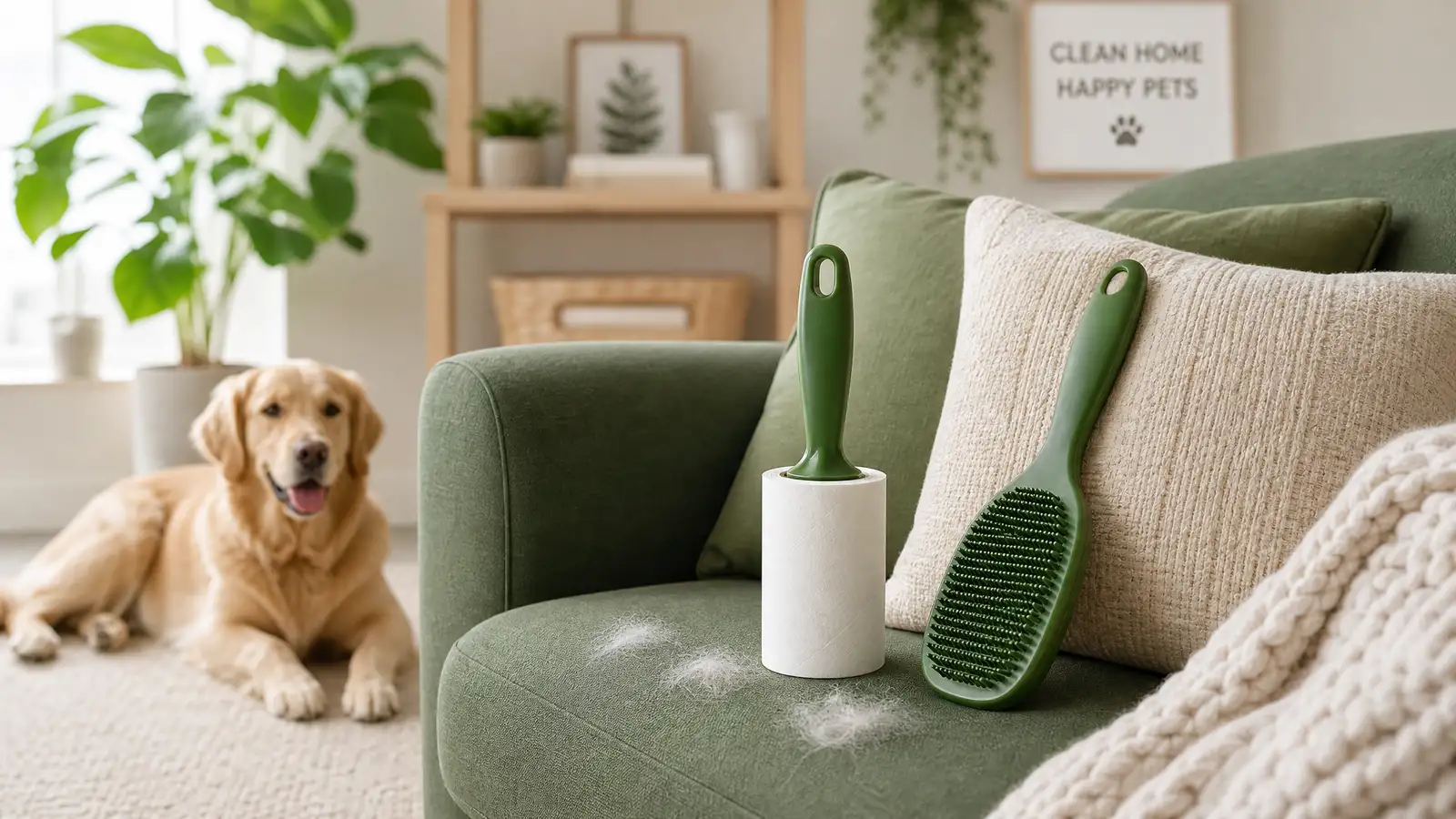
The ChomChom roller is a reusable alternative that works better. It uses a fabric surface that rolls in one direction to pick up hair and the opposite direction to deposit it into a collection chamber. No sticky sheets. No refills. No waste.
The ChomChom is designed for furniture and fabric surfaces. Run it back and forth over your couch cushions and watch the hair disappear into the chamber. When the chamber is full, you open it and dump the hair into the trash. Rinse the roller under water if it needs cleaning. That is the whole maintenance routine.
For clothing, a quick pass with the ChomChom works on most fabrics. For delicate items or situations where you need a single-use option, keep one regular lint roller in your bag for emergencies. But the ChomChom handles ninety percent of the job.
Pet hair vacuum attachments make a real difference.
Standard vacuum heads are not designed for pet hair. They glide over fabric and leave fur behind. You need attachments built for the purpose.
A motorized brush roll with stiff bristles agitates carpet and upholstery fibers to release trapped hair. Many vacuums come with a small motorized hand tool for stairs and furniture. If yours did not, buy one separately. It is the most-used attachment in a pet household.
A crevice tool with rubber nubs is another sleeper hit. Those little rubber tips grab hair from corners, baseboards, and the gap between the couch cushion and the armrest. Standard crevice tools just push hair around. The rubber nub version actually picks it up.
If you have a canister vacuum, empty it after every use during shedding season. Pet hair fills a canister fast. A full canister loses suction power. You are running the vacuum over the same spot with diminishing returns.
Washing machine tricks for hair-covered laundry.
Washing machines are surprisingly bad at removing pet hair. The hair loosens in the wash but redeposits onto clothes during the rinse cycle. You pull clothes out of the washer covered in the same fur you were trying to remove.
Two tricks fix this. First, run clothes through the dryer on an air-only or low-heat cycle before washing. The tumbling action and the lint trap pull off loose hair. After ten minutes in the dryer, empty the lint trap. Then wash the clothes. The washer has less hair to deal with.
Second, add a dryer sheet to the dryer when you dry the clothes normally after washing. Dryer sheets reduce static, which prevents hair from clinging. The lint trap catches the released hair. Clean the lint trap after every pet laundry load. A clogged lint trap is a fire hazard and a performance killer.
A pre-wash shake helps too. Take clothes outside and give them a vigorous shake before they go in the hamper. The more hair you remove before it enters the laundry system, the less you have to fight on the back end.
Prevention starts with regular grooming.
The most effective pet hair strategy is to remove the hair from the animal before it lands on your furniture. A Furminator deshedding tool pulls loose undercoat hair from dogs and cats. Use it outside once a week during shedding season. You will be horrified by how much fur comes off. That is fur that is not on your couch.
A rubber curry brush or shedding blade works well for short-haired breeds. Use gentle circular motions. The hair lifts away. Follow up with a damp cloth wipe-down to catch any remaining loose fur.
Bathing your pet every four to six weeks also reduces shedding. The warm water loosens dead hair and the shampoo helps it rinse away. Brush thoroughly before the bath to remove as much loose fur as possible. Wet loose hair mats up and becomes harder to remove.
Robot vacuums for daily maintenance.
A robot vacuum will not deep-clean your carpets. It will maintain them between deep cleans. In a pet household, daily maintenance is the difference between a home that always looks clean and a home that looks clean for three hours after you vacuum.
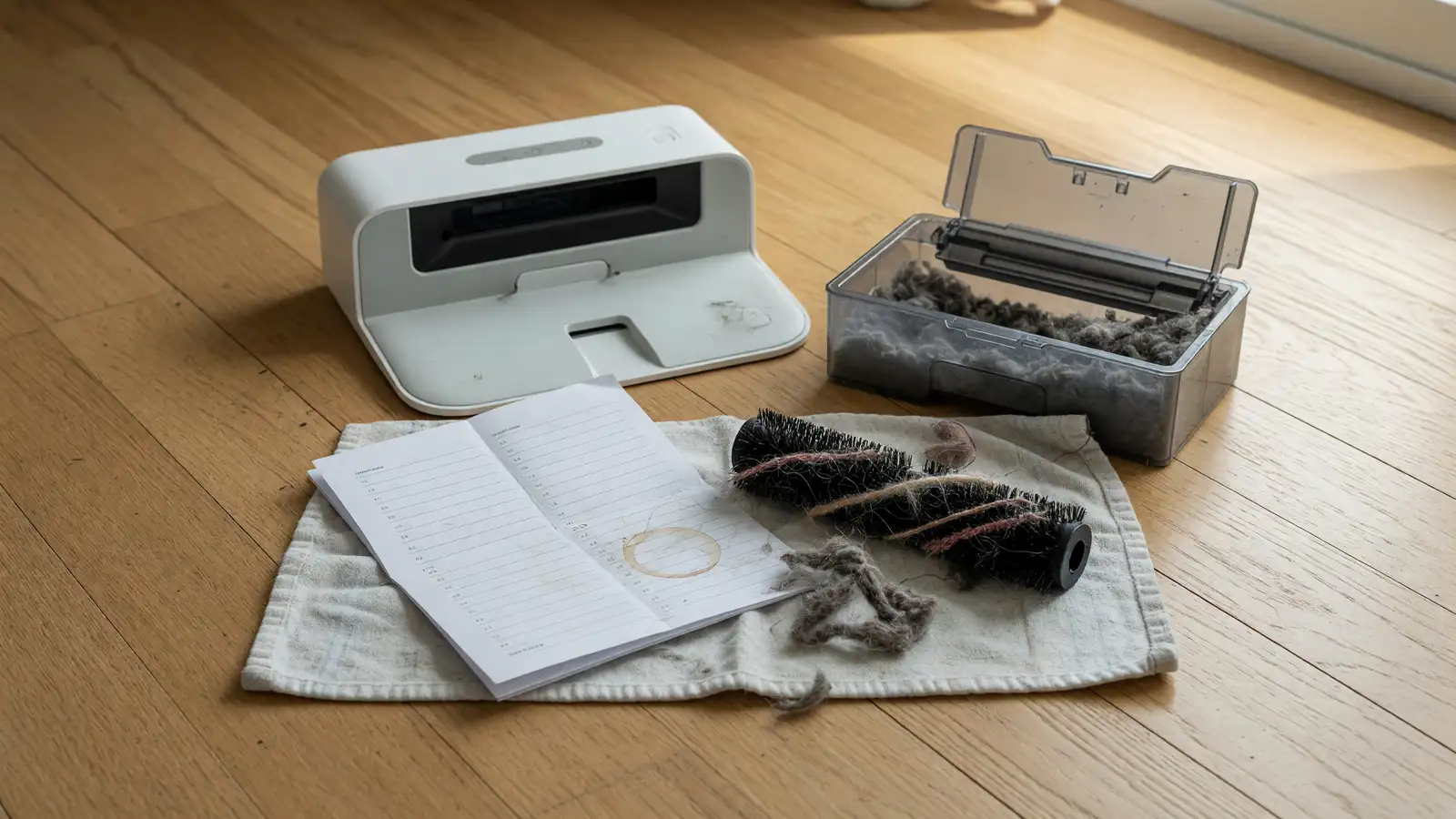
Run the robot vacuum every day, ideally when you are not home. Empty its bin after every run. Pet hair fills a robot bin extremely quickly. Some models have self-emptying bases that hold several weeks of debris. Those are worth the investment for pet owners.
The robot handles the surface-level hair that accumulates daily. You handle the deep cleaning once a week with the rubber broom and the motorized vacuum attachments. Together they cover the full pet hair cycle.
Rubber gloves for upholstery.
If you need to remove pet hair from a chair or couch cushion right now and have no tools handy, put on a pair of rubber dishwashing gloves. Dampen them slightly. Run your gloved hand over the fabric in one direction. The rubber grips the hair and rolls it into clumps you can pick up and throw away.
This trick works on car seats, fabric office chairs, and anywhere else pet hair has embedded itself. It is not as efficient as a ChomChom roller, but it works with something you already own. Keep it in your back pocket for the moments a guest is arriving in five minutes and the couch looks like it grew fur.
Pet hair is a fact of life with animals. You accept it when you bring them home. But accepting it does not mean surrendering to it. With the right tools and a weekly routine, you can keep the fur under control and enjoy your pet without wearing them on every outfit.