The pantry is the engine room of the kitchen. When it is organized, cooking flows. When it is chaos, even boiling water feels like an expedition. The difference between a pantry that supports your cooking and one that hinders it typically comes down to a single missing element: zones.
The zone method is the organizing principle used in professional kitchens worldwide. Instead of arranging food by container type or by when you bought it, you group ingredients by how you use them. Every time you open the pantry door, your hand goes directly to the zone that contains what you need.
Mapping Your Zones
Before touching a single item, sketch out your pantry’s zones on paper. The specific zones depend on how you cook, but most households benefit from five core zones.
The baking zone contains flours, sugars, baking powder, vanilla extract, chocolate chips, and sprinkles. Everything needed for baking lives together, so you never search for baking soda in the middle of a recipe while butter melts unattended on the counter.
The cooking zone holds oils, vinegars, canned goods, broths, pasta, rice, and dried beans. These are the backbone ingredients of dinner. Group by cuisine if you cook internationally: soy sauce, rice vinegar, and sesame oil together; olive oil, balsamic, and canned tomatoes together.
The breakfast zone collects cereal, oatmeal, pancake mix, syrup, granola, and nut butters. Morning routines are time-sensitive, and reducing the seconds spent searching for breakfast items has a disproportionate impact on daily stress levels.
The snacks zone is essential for households with children or anyone who works from home. Keeping snacks in one clearly defined area prevents the pantry from becoming a scavenger hunt. Individual baskets or bins for each family member eliminate the inevitable arguments about whose snacks are whose.
The bulk zone lives on the highest or lowest shelf and holds backup supplies: the extra box of pasta, the second jar of peanut butter, the Costco-sized bag of rice. This zone gets restocked from grocery runs and drawn down into the active zones as items run out.
Containers That Make Zones Work
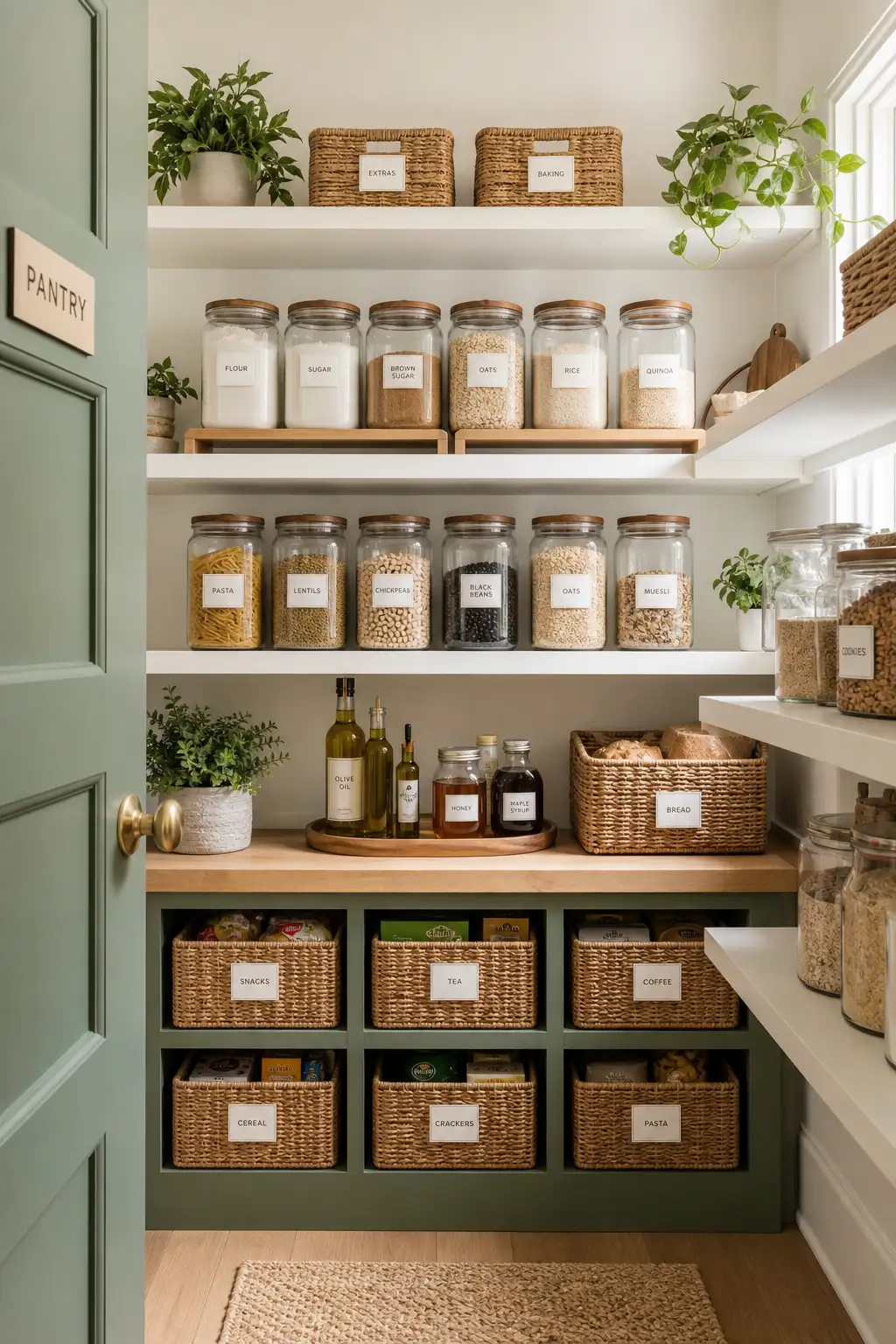
Zones are conceptual. Containers make them physical. Clear, airtight containers are the gold standard for dry goods because they allow you to see inventory levels at a glance. When the flour bin is half empty, you know to add flour to the shopping list.
Uniform container sizes maximize shelf space. Square or rectangular containers use roughly twenty-five percent more shelf space than round containers of the same volume because they leave no dead space between them. The OXO Pop and Progressive Prepworks lines are both widely available and reliably airtight.
Label every container, even if the contents are obvious through clear plastic. Labels remove the ambiguity that causes other household members to put things back in the wrong zone. A simple label maker or even masking tape with permanent marker is sufficient. What matters is consistency.
The Lazy Susan Solution
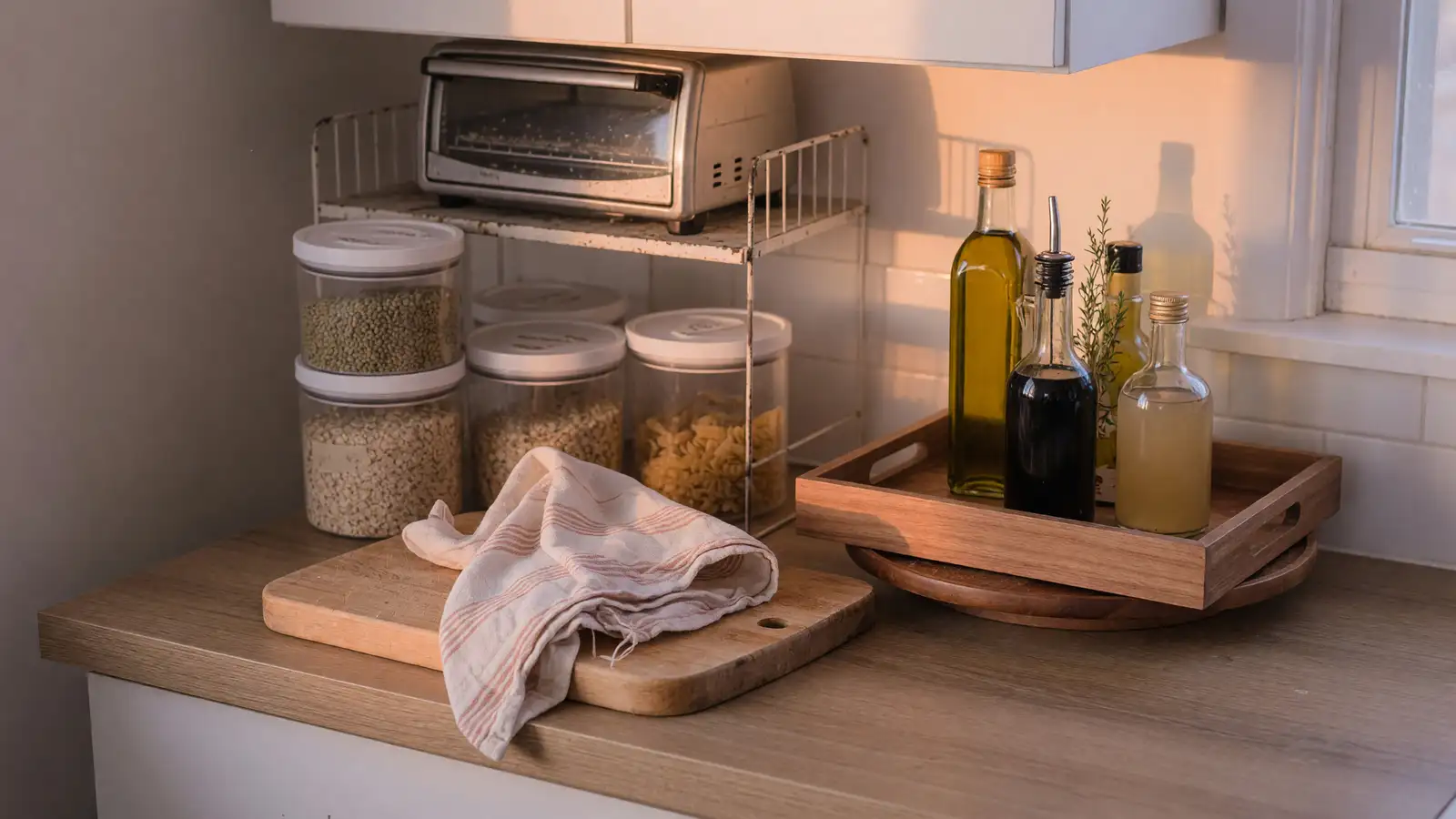
Deep corner shelves are the Bermuda Triangle of pantry organization. Items disappear into the back and are never seen again until their expiration date has long passed. A two-tier lazy Susan transforms these dead zones into accessible storage. Spin to reach anything without moving anything else.
Lazy Susans work particularly well for the cooking zone, where bottles of oil, vinegar, soy sauce, and hot sauce are all roughly the same height and benefit from the ability to spin and grab. They also work for the baking zone, where extracts and small containers of sprinkles and decorations tend to multiply.
The Shopping List Connection
The most valuable output of a zoned pantry is not the visual satisfaction. It is the shopping list. When every item has a designated zone and every zone uses uniform containers, you can scan the entire pantry in thirty seconds and know exactly what you need to buy. No more discovering you have three open jars of cumin while simultaneously being out of black pepper.
Tape a small notepad and pen to the inside of the pantry door. The moment you use the last of something or notice a container getting low, write it down. Take a photo of the list before you leave for the store. This habit alone reduces the number of mid-recipe grocery runs to nearly zero.
A zoned pantry is not a one-time project. It is an agreement with yourself about where things belong. When every item has a home and every home makes sense, maintaining order becomes nearly automatic. And a pantry that stays organized week after week is one of the quietest but most significant quality-of-life upgrades a kitchen can receive.