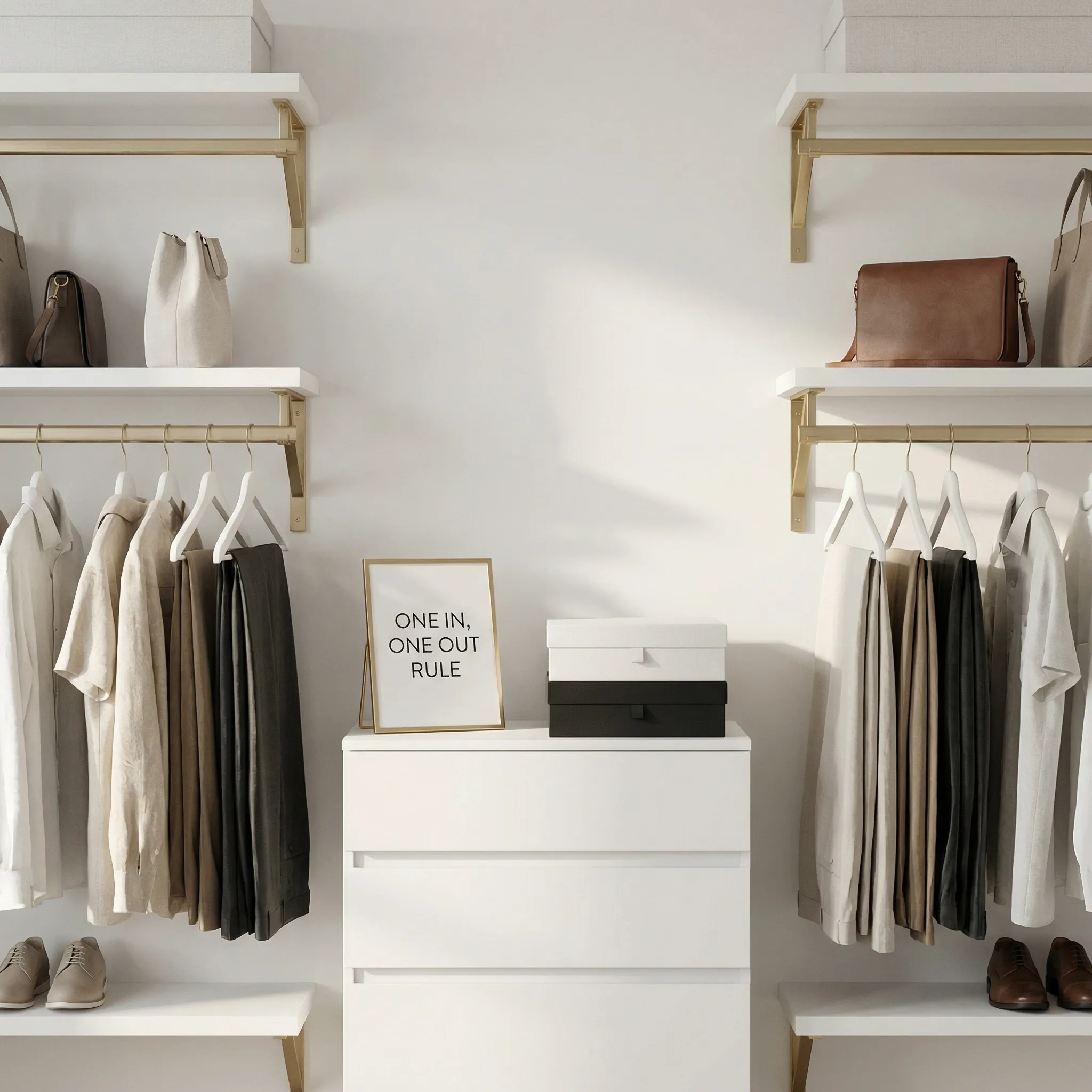
In the relentless battle against clutter, one principle stands out for its elegant simplicity. The one in, one out rule requires no special tools, no extensive planning, and no dramatic decluttering sessions. It operates continuously in the background, preventing accumulation rather than fighting it after the fact.
This principle forms the foundation of sustainable minimalism. While initial decluttering creates dramatic transformations, the one in, one out rule maintains those gains indefinitely. Understanding and implementing this rule completely changes how you relate to new purchases and incoming items.
Understanding the One In, One Out Principle
The concept could not be simpler: for every new item entering your home, one item must leave. A new shirt requires an old shirt’s departure. A new kitchen gadget necessitates eliminating an existing one. A gift received means identifying something to donate.
This rule transforms acquisition from an addition into a trade. Before purchasing anything, whether on sale, as a gift, or on impulse, you must first identify its replacement. This pause creates space for consideration. Do you truly want this item enough to release something else?
The one in, one out rule succeeds because it addresses clutter at its source. Traditional organizing tackles existing excess. This principle prevents new excess from forming. Prevention proves far easier than cure.
Starting Your One In, One Out Practice
Begin by establishing the rule’s parameters. Define what counts as “in” and how strictly you will apply the principle.
Most practitioners count all physical items entering the home: purchases, gifts, freebies, and items moved from other locations. Some include digital purchases or consumables; others limit application to durable goods. Choose parameters matching your goals.
Create systems supporting the rule’s implementation. Designate a donation box or bag in your closet or storage area. When something enters, immediately place its outgoing counterpart in the donation container. This physical action reinforces the mental commitment.
For items entering through delivery, keep boxes or bags until completing the exchange. Taking the new item inside while carrying the outgoing item to your car or donation center reinforces the trade nature of acquisition.
Overcoming Common Challenges
Initial implementation encounters predictable obstacles. Anticipating these challenges helps navigate them successfully.
Gift-giving presents a recurring challenge. When receiving gifts, apply the rule to those you accept. Some minimalists politely decline gifts, explaining their one in, one out practice. Others accept graciously, then complete the exchange by removing an item to donation.
Free items from conferences, promotional events, or sample products represent another challenge. Question whether you would purchase these items if they cost money. Often the novelty wears quickly, and clutter accumulates. Apply the rule strictly or decline the free item entirely.
Seasonal purchases require advance planning. Winter clothing entering storage requires outgoing summer items. Evaluate what truly served you during the past season and release items that did not get worn.
Replacement purchases follow naturally. When items wear out, the broken version exits, and the new version enters. This represents the rule’s most straightforward application.
The Psychological Shift
Internalizing the one in, one out rule transforms your relationship with possessions.
Acquisition becomes intentional rather than impulsive. The requirement to identify an outgoing item forces consideration. Often this pause reveals that desire for the new item does not exceed attachment to the existing one, preventing unnecessary purchases.
Gratitude increases for existing possessions. Knowing each item might be traded for something new encourages appreciation for current belongings. This shift reduces the endless seeking that characterizes consumer culture.
Decision-making improves through practice. Constantly choosing what to release sharpens decision-making abilities applicable elsewhere. The mental exercise strengthens clarity about what truly matters.
Attachment to possessions decreases. The understanding that all items remain temporary. Their presence depends on continued relevance. This reduces the grip things have on daily life. This detachment brings unexpected freedom.
Beyond Physical Possessions
The one in, one out principle extends beyond physical objects.
Digital subscriptions, streaming services, and memberships benefit from similar consideration. Adding a new subscription requires canceling an existing one. This approach prevents subscription creep and keeps services actively evaluated.
Social commitments can operate similarly. Accepting a new recurring commitment requires releasing an existing one. This principle protects time and energy for priorities.
Digital files might apply the rule. Creating a new folder or starting a new project prompts organization of an existing one. This prevents digital accumulation paralleling physical clutter.
Relationship investments follow the same logic. Deepening one friendship might require consciously investing less in others. While this sounds transactional, conscious attention to relationship depth often proves more nurturing than scattered attention.
Advanced Applications
Once comfortable with basic practice, explore sophisticated applications.
Categories within one in, one out work for some practitioners. Perhaps clothing operates under strict one in, one out while kitchen items receive more flexibility. Document your specific applications for clarity.
Time-based exchanges create additional structure. Monthly clothing swaps, seasonal exchanges, or annual reviews ensure regular rotation and evaluation. This approach catches items that slip through daily exchanges.
Quality thresholds can enhance the principle. When something enters, it must exceed the quality of what leaves. This prevents replacement with equivalent or inferior items, gradually elevating possessions to higher quality.
Maintaining Long-Term Practice
Consistency determines one in, one out success. Several strategies support sustained implementation.
Regular visual reminders reinforce commitment. Sticky notes on closets, phone reminders, or household discussions keep the principle present. Eventually, the habit becomes automatic, but early stages benefit from external prompts.
Family participation amplifies success. When all household members practice one in, one out, the system works smoothly. Children learn intentional consumption naturally, and parents avoid frustration from inconsistent approaches.
Tracking progress provides motivation. Documenting what enters and leaves reveals consumption patterns and encourages continued practice. Some find weekly or monthly summaries enlightening.
Celebrate milestones. Maintaining one in, one out for a year deserves recognition. The achievement represents significant behavioral change and accumulation prevention.
The One In, One Out Life
Embracing one in, one out fully creates a fundamentally different experience of ownership. Rather than accumulating endlessly, possessions flow through your life. They enter purposefully, serving meaningfully, and departing when their purpose completes.
This flow creates lightness. The feeling of being owned by possessions diminishes. Space opens in closets, drawers, and daily attention. Life becomes simpler, clearer, and more intentional.
Start today. Choose one item to leave your home for every item that enters. Notice how this simple practice transforms your relationship with everything you own.