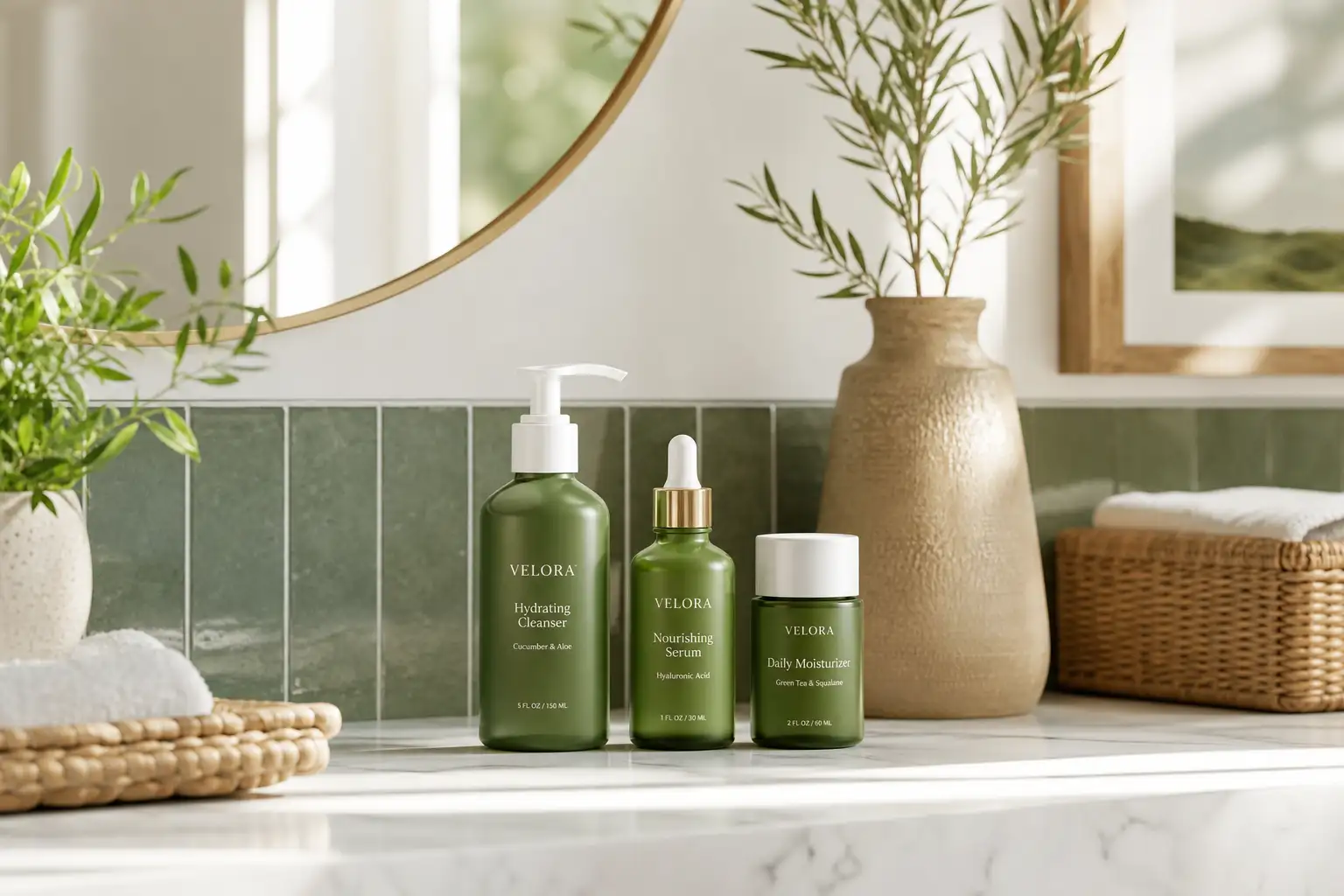
Walk into your bathroom right now and count how many products you see. Bottles on the counter. Tubes in the shower. Jars in the medicine cabinet. Serums, creams, masks, scrubs, toners, oils. If your number is above twenty, you are not alone. The average bathroom is one of the most cluttered rooms in the house.
Here is the uncomfortable truth. You probably use fewer than half of those products regularly. The rest are expired, abandoned, or waiting for some future version of you to become the kind of person who does a ten-step skincare routine every night. That person is not coming. Here is how to strip your bathroom down to what you actually need and stop the cycle of accumulation.
Start with the one-in-one-out rule.
The one-in-one-out rule is the simplest tool for maintaining a reasonable number of products. When you buy a new moisturizer, an old one leaves your bathroom. The outgoing product gets used up first, then replaced. Or if you realize you will not finish it, you toss it before bringing the new one home.
This rule forces you to make trade-offs. You cannot have five different face creams at once unless you are actively using all five. Most people are not. They have a favorite, a backup, one that was on sale, one that a friend recommended, and a sample from a gift bag. That is four too many.
Apply the rule to every category. Shampoo, conditioner, body wash, face wash, moisturizer, sunscreen, makeup, hair products. One in, one out. Your bathroom real estate is finite. Your attention is finite. Treat both accordingly.
Declutter expired products and free samples first.
The easiest category to tackle is expired products. Skincare and makeup have expiration dates. They are usually printed on the packaging as a little jar symbol with a number inside. “12M” means the product expires twelve months after opening. If you have been using the same foundation for three years, it is expired.
Expired products lose efficacy. Preservatives break down. Bacteria grows. That eye cream from 2022 is not doing your skin any favors. Throw it away.
Free samples are the second easiest category. Hotels, gift bags, Sephora checkout counters. You accumulate tiny bottles of things you would never buy for yourself. You keep them because they are free and small and seem useful. They are not. If you have not used a sample within a month of receiving it, you are never going to use it. Toss them all.
The same goes for products you tried once and hated. The shampoo that left your hair greasy. The face wash that made your skin tight. Holding onto these out of guilt over wasted money does not un-waste the money. It just adds clutter to your shelf. Let them go.
Multi-use products eliminate entire categories.
The most powerful decluttering move is to replace multiple single-purpose products with one product that does several things well. A tinted moisturizer with SPF replaces three products. Foundation, moisturizer, and sunscreen. That is two fewer bottles on your counter.
Coconut oil works as a makeup remover, a body moisturizer, and a hair mask. A single bar of castile soap can replace body wash, hand soap, and even face wash for some skin types. A lip and cheek tint handles two makeup categories.
You do not need to go full minimalist with three products total. But when you run out of something, ask whether you can replace it with something you already own that does the same job. Before you buy a separate eye cream, ask whether your regular moisturizer works just fine around your eyes. It probably does.
The thirty-day product test.
If you are unsure whether you actually use a product, do a thirty-day test. Move the product to a different shelf or a box under the sink. If you go thirty days without retrieving it, you do not need it. Donate unopened products. Toss opened ones.
This test works because it removes the product from your daily line of sight. You are not making a permanent decision. You are just relocating it. The emotional weight of “throwing away” something disappears. After thirty days, you will have forgotten it existed. That tells you everything you need to know.
Do this for every category over the course of a few months. Shower products one month. Skincare the next. Makeup the month after. By the end, you will have a bathroom containing only things you actually reach for.
How marketing creates fake needs.
The skincare industry wants you to believe you need ten products for healthy skin. Cleanse, tone, exfoliate, serum, eye cream, moisturize, oil, mask, mist, SPF. That is a morning routine that takes twenty minutes and costs hundreds of dollars per month.
Dermatologists disagree. Most skin needs three things. A gentle cleanser, a moisturizer, and sunscreen. Everything else is optional. Some people benefit from a retinoid or an acne treatment. Some people enjoy the sensory experience of a mask or a serum. But nobody needs a ten-step routine. That need was manufactured by companies that profit from selling you more products.
The same applies to haircare. Shampoo, conditioner, and perhaps a leave-in product. That is the routine for most hair types. You do not need a separate clarifying shampoo, a purple shampoo, a scalp scrub, a hair oil, a heat protectant, and a texturizing spray unless you are a professional stylist.
Before you buy another product, ask yourself who benefits from that purchase. Is it you, because you have a genuine need the product fills? Or is it the company, because their marketing convinced you that you have a problem you did not know existed yesterday?
Organize what remains in clear acrylic drawers.
Once you have pared down to essentials, store them well. Clear acrylic drawers work better than cabinets for bathroom storage. You can see every product at a glance. Nothing hides in the back of a dark cabinet for years. The clear material also looks clean and intentional.
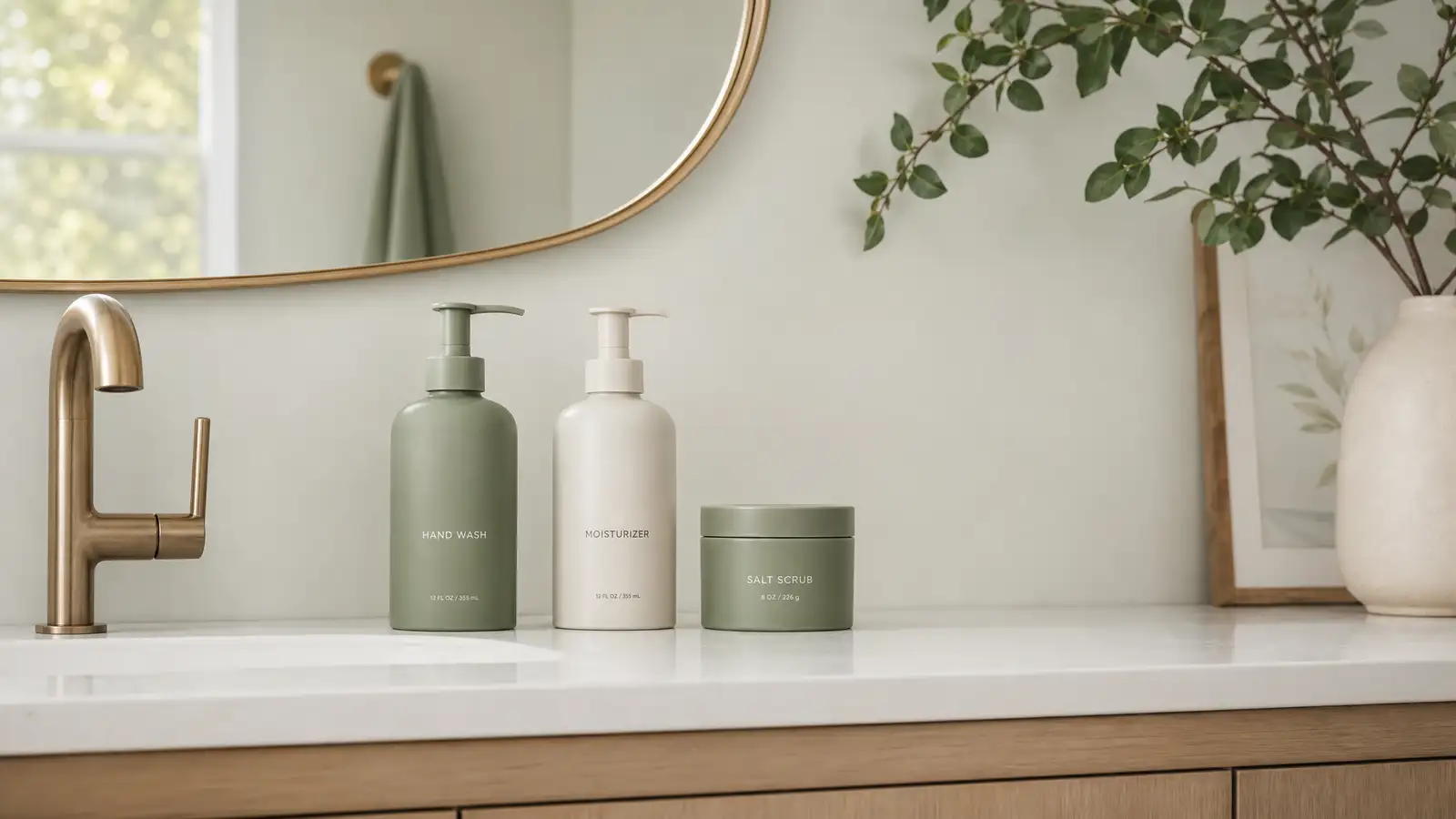
Group products by category in separate drawers. Skincare in one. Makeup in another. Hair products in a third. First aid and medications in a fourth, well out of reach of children. Keep the counter clear except for the two or three items you use every single day. Everything else goes in a drawer.
A clear counter is a visual signal that you are in control of your space. It also makes cleaning easier. You wipe the counter in five seconds instead of moving twenty bottles around. That is a small win, but small wins compound.
The real freedom is in having less.
A minimalist bathroom is not about deprivation. It is about removing the noise so you can see what actually matters. When you have three skincare products you love instead of twenty you feel guilty about not using, your morning routine becomes calm instead of chaotic. You stop wasting money on products that expire before you finish them. You stop feeling like you are failing at a beauty routine nobody actually needs.
Start with the trash. Expired products. Dried-out mascaras. Empty bottles you were saving for no reason. Then move to the unused. Free samples. Gifts you never liked. Products that irritated your skin. Then apply the one-in-one-out rule going forward. What remains is a bathroom that serves you instead of overwhelming you.